

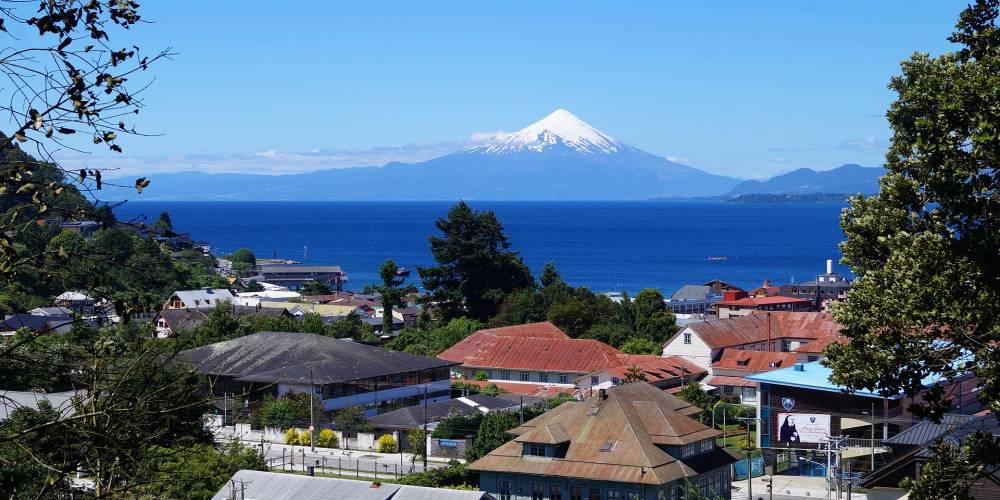
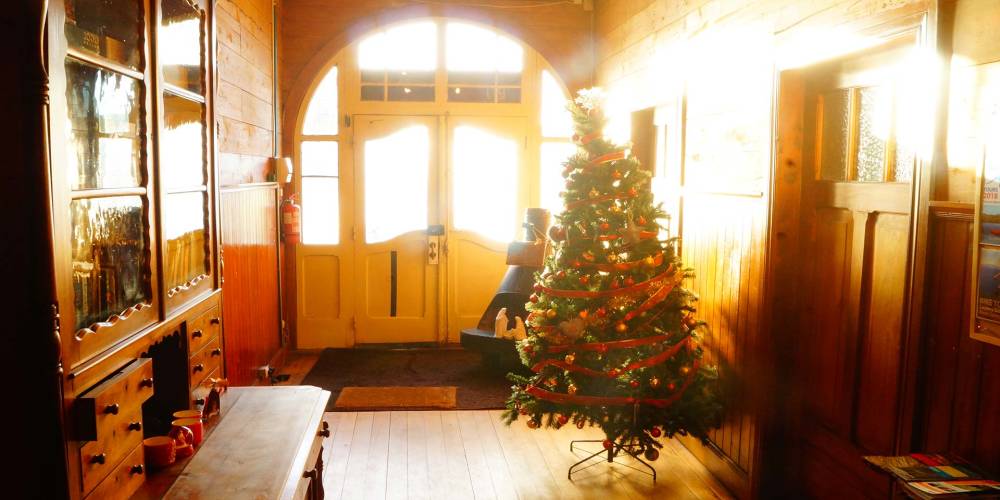
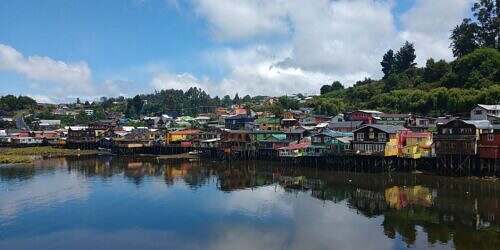
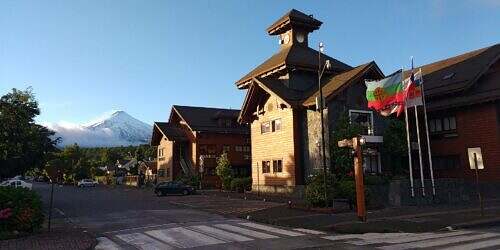
Puerto Varas on Lake Llanquihue, five hours south of Pucon, is one of the last big towns before the endless expanses of southern Patagonia. I spend a few days over New Year’s Eve in the Margouya Patagonia Hostel, a manor house that is a good hundred years old. The French owners have transformed the property into a true backpacker’s heaven: Open fires, free-standing bathtubs and a hard drive hanging on the TV with loads of good films are a welcome change from fast-paced travelling.
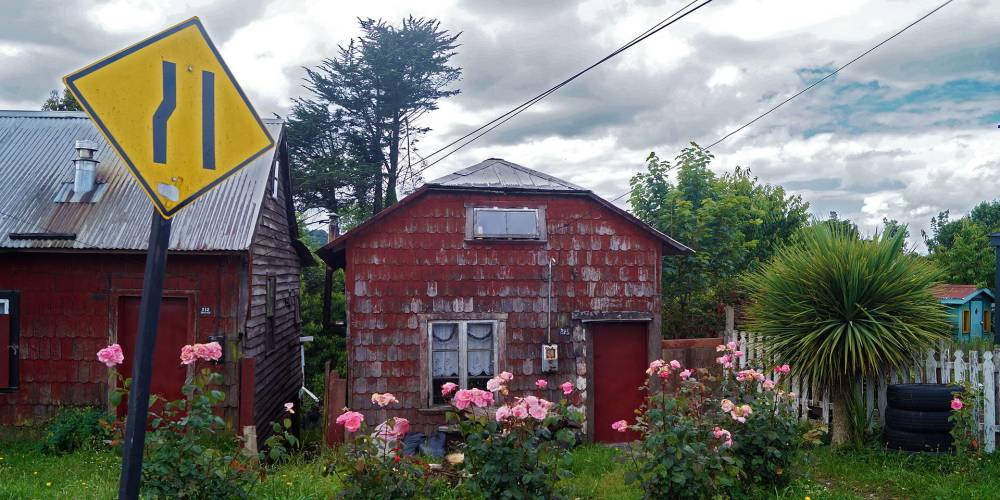
Unfortunately, Puerto Montt makes the same mistake as Pucon: it spoils its charm, characterised by old wooden houses, with concrete bunkers that are out of scale. The largest of these stand directly upwind of the only kiteable beach in the neighbourhood. The hills slow down the typical cold southerly wind from the Patagonian fjords. The bunkers kill it for good. No chance of kiting here.
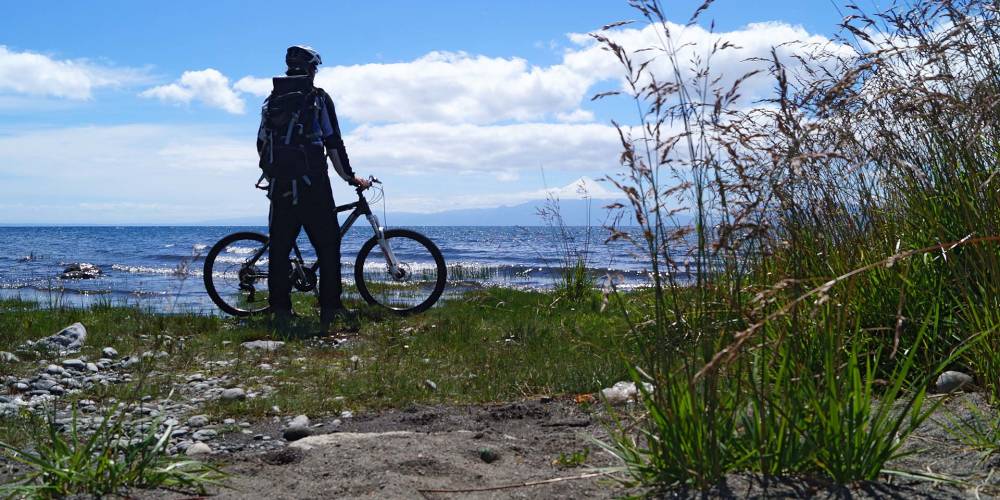
On a mountain bike, I ride twelve kilometres along the railway between lush meadows full of wildflowers around the lake to the small village of Llanquihue. The lake spits out a crystal-clear, wild river to the south towards Puerto Montt in the fjords. A kilometre further on I find the perfect kite beach. Soft, sharp volcanic sand on a 50 metre wide, very gently sloping beach, hardly any obstacles and winds of 15 knots sideshore without turbulence. My two options are either to ride 25 kilometres every day by bike or bus – or rent a really expensive hut on the beach. I decide in favour of the third option, lie down on the soft grass and admire the perfect cone of the Osorno volcano on the other side. The next three windless days take the decision out of my hands.
There is a big barbecue for New Year’s Eve with 40 guests. The hostel owners once again justify all prejudices against French cuisine with their magic. Good guests from all over the world bring many stories. Thanks to a professional player from Milan, I now know that we are world mini golf champions. The unimportant things are drowned out by lots of good wine. At midnight, everyone runs to the shore of the lake. 80,000 people marvel at one of the biggest fireworks displays in the south. Me and my fear of crowds stay back at the hostel with wine. A couple on the first floor make the walls shake, then the first claustrophobics return.
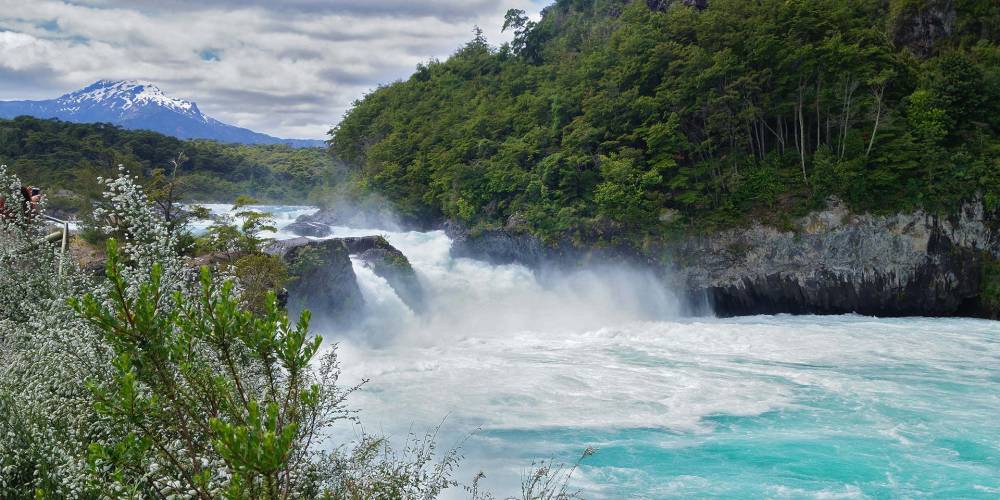
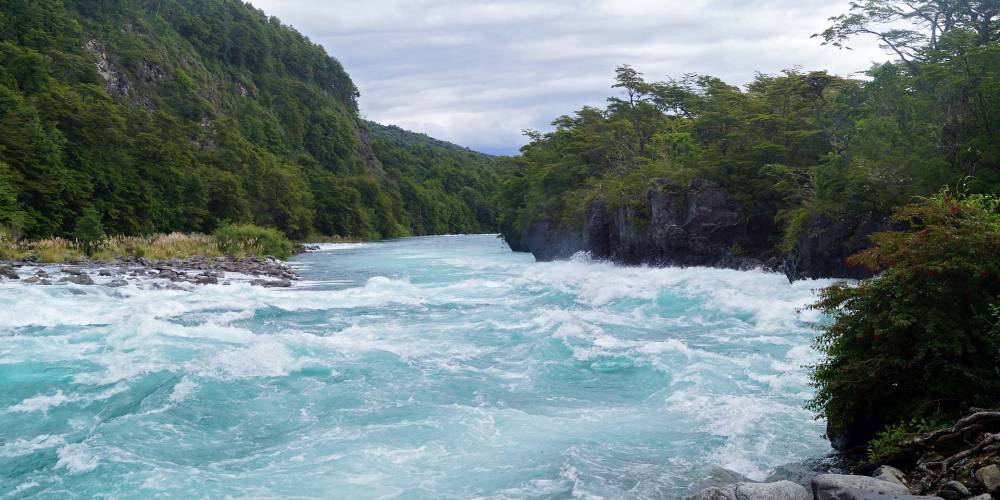
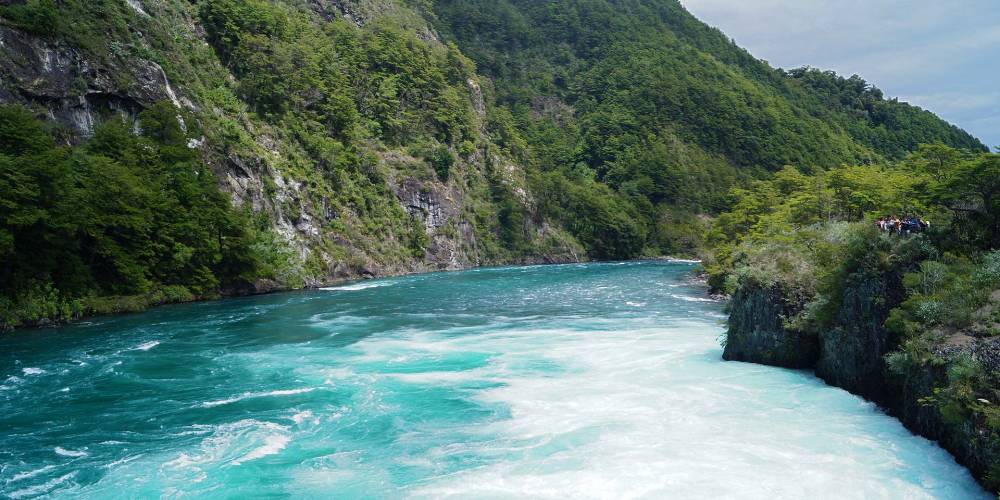
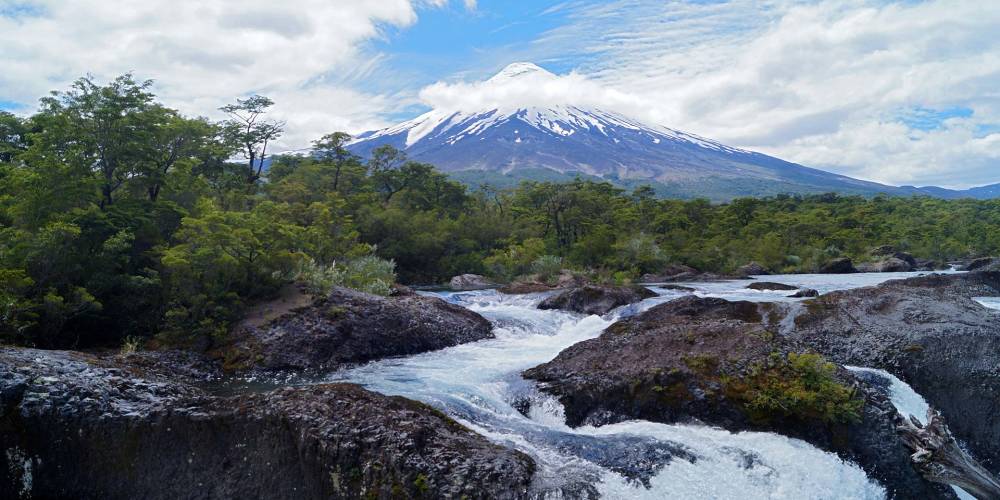
The Saltos de Petruhe are one of Chile’s largest cataracts. They can be reached by bus in just over an hour from Puerto Varas. Unbelievable masses of water pour over several metres of basalt into the azure depths. For a long time, I can’t decide whether the crowds of people or the masses of water scare me more, but then I decide in favour of neither because of the national park entrance fees, which are always twice as expensive for foreigners in Chile. Back in Puerto Varas, I’m delighted to find a washing machine at the best deal in a town of 20,000 inhabitants, at a lovely €30 for a load.
The next two days are typical Patagonia. It rains non-stop. Hardly anyone leaves the house. Several wars break out over the three seats on the couch in front of the fireplace. The wine continues to taste good, work continues, good food is shared, but I am somehow very tired of travelling. I usually create big stories out of small things. There are loads of good stories laid at my feet, but I don’t know what to do with them at the moment.





 Frank Woelky, born in 1973. Kitesurfer since 1998. Since 2006, I have been combining kitesurfing and web design on trips lasting several months off the beaten track.