

The Panamericana was the hardest voyage I’ve ever done. Even island hopping in the most remote places of the Philippines was usually way much easier. Sure, ten weeks are by far not enough time for even just the few spots I visited in seven different countries. First, Copa Airlines denied the transport of my kiteboard after 7.5 hrs in their hotline. I had to buy a split board. Then Condor lost all my other baggage for three weeks – thanks for the 490 €!
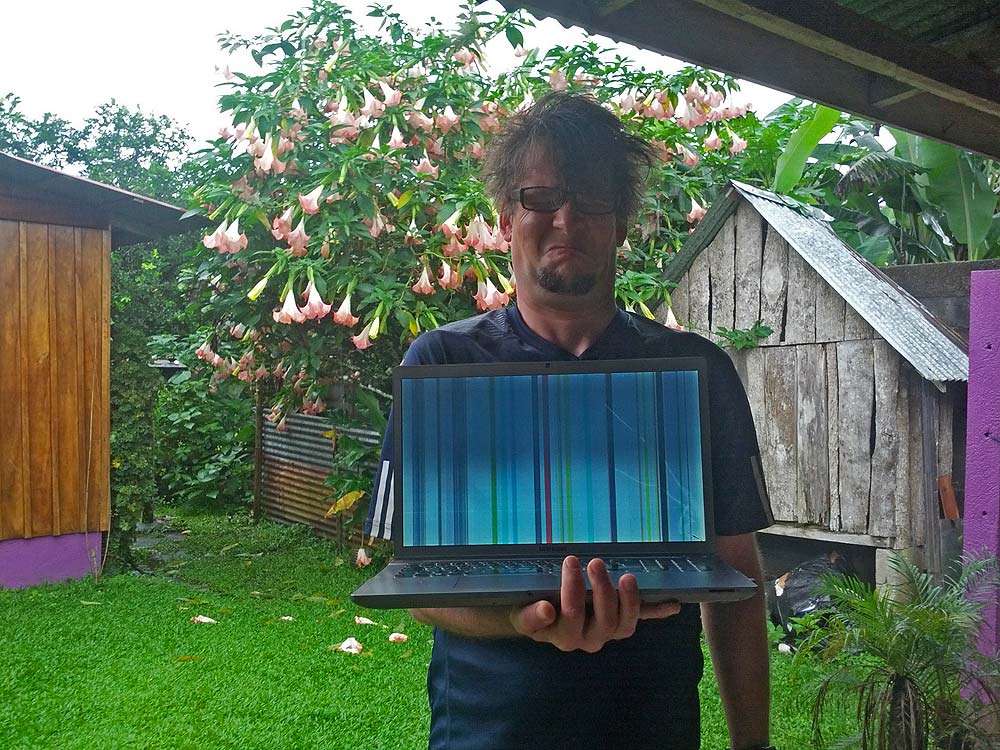
My laptop’s display broke right after the start when trying – but unfortunately not finishing – a backflip from the top bunk bed. The external replacement monitor i bought was good for many laughs in cherished places when cursing the almighty inavailability of an internet connection. For the first time in years of travelling my webdesign clients had good reasons to be angry with me. (more…)
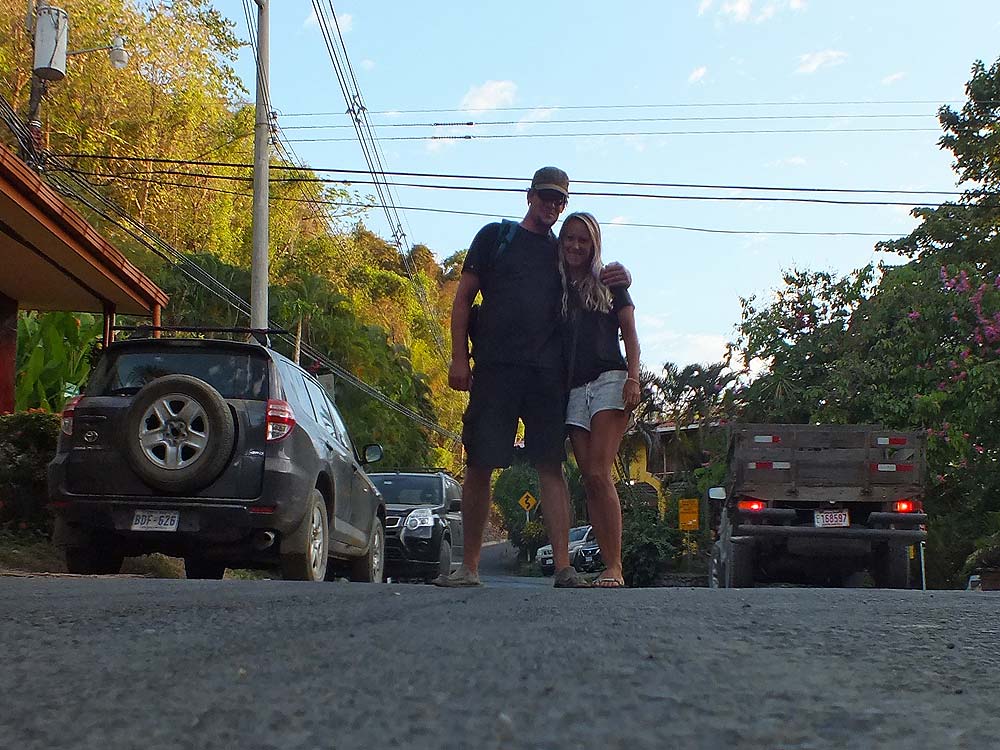
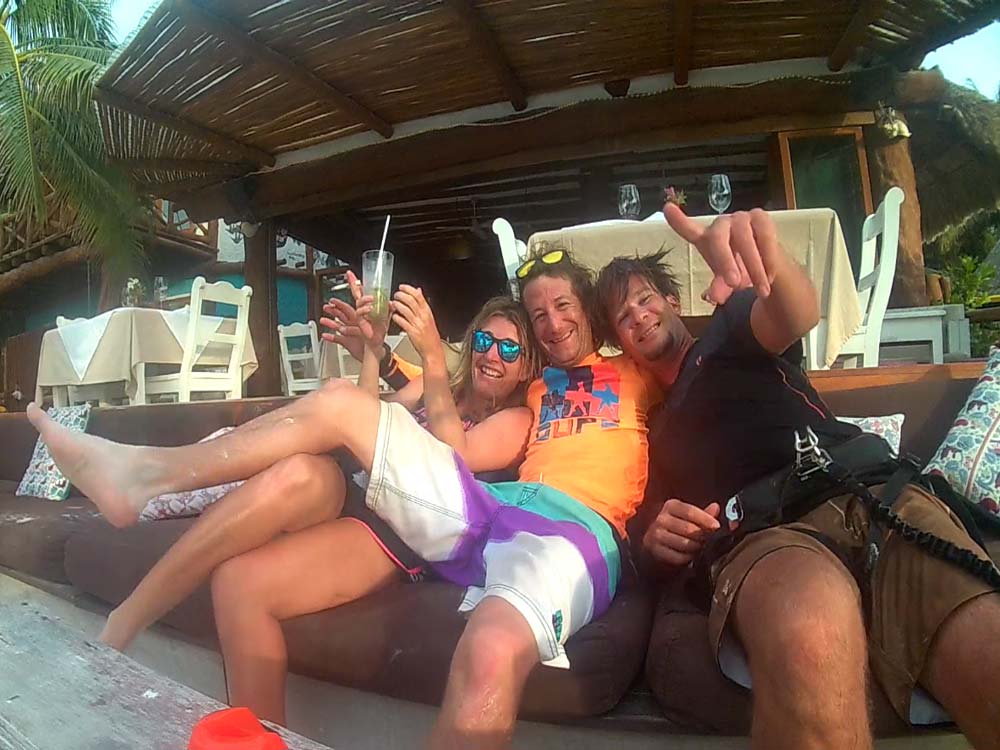
Isla Holbox
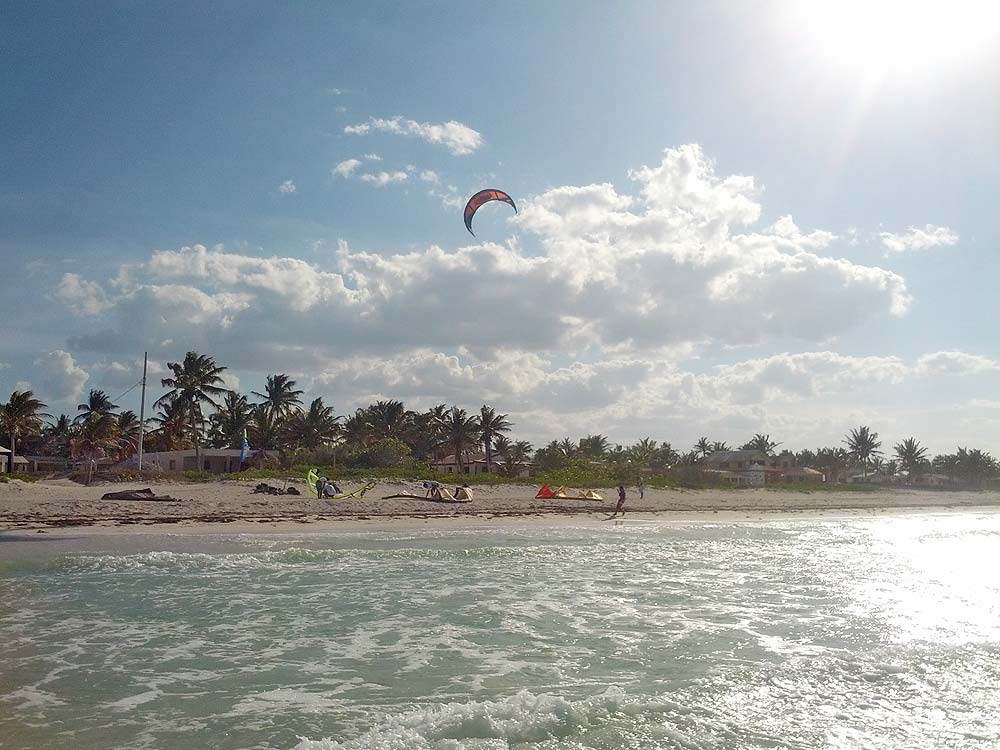
Holbox is the last surprise of my Pan-American journey. In Belize, a Swiss man said: “The best wind in Mexico blows there!”. He was right. Every day 16 to 23 knots and beautiful waves along with ten kite buddies on Holbox will be my last kitesurfing paradise.
Until 2013, kitesurfing was completely banned on Holbox, which is largely a nature reserve. Today we are allowed to kite – for a €10 wind usage fee, and only on a single beach one and a half kilometres north-east of the town centre. The wind is almost always from the east, so the kite beach lies sideways in the lee of the island. The only option is to take the kite school boat seven kilometres around the corner of the island every day for €14. (more…)
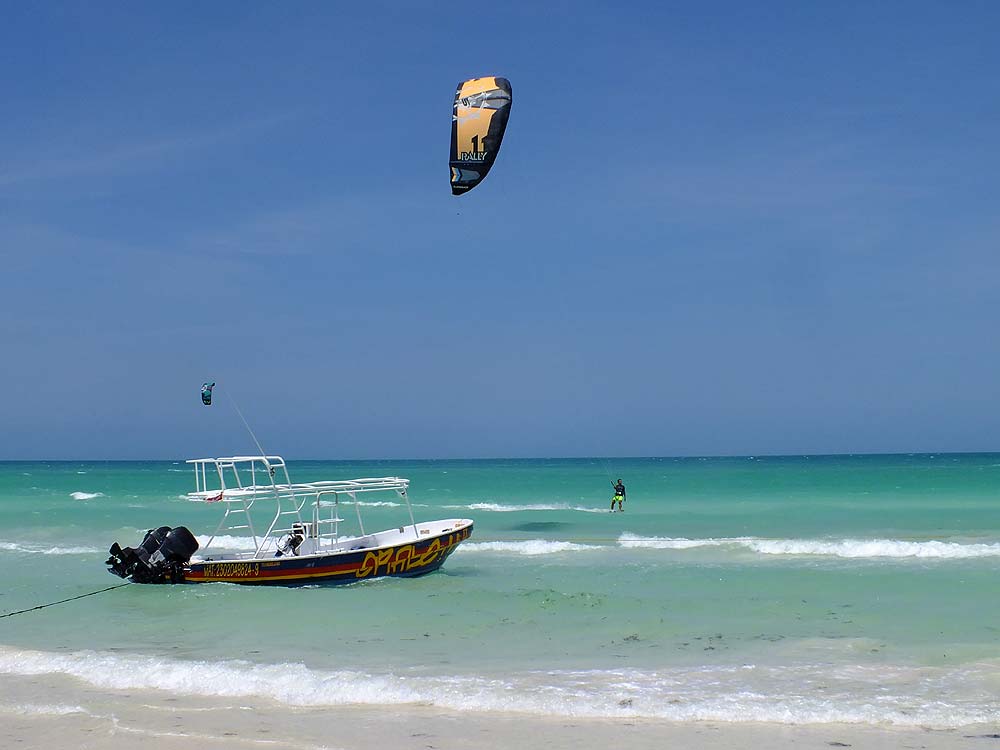

El Cuyo
El Cuyo is located in the very north of the Yucatan Peninsula. Open Street Maps recognises exactly one POI in this small, sleepy fishing village at the end of the world: “Iglesia”. The pampas between the last town of Tizimin and El Cuyo are supposedly also crossed by buses and collectivos, but so rarely that I need a cheap taxi for the last 85 kilometres.
Even during Semana Santa, it is no problem at all to find accommodation here. After five minutes I have a small, cheap hut on the beach. I am the only gringo among a handful of Mexican day trippers in the whole of El Cuyo. From the palm leaves rustling softly in the wind, a higher power whispers to me: “This is your task!” I shiver in 33° Celsius on the turquoise blue sea: “Huh?”. (more…)
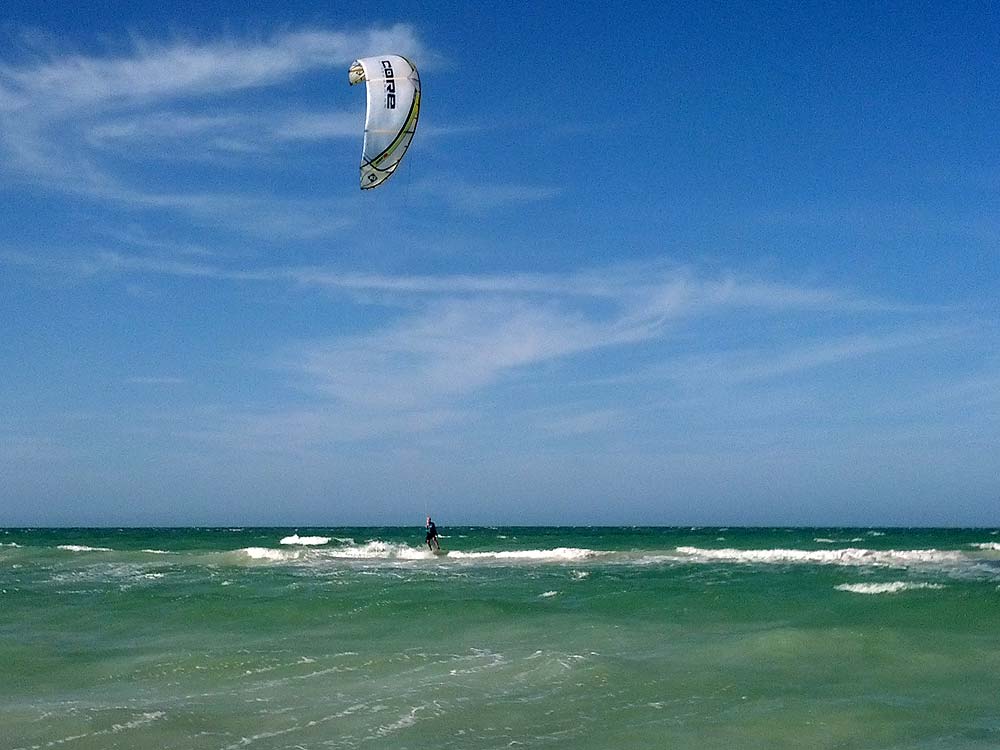
Tulum & Cobá
My Panamericana journey is coming to an end. Sicilia-Roomie Carmela takes me on a 10-hour journey from Belize to Tulum. Mexico’s southern border is at least as awe-inspiring as that of the USA. Yucatan is the Mallorca of Mexico: the two-lane highways have no potholes. Trucks and supermarket chains are American. At Easter there are more tourists here than inhabitants.
The marketing of the Mayan culture far outstrips the promotion of folk music in the Musikantenstadel. Everything here is Mayan: beer, shops, tours, hotels, even condoms. After the Conquista, the Mayans apparently caught the travelling bug. They emigrated to all corners of the world. That’s why today Mayan clothing comes from Bangladesh, Mayan stoneware from India and Mayan hammocks from China. (more…)

Do you Belize? Caye Caulker!
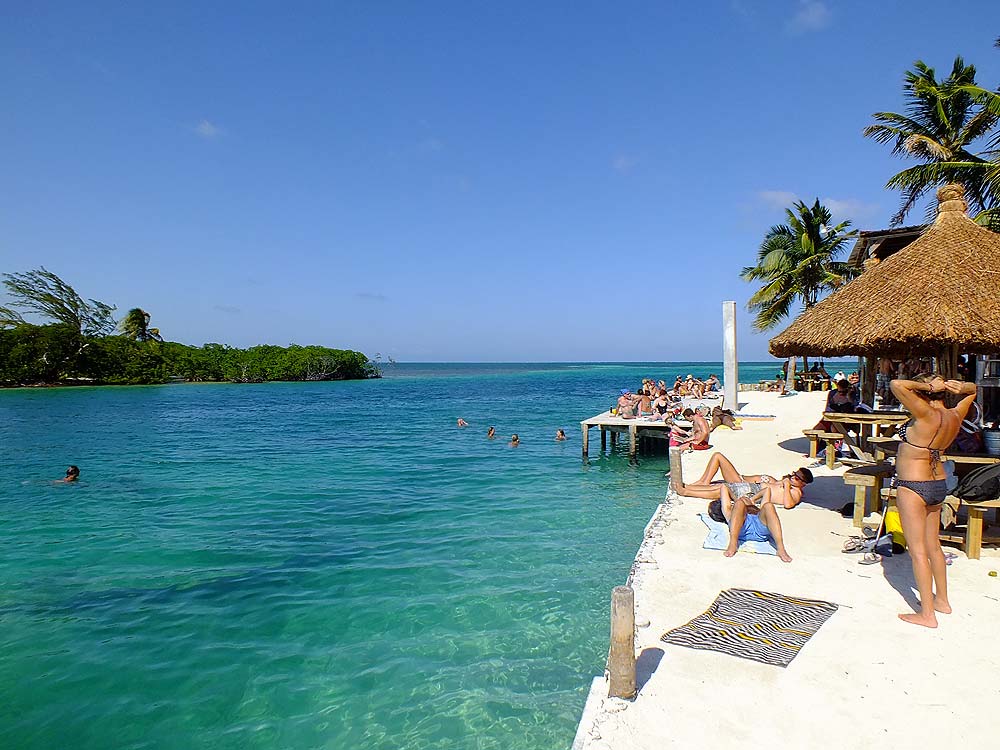
The speedboat takes you 40 kilometres out into the Caribbean over turquoise blue, smooth water. The cayes off Belize City are small reef islands and the melting pot for all international travellers between Alaska and Tierra del Fuego. The Pan-American Highway clearly runs over water here.
Caye Caulker is small. At just 1,500 metres by 500 metres, the houses are stacked high and narrow. There is hardly any open ground; countless bars and restaurants ate it up a long time ago. The only open spaces are the sandy streets, a football pitch and the cemetery. (more…)
Washing day & border triangle
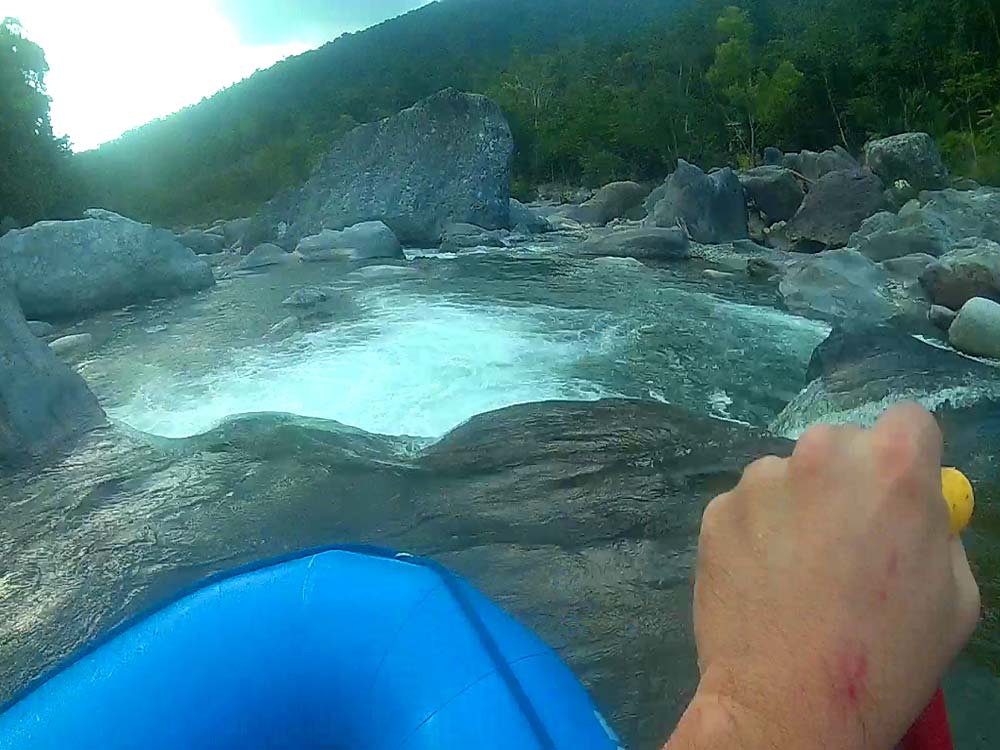
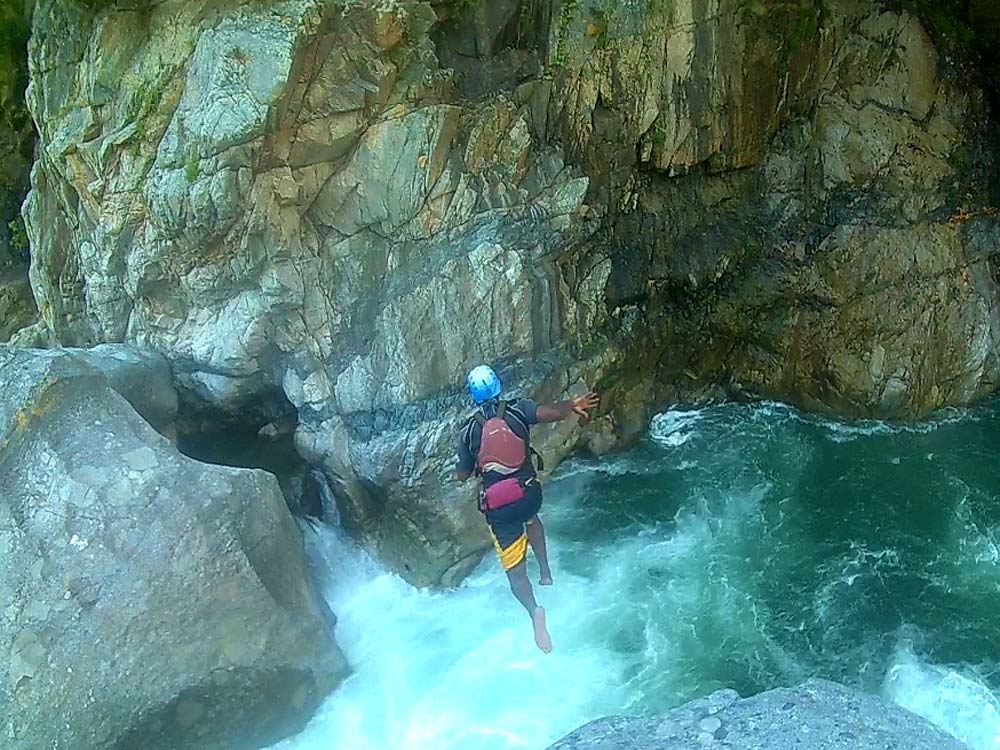
The Rio Cangrejal is considered one of the best white water rivers in Central America. In the rainy season, it is often impassable for weeks, when the water flows over five-metre-high stone giants. Now, in March, it is good for canyoning, a few high jumps into cold whitewater pools, some rafting and a proper full wash.
The protective wall at my hostel in La Ceiba looks like a cross between a velociraptor and a German hunter’s fence. It has certainly taken down numerous bad guys – even though its hunting ground lies within a gated community. Honduras remains the second of the 80 countries I have travelled to that has permanently frightened me. (more…)
Km 4.376: The Pirates of Roatan!
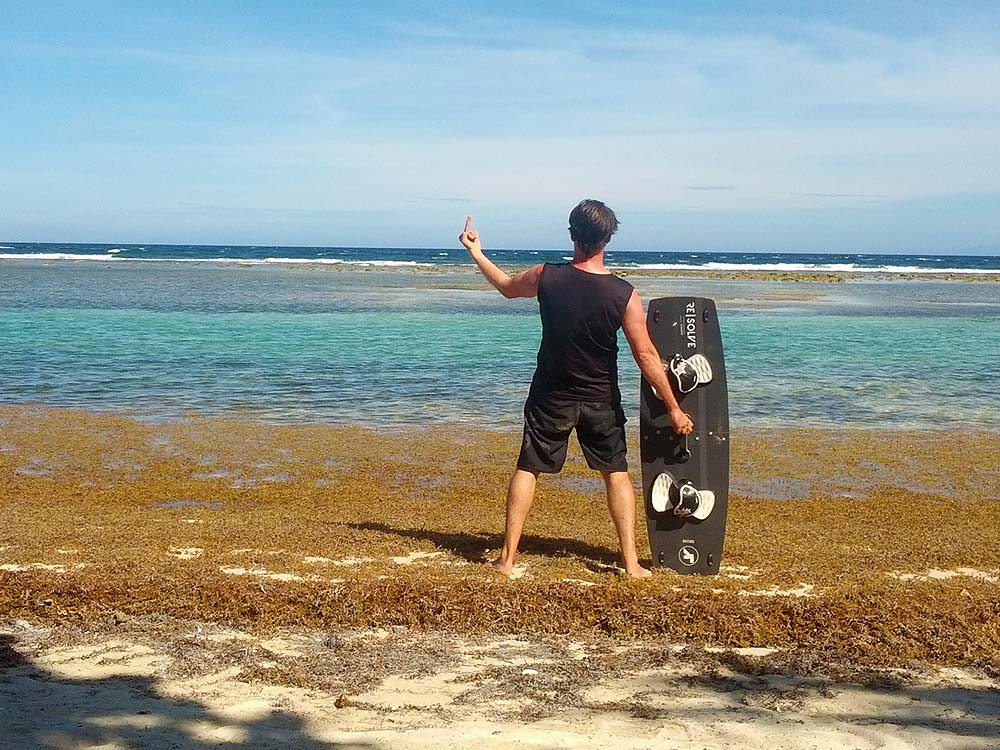
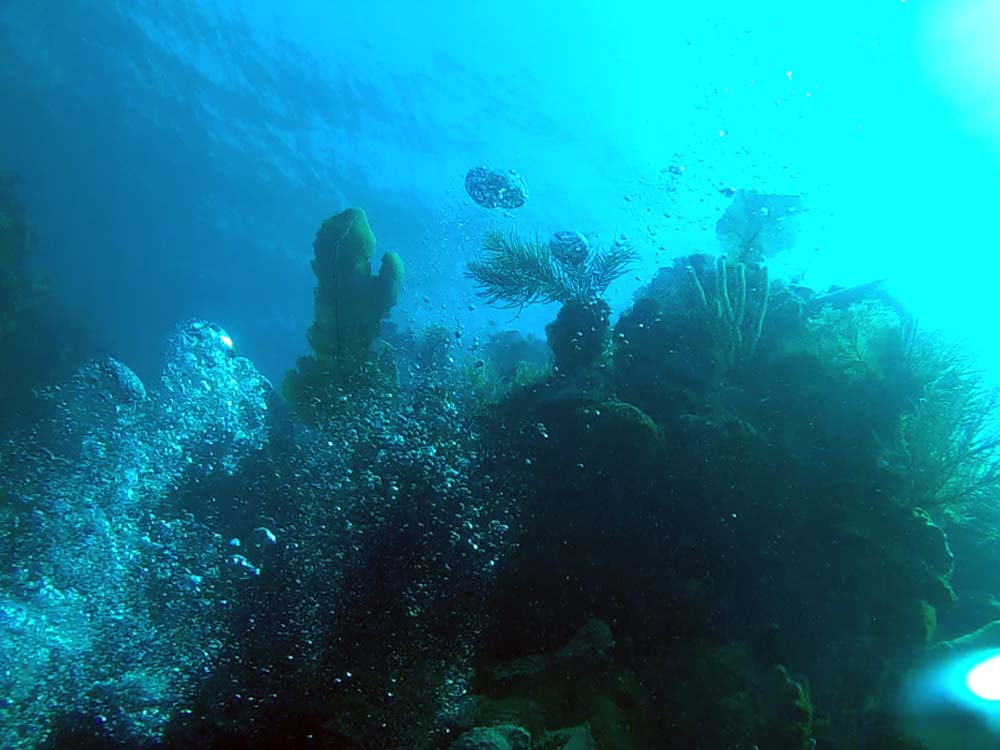
The impact on the old pirate island of Roatan is more than violent – and probably exactly what every pirate has experienced for hundreds of years: a small conspiratorial community beyond any law against the rest of the world, and a bottle of rum to boot! Today, the world voluntarily comes to the pirate island of Roatan. Unfortunately, they don’t realise how much more pirate than victim they are now. The English pirates once used Roatan as a base for their raids on the Spanish crown colony 50 kilometres to the south. Today we use it as the last wild west before sunrise. The capital of Roatan is named after the B-class pirate Coxen. The “Hole” behind it is the last bastion against the property mania. Blackbeard grabs Gilette and robs whatever the gringo’s greed for a slice of pirate paradise will allow. (more…)
Honduras Roadkill
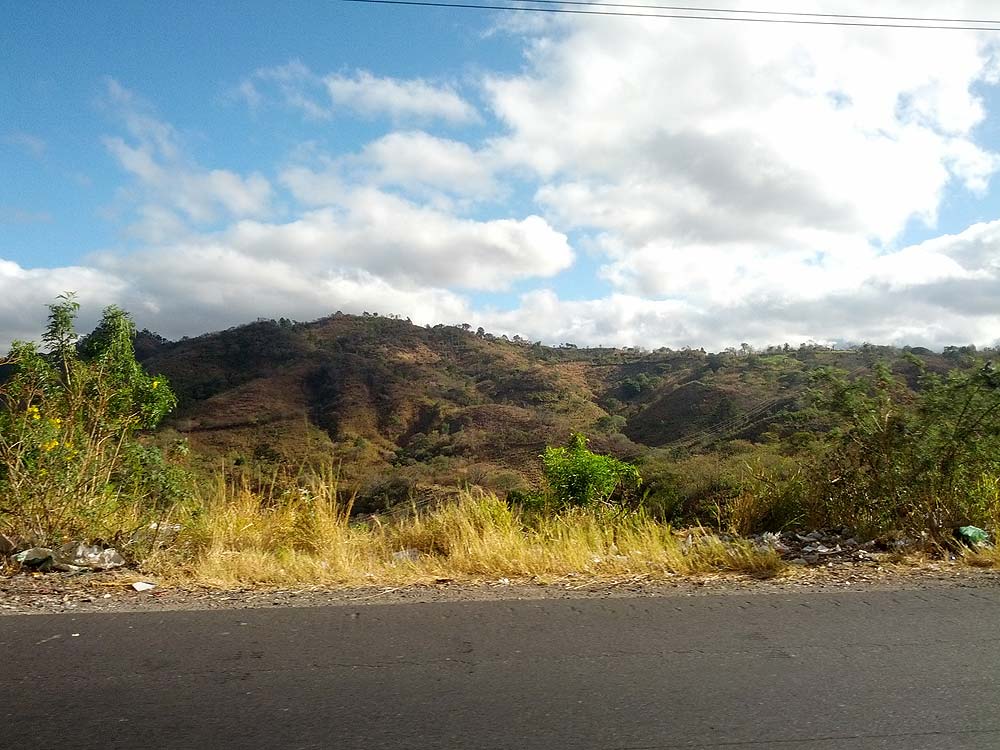
Our 750 kilometre road trip across Honduras begins at two o’clock in the morning near the border in Leon, Nicaragua. I don’t pay much attention to stories. I’m travelling. Searching for the truth. And then write about it. Honduras is the second exception in the almost 80 countries I have travelled to so far. Without exception, every story about Honduras advised against a three-day journey by public bus.
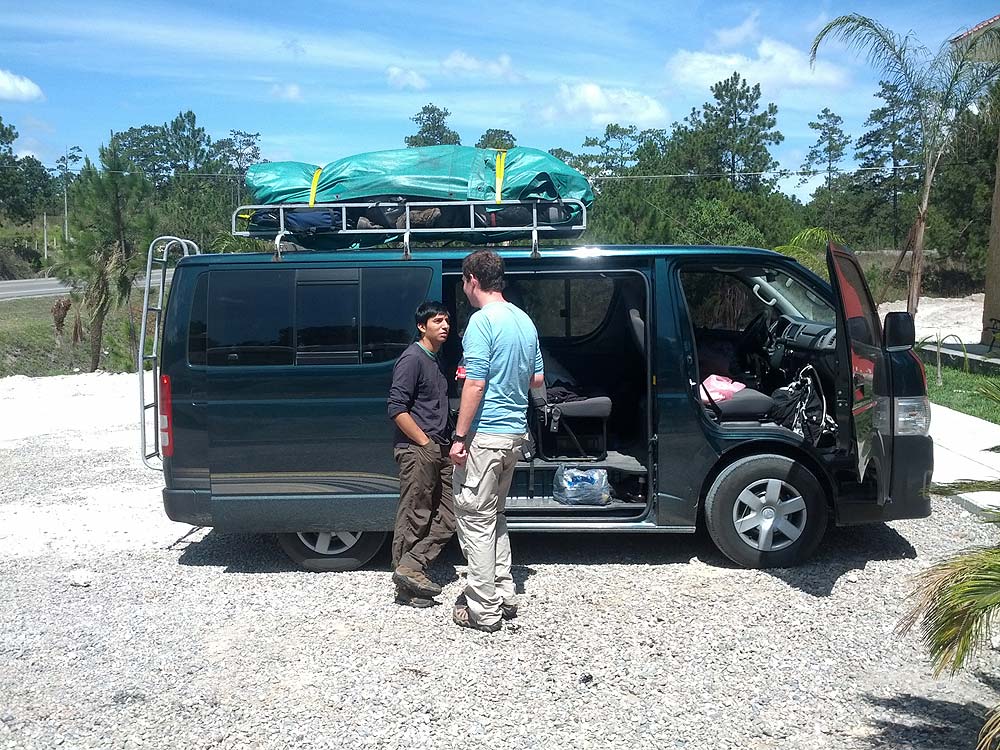
I book a non-stop trip by minivan for $80. At the border to Honduras, the roof luggage is given a rain cover at five in the morning. A well-travelled Yank teaches me better: “If there wasn’t a tarpaulin over the luggage, it would be stolen straight off the roof at traffic lights,” he tells me, while I exchange a few dollars at the usual border dung rate with a man with a ten-centimetre bundle of lempiras. (more…)
Leon: Long live the … what?
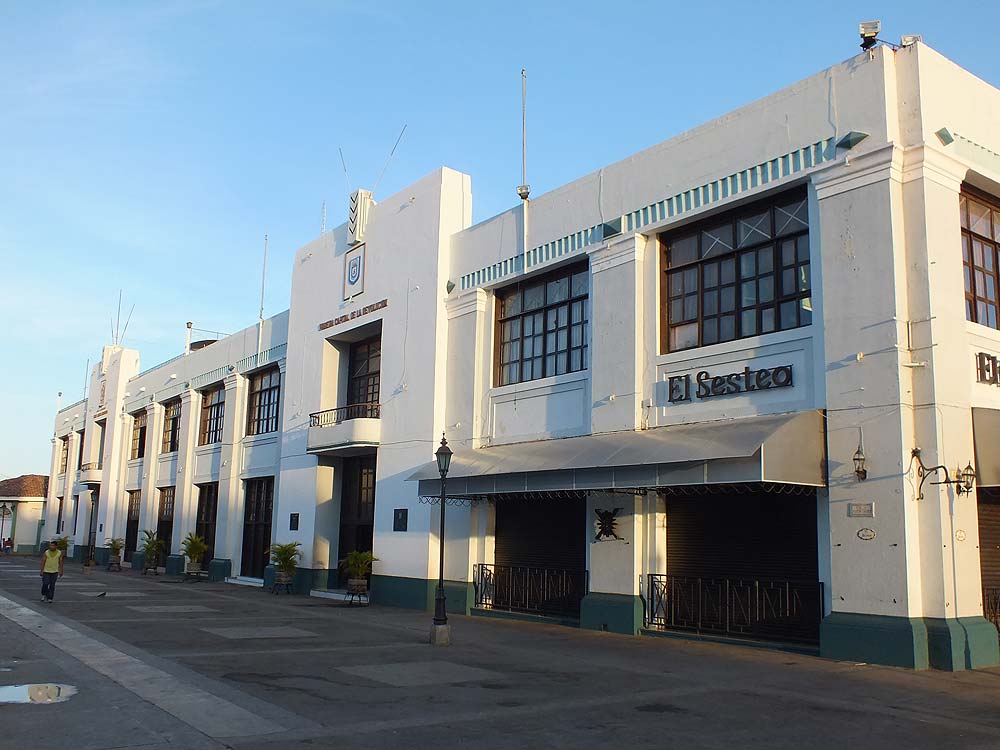
You certainly can’t understand a country in ten days. But I had hoped to recognise at least the beginnings of its soul. But Nicaragua didn’t make any sense to me. On the contrary. I am more confused than before.
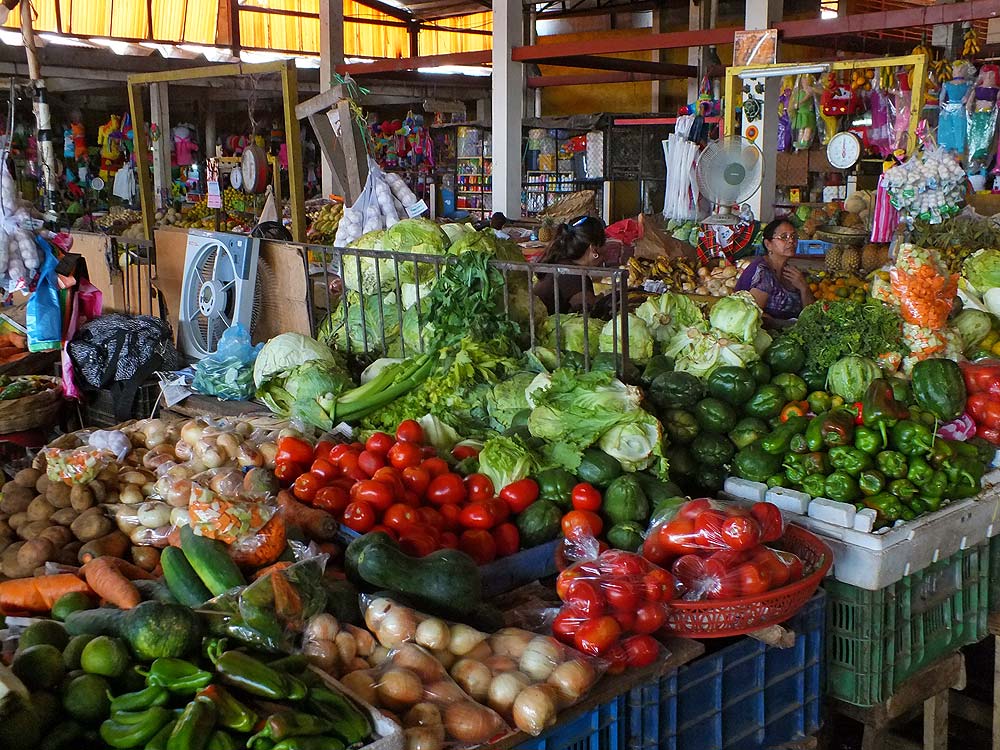
Nicaragua is like its restaurants. There are at least 100 dishes in each one: pork, beef, chicken or fish, combined with rice, chips, beans or vegetables. An endless, tiring, meaningless variety. You always wait at least an hour for your food, while five waiters stand around bored. Then the food is served cold and you wait another half an hour for the bill. (more…)
Nicoya Soulsister
With some people you plan journeys for eons. Other travelling partners find you within moments. Both have one thing in common: you have no idea where the journey with them will take you. Real travelling is always unplannable, open and without a destination.
I’ve grinned 17 Thai ticks to death, talked 24 Egyptian vultures to sleep and sung at least 32 Filipino karaoke guys to death, but it’s in the pushers on the Nicaraguan border that I find my masters for the first time. On the 800 metre walk between Costa Rica and Nicaragua, an ever-changing swarm of at least five eloquent shithouse flies accomplish the masterpiece of taking a whopping $60 out of a globetrotter’s pocket instead of the necessary $20. (more…)

Ometepe
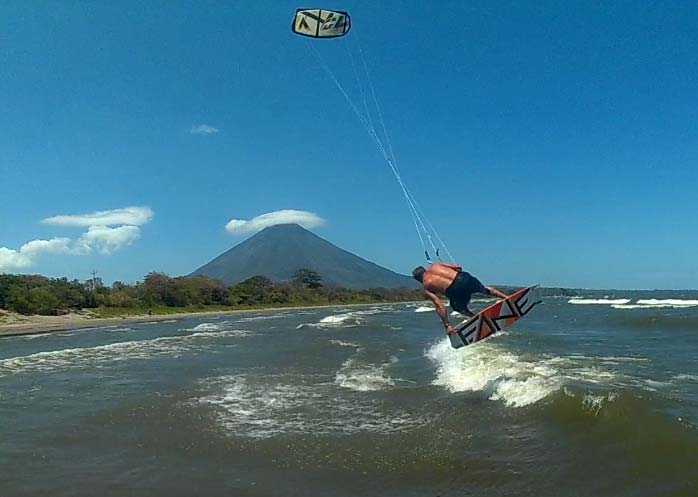
The island of Ometepe, located in the middle of Lago Nicaragua, is the biggest surprise of my Pan-American kite trip so far. In Costa Rica, everyone said the wind on Ometepe was much weaker. It is almost as strong. On five out of five days, I was mostly on the water with the nine kite.
In the morning, the wind usually blows very laminar with 20 to 25 knots side-on from the right. It likes to take a siesta at midday. In the afternoon, it freshens up considerably to 35 knots. In the evening and at night it blows violently. Santo Domingo beach is the only kiteable beach on the whole of Ometepe. I circumnavigated both volcanoes on the Enduro on 80 km of gravel track. (more…)
Km 2,256: Dance Dance @ Bahia Salinas
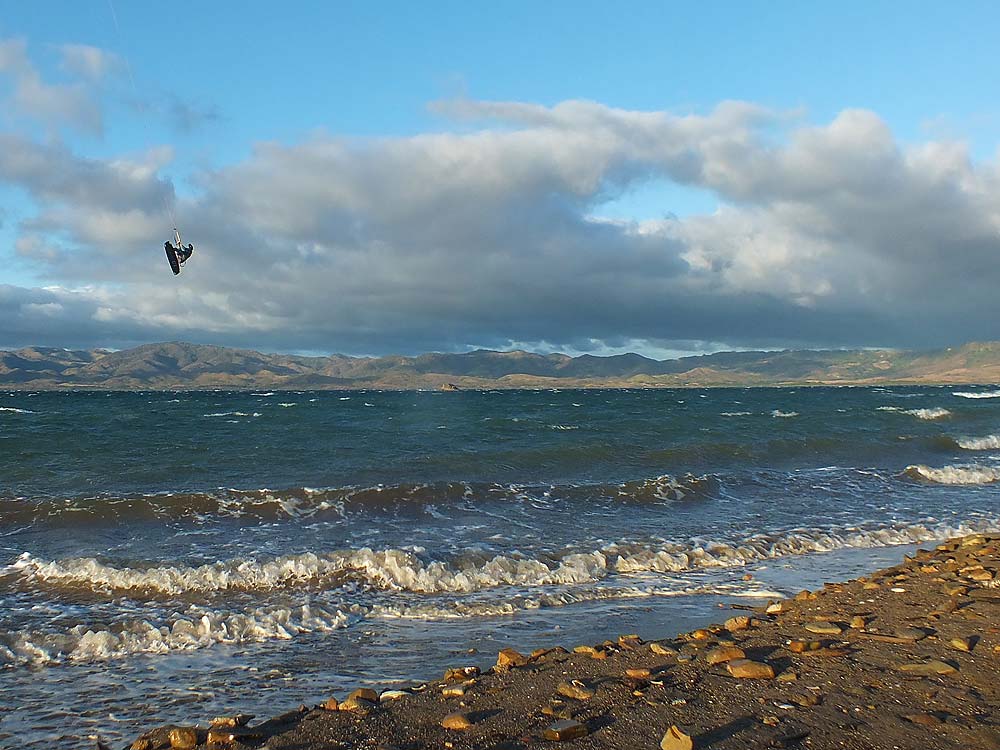
I open the car door a crack. The wind immediately snatches it out of my hand. When an old bony tree dies in the dry steppe here, it simply collapses in the strong wind. Our beach house is 300 metres from the spot and has room for eight people. As the only guests, we decadently treat ourselves to separate bedrooms after three weeks of travelling together.
The wind in Bahia Salinas is the strongest I have experienced in 16 years of kitesurfing. It never actually blows at less than 20 knots – with gusts of often over 50%. At high tide, the beach is completely gone and there is only a small dusty spot to launch from. (more…)
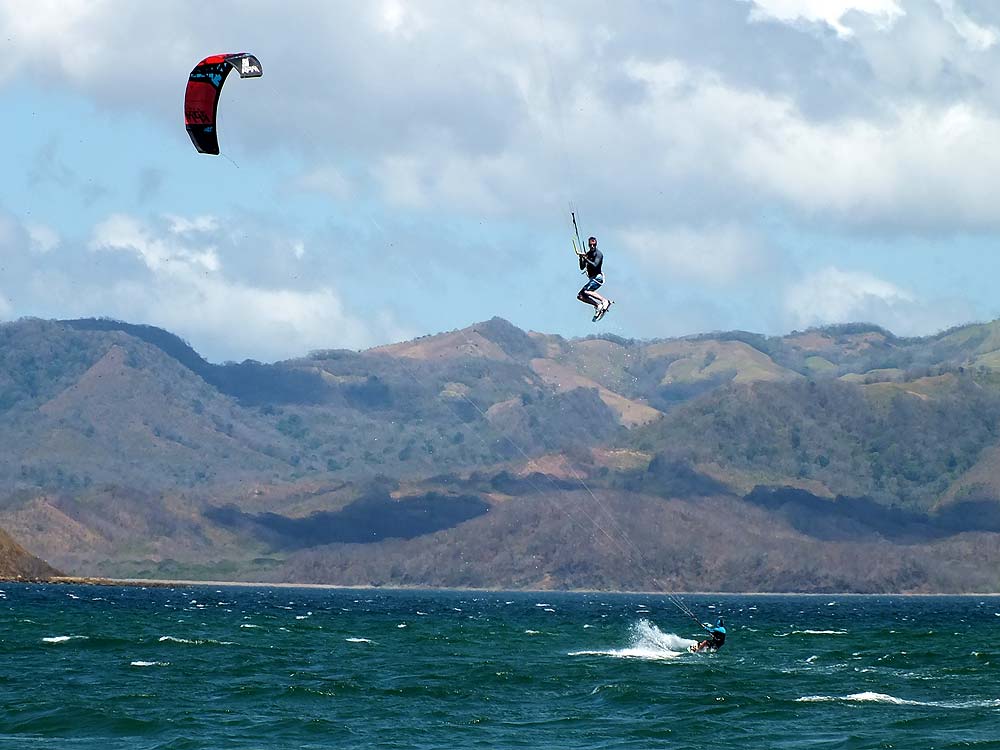
Playas Del Coco
Playas del Coco surprises us. Actually, we were just looking for a suitable stretch of coastline where the wind comes sideshore. We find a nice little village in a beautiful bay on the Pacific. Our hotel with a huge room is right on the beach, and there’s already a bit of wind blowing on the beach when we arrive. The bars and restaurants are not too crowded and the village is a pleasantly Rastafarian-free zone.
The next morning, the wind doesn’t really get going. We drive a few kilometres by car to the more north-facing, secluded Playa Panama. (more…)


Costa Rica is killing me…
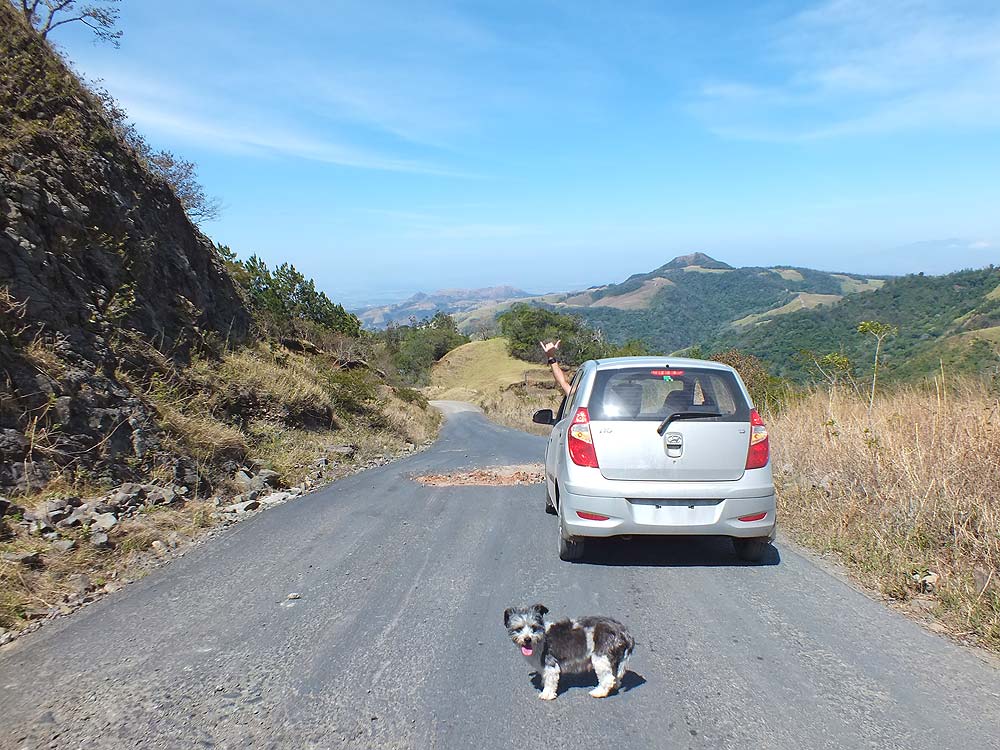
After almost 1000 kilometres on the Caribbean side and through the Costa Rican highlands, we rejoin the Panamericana. The road from Laguna Arenal was marked normally on the map. It takes us two and a half hours to drive the last 40 kilometres of steep gravel road down to the Pacific. Some local residents said it would be impassable with our car.
The Panamericana takes us another one and a half hours to the tourist centre of Jaco, 100 km to the south. The grubby surfer hostel right on the beach offers free surfboards, but waves without wind are just not my thing. (more…)
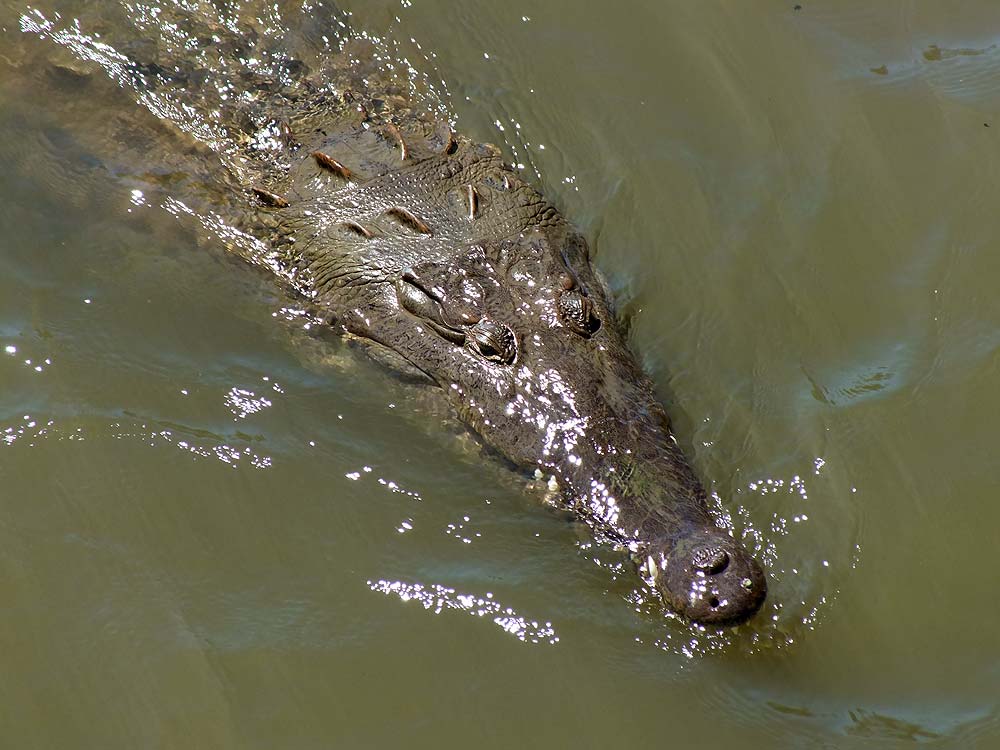
Kitesurfing @ Laguna De Arenal
The north-east trade wind only accelerates by five to ten knots on the last three kilometres of the 40 km long reservoir. The hot dry steppe of Guanacaste sucks the cooler, humid air masses from the highlands north of Laguna Arenal sideshore over the ticowind.com station.
The only possible launch site can only be reached via a 1.5 km long dirt track. After heavy rainfall, driving there without a 4WD is borderline. Before we arrived, it rained non-stop for two days. (more…)
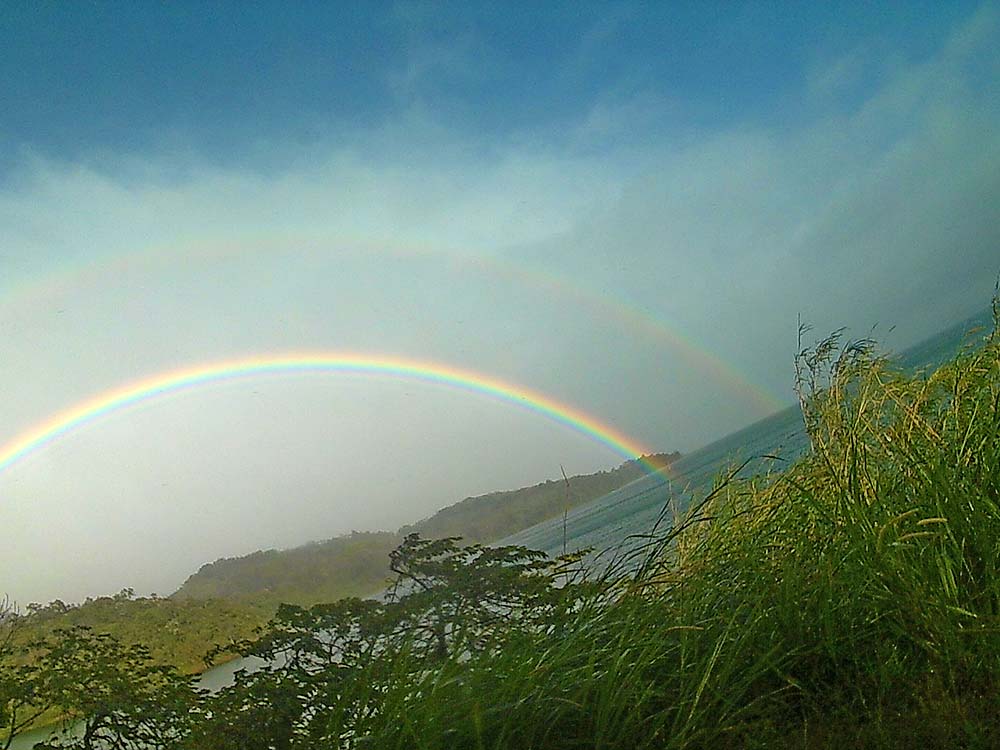
La Fortuna: Rien ne vois plus
The Inuit may not have 17 words for snow, but the Ticos know 21 words for rain – and one for fate. During our two days in La Fortuna, we see the Arenal volcano up to an altitude of 20 metres, despite two days of continuous rain, and dripping mud monsters return home from hikes.
The number of five-star resorts is only surpassed by the price of drinks. Six US dollars for a can of beer is a top value even in expensive Costa Rica. There is nothing that is not available here: Rafting, zipline, hot pool, night hike, horse riding, mountain biking, quad tours and, of course, volcano climbing. (more…)
Irazú Volcano
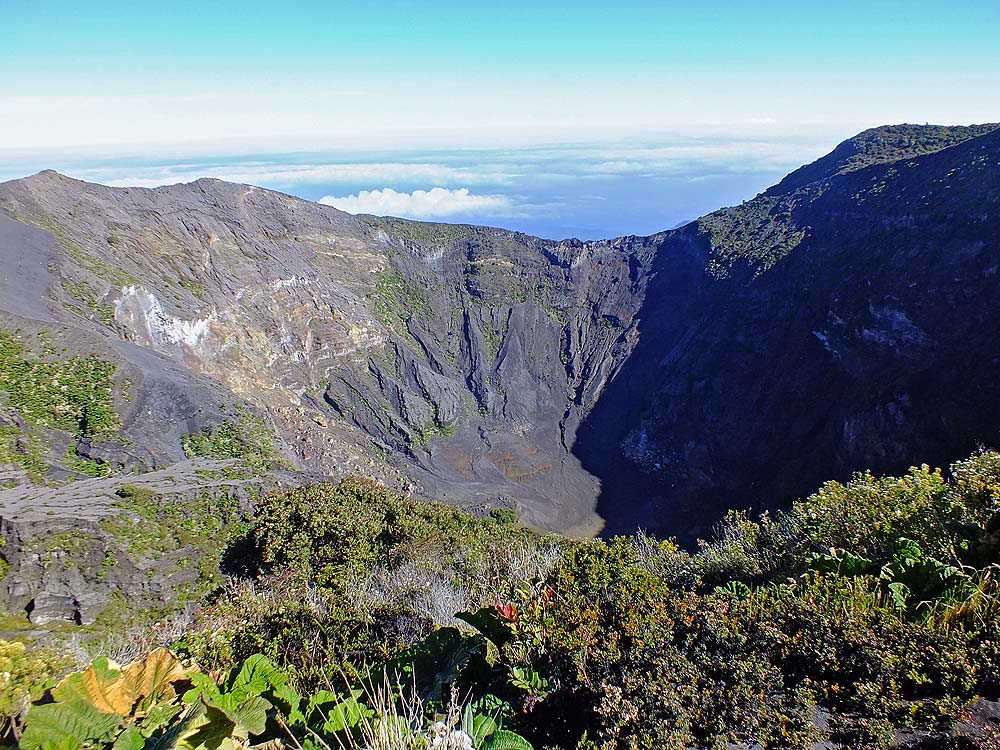
At six in the morning, the rain clouds hang low over Orosí. The ascent to the 3,432 metre-high Irazú volcano, a good hour away, seems to be a washout. Unexpectedly, however, the thick cloud cover breaks up on the way. When we arrive at the gate to the crater at eight o’clock, after a heavy heat-up among the first cars, the weather is perfect. La Brass Bande disperses above the clouds.
Parking on the Irazu volcano is only permitted in reverse. The last eruption was only in 1994, and for an entrance fee of $15, the safety-conscious traveller can expect perfect evacuation preparation. At the edge of the caldera we find the height of Costa Rican smoking racism: the Ticos have declared the entire volcano a smoke-free zone. A hilarious affront that we can’t possibly ignore. (more…)
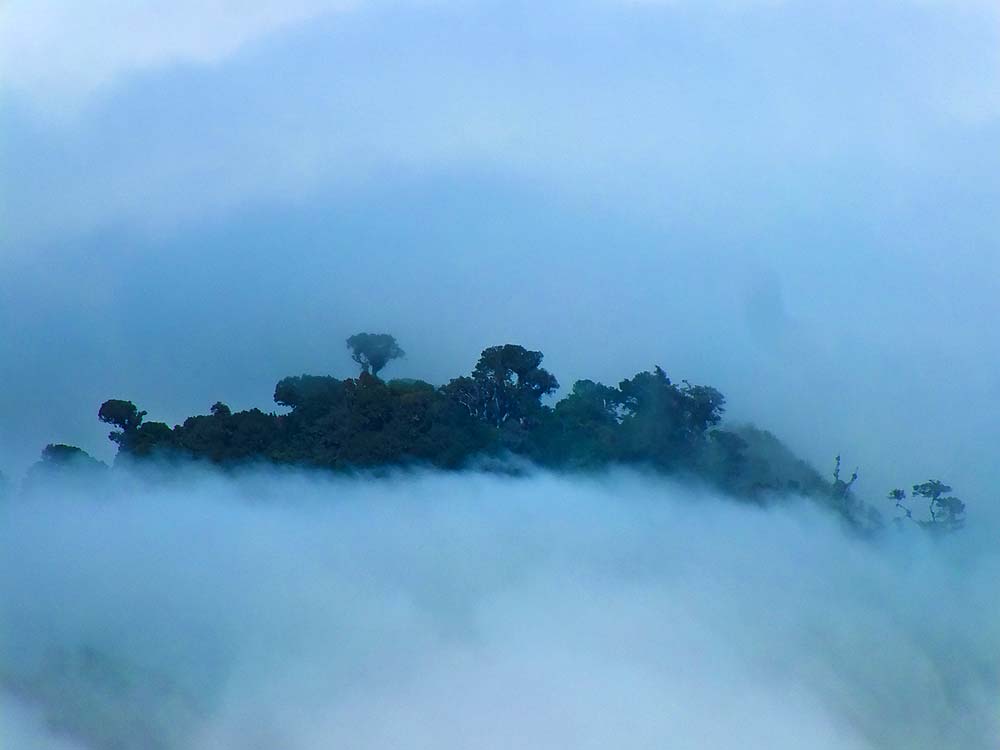
Wet pants in Puerto Viejo
We pull our kitebags across the border to Costa Rica on an old railway bridge with holes in it. The formalities are minimal. Hamburg didn’t let Condor’s crap flies on the plane under the false pretence that their return ticket had to be from the same country. No border guard wants to see the flight tickets here.
The first stop in Costa Rica is Hippie-Central Puerto Viejo, a somewhat too relaxed little surfer village on the Caribbean side. The non-pot smokers are a radical minority here, with teetotallers on the red list. The Rastas smoke weed everywhere and all the time. Not taking the plug out of your mouth when a police car drives past is good manners here. (more…)
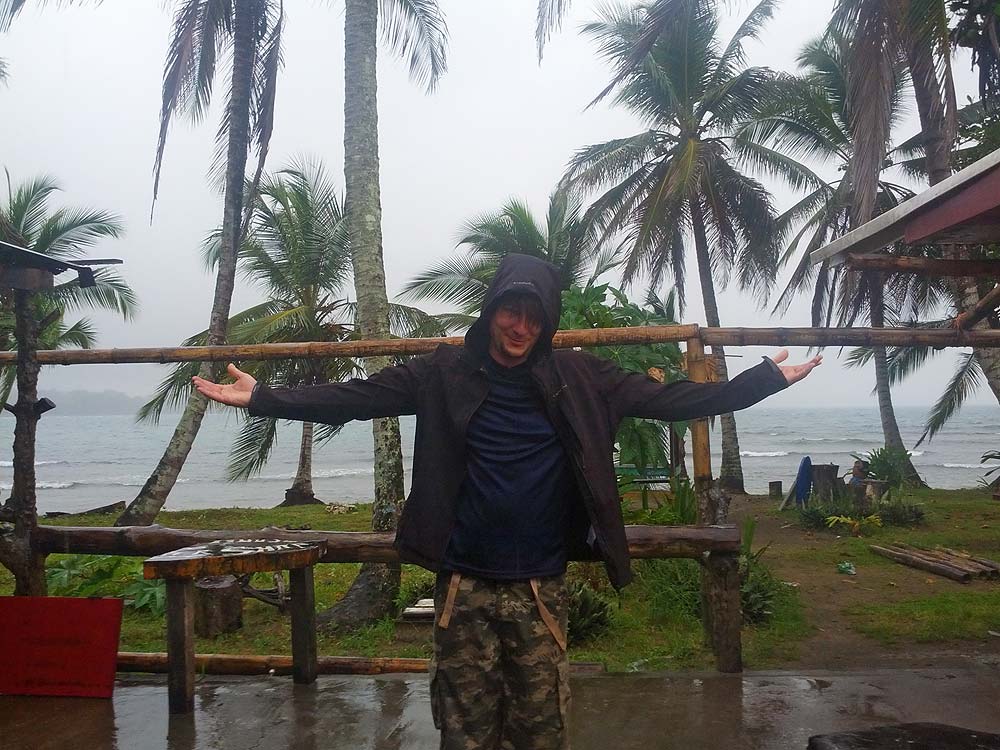

Rastafari-Smurf-Village: Bocas del Toro
We leave the Panamericana for a few hundred kilometres towards the Caribbean. The route takes us a good 200 kilometres over the mist-shrouded rainforest mountains of the Reserva forestal de fortuna, which are up to 2,200 metres high, down to the Bocas del toro. The boat takes us a few kilometres further to the island of Colon. Every backpacker between Alaska and Tierra del Fuego stops here.
We reach the Rastafarian smurf house at sunset. It smells of money, grass and hibiscus. The wooden houses are endlessly colourful, some in ruins, some in need of renovation and form a wonderfully uniform whole. Bukowski would have loved our hotel room: dark, musty-sweet, but unbeatably cheap and in the centre of dozens of bars. (more…)
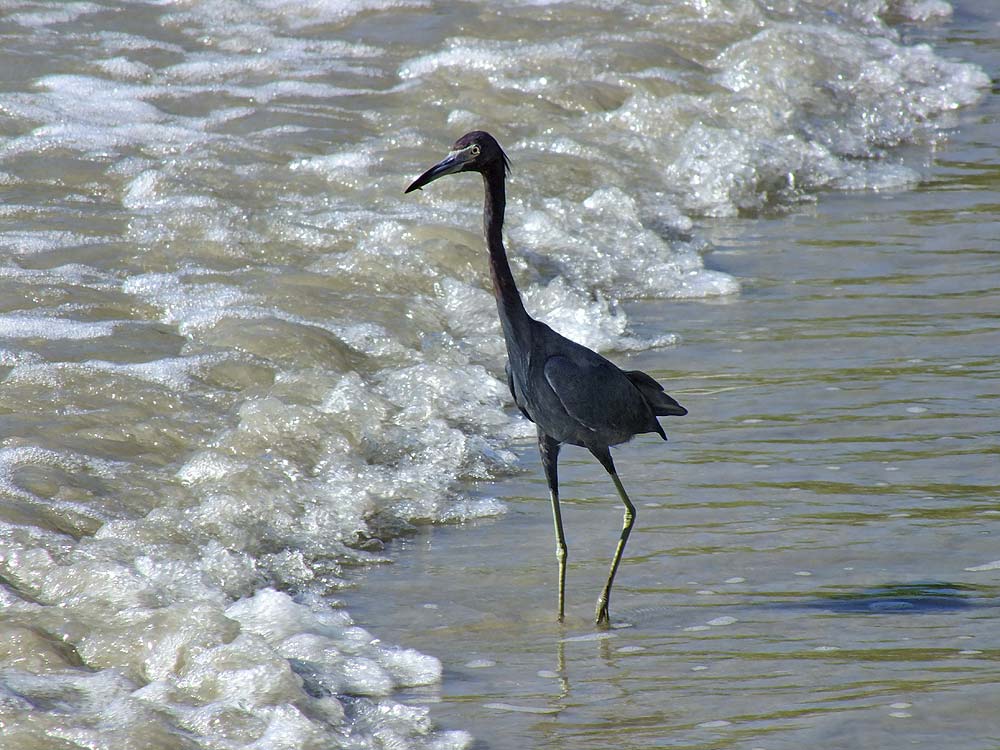
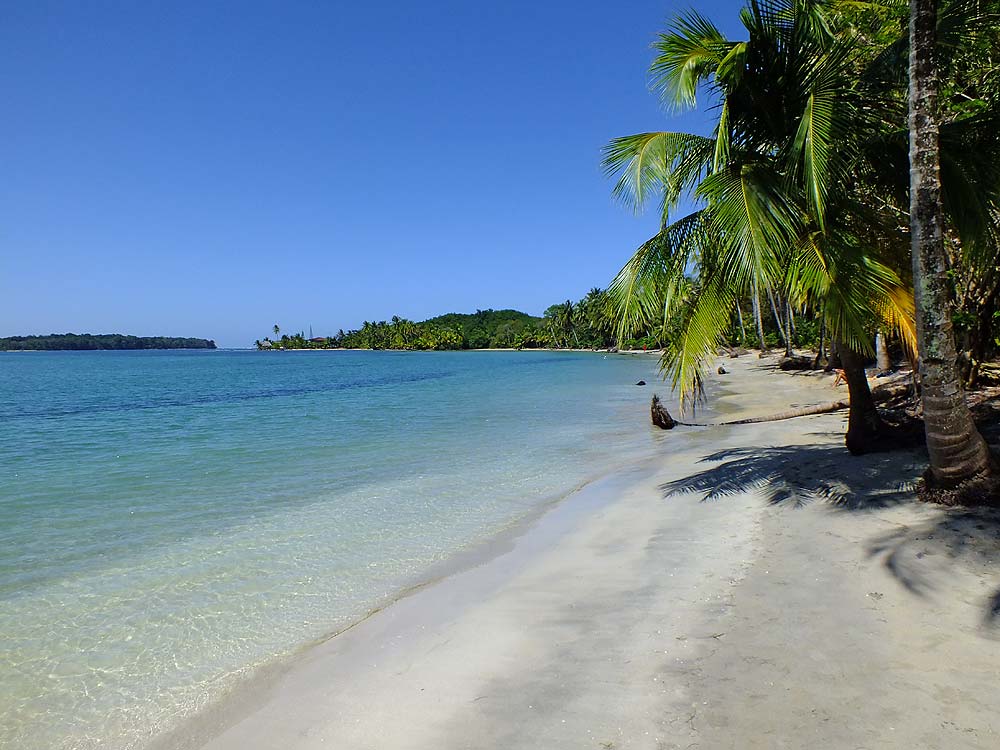
Panamericana, km 532: Boquete
The Panamericana is the monster truck of the world’s roads. The thinness of the thread stretching from Alaska to Tierra del Fuego makes it the time-honoured grande dame of the road trip basics. Ewan McGregor rode it south on his motorbike. We headed north with our kites.
On the first morning of the trip, my first destination was the exciting Puente de las Americas across the Panama Canal. Today it’s Boquete at the foot of the 3,500 metre high Barú volcano in the north of Panama. Km 532. Ten hours, four buses and a nice Panameño north-west of Punta Chame, I’m quite overwhelmed by the endless expanses. The Panamericana has bitten me for the first time. (more…)

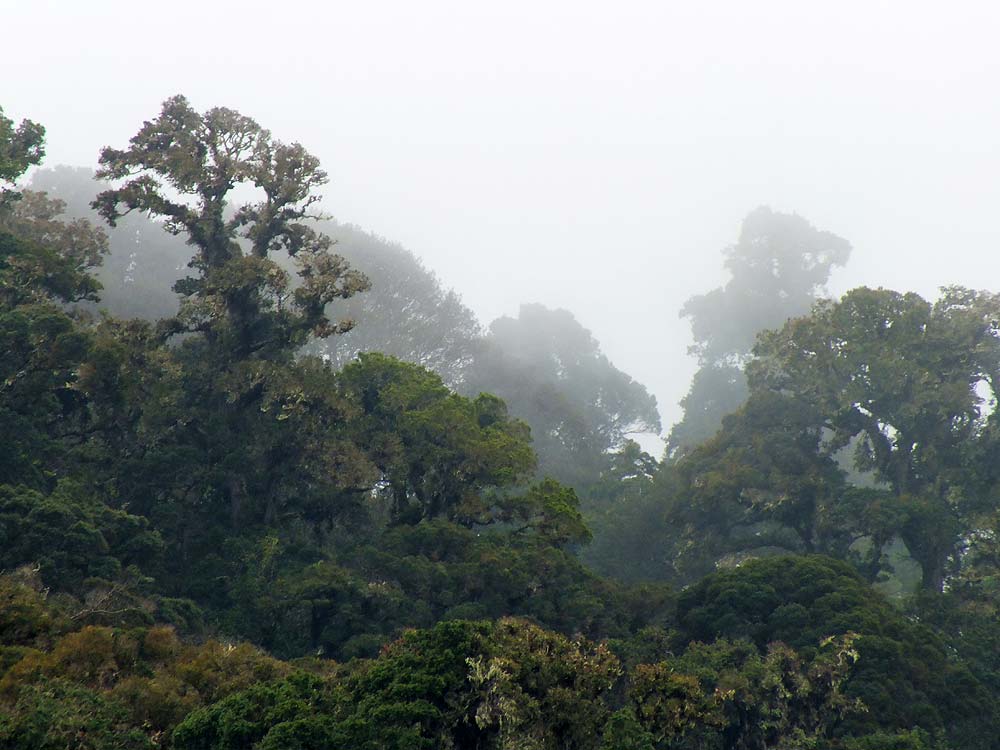
Punta Chame
John Wayne once had an island around the corner. It is now Disneyworld. Punta Chame is different. Situated at the end of a long peninsula 100 km north of Panama City, the lonely empty holiday homes of rich Panamenos withstand the strong winds. The stoner Belgian cook from our French fazienda drags us along to a kiteboarding party at the end of the road.
The glossy apartment block with Jaccuzi is empty during the week. The reggae is reminiscent of the rooftop bar on Cape Verde, but the grass smells much better. I quickly consider Jack Nicholson as a possible neighbour. I successfully combat the feeling with rum, which is the Spanish word for “grandad”. Until an Ansbach perma-traveller with a butcher’s knife pulsing in lemons tells me I’ve just eaten shark. (more…)
Oh how beautiful Panama City is!
Ghandi was not so wrong. Life is suffering. But he forgot to add that this is what makes the beauty in between shine. He would certainly have liked Panama City. Here, the latest glossy skyscrapers stand next to a completely dilapidated old town, a UNESCO World Heritage Site. At seven in the morning, the sun shines pale on empty building shells supported by steel girders.
After the tour through the Casco Antiguo, I walk a few kilometres further up to the Punete de las Americas. This is where the Panamericana motorway crosses the Panama Canal. At some point, the narrow left-hand pedestrian lane, which is never used, comes to an end. I cross to the other side and obey the many “no trespassing” signs. The canal belongs to the Americans, the bridge probably does too, and only Asterix should mess with Romans. (more…)


A conciliatory ending
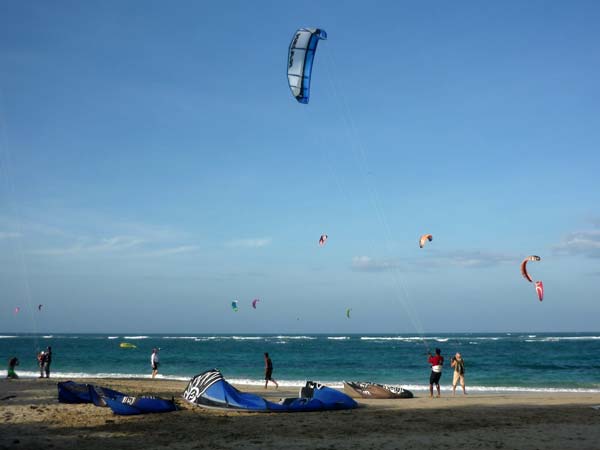
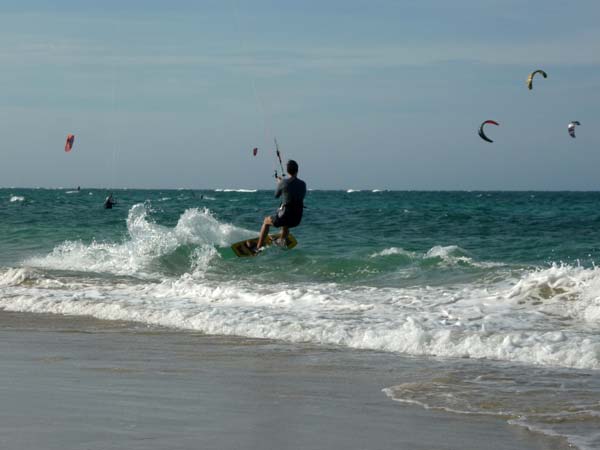
At the end of my last three weeks in Cabarete, the wind finally returns. Tentatively at first, a little breeze, but after six days of calm and rain, it’s a sign of things to come. From three o’clock onwards, a nice 20 knots are blowing on the kite beach. The wind is extremely gusty, the waves are mean, high and coming from different directions. But that doesn’t matter. The main thing is wind.
I keep going out to the reef and playing catch with the breakers. I escape all but one of them. It bites me on the bum and rolls over me. Nothing happens. When I surface, a fat turtle is suddenly right next to me and stares at me. Not the only one that day. By the evening, I must have seen a dozen large sea turtles. The oldest sea dweller meets the youngest. (more…)
Caribbean gloom
It has been raining almost non-stop for four days. Heavy thunderstorms cause rivers to overflow and reduce visibility to 50 metres a day. I take advantage of a short break in the rain to walk back to Cabarete from the absolutely windless kitebeach on the beach. It lasts until the halfway point, then I get a clean shower.
The kite camp is almost empty, all my friends have gone. There are currently only two of us here. The day before yesterday, Ali gave us a bottle of rum, which we completely emptied during a fruitless round of poker. After that I felt sick for two days. I’ve been working at least six hours a day for days, my holiday is over. (more…)

Poverty & wealth in Cabarete
Just a moment ago, I was happy about differences in opinions and views. Today, there is one difference in the Dominican Republic that really gets to me: The one between rich and poor. It’s not that it’s something new. There has always been poverty and wealth here. What strikes me now is the gap in between, which is widening dramatically.
The average per capita income has doubled in the last 10 years. 20% of the rich earned five times more, 80% of the poor half as much. What did José, the exiled Dominican on holiday, say? He had never seen so many Hummers and Porsches. The luxury castles are growing everywhere in Cabarete, but only rich foreigners live in them. The peso fluctuates unrationally in relation to economic power. (more…)

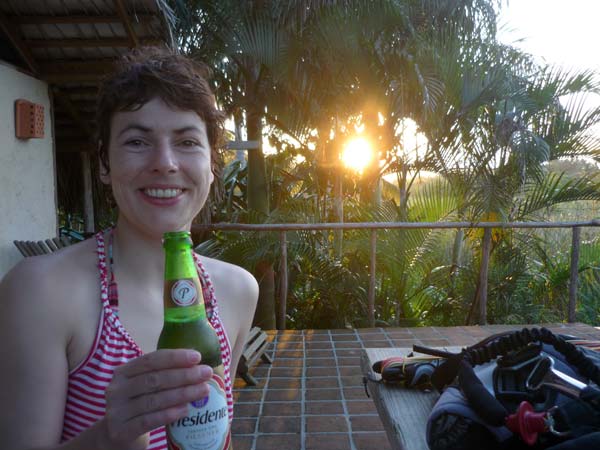
The Author
 Frank Woelky, born in 1973. Kitesurfer since 1998. Since 2006, I have been combining kitesurfing and web design on trips lasting several months off the beaten track.