

Our 750 kilometre road trip across Honduras begins at two o’clock in the morning near the border in Leon, Nicaragua. I don’t pay much attention to stories. I’m travelling. Searching for the truth. And then write about it. Honduras is the second exception in the almost 80 countries I have travelled to so far. Without exception, every story about Honduras advised against a three-day journey by public bus.
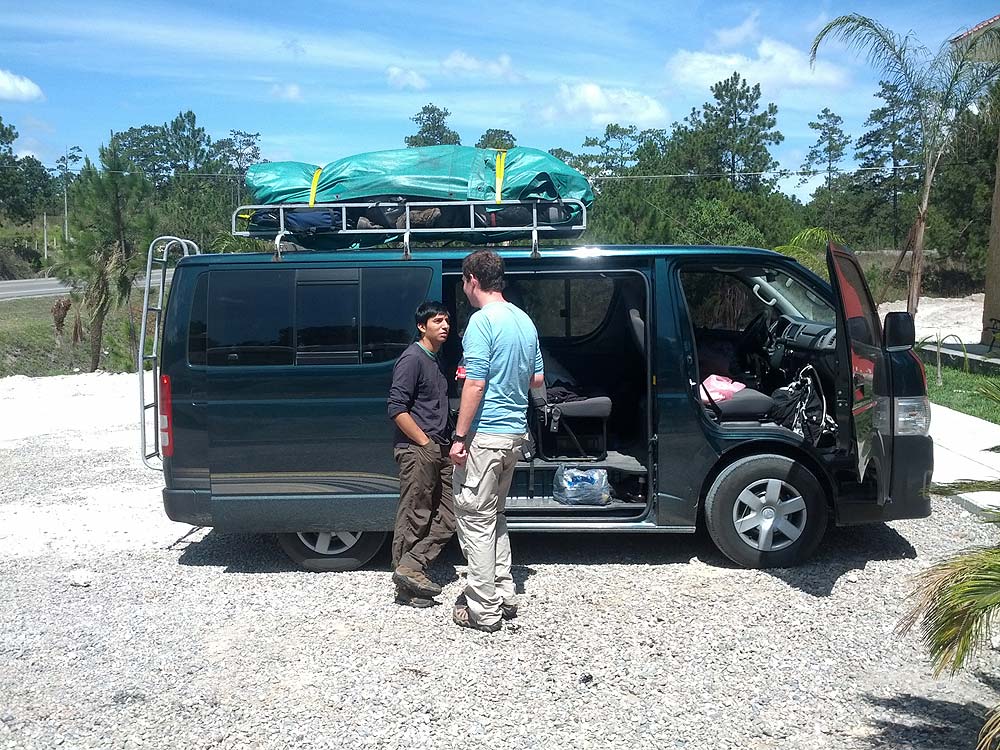
I book a non-stop trip by minivan for $80. At the border to Honduras, the roof luggage is given a rain cover at five in the morning. A well-travelled Yank teaches me better: “If there wasn’t a tarpaulin over the luggage, it would be stolen straight off the roof at traffic lights,” he tells me, while I exchange a few dollars at the usual border dung rate with a man with a ten-centimetre bundle of lempiras.
Just over the border, the road becomes a single slalom of potholes for 100 kilometres. The driver has carving tyres, the banging of heads against the windows is the alarm clock. At the bottom of a pothole, I think I can look an Uzbek straight in the arse, and every now and then a small car disappears into one, never to be seen again. But minivans are safe, they have a longer wheelbase.
The route leads up into the mountains and through what is said to be the most violent city in Honduras. The public bus station is also in the worst neighbourhood of Tegucigalpa. I happily ride through the Honduran mountains with ten other perma-silent travellers.
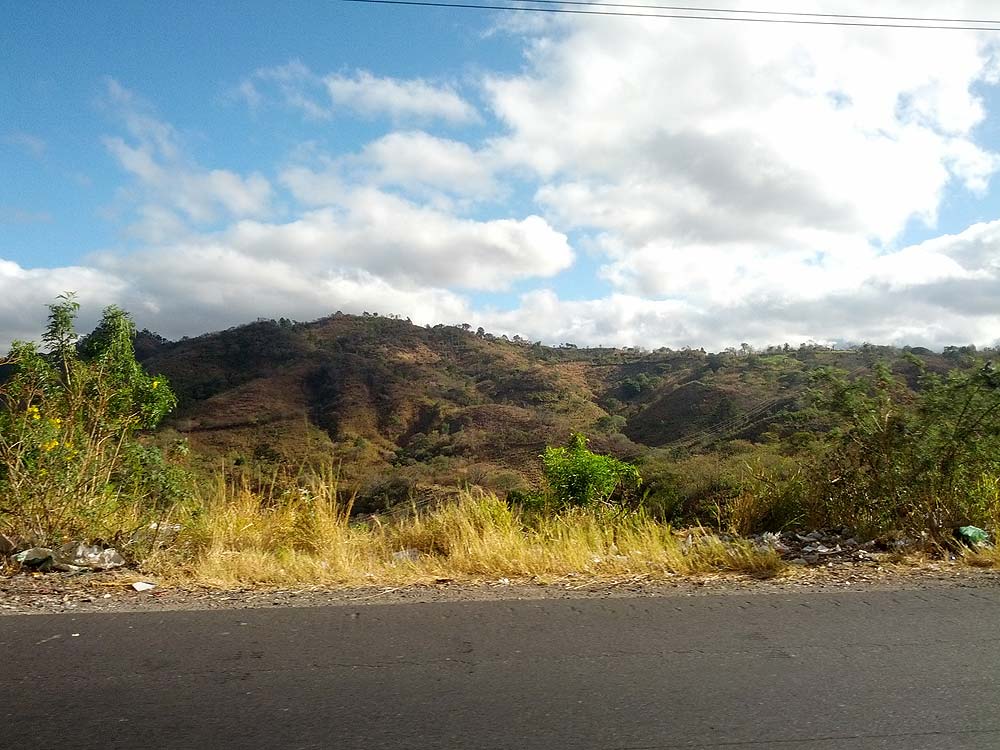
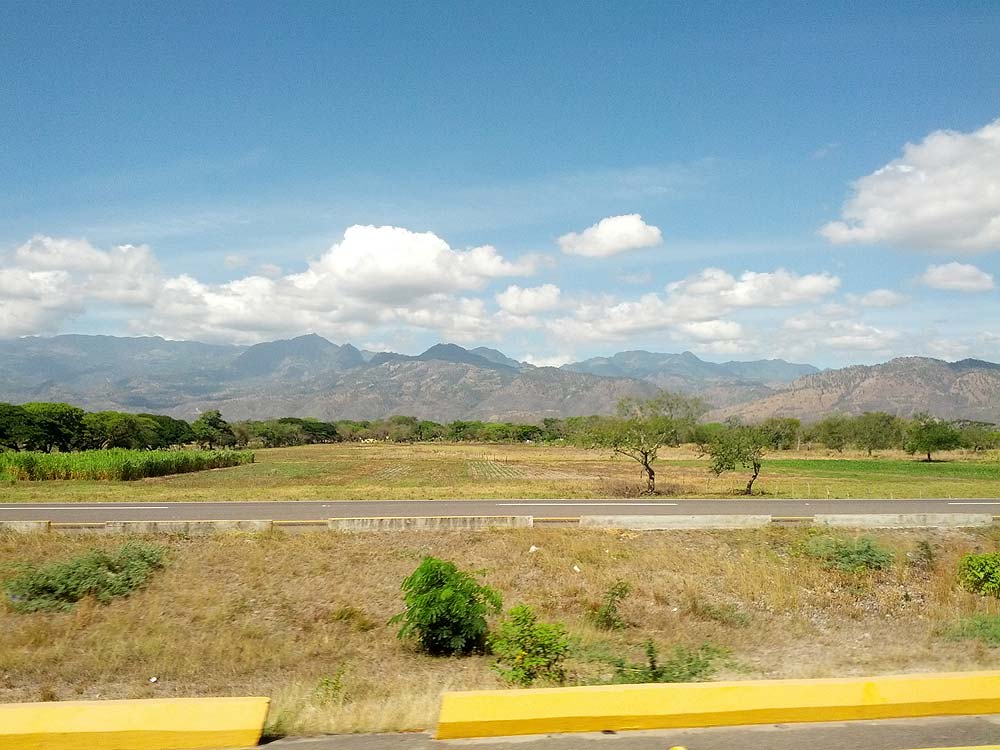
The mountains are varied and beautiful. Pine trees grow on the slopes, cloudy shadows brush over them, and at the blue Panamaca Lake there is even a good wind for kiting over green grassed launch sites. But what good is that? Due to the unique ability of Honduran suicides to dematerialise murder weapons post mortem, this country has the highest suicide rate in the world. Extreme sports become more boring than crochet competitions – and biscuit wanking becomes a morally impeccable leisure activity for the rural youth ring.
Honduras tells me its story filtered through the darkened bus windows: practically every house is a prison. All the windows and doors are barred. Schools are surrounded by high walls. The design-conscious upper classes like to add barbed wire painted pink on top.
Distances are best measured in tonnes of rubbish due to the pothole curves. One kilometre corresponds to exactly 836 kg of rubbish per side of the road, of course. In between there are tonnes of mangled car wrecks.
If you like action films, you’ll love Honduras. Squealing tyres come towards us in the other lane. At first I tense up a little. It looked like the truck was going to graze us. But it’s easy. Only rolled over a few times behind us in the other ditch.
The driver of the truck in an accident a few hours further on was less lucky. Even Evil Kneivel wouldn’t have got out of the wreck alive.
Our bus driver speeds along at a relatively moderate 130 km/h for nine hours and only forces two oncoming cars off the road while overtaking on a continuous central reservation. So only almost. It’s easy.
The truck driver overtaking immediately afterwards, on the other hand, was definitely a direct descendant of Ivanhoe: at well over 100 km/h, he rode between the lorry and the oncoming lane occupants by a hair’s breadth. Nobody honks. Bored residents watch the tournament between smoking rubbish fires. It’s easy.
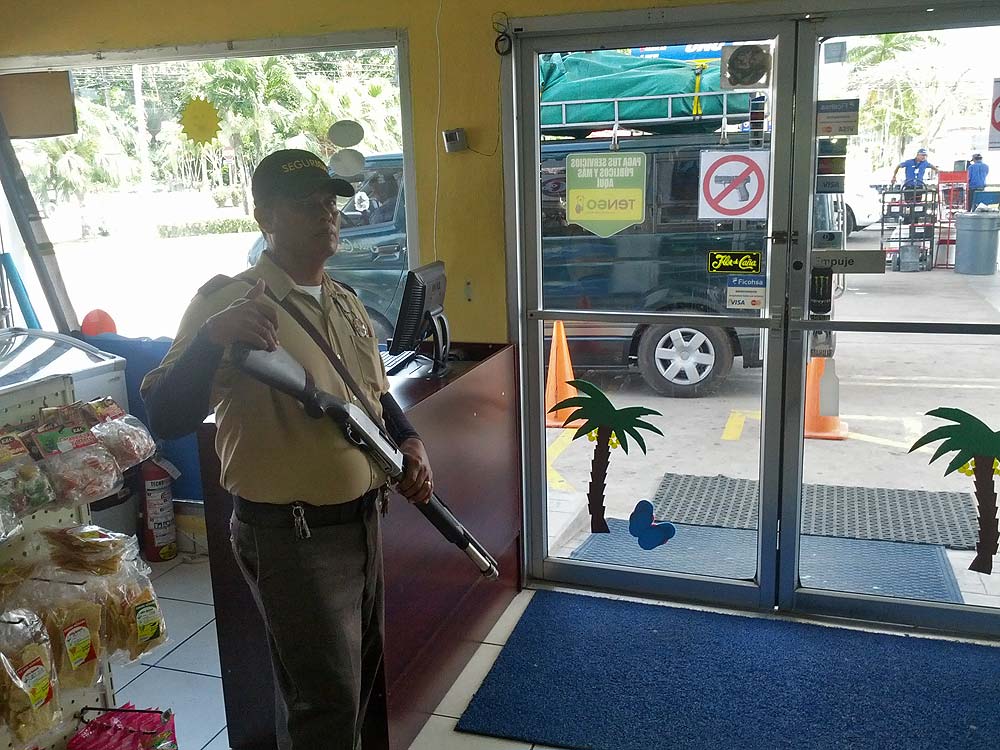
The third petrol station is again adorned with “No weapons” signs. The pump guns of the two guards behind them give me a sense of security. Before taking a photo of them, I ask for permission anyway, just to be on the safe side.
During a short stop in La Ceiba, supposedly the second most violent city in Honduras, I am somewhat confused by the panicked looks of the traveller monchichis from the bus interior while I heroically smoke a cigarette.
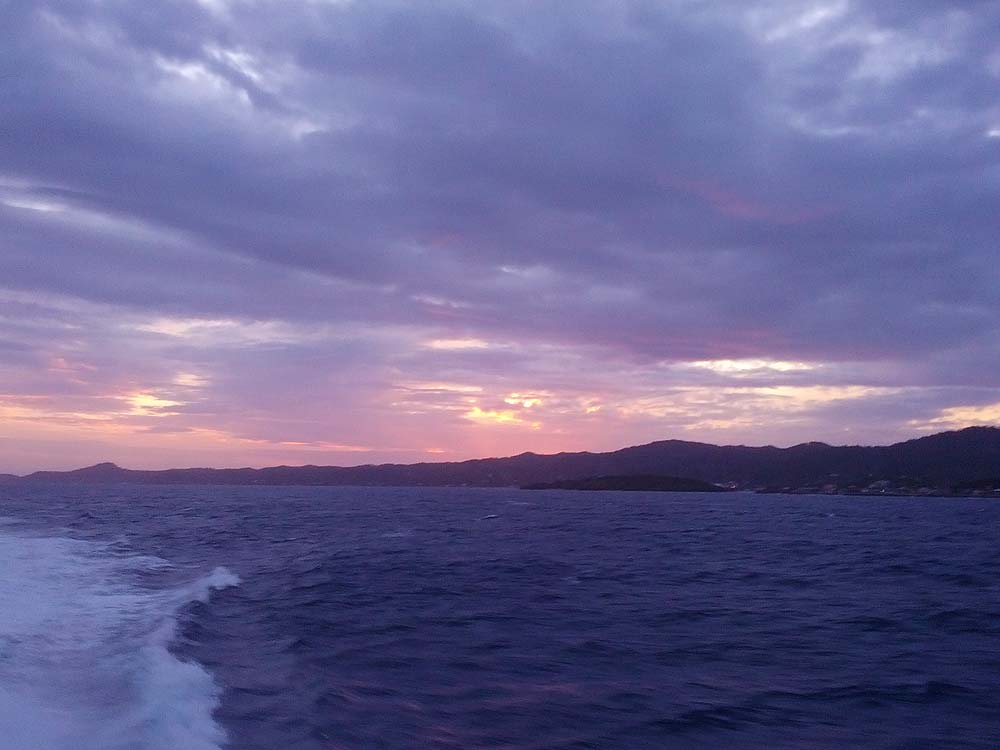
After 13 hours and 600 km travelling through Honduras, I see gringos for the first time at the harbour today. On the one-and-a-half hour crossing on the fast ferry, the Hondurans celebrate their deep religiosity. Fuelled by swells of up to three metres and heavy rolling, a quarter of them are actively engaged in breakfast reincarnation. Ois easy.
 Frank Woelky, born in 1973. Kitesurfer since 1998. Since 2006, I have been combining kitesurfing and web design on trips lasting several months off the beaten track.