

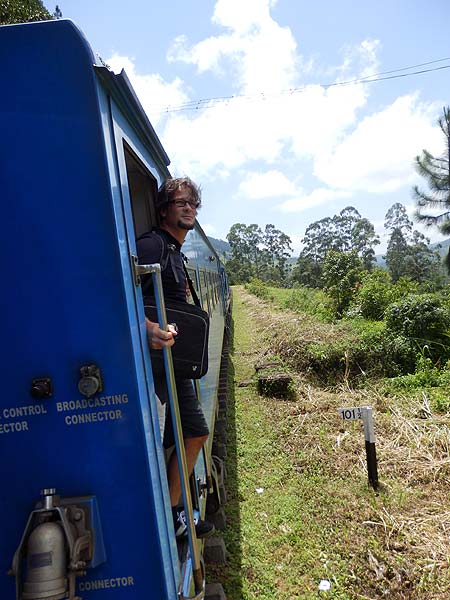
From Kandy, I join two fun Swiss kiters for a trip to the Sri Lankan tea centre. We take the train early in the morning to Nuwara Eliya, just 40 kilometres away by air. The journey takes five hours and runs for around 125 kilometres, constantly ascending through endless tea plantations and jungle. The open doors are my panoramic viewpoint.
At 2000 metres above sea level, Nuwara Eliya is the highest town in Sri Lanka. It was founded in the 19th century by the heat-stricken British colonial rulers, and numerous buildings still bear witness to this today. Our accommodation is an enchanted little hostel in the style of Peter Pan: a bamboo courtyard and stream garnished with tree-trunk furniture, surrounded by small two-storey huts. King Fern Cottages. Fine.
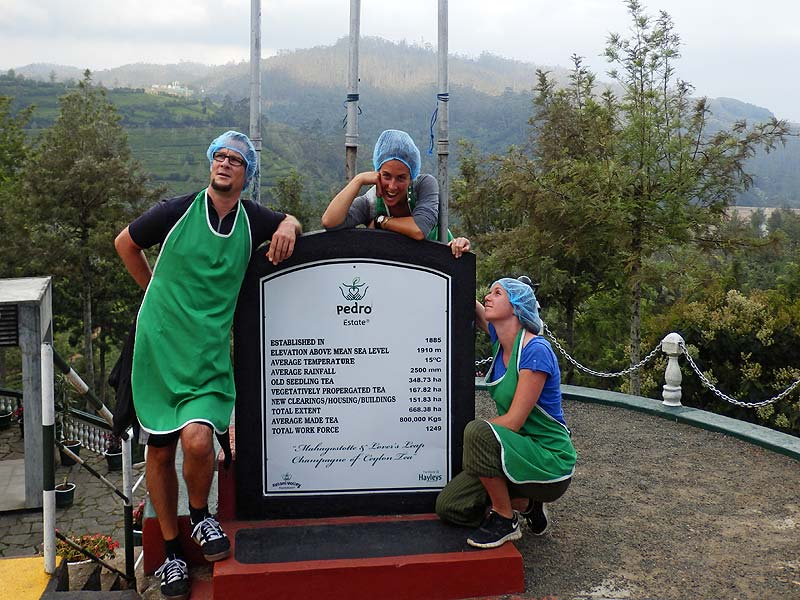
On a hike to the Pedro tea plantation, we enjoy the fresh air and light rain in shorts, while the predominantly Tamil inhabitants dress up as Eskimos.
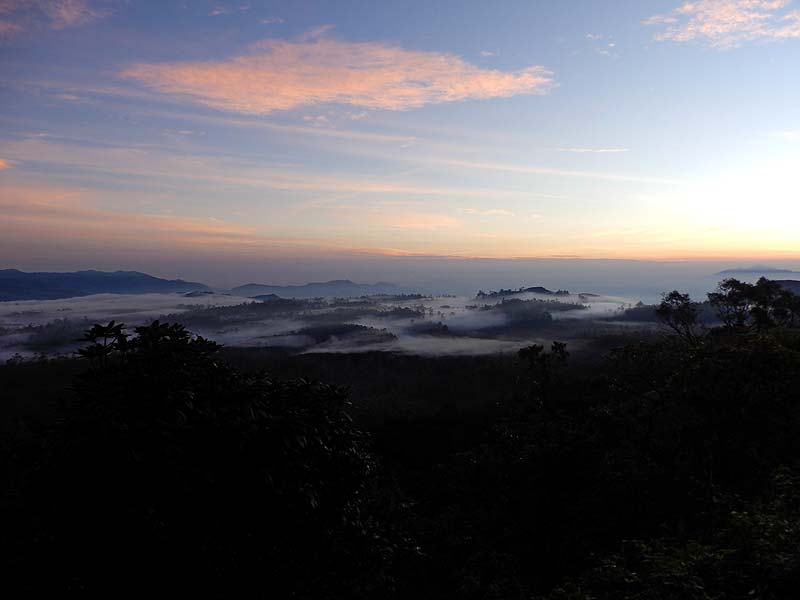
The next day, we set off long before sunrise for the Horton Plains National Park, an hour away by minivan. As we drive up to the high plateau, which lies between 2100 and 2300 metres above sea level, the sun rises over the mountains, while the rainforest of the surrounding plains below is covered by a thin but dense sheet of mist. Only a few trees stand out surreally. Everyone is silent. Except for the Japanese. They never seem to know when to just shut up.
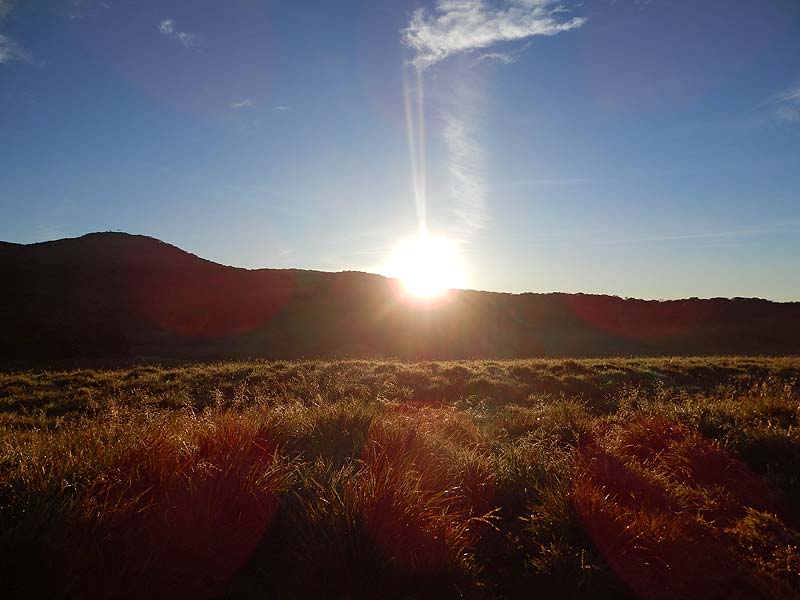
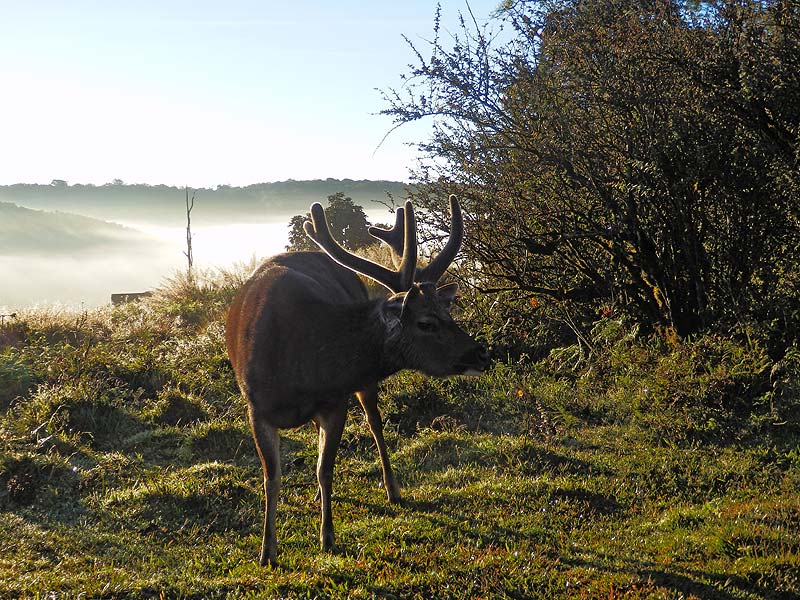
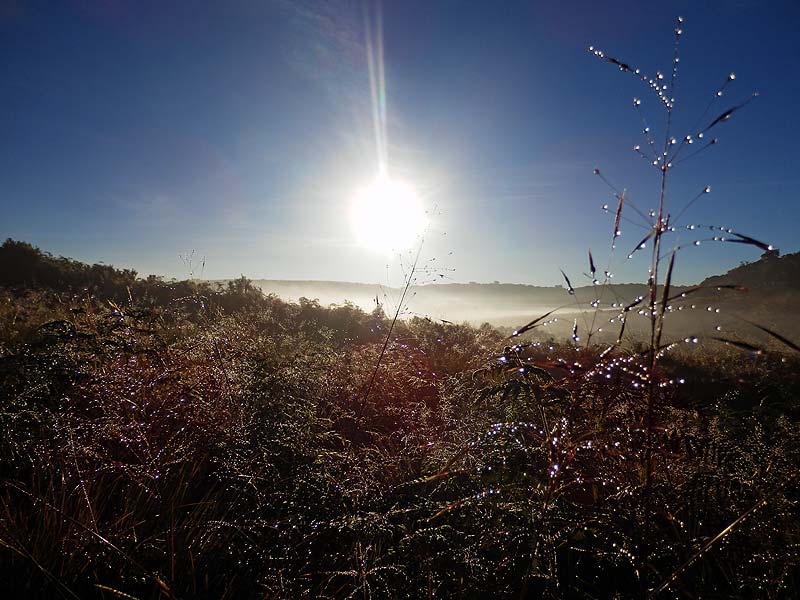
In the national park, the dew glistens on the tall grasses in the rising sun. Samba deer graze in between, and Adams Peak peaks out of the clouds behind them. We are still almost alone in the midst of magic.
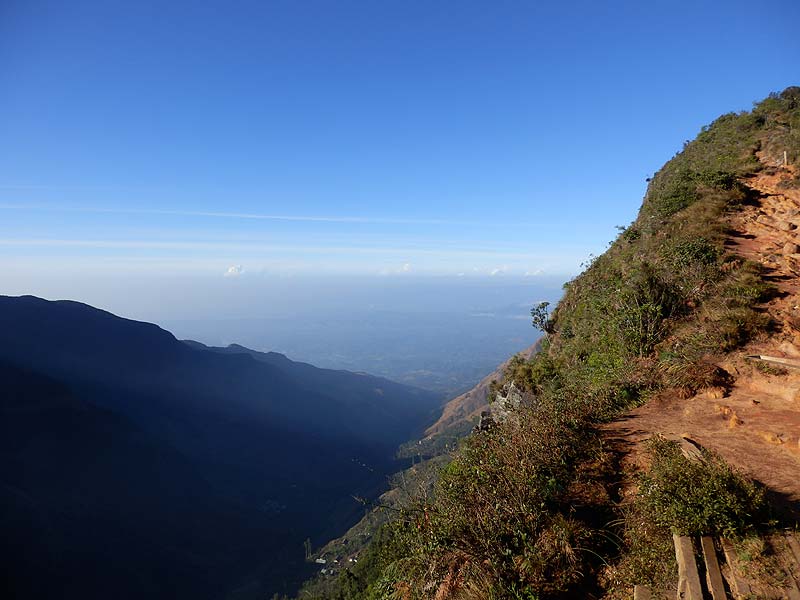
The 10 kilometre trail leads through rainforest and grassy plains to the supposedly 840 metre high cliff of Worlds End. The view of the surrounding tea plantations is poor and the altitude doesn’t impress any mountain people. The first noisy group of Japanese with Gucci survival bags catches up with us and immediately starts posing on the precipice.
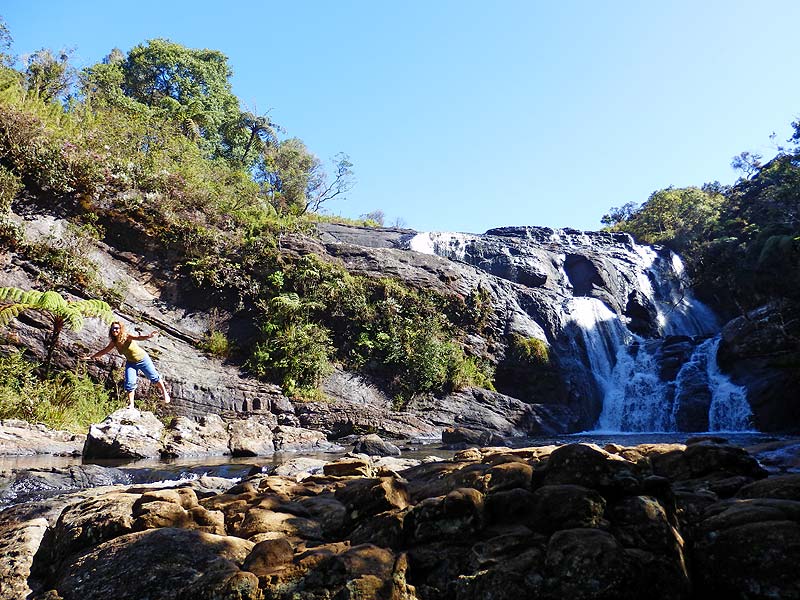
We quickly flee to the Baker Falls. I ruin my knee again on the steep descent and hobble the remaining four kilometres back to the exit.
Before the British arrived, hundreds of elephants grazed blue-flowering trees on this plateau. The British wiped them out within a few years. The “most successful” of their hunters killed 1400 elephants. He himself was then killed by lightning. His gravestone next to the golf course in Nuwara Eliya was also struck twice by lightning.
We did well to get up before five. It’s not just that fog and clouds often rise from the surrounding lower tea plantations into the Horton Plains as early as 10am, which wasn’t the case for us. I count 64 minivans and a few large buses and tuktuks as we set off. But magic is quiet.
The bus back to Kandy, 1500 metres in altitude and full of hairpin bends through tea plantations, is packed. Writing a blog is only possible on my mobile phone, and even that is only possible with my elbow just in front of the nose of my Tamil bench neighbour due to the full aisle. Thanks to the numerous potholes, my elbow must have tickled his nose hairs several times, which he doesn’t particularly like. I ask him if he is familiar with the term “inspiration of the moment”, but don’t really get a satisfactory answer.
The name proudly displayed on the front and back of every Sri Lankan bus is the only thing that holds the rust together. They are all called “Lanka Ashok Leyland”. On the 65 kilometre descent to Kandy, we only have three near misses within two hours, which probably tempts the parents of my bus to take away its middle name in the evening.




 Frank Woelky, born in 1973. Kitesurfer since 1998. Since 2006, I have been combining kitesurfing and web design on trips lasting several months off the beaten track.