

Five days of permanent calm is more than a kitesurfer has to endure. I hire a car and set off before dawn. The road to Marrakech leads from hazy Mad Max via Tuscany without cypresses to the green granary in front of the high Atlas. Because of the bomb attack in Marrakech, the police checkpoints are as dense as in the Golden Triangle – only the armoury is a little more discreet.
After only an hour’s drive, a policeman shoots me down with a laser pistol. 20km/h too fast. My German driving licence saves me from punishment, as it did in the USA. Apparently we have worldwide freedom from fools when it comes to speeding. A little later, the police follow me with blue lights, and this time my stomach gets queasy. They overtake. For free.
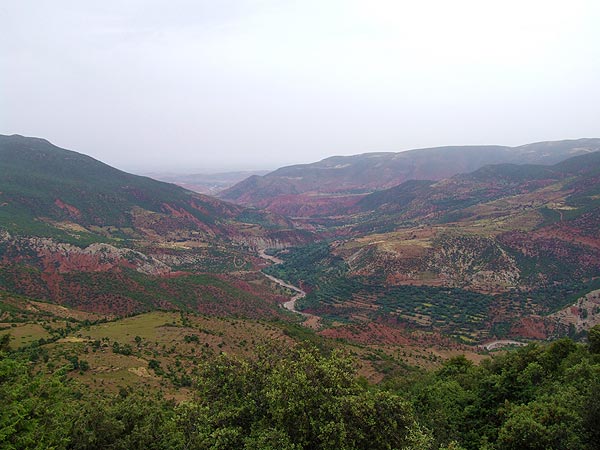
Crossing the High Atlas is tough. The farmers’ clay buildings cling to the barren mountain slopes. It smells like the Himalayas. Rocks in the brightest colours, green forests and valleys, stony deserts and high meadows alternate. The colours are eaten up by a completely hazy sky, even at the highest pass at over 2200m. As the only white person, I cross chaotic market days in small mountain villages. The air smells of pine trees and 1000 herbs.
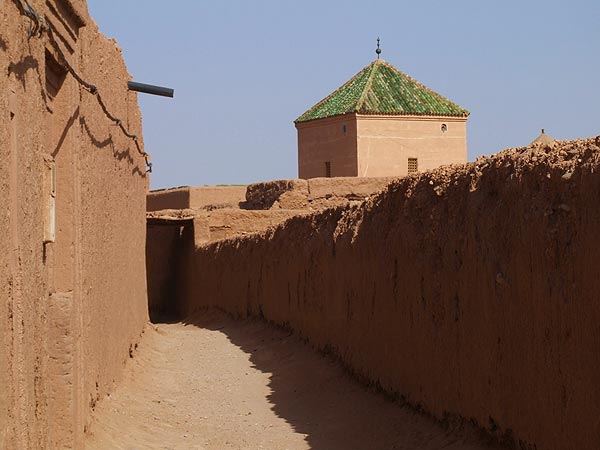
The landscape changes immediately on the south side of the pass. The rain falls almost exclusively on the north side. So much in the last few days that once again some roads have been completely washed away. Some people have died. The south side is becoming drier and drier as it runs out into the Sahara. The first kasbahs, centuries-old clan fortresses and granaries built only from rammed earth and little wood, are falling into ruin along the road. I too am increasingly falling into disrepair. The last two nights in the pirate’s cave hardly brought any sleep.
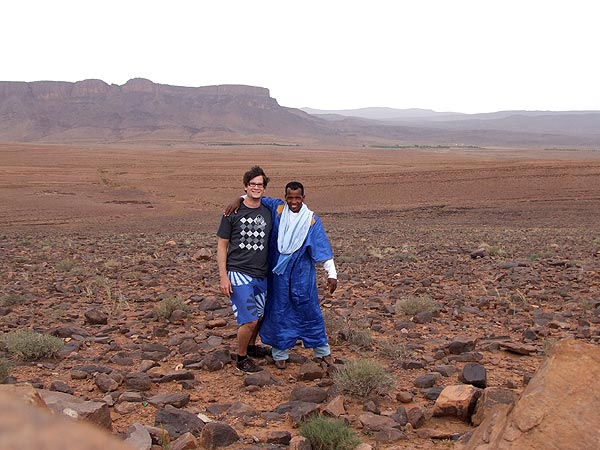
My salvation is the story of this day. In the stony desert between the last villages before the Sahara stands a genuine Tuareg in full blue armour. His dromedary is broken. It goes by the name of Honda Civic, he goes by the name of Abdullah. I give him a lift to the next village, 50 kilometres away. On the journey, he talks about caravans. Just as I’m getting even more tired, as always during history lessons, he casually mentions that the next caravan is leaving in June.
I am wide awake. What are you transporting today? Jewellery and people. Not all tourists, but also labourers and journalists. How long does it take? Three months each way. To where? To Mali. Why? It’s tradition, and it’s sacred. Abdullah smells like a spice shop. As cheeky as I usually am, I don’t dare ask if it’s him or a perfume.
He talks about the Touareg’s efforts to bring the Paris Dakar Rally back to where it belongs. It brought the Touareg a lot of work. He shows me valleys and warns me of flashing policemen. His every movement radiates honour and dignity; the farewell alone is a calligraphic gesture.
I change my plan on his advice. Why drive 300 kilometres further east when there are huge Sahara dunes here in the south? And not as overrun with tourists as Merzouga and Erg Chebi? Of course he has an uncle who offers overnight stays in the desert – quite expensive, but how often can you sleep in the Sahara? I book a night under the stars in a Bedouin tent in the Sahara.
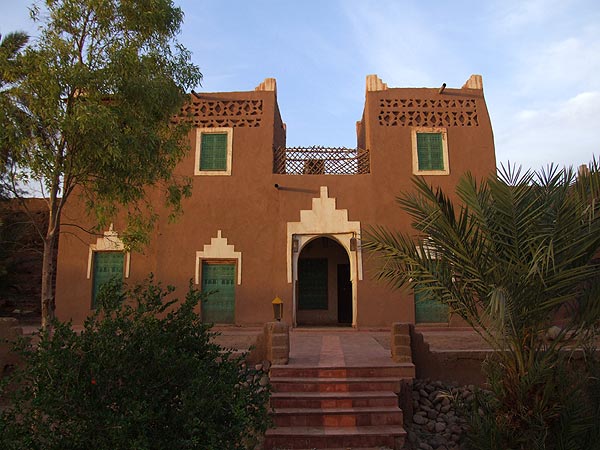
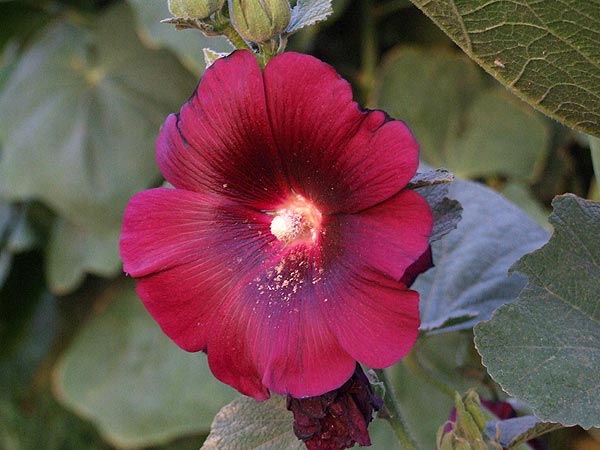
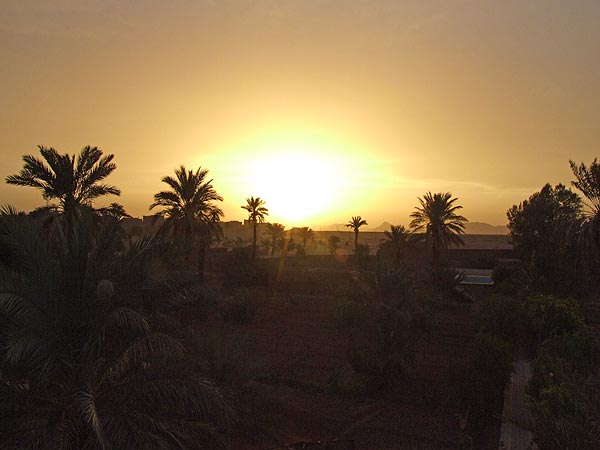
I drive the last few kilometres alone through the last greenery before the desert, the Dra Valley to Zagora. A strong wind blows sand across the road. Of course, my kites are in Essaouira. Grazing donkeys stand under date palms. Women cut grain by hand. My accommodation is an old kasbah. The garden is Eden with flowers and grazing goats. The tea is good as always. The mud walls are cool.




 Frank Woelky, born in 1973. Kitesurfer since 1998. Since 2006, I have been combining kitesurfing and web design on trips lasting several months off the beaten track.