

4800km road trip across Oman, from Salalah, along the coast, into the Wahabi Sands desert, from there into the mountains and via Sur, following the coast again to Muscat. In summer, up to 50°C inland.
We took three and a half weeks for this journey. We travelled through the sand in a rented Mitsubishi Pajero to beautiful white kite beaches with turquoise blue water, drove through impressive wadis and took in the breathtaking mountain scenery.
Every trip starts with preparation. After we had determined our places of interest in Oman using Google, travel guides and YouTube, we realised that we would probably have to tackle some off-road routes. We had already rented a 4×4, but we had no off-road experience, especially not in the desert. There was no time left for an off-road course, so we read up intensively on the subject and bought a tyre pressure gauge and a small compressor for the trip.
Our travelling time: June/July. Summer is unusual for travelling to Oman because it gets far too hot in the interior of the country, sometimes exceeding 50°C. In Oman, we were therefore often asked where we would stay, as Omanis don’t expect tourists at this time of year. We chose this time of year because we wanted to go kitesurfing and diving. According to wind statistics, the wind in Oman is relatively reliable from April until September.
Another good thing about this time of year is that there was very little going on at the sights. We were sometimes the only guests in the hotels. The bad thing about this time of year is that the sea near Salalah is closed to swimmers due to the strong currents that occur at this time. The water is very murky at this time and not suitable for snorkelling or diving. With the exception of Muscat, all diving centres throughout the country are therefore closed in summer. The wind that prevails at this time of year carries a lot of sand into the atmosphere, which meant that we rarely had clear skies or beautiful sunsets during our trip.
After an overnight flight to Muscat and a connecting flight to Salalah with Oman Air, we pick up our car at the airport. We had booked a Land Cruiser and were given a Pajero; the Pajero’s engine is supposedly better. Never mind, the Pajero is also a 4×4 SUV in which the kite bag and the rest of the luggage can easily be stowed. The Omanis usually have an energy label stuck on the rear side window, just like on our fridges and washing machines. Where will this label be on the numerous SUVs in this country? Bright red with the words “very poor”. We have not recognised the ambition to achieve A or even A. No problem, there is also enough cheap fuel available.
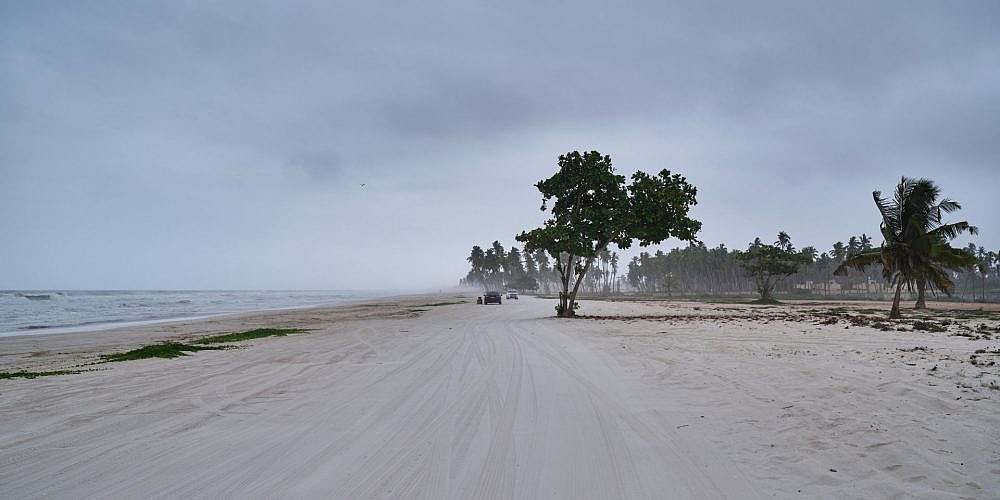
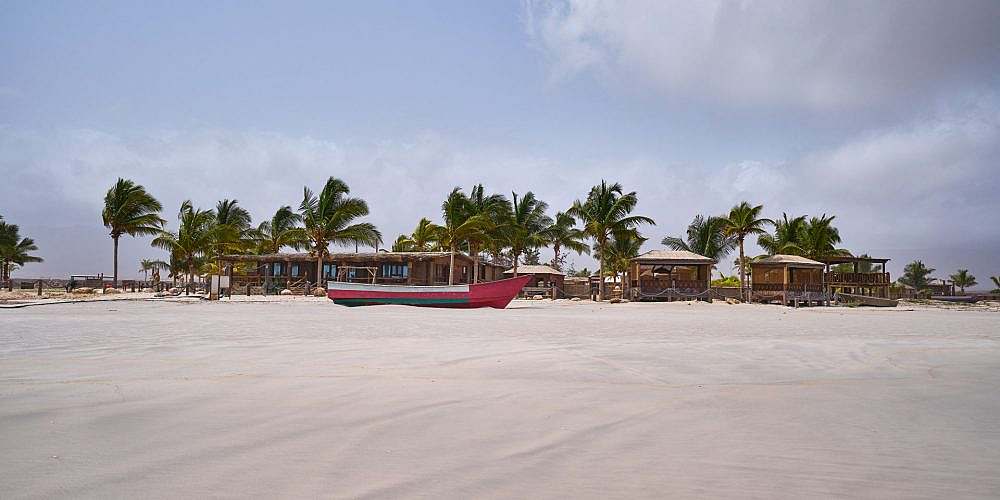
Our road trip begins in Salalah, where we stayed at the Souly Eco Lodge just outside. There we have a hut right on a wonderful beach. We stand on this beautiful beach and watch the waves. In summer, the beaches around Salalah are closed to swimmers due to strong currents. There is wind, but I don’t want to venture out on the water alone. There are no rescues and no sheltered bays.
There is brackish water in the wadis that are closed off from the beach towards the sea, which would be an opportunity to pull up the kite, but the water doesn’t look particularly inviting. I’ve also read that it’s not safe to swim in stagnant water because of parasites. I lie down on the terrace of our hut, I’m dog-tired, although there was enough room to sleep in the business, I’m not really well-rested.
As the lodge is a bit out of town, we ate there every evening. The restaurant there serves delicious meat biryani. The food in Oman is generally very tasty and varied. The larger hotels tend to offer international dishes, while the local restaurants and coffee shops serve Indian, Turkish and Asian food. We were always given a legible menu outside the hotels, but we still didn’t understand it. So the food is like a lottery only better, always a hit!
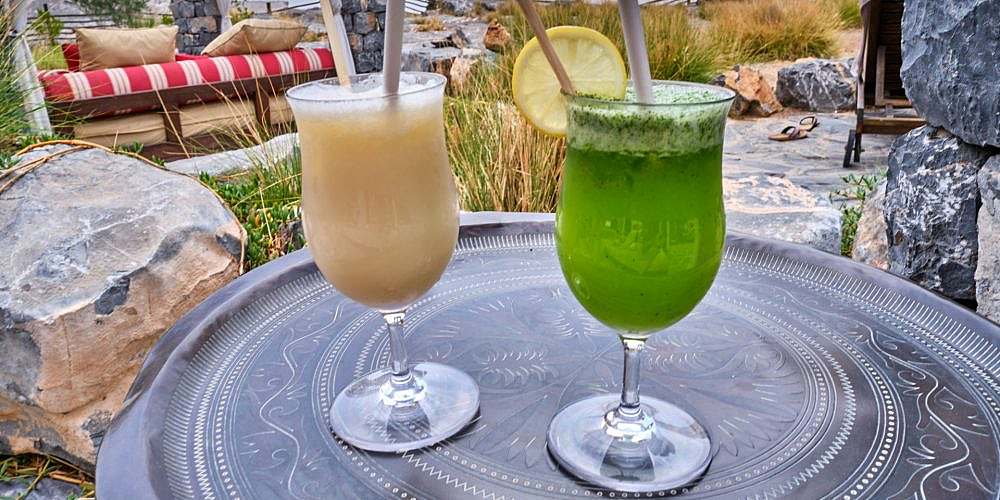
The price level of the food in the hotel is expensive, about the same, sometimes significantly more expensive than here. The food in local restaurants is extremely cheap. Alcohol is only offered in international hotels, otherwise I stuck to the lemon mint juice. We never had any problems with the food, even in the most remote restaurants, and we even did the test with milkshakes and ice cream from the supermarket!
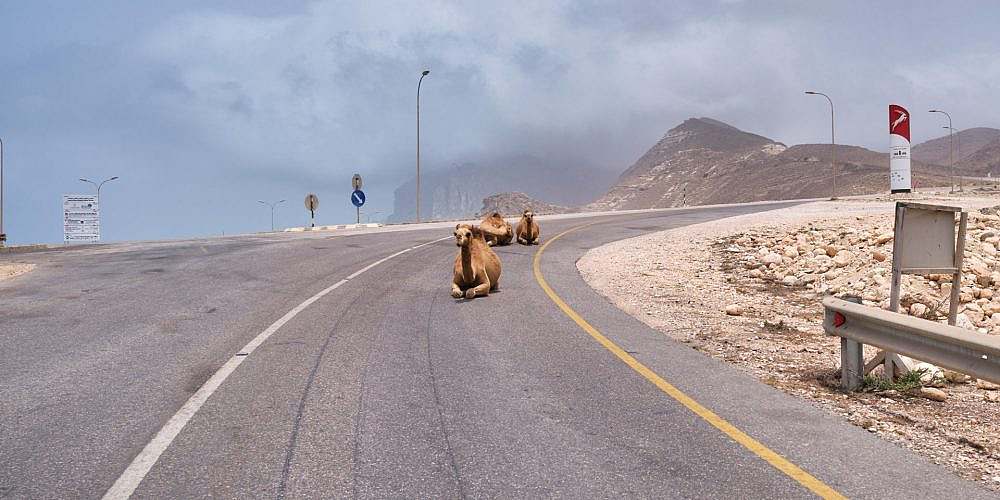
The area around Salalah is well worth seeing, the roads are very well developed and you can often see whole herds of camels on the motorways. Driving in Oman is very pleasant, the roads are rarely very busy. Speed is controlled by radar. On motorways, there are permanently installed boxes every few kilometres, while on trunk roads a civilian police car with radar can occasionally be seen at the side of the road. From time to time there are fixed police checkpoints, so our ID cards, vehicle documents and driving licences are always ready in the glove compartment.
I never really realised what the police check. Allegedly they check before steep mountain stages whether the vehicles are suitable for the controlled mountain stage, but I don’t believe that. We have driven much more hair-raising, especially unpaved roads without prior police checks.
The coast south-west of Salalah is very mountainous, the way the roads there are hammered into the mountains, they resemble our best Alpine passes. The sand in the bays is almost white and the sea is turquoise blue. There is plenty of nature to see, such as the coastal landscape, wadis and waterfalls. We didn’t visit the cities or any of the souqs. Most of the souqs only sell junk anyway.
A funny thing about Salalah is the Point of Gravity, which is marked by a sign next to the road. The Point of Gravity was a must-see for us to try out. We parked our car there next to the road, put it in gear, released the brake and as if by magic the car started to roll uphill. I’m still Googling how that’s possible 😉
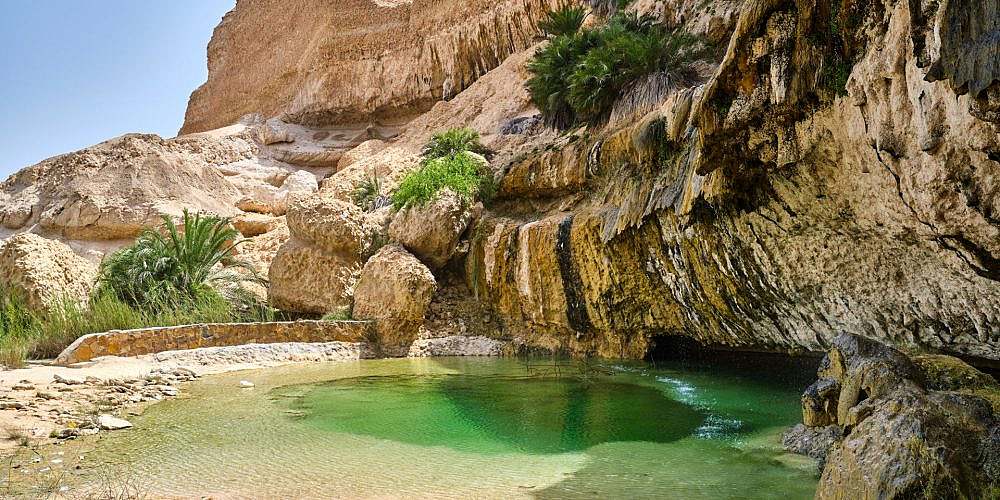
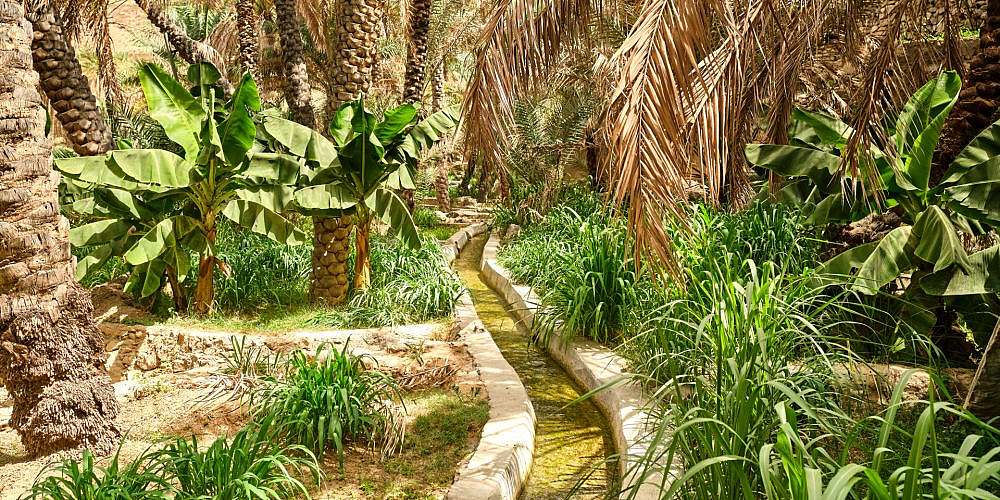
Our journey along the coast takes us north-east over mountains past canyons to Wadi Shuwaymiyyah. It’s hot, dry, the rocks are reminiscent of Death Valley, the acacias more like a backdrop from The Lion King and then the green of the wadi on a hill. It’s not a particularly large wadi. We followed the Falaj (Omani water channels) to get to the waterhole.
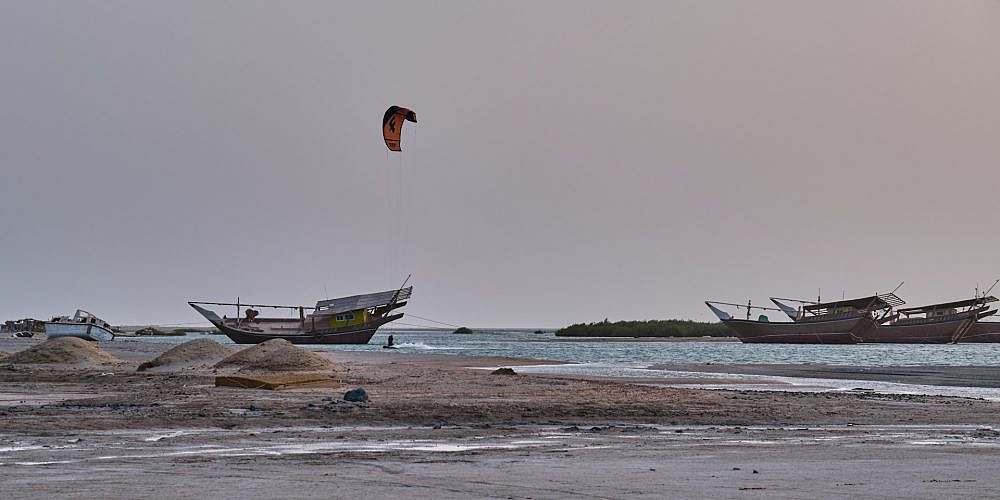
We continue to Duqm. The journey across the high plateau is totally monotonous and boring and lonely “for hours” with no oncoming traffic and the occasional house. Then it’s back to the sea, we want to refuel, but the first petrol station doesn’t have the fuel our Pajero needs, the second petrol station is also out of 91, so we fill up with 95 and head off-road to the sea at Al-Jazer, where there’s a lagoon that’s great for kiting.
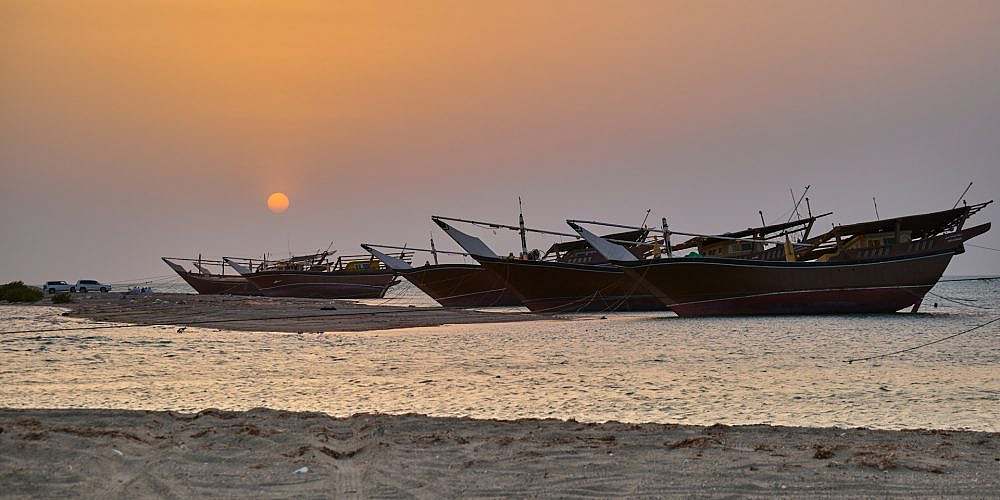
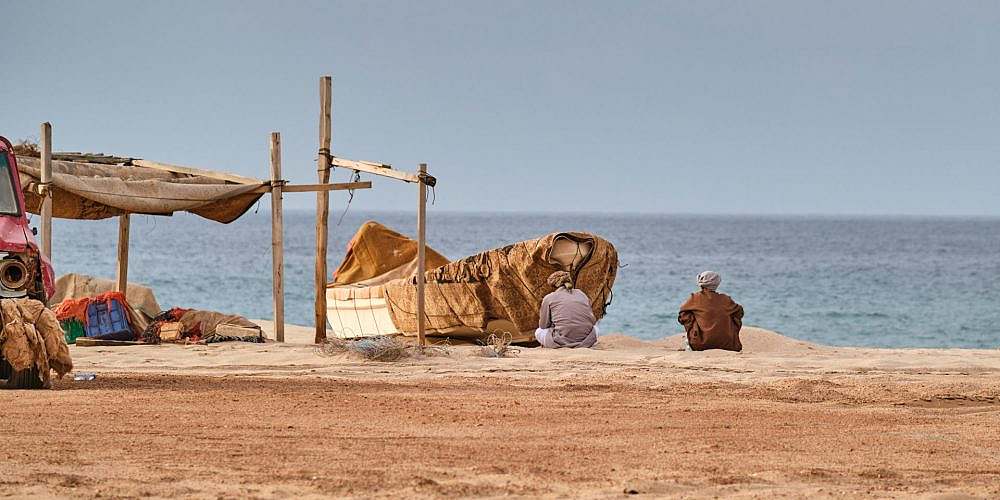
The beach at the end of the sandy track is full of small fishing boats on the white beach, some of the fishermen have left their nets behind with their catch, which has now dried out. We drive a little way along the beach to where there are no boats. A camel is already waiting for us on the beach, the goats are curious, while my kite is still rustling as it inflates. As the kite takes shape, the goats leave. I head out onto the water, the wind is nice and steady, the waves a little choppy, the water turquoise blue. I am totally satisfied.
We arrive in Duqm in the dark. Various people told us not to drive in the dark because there could always be animals on the road or poorly lit lorries on the road. However, we didn’t recognise a problem here in practice. Duqm is a crazy city, two and three-lane roads, huge roundabouts, spacious junctions, but no houses! The city has been thrown from the drawing board into the desert.
The Omanis’ plan is to build the largest Arabian harbour in Duqm, with industry and tourism. We will see in a few years whether this works. The harbour is already there, the gigantic cranes for the container terminals rise dimly on the horizon, there is also an airport, but because everything is so spread out, we don’t see much of anything. As the journey from Salalah to Masirah Island cannot be completed in one day, we spent the night at the Crown Plaza in Duqm.
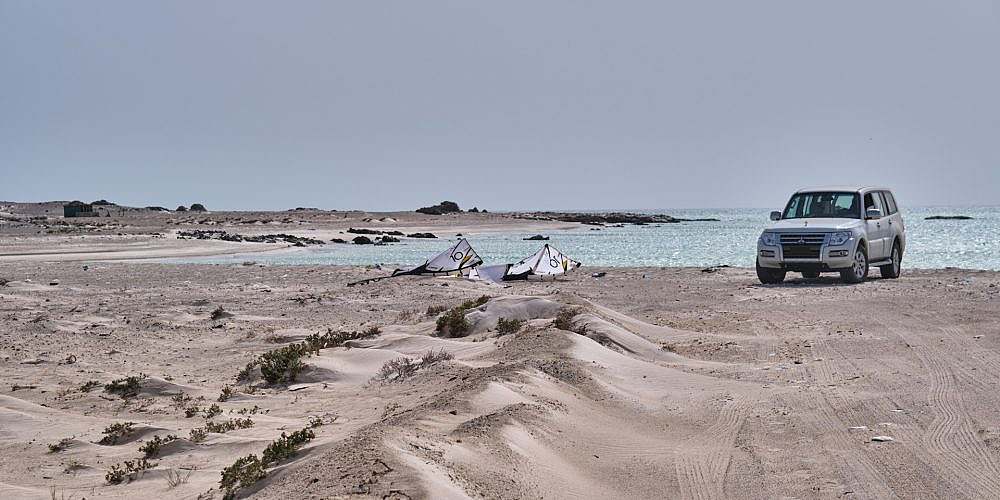
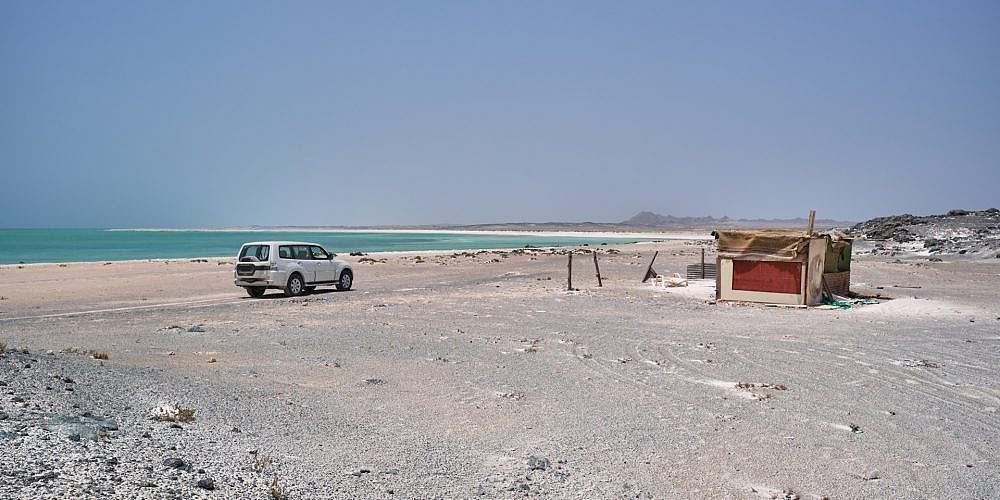
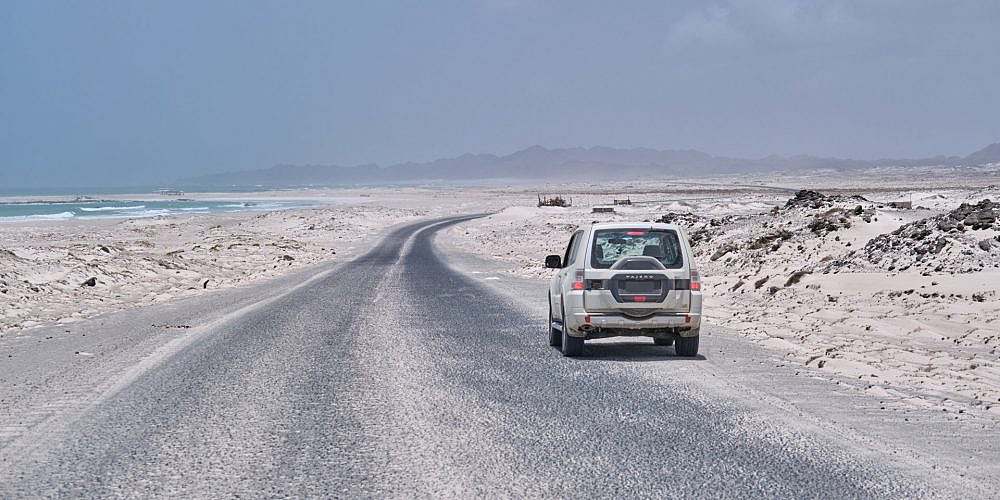
The wind sweeps the sand over the roads, it is dusty, the route to the north-east is very busy and work is underway on a multi-lane motorway. A small sign for Duqm Salt indicates the turn-offs to the Sugardunes. Small sand dunes lie above the dirt track in places. Then we reach a passage covered with loose sand. We deflate our tyres for the first time and drive about 15 km off-road through the sand until we pass Duqm Salt and finally see the sea.
We reach the Sugardunes, a desert landscape right on the coast with fine white sand. After visiting the dunes, I get ready for a kite session. The wind is blowing well, I choose the 10, there are waves with a shore break and I’m looking forward to using the waves as kickers. Setting up was a bit difficult at Al-Jazera, as there is a lot of small vegetation and rubbish in the sand that can get the lines caught.
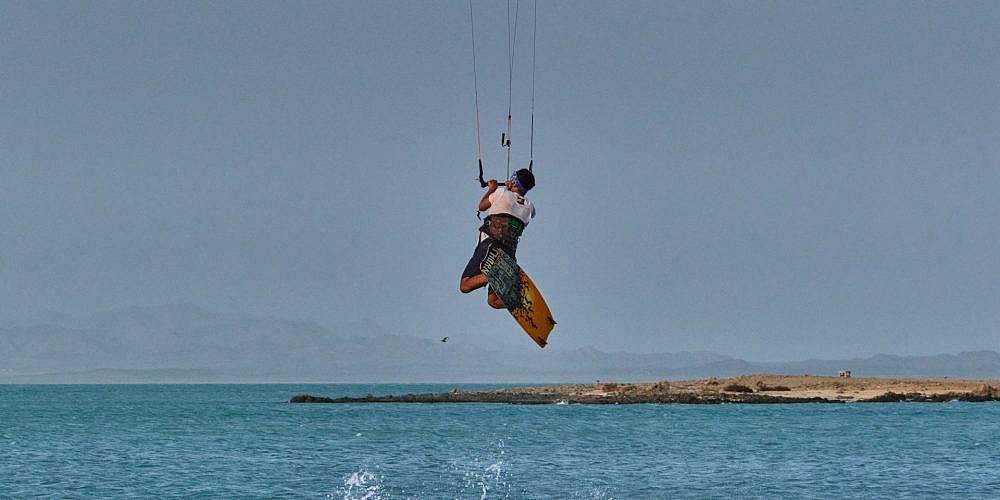
On the water I’m completely in my element, I notice that the wind is getting stronger, at some point my concentration wanes, a wave catches me, the kite drops, that’s the sign to end the session, the wind has also picked up considerably. The sand is flying on the beach, and the rest of the journey will follow suit. We want to return to the main road via al Khaluf, but the last few kilometres to al Khaluf run directly along the coast and the tide is high, so the route is not clearly visible. We didn’t want to get stuck in the sakbah (drifting, wet sand), so we turned round and found our way out of the sand dunes with only two wrong turns in strong winds.
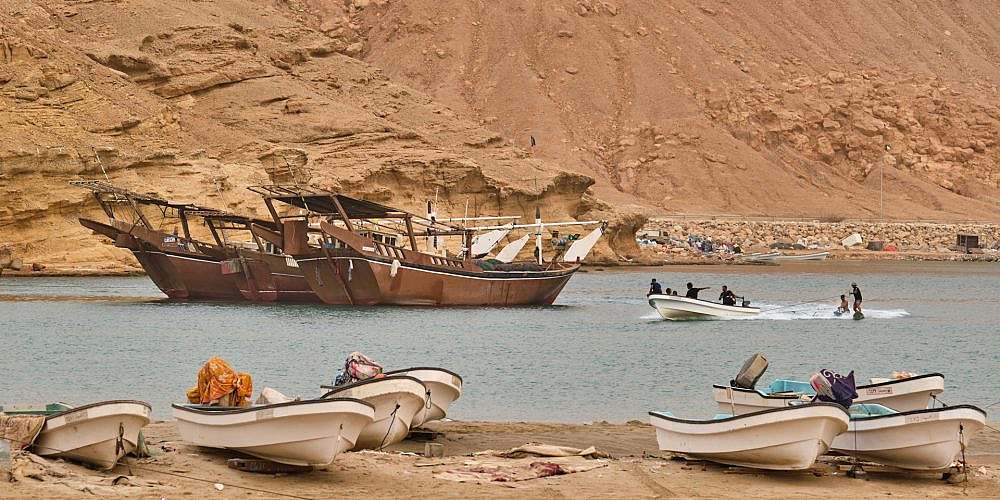
Bar al Hikman is worth a visit and is widely advertised for kitesurfing in this corner, but it is not recommended to visit the lagoons on your own, so unfortunately we skipped Bar al Hikman on our road trip and crossed over to the island of Masirah, which is also famous for its kitesurfing beaches. Buying the ticket for the ferry goes smoothly and we still have enough time to pass the time at the harbour. We are curious to see what the fishermen around Masirah catch in the sea, mainly tuna and sharks.
We visited many beaches on Masirah Island that are used for fishing. Fishing boats are moored on the beaches, sometimes the remains of the catch can still be admired, a baby whale shark, a few sharks and other fish. Unfortunately, as is often the case in Oman, the beaches on the island are littered with plastic rubbish. We were told that this is because the Omanis simply throw everything away. I don’t know, I think that we also contribute to the rubbish on these beaches with our civilisation rubbish.
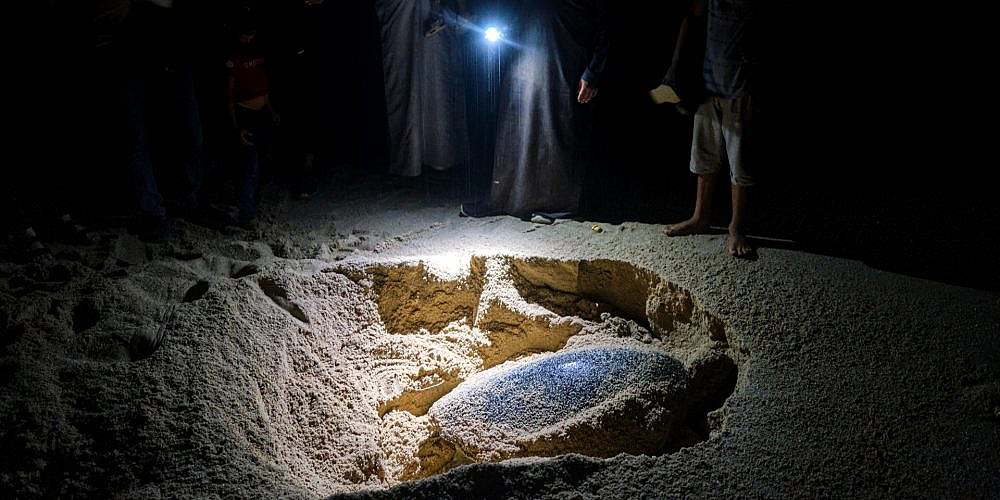
Masirah Island was a British air force base until the 1960s, strategically located with listening posts for the Arab region. The base still exists in the north of the island, but is now in Omani hands. Some Omanis from the Air Force can also be found among the kitesurfers. We circumnavigated the island. At first glance, the island looks boring, but it’s the little things that make the island special, such as the beaches where the turtles lay their eggs.
On the very first evening we see a kiter in Hilf, the main town, I have everything with me, I hesitate and then it’s already too late to get everything ready for a sundowner. Finally I have a few days in a row to kite, first we go to Masirah Beach Camp the next day.
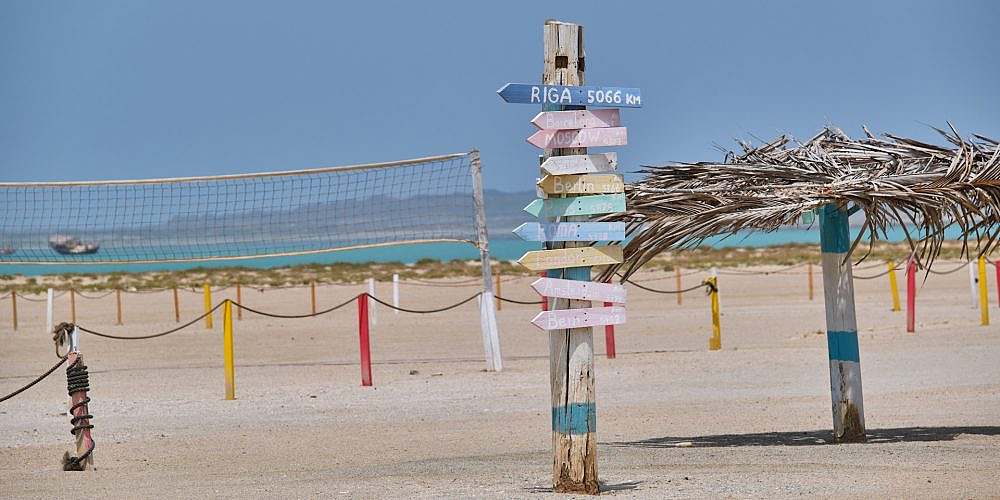
The kite camp on Masirah with its colourful appearance looks tip top, but everything is deserted. We meet a guy from Bangladesh, the only employee in the camp gives us a coffee. We have a chat. Until last year, it was run by Alex. Now the camp is run by an Omani together with an Englishwoman. We have heard from other sources that the quality of the camp has declined since the change and that it is no longer running so well, without going into specific details.
We drive the 200 metres over to the beach, it’s low tide, and with the shallow spot that means another 150 metres of walking until the water level is high enough for kiting. The standing area of the spot is huge. The wind at the kite camp on Masirah is offshore, but there is no rescue. If someone drifts off, fishermen are informed. Sounds adventurous, but it’s not a problem because there’s a huge standing area and there’s always a boat somewhere. We were told that no one has ever been lost.
It is hot, almost 40°C. Setting up is therefore a bit of a challenge simply because of the heat. Some of the water is over 30°C, but it’s still refreshing after setting up. I choose the 10 again and am slightly overpowered. The water is partly smooth, partly choppy. Because the wind blows over the land, there are different wind zones on the water. With a “normal” board size, the 10 and the 7 were enough for me as a kite, I had the 12 with me for nothing.
In the afternoon, a guy from Airforce sets up a 12er, I stick with my 10er. We return to the beach camp the next day and meet an Omani fisherman and his nephew in the evening. The nephew makes good jumps, otherwise the Omani kiters I have seen are very basic, an Englishwoman told me that the Omani kiters don’t make any space on the water. I can’t confirm that, there was always enough space on the water.
I want to go kitesurfing on another beach. We drive south along the east coast and when I see a few kites in the sky, we turn off. There are a few SUVs on the beach, beach music is blaring from a loudspeaker, the SUVs are loaded with cool boxes containing cold drinks and probably enough food for a picnic. There are probably a few families who have gathered here to go kitesurfing. The women are in the water with bathing burkas and children, the men are kiting. We drive further south.
A sign points to a kite camp, we turn off and reach a dilapidated hut. The beach is wonderfully white, the water turquoise, there is a large standing area. I set up my kite and have a great session. In the evening we switch to the beach camp. Because it’s Friday, lots of Omanis gradually arrive, some to kite, like the fisherman with his nephew and then the guy from the air force, but also lots just to watch. The Omanis are looking to chat to us, they ask us questions about where we come from, what we’re doing here…
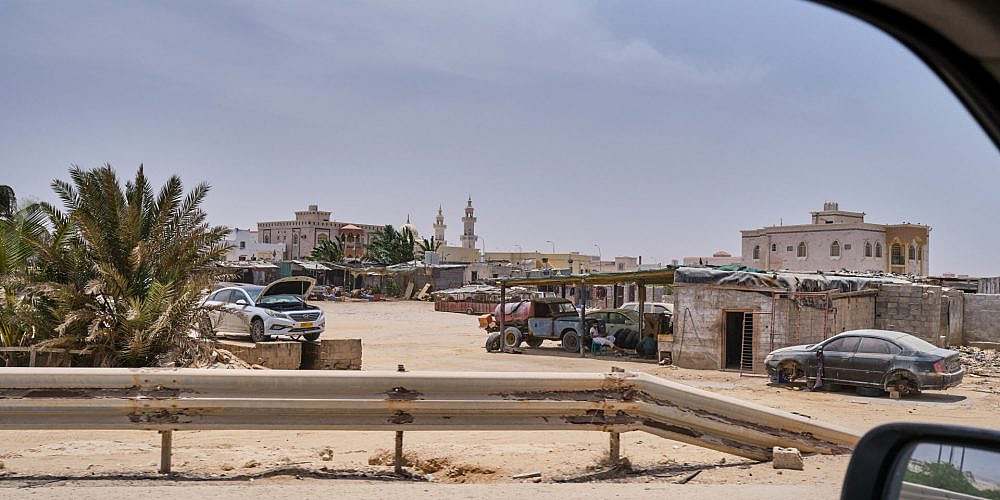
We leave the island, and with it the sea, and head inland to the Wahiba Sands desert. It’s worth holding the camera out of the side window from time to time to capture the scenes and moments that would otherwise simply pass you by. We see villages that seem totally impoverished, but also villages with one magnificent entrance next to the other. Then we see fruit stands, small stalls selling firewood and we also see cyclists on the motorway.
Almost every village has its own police station, which is usually a little out of the way. The stations all look the same and are generously laid out. The administrative buildings are hidden behind walls and small towers with floodlights are erected at the corners. We reach
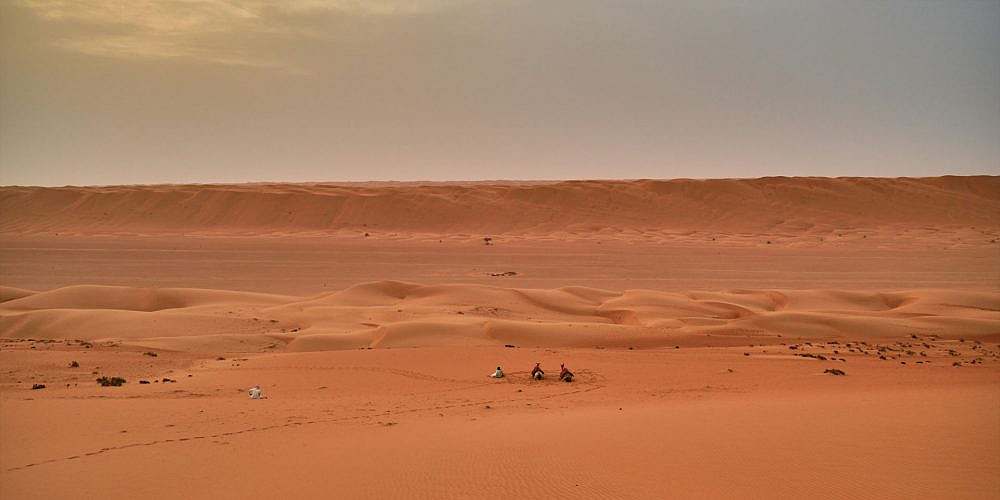
Wahiba Sands is dominated by reddish sand. The desert stretches all the way to the sea and causes shifting dunes to form on the coastal road. Heavy traffic awaits us around Al Kamil, it is hot, stuffy, hazy, over 40°C, not a nice place and the traffic is nerve-wracking. Finally we reach the turn-off to our desert camp. We let the pressure out of the tyres again and drive into the desert. There are many desert camps in the Wahabi Sands, but only two or three are open in summer. Our camp had around 80 tents and every conceivable luxury except for a pool, but that would be too decadent in the desert.
We were the only guests in the camp with another German couple. In the evening we had a 4-course menu. As the chef was probably not sure what we would like, he simply put different types of fish and meat on the plate for the main course. Food until you drop! On the second day, the chef asks us why we don’t finish our food! The dunes tower high on both sides of the camp. On the first evening, we are driven onto a dune for sunset. We take a camel ride at the crack of dawn to watch the sunrise. Apart from that, there’s not much else going on during the day. In these high temperatures and the oppressive heat, it’s also difficult to move, we really only ever want to shower.
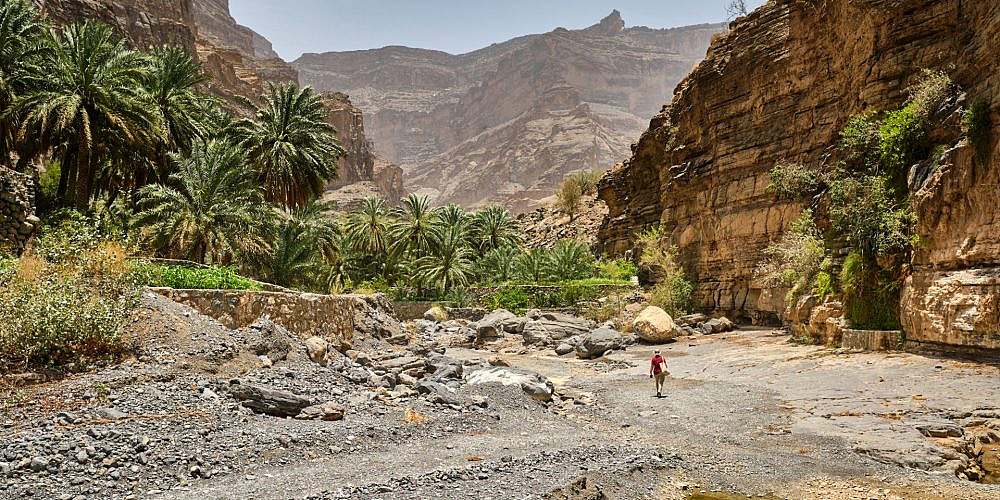
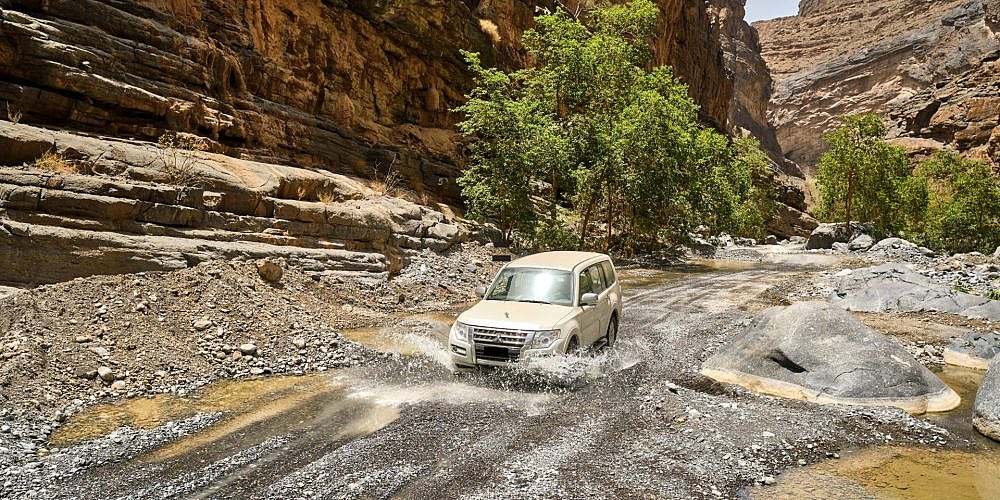
We are now drawn further into the mountains. Oman’s highest peak is Jebel Shams at 3009 metres. A huge canyon called Wadi Nakhr has formed on the south-western flank of this mountain. This is the area we want to explore from Nizwa and also opposite Jebel Shams, the Balcony Walk. The journey into Wadi Nakhr is an adventure, the road is unpaved and because it runs partly in the riverbed, there are occasional passages through water. The gravel is very loose, so a 4×4 is absolutely essential for this adventure.
At the entrance to the wadi there are still many palm trees to the right and left of the track, children bathe in dammed pools of water and huge boulders have to be driven round. Then the rock faces get closer and closer together and rise steeply to the right and left of the path. We come to a place that is insurmountable for our 4×4 SUV, so we park the car and walk further into the wadi. The mountains around us look spectacular. It often looks as if a rock face is blocking our way, but then the path takes a bend and we continue on.
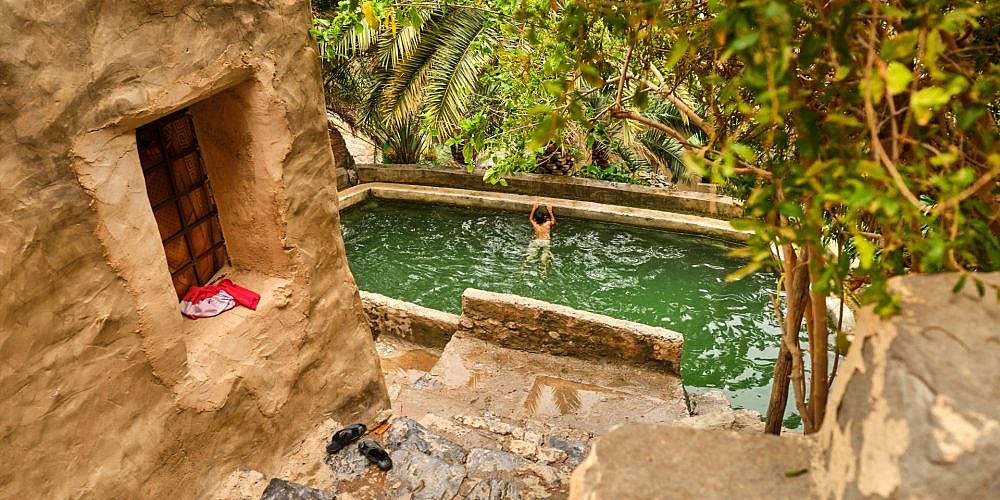
Further into the wadi, the rock faces recede and we reach a palm date plantation with a few natural and dammed ponds. The rippling of the water alone is refreshing in this heat.
However, we run out of drinking water and so, although we have not yet reached the end of the wadi, we have to break off our hike and return to the car. We have learnt that we always take enough water with us, especially when we go off-road by car, and so there were still enough water bottles in the car to quench our thirst.
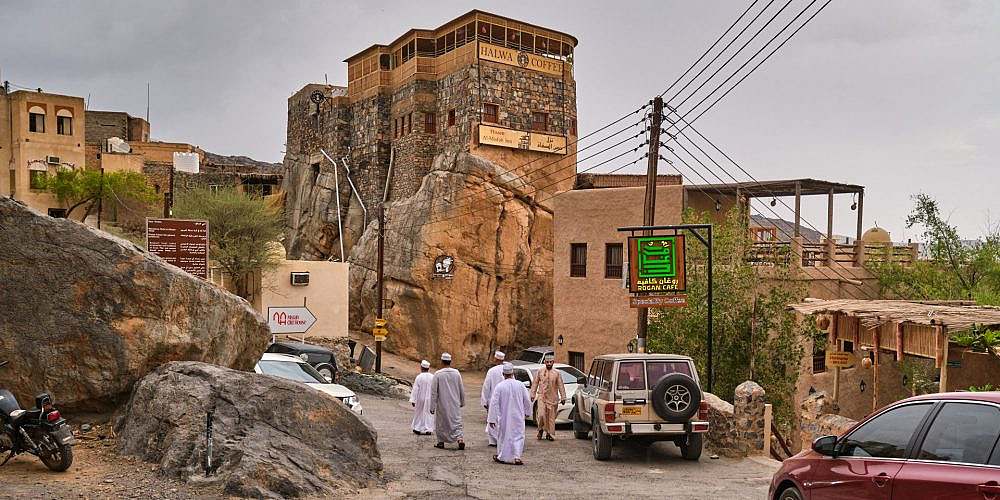
On the way to Jibreen Castle, a UNESCO cultural heritage site, we treated ourselves to an ice cream and a milkshake in a coffee shop for refreshment. Jibreen Castle is well worth a visit, there is an audio guide with entry that includes 34 stations. It was 45°C and we thought it would be a bit cooler in the castle, but the walls of the castle were so hot that the tour of the castle became an act of violence, especially because there are countless staircases in this castle. We got off at audio guide 26, we missed the connection.
While we were in the castle, they were filming in one of the castle’s two mosques. Muslims are very strict in their dress code and this dress code also accompanied us during our trip to Oman. Off the shoulder is not allowed in most places, nor are short shorts that end above the knee. When bathing, men should at least wear shorts, and it would also be a good idea to cover your upper body in the wadis, as this is required on the information boards.
Women should wear at least a swimming costume, but there are also bathing burkas and there she was next to the mosque, a bone-thin model, a gazelle on high heels, over 2 metres tall in an extraordinarily revealing glittery dress. We thought our brains were playing tricks on us, protesting against the lack of water and the heat.
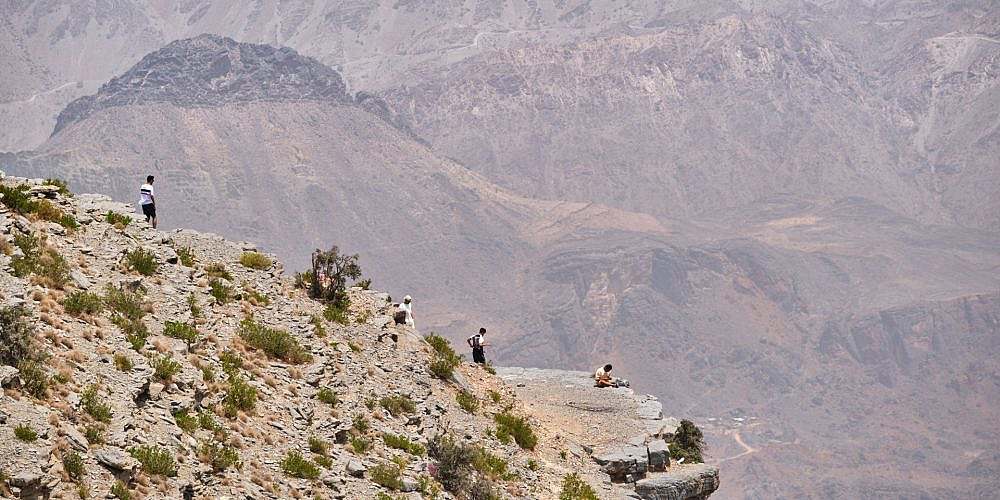
We have our accommodation right at the start of the Balcony Walk. After breakfast, we set off to hike the 6 kilometres along the precipice. In some places you can see the Wadi Nakhr from above. The hike is impressive, about the last third of the hike runs under an overhanging rock face. In the last part of the hike, abandoned houses nestle against the rock. The destination of the hike is a small pond. We didn’t see it, but there was a lot of moss and slippery passages where the water runs out of the rocks. This hike is given as 3 hours in most guidebooks, but it took us 5. You should also make sure you have enough water here, of course we ran out again!
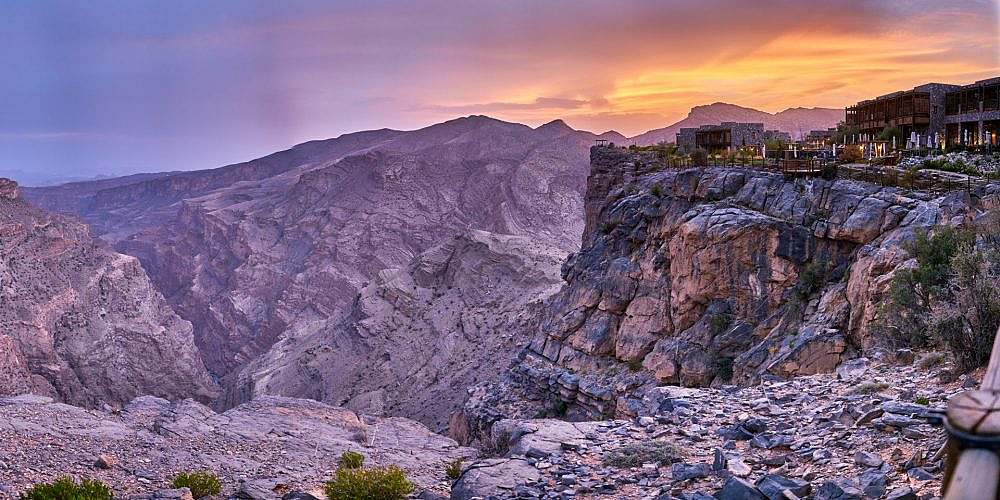
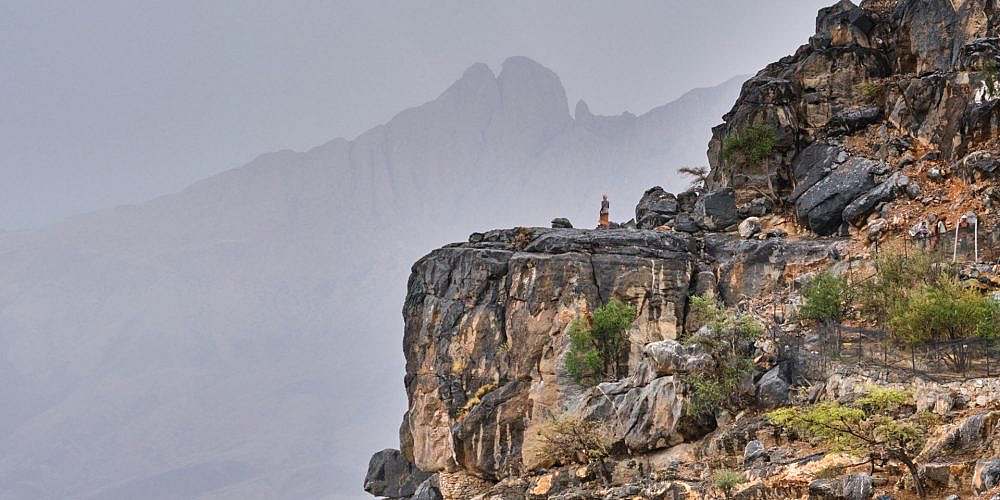
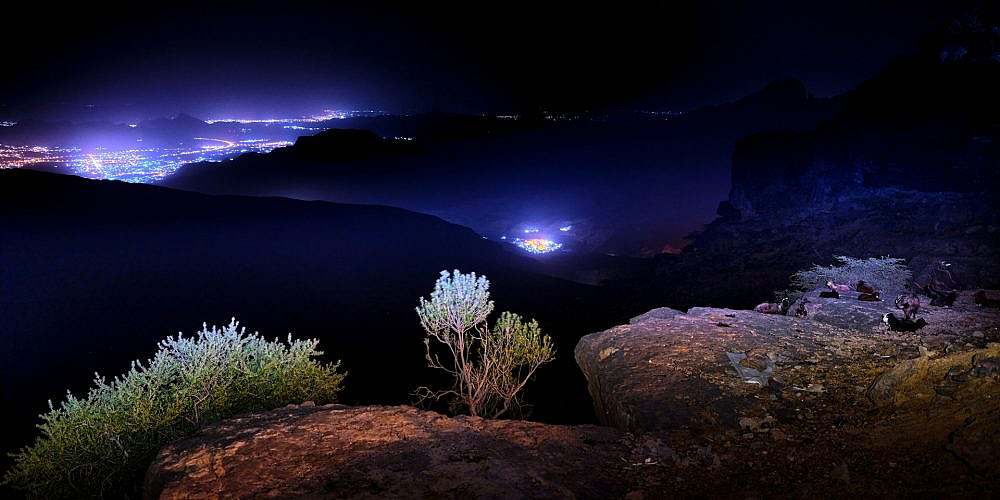
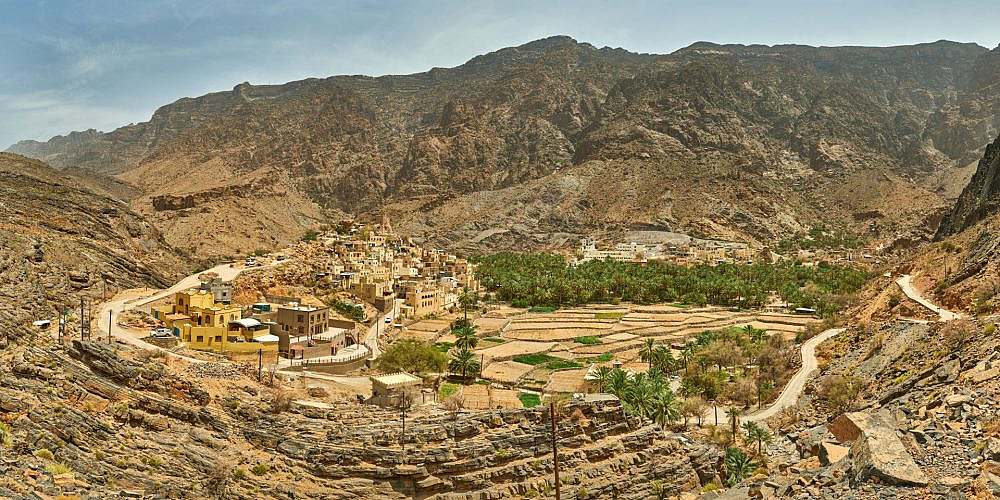
We change mountains and drive over to the Jabal Akhdar Mountains. The infrastructure here is much better developed, there are a few luxury hostels, one of which we have booked, another claims a sightseeing point for itself, Diana’s Viewpoint. This is where Princess Diana was taken by helicopter during her visit to Oman to take a look at the mountains. One “floor” below, there is a hiking trail that gave us exactly the same beautiful view of the mountains and the beautiful terraced gardens in this region.
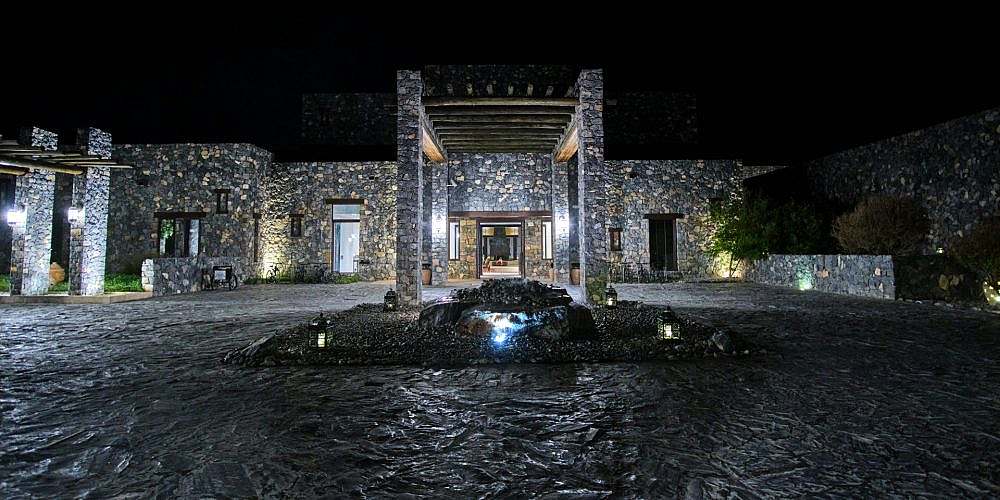
Our luxury hostel is the Alila Jabal Akhdar. I call it the hotel on the precipice, with its own climbing garden, cave tour and a beautiful infinity pool. We spent the afternoon by this pool and I imagined myself having a beer. There was no alcohol in the accommodation at Balcony Walk, so no beer either. There is no beer in the supermarket either, we are in an Islamic country and I didn’t see any shops selling alcohol during the trip.
In an international hotel I will be able to get a beer by the pool. I’m told that if I order three beers, I’ll get two for free, a promotion from an American brewery! An alcohol consumption animation from a country that has a disturbed relationship with alcohol more than 100 years after Prohibition, in a country where alcohol is not permitted. I am shocked! I accept the offer, so I sit by the pool with an ice bucket, which now contains 5 beers. I take three back to my room later and top up our minibar with them.
The weather has changed in the meantime, there is now a thunderstorm every day, we want to visit the Wadi Bani Habib and stand in the car park in over an hour of heavy rain with thunder and hail. The Omanis are almost in a party mood outside their cars, they like the rain, we stayed in the car, we have enough rain in Germany. When the rain stops, we marvelled at the waterfalls on the rocky slopes and then set off to descend into the wadi. A wadi is a (usually dry) river course.
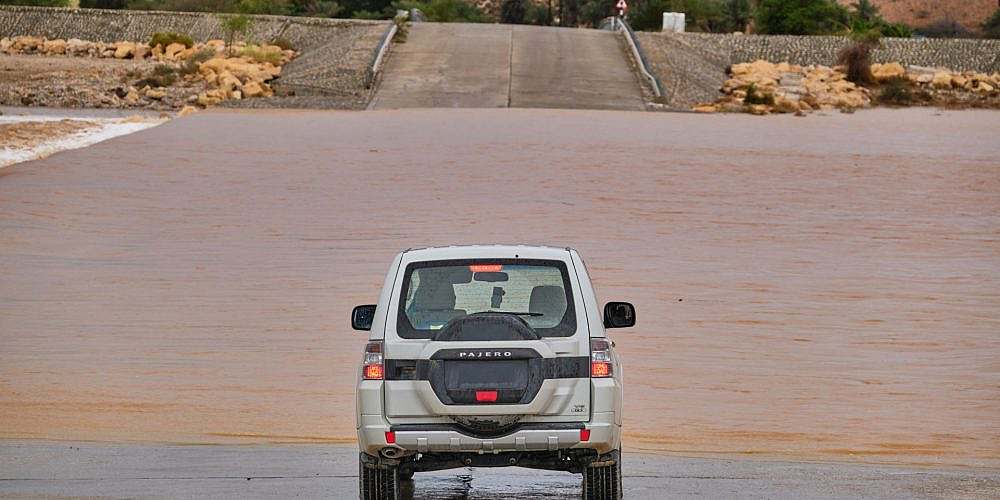
Once we reached the wadi, a ranger caught up with us and followed us from the car park. He told us that he was closing the wadi because there would be so much water here in half an hour that we wouldn’t be able to get back. We waited and sure enough, after half an hour the water suddenly came and quickly turned the dried-up wadi into a raging river. We remembered the instructions in the guidebooks – ok, we hadn’t thought of that! Good thing the ranger was there.
We drive on to our penultimate destination in Oman, Ras al Hadd, where there is a lagoon that is good for kitesurfing. On the way is the Wadi Bani Khalid, alternatively a small diversions via Ashkharah or Asilah would have been possible to go kiting again, but this Wadi Bani Khalid was on my wife’s wish list. We reached Ras al-Hadd at sunset, the wind would be enough for a 12, but I was looking forward to a session the next day. Mistake! Because you should use the wind when it’s there. Unfortunately, our stay in Ras al-Hadd was very windless.
If there was wind, you could certainly really let off steam in Ras al-Hadd. Most of the lagoon is shallow and the water is likely to be quite slippery in windy conditions. The overhead power lines that used to run directly along the beach have been dismantled and only the pylons remain. On the other side of the headland is the open sea with plenty of beautiful waves.
Not far from Ras al-Hadd is the Turtle Reserve at Ras Jinz, where there is a guided tour every evening at the appropriate time of year to watch the turtles lay their eggs. It’s worth seeing, the turtles are really big and move very quickly. When we wanted to go to the beach ourselves one evening, we were told by the hotel manager that this was forbidden and would be checked.
The dhow factory in Sur is worth a visit. The site is not large, but is reminiscent of a mega adventure playground for men. There is just enough space for two dhows, which are moored in the “dock”. These two dhows are a marvellous example of how these ships are put together. The workers, all from India or Bangladesh, proudly show us what they are working on.
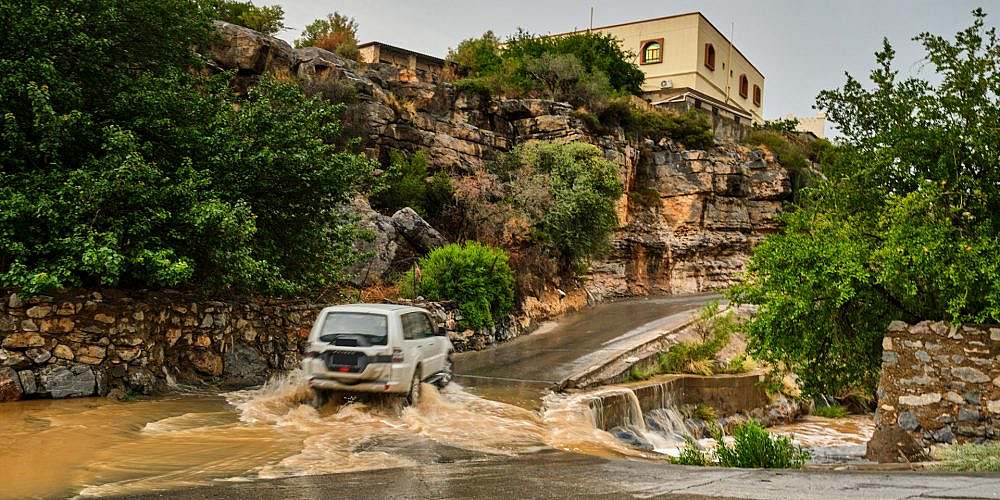
Heavy, prolonged rain overnight, the roof of our hut leaks in one place, we check out, go to the car park, which is under water! All the cars below SUV level have been flooded overnight. As we drive through the town, children are splashing around in the water outside the supermarket. Our journey to Muscat is rainy, the roads are flooded again and again, sometimes together, with quite deep mud deposits. The Omanis stop on the motorway at the waterfalls to take photos. We wanted to see a few more wadis on the way to Muscat, but they were all flooded.
Muscat is very different from the rest of the country. Muscat looks clean and tidy, in stark contrast to the many places we travelled through during our road trip. I’m standing on the kite beach in Muscat at Azaiba Fishing Point. Our car is the only one on the beach and there is virtually no wind. There’s something wrong with the wind statistics, but that doesn’t help me now. I pack everything back into my kite bag, tomorrow I have a flight back to Munich.
We lie down by the hotel pool, go to the rooftop bar, which doesn’t serve alcohol because of the Islamic festival of sacrifice – bad timing again. On the way to our room, two women from Saudi Arabia in bikinis are standing in the lift, we don’t want to get in, but they wave us into the lift, both seem drunk. It turns out that they are our neighbours. As we say goodbye, one of the women takes a huge bottle of vodka out of her bag and tells me to get a glass, but I only find a whisky glass in the minibar. The Arab woman fills it up halfway. We ask where she got the bottle -> Duty Free, she laughs!
During our journey we got a lot of impressions of the country and its people and the animals, especially the camels in Oman. It was different from what we had imagined. We enjoyed our road trip. The journey made a deep impression on us in many places and surprised us again and again. We will be travelling to Oman again at some point, but then during our winter months and without a kite.
Author: Stefan Oberstein












 Frank Woelky, born in 1973. Kitesurfer since 1998. Since 2006, I have been combining kitesurfing and web design on trips lasting several months off the beaten track.