

Uyuni is the last dusty border post with 18,000 inhabitants before the 12,000 km² Salar de Uyuni salt desert. We arrive after midnight. Until the morning, people are constantly leaving the dorm or dropping dead in bed.
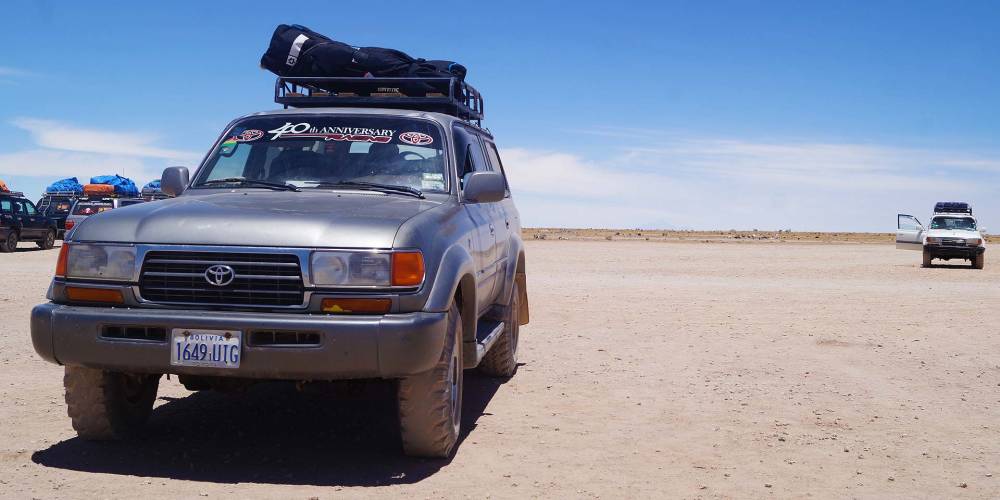
The next day I wait in vain for a thorn bush drifting in the wind between two duellists. Together with my travelling friend Francesco, I grab the last free seats in one of the more than 50 jeeps that set off into the Salar de Uyuni every day.
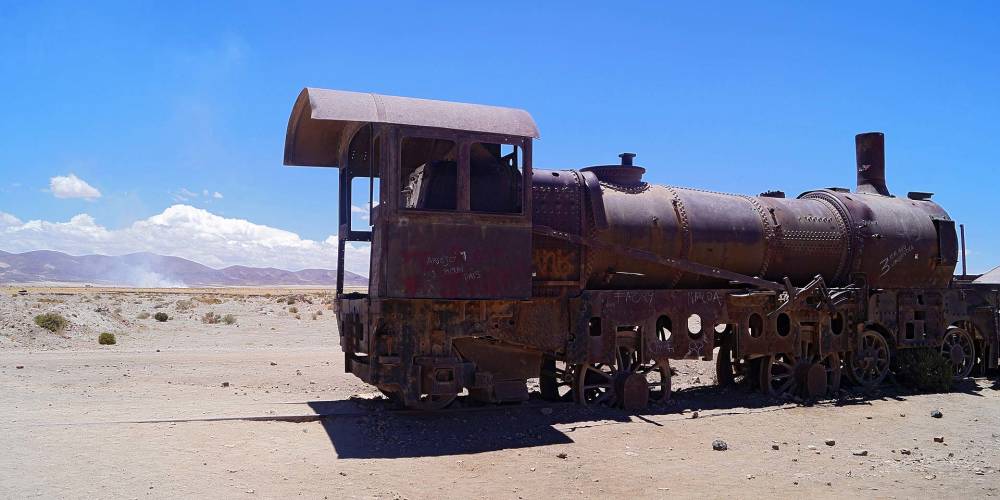
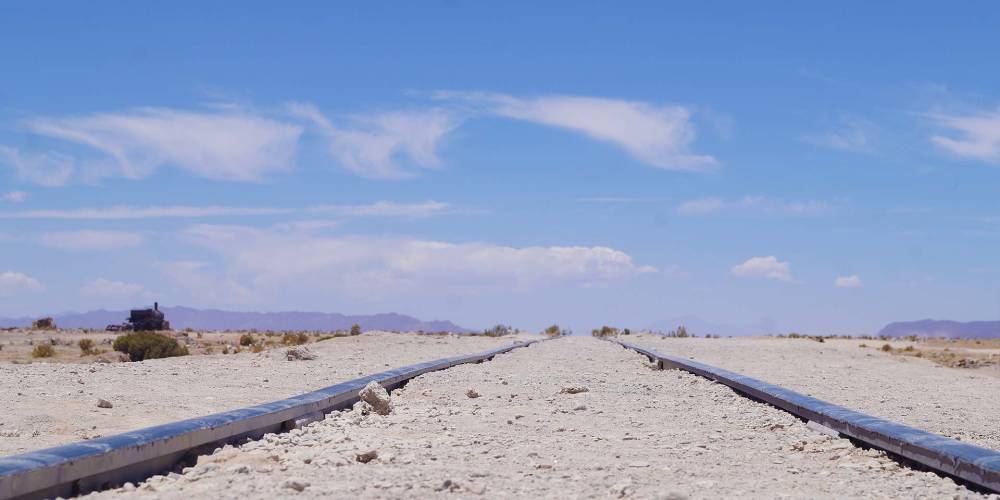
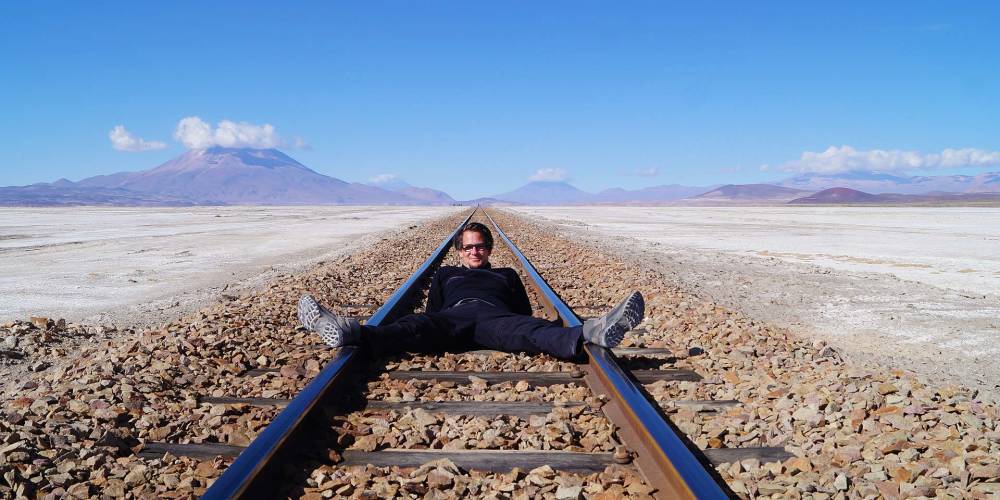
On the outskirts of Uyuni there is a cemetery full of 150-year-old train corpses from the golden age of silver nitrate mining. A few kilometres further on, the Colchani tribe runs a small handicraft market.
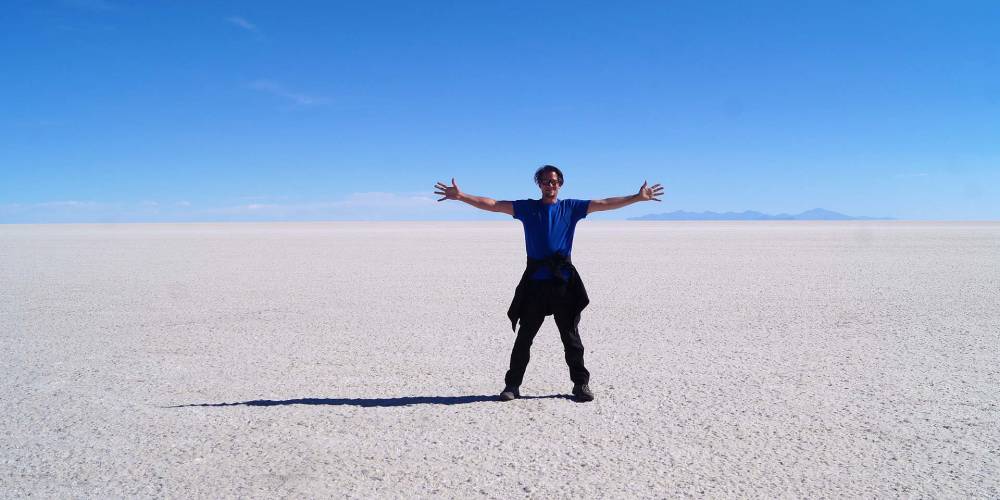
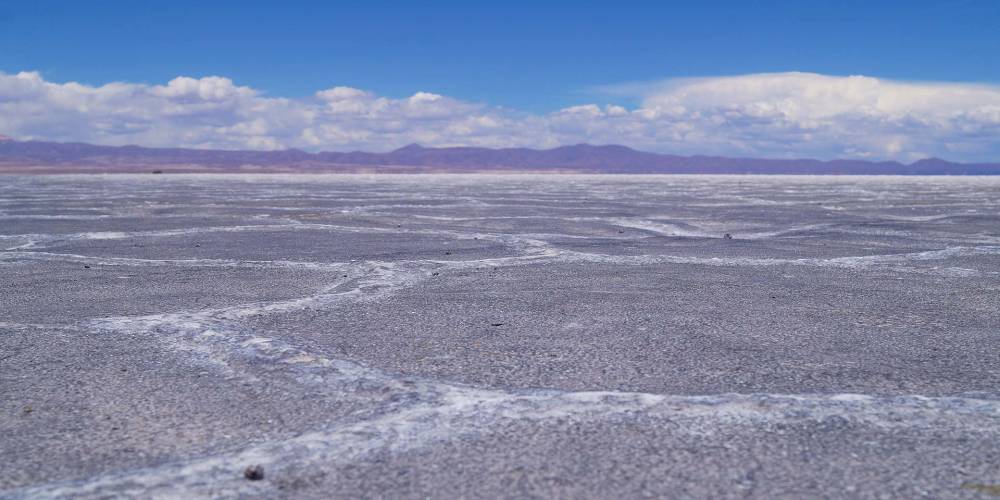
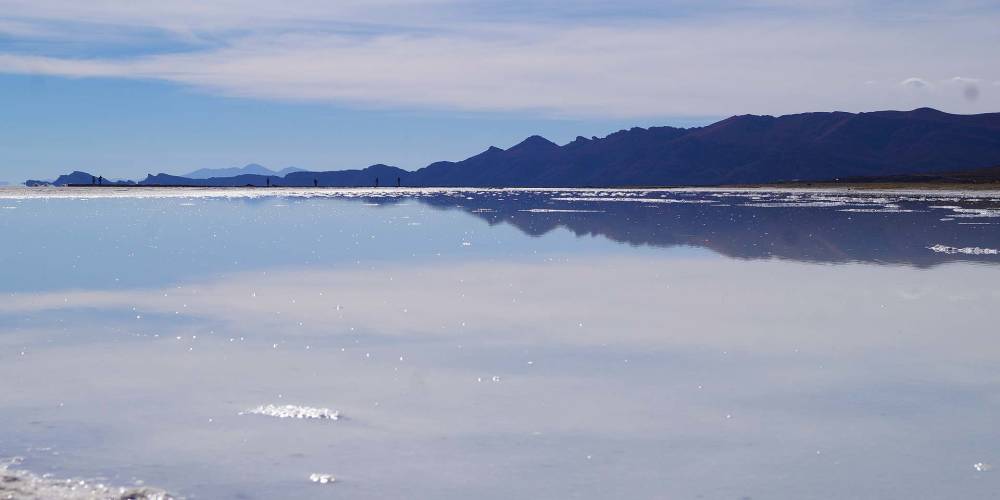
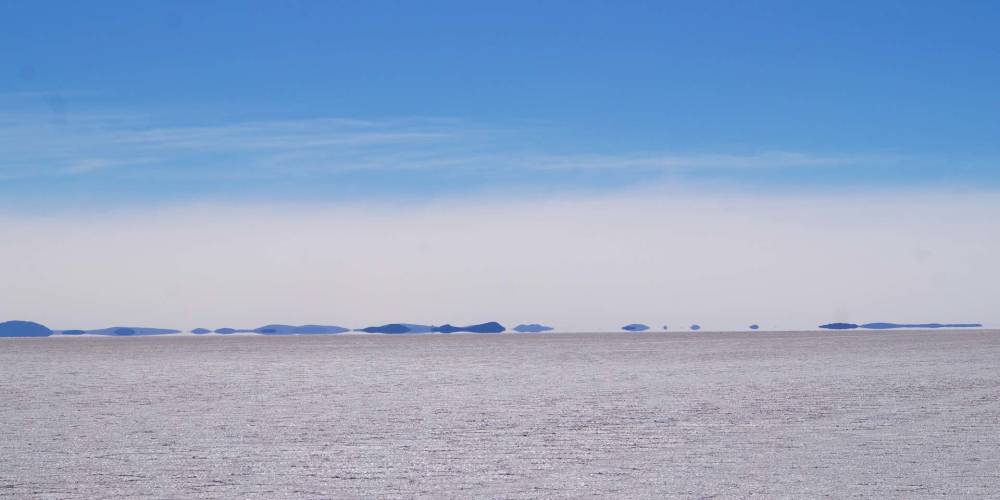
Then it’s straight into the Salar de Uyuni. In the rainy season, the water is several centimetres high everywhere. A few French people have even ripped the Salar de Uyuni with their kites. With a salt content of 50%, no stainless steel remains rust-free. The six-monthly change between the rainy and dry seasons divides the plain into crazy puzzle pieces with salt crystals growing upwards at the edges.
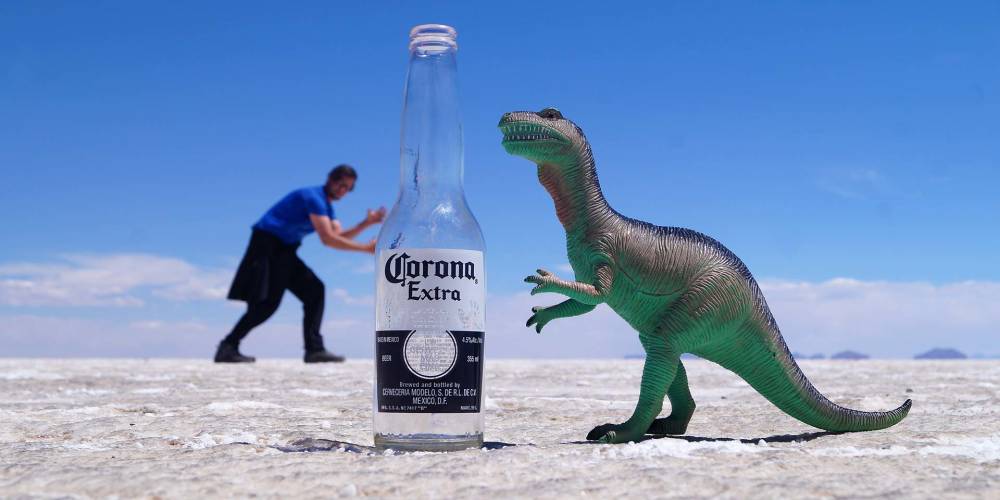
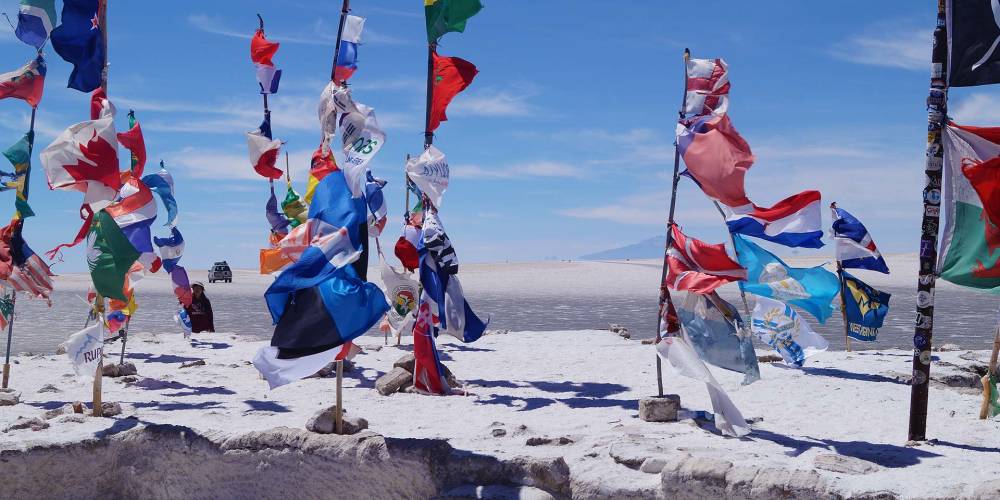
In the middle of the Salar de Uyuni stands a hotel made entirely of salt. The international crowd jostles around in search of the best picture. The only quiet pictures without people are difficult to capture among the 50 jeeps.
Why is it that the ugliest people are always the most keen to spoil the most beautiful natural scenery with their faces? And why do they always do a 180 when you point out to them in a friendly manner that their idiotic poses would harmonise much better with the back wall of the next location? World! Open it up to me!
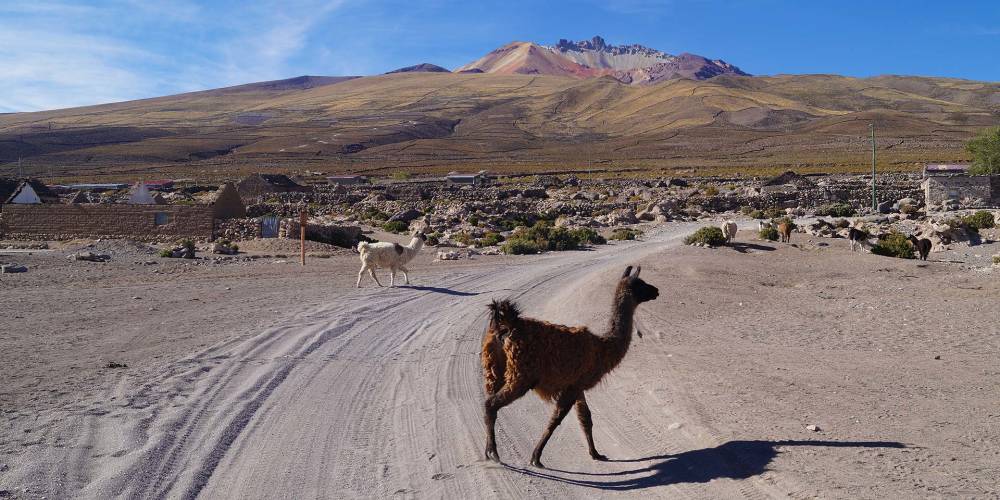
The day’s destination is 130 kilometres from Uyuni on the other side of the desert. I doze off at over 100 km/h on salt. Between the banks of the salt desert and the Tunupa volcano lies the small village of the same name. Free llamas graze on the meadows in front of the salar.
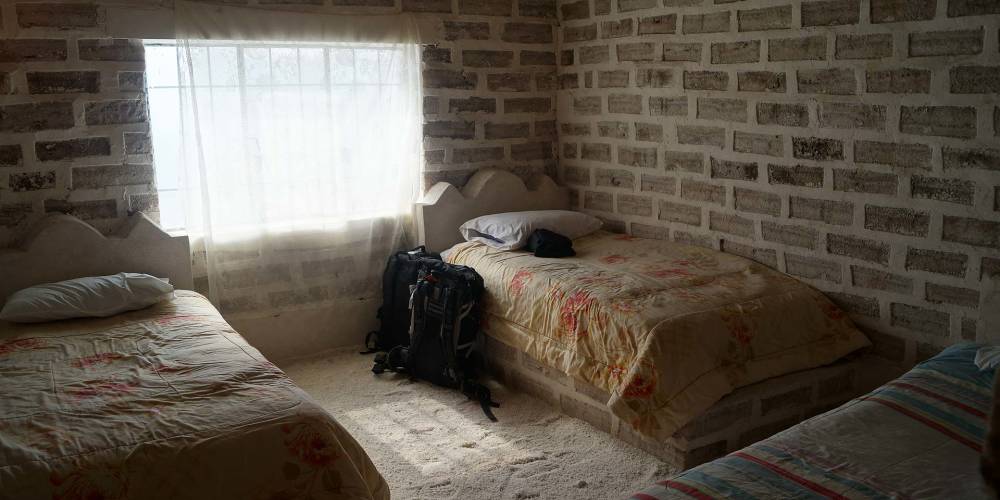
Our accommodation is made entirely of salt, even the floor of the room is covered with a centimetre-thick layer of coarse salt. Even the sugar for the coca tea, which is urgently needed at 3,600 metres, tastes salty.
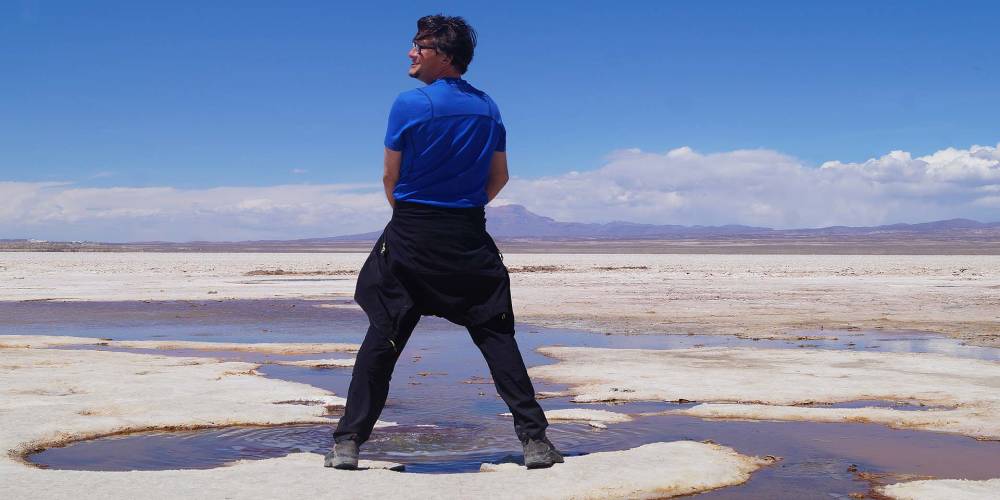
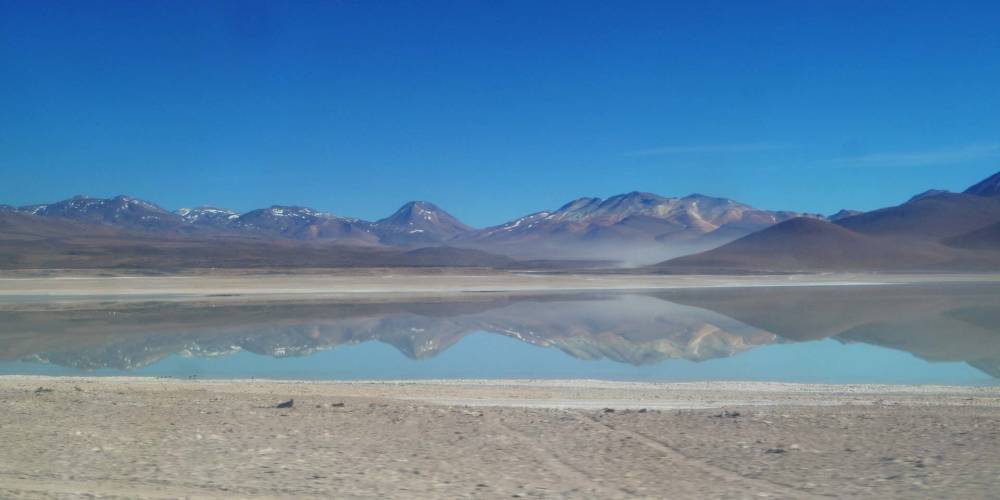
A good wind blows over the last small 10 cm puddles from the last rainy season on the Salar de Uyuni. I’m too flat to kite. Even after almost two weeks, the altitude sickness hasn’t quite given way to acclimatisation. A lone flamingo fishes in the setting sun. The whole world doubles up in mirror-smooth water and the volcano unpacks its Sunday colours.
At night I dream that I am sleeping in a bed full of stars. In the morning I realise that it wasn’t a dream. A few grains of salt have got lost between the sheets and the mattress. If you run your hand over them, they briefly phosphoresce green in the night like shooting stars. I spend 12 hours catching up on a week’s worth of missed sleep between fallen stars.
At this altitude, the body consumes twice as many calories. I realise this for the first time when the jeep arrives a little late for the second day. Sugar water is sold out and lunch doesn’t arrive for another six hours – just in time to stop Gargamel from going on a hypoglycaemic rampage. The body only knows two states here: Hungry or tired. The only thing in between is thin air.
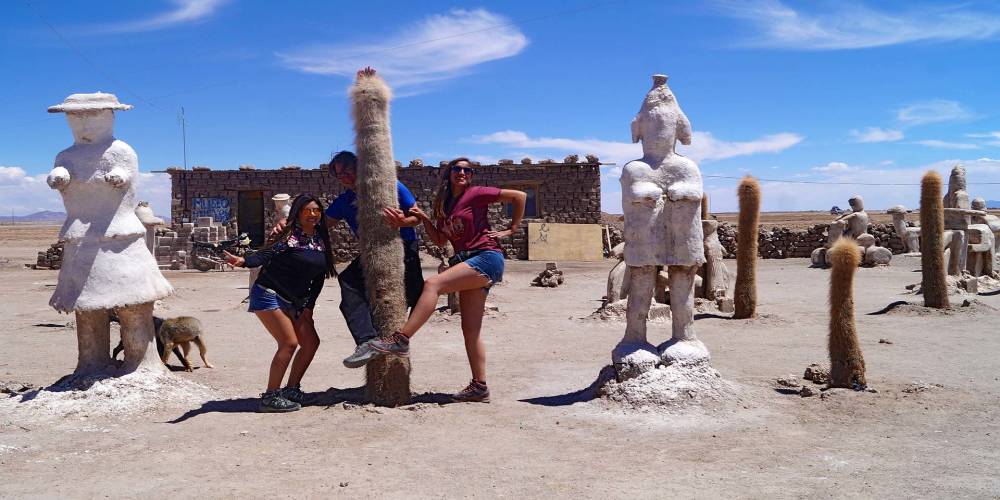
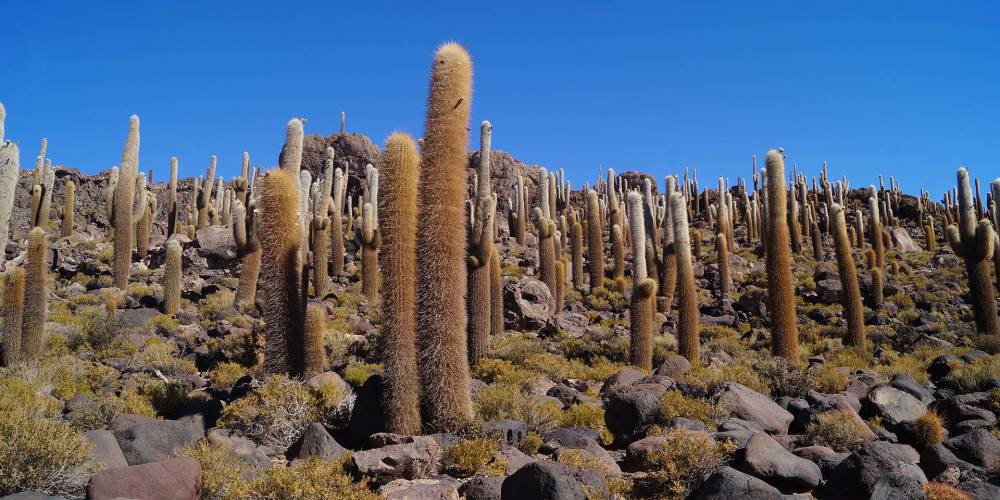
On the second day, there is only one stop in the endless expanses of the salt desert: Isla Incahuasi, covered in giant cacti. A motorbike man rushes sysiphonically from left to right to escort all the masses to the paid entrance. Locking up Salt Sea islands is a tough job.
The next simple hotel in Puerto Chuvica is also made entirely of salt. We are at the end of the world. There is electricity and hot water – at least in theory, and of course only as long as there is any water at all. A sign in the dining room prohibits the use of dynamite – scandalously, even in the immediate vicinity.
Altitude sickness is a combination of a defective engine head gasket, hangover, Montezuma and asthma. Pouring water ten times a night keeps the throat from closing up.
Silent lightning flashes from mighty clouds on the horizon. Millions of stars shine out of the crystal-clear sky above. The hotel’s sheepdog fails in his attempt to bark at every single one in the sky. Around four o’clock, he and his German mutt genes run out of steam.
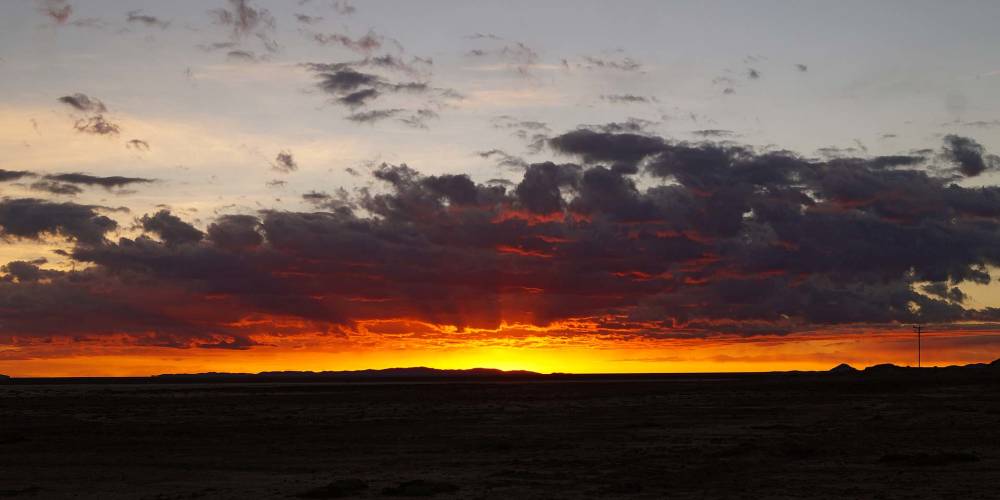
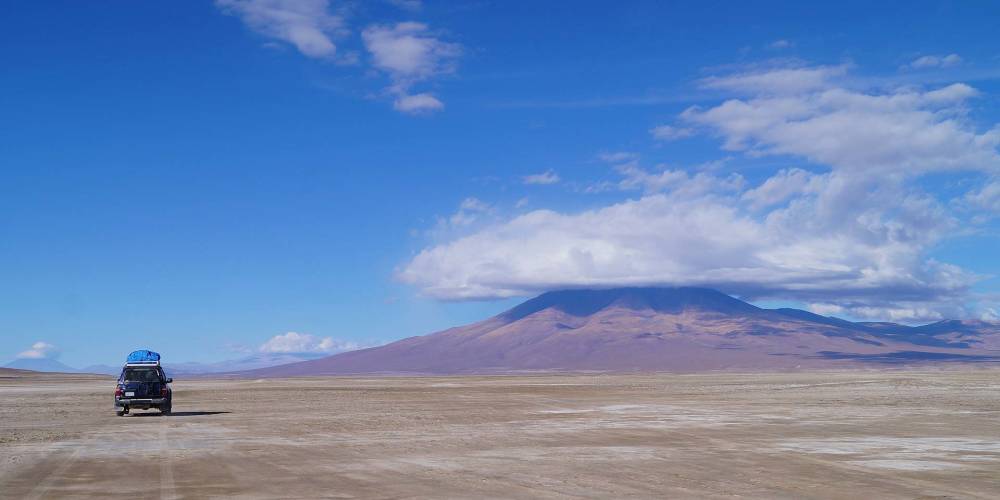
On the third day, we set off into a gigantic sunrise. After two hours, we leave the Salar de Uyuni and switch to rugged, rocky sandy desert trails. Salt deserts can also be ridden on lowered mud bikes without any problems. From now on, you really need 40 cm of ground clearance under 4WD.
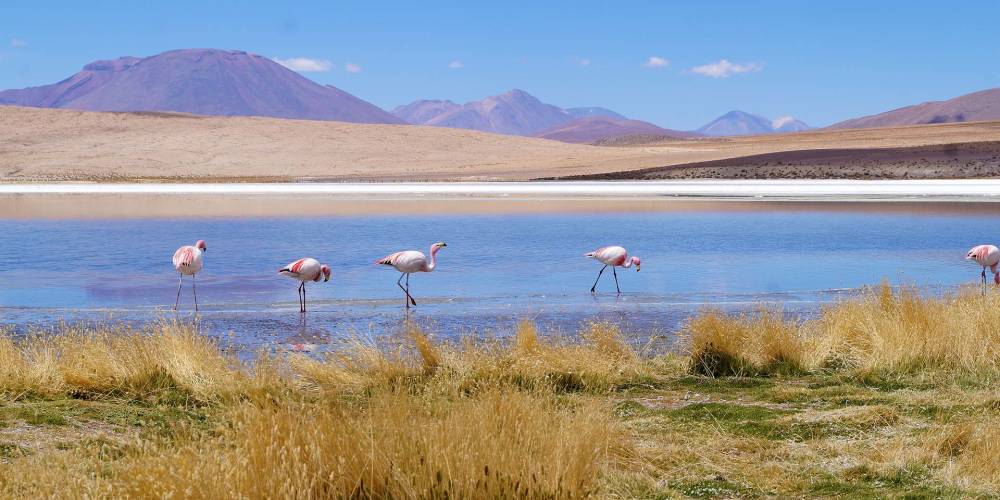
The trail becomes more and more challenging up to 4,300 metres, past an active volcano, sand pits and four high alpine salt lakes full of flamingos. Part of the route is along old mine tracks. Signs count down the kilometres to the Chilean border and explain why Chile and Bolivia don’t get along very well today: the mineral resources used to all go to Chile via dirty deals.
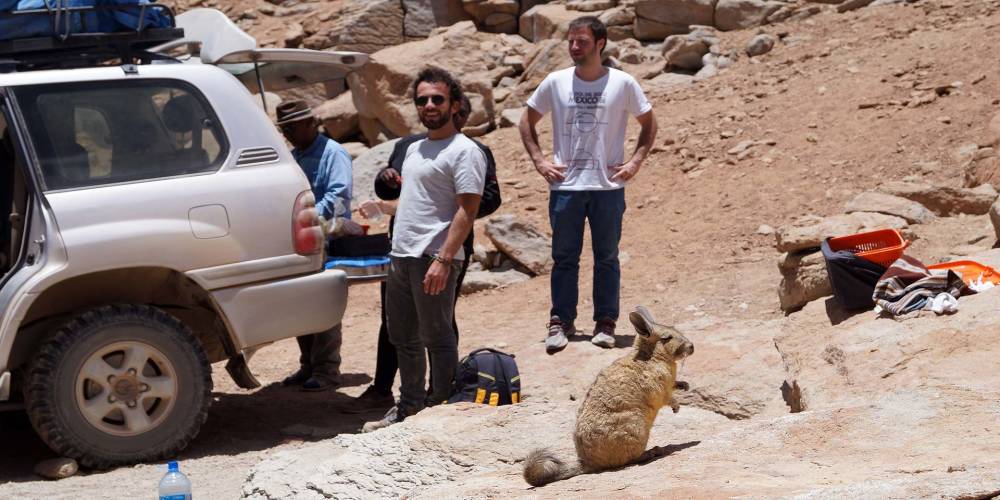
After almost eight hours of rock climbing, at lunchtime in Inca Canyon at an altitude of 4,000 metres and a pleasant 20°C, a fearless rock hare comes within a hand’s breadth to snorkel for food. In the sandy desert behind, ostriches graze in front of rainbow mountains right next to the track.
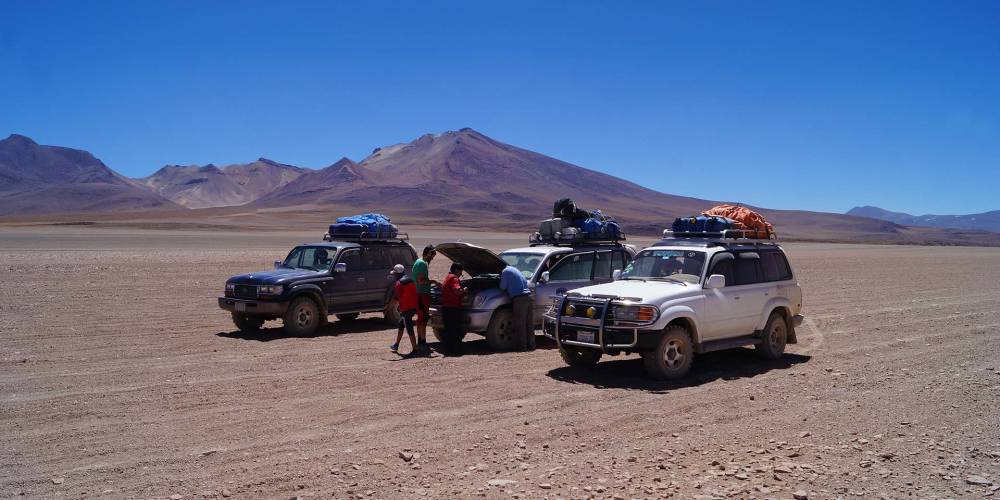
Our wise driver with 30 years of desert experience was able to quickly repair the first minor engine failure in the morning. The second engine failure in the afternoon easily occurred 80 kilometres after the last small settlement in a windy and endlessly wide high valley. Wild vicuñas pass by. With the help of two more jeeps, the damage is repaired after half an hour. The driver quickly repairs the third one shortly afterwards.
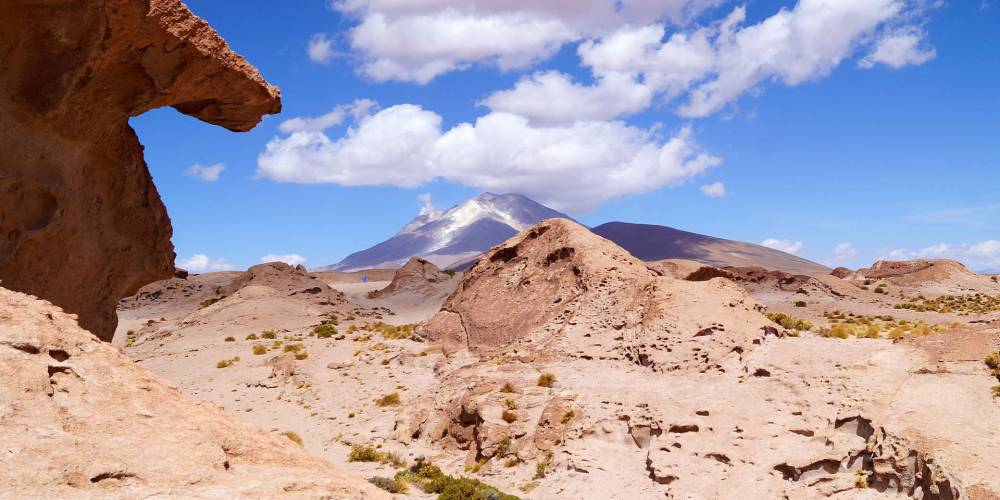
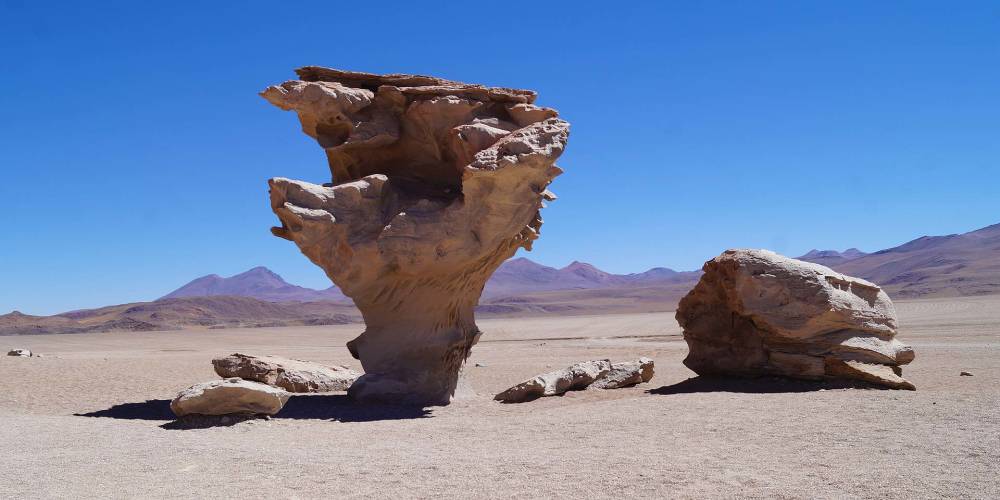
In the nearby Arbol de piedra, the wind is chopping at 35 to 40 knots. The stones say: frequently. Wind and sand have polished the volcanic rocks to a height of two metres over thousands of years.
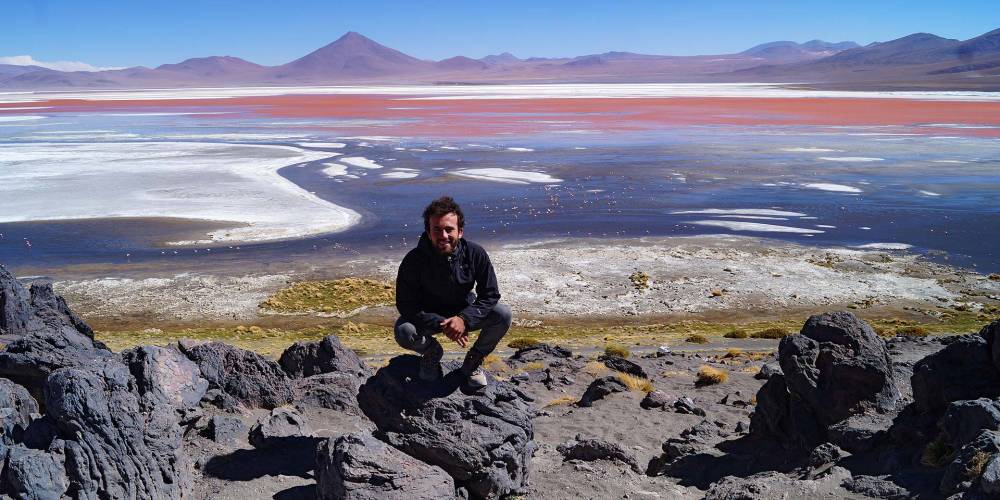
The Laguna Colorada at 2,600 m only shines in full colour when the wind is strong and the sun is shining. Just like today. It gets its colours from bacteria. As it is the only lagoon up here that never freezes over, the bacteria survive the winter. If the red bacteria die, they turn black. Hundreds of flamingos fish for them – and turn red again.
The day’s destination is a hostel near the lagoon in the middle of a stormy lunar landscape. There is only a short supply of electricity and two ice-cold washbasins for 20 guests. But that’s all they need after the ten-hour tour.
The last day begins before four o’clock at night in the bitter cold. A supernova joyfully plays colour changer in the east to load the jeep. It’s rush hour in the Milky Way.
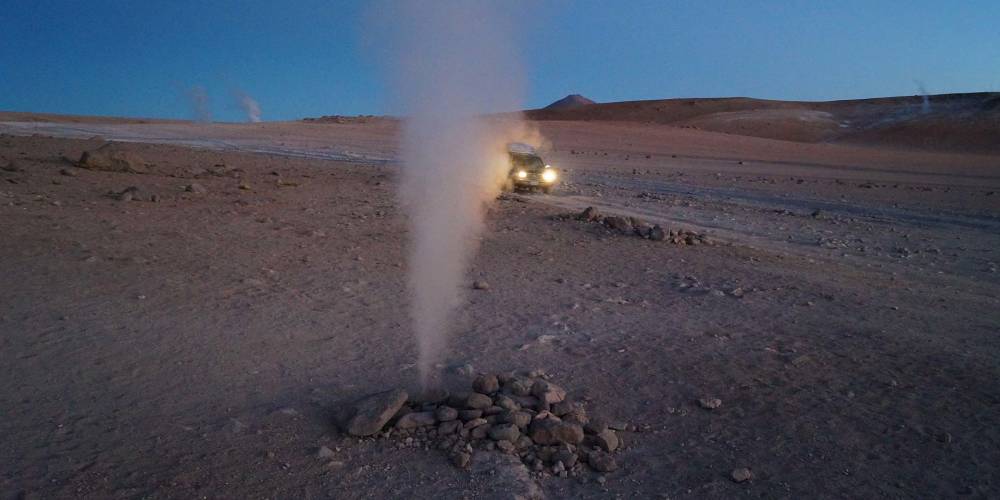
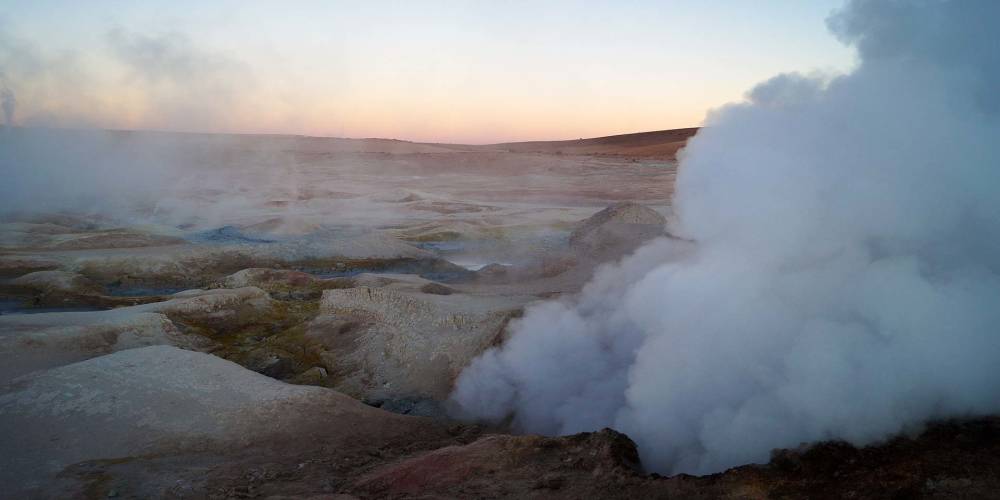
We reach a bubbling geyser field at 4,700 metres before sunrise. Signs warn us not to enter. They are like all signs in Bolivia: they just stand there.
The sun rises between snow-covered volcanic peaks. Jeeps further down are trailing kilometres of dust behind them.
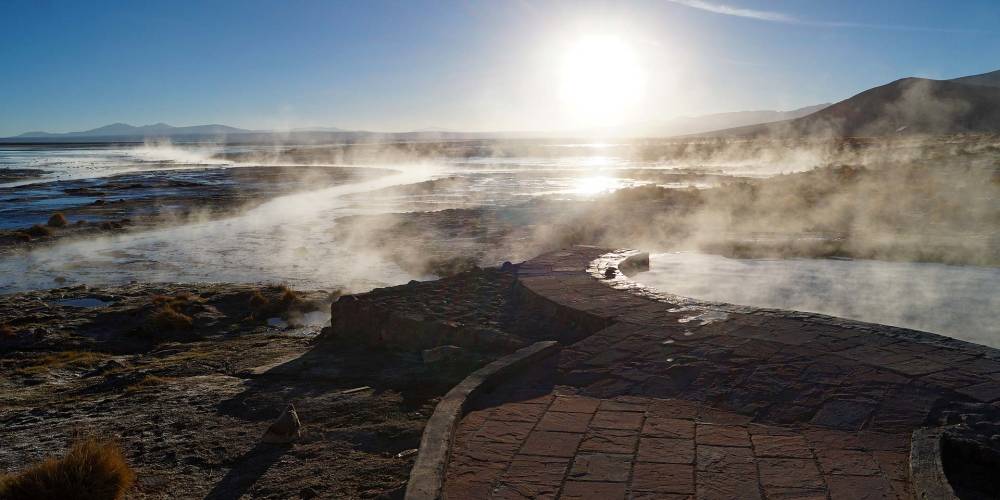
Francesco can’t get out of the thermal springs next door. Birds attack me when I accidentally enter their breeding grounds. The water gushes out of 100 small springs. One is steaming, a metre further on it is frozen.
A few doses of lunar landscape later, we have reached the end of the journey. Laguna Verde lies at 4,400 metres above sea level and had been my intended high mountain kitesurfing spot for months. Unfortunately, it didn’t work out. Firstly, it’s just inside the national park. Secondly, the good driver overzealously asks the ranger where the best place to launch a kite is. The ranger is less than pleased. Thirdly, there are also flamingos here, and they are definitely less used to kiters than those in Paracas. If you want to try it anyway: the wind starts quite suddenly at 12 noon and kicks up to over 40 knots in the afternoon.
The almost four-day tour over 900 kilometres of desert off-road costs around 150 euros including entrance fees and leads through unreal, beautiful, remote areas of southern Bolivia between 2,500 and 4,700 metres above sea level. The accommodation and food are basic. If you want luxury, you should go somewhere else, because no matter how good the jeep and driver are: up to 12 hours a day are hard, even sitting down. The distances are long, so the photo stops are short and often quite crowded.
I leave Bolivia at the southern end of the tour and continue on to Chile at the border crossing near Laguna Verde with the dustiest kitebag ever.




 Frank Woelky, born in 1973. Kitesurfer since 1998. Since 2006, I have been combining kitesurfing and web design on trips lasting several months off the beaten track.