

The Bolivian tourist smugglers pile 48 people, just as many rucksacks and my kite bag onto the eight metre long boat from Isla Del Sol back to the mainland. Life jackets would only marginally extend the survival time in six-degree water several hundred metres from the shore anyway.
The waves come from the side. Thanks to 20 people on the roof, the boat’s centre of gravity is well above the non-swimmer rate on Philippine ferries. Great rocking, but nobody sways…
The bus takes us over an almost 4,500 metre high pass to the next ferry. The motorised board for the bus bears the name “Rey Salomon”, which was certainly chosen in ignorance of history. You can see the water clapping through the planks of the boat for the passengers. I am delighted by the fact that the number of possible ways to die has now increased to two thanks to drowning and suffocation.
Bolivia has the same relationship with pollution as Cambodia has with child prostitution. Signs everywhere advertise against it – but everyone obviously doesn’t give a shit. Mountains of plastic rubbish pass by the bus window.
I’m a big fan of Evo Morales. Above all, nationalising the private American oil and mining industries, introducing a hefty entry fee for US citizens only – and still somehow managing not to be killed or ousted by the CIA as a socialist South American president: that shows a healthy sense of humour, a sense of justice and a pronounced fatalism – and it really impresses me. Nevertheless, he doesn’t have much under control.
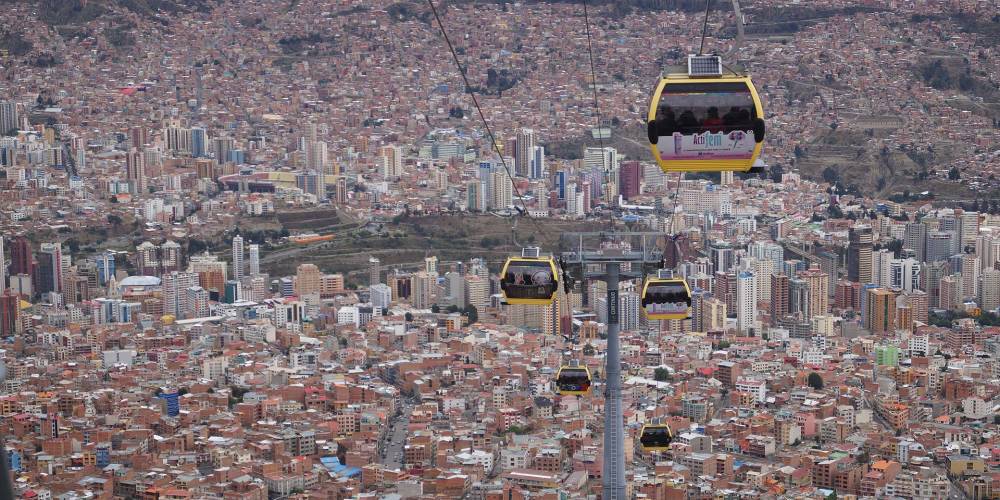
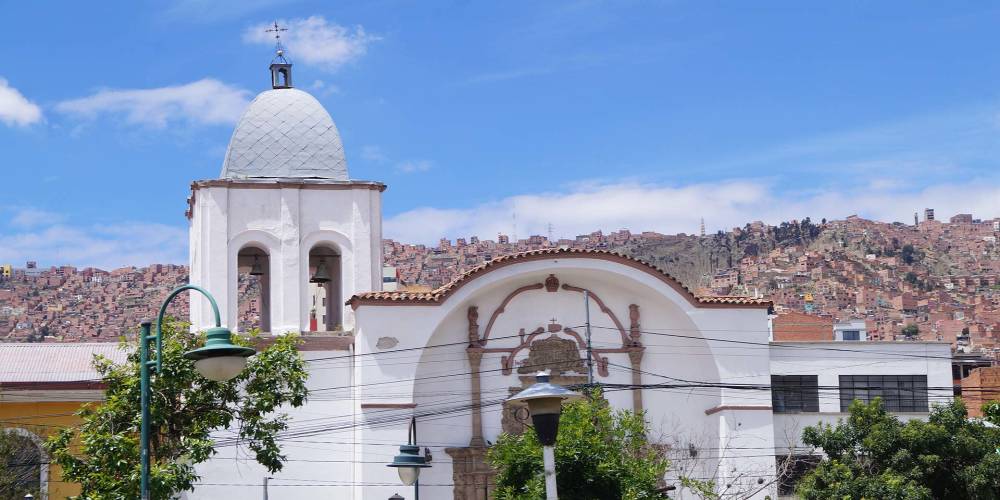
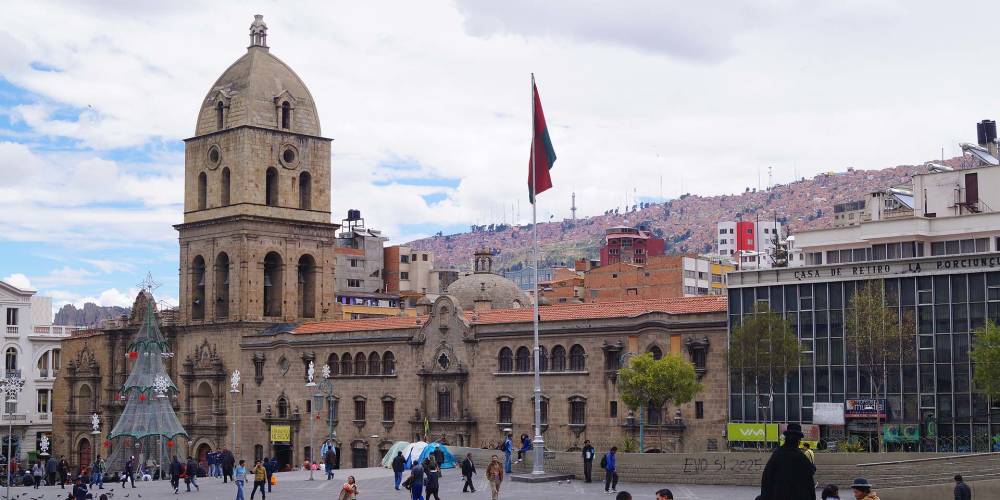
La Paz is a brick-stoned wave, poured into a canyon at 3,200 to 4,100 metres above sea level – and with three million inhabitants, it is the highest city in the world. The roads are narrow, steep and chronically congested. Honking horns seem to move the avalanches of cars faster than engines.
The Wild Rover is the best-rated hostel in Bolivia. However, only drunk tweens were allowed to vote. This week, the tenth anniversary is being celebrated with boozy karaoke at 98 dB(A) until two o’clock in the morning. Then a good 100 roaring alcoholic zombies march past the Dorm for an hour (“I swear I didn’t fuck her, honey!”) into the discos of La Paz. From three o’clock onwards, they come back drop by drop for hours (“I knew you did her!”). Sleep is out of the question and the altitude sickness continues to gasp for air. I guess there are still places that are just too much for me.
I move into the house of the ex-president of Bolivia on the other side of the road. The Colonial Hostal is beautifully old, some of the furniture is still genuinely Biedermeier and the Wi-Fi is finally good for working again.
The city tour with Daniel from Red Cap Tours is the best ever. Especially in view of the fact that there is not really much to see in La Paz apart from damp dirt and lots of misery, the two of them deliver an extremely informative and entertaining three-hour tour.
The two comedians self-critically recapitulate: “We’ve had 186 heads of government in Bolivia in 200 years. We usually elect the bad ones – such as traitors to the country – to a second term of office. We hang the good ones.”
Seven presidents were actually hanged. They cite “misunderstandings”. Staying in an ex-presidential house is suddenly the norm – and tonight I’m putting a presidential spell of old hiking socks around my bed as a purely prophylactic measure.
Evo Morales is mutating into a dictator. Information like this doesn’t reach us in Europe. He changed the constitution and form of government so that he could be elected a third time. Then he called on the people to elect the highest constitutional judges, but at the same time imposed a total ban on communication about their positions. After it emerged that all the candidates were Morales’ confidants, 53% of Bolivians voted in favour of the non-existent judge “Zero”. Bolivia is boiling again.
Morales’ live television speeches are legendary and have earned him the title “Trump of South America”. A few samples? “Eat less chicken or you’ll turn gay!” Outcry from the gay community. Retreat and attempts to justify it with hormones in breeding.
Morales wants more Bolivians. So he announces an insanely high condom tax. Outcry from the state health authority: “Hey, these things also protect against sexually transmitted diseases!”. Retreat: “Okay, then every childless woman over 18 pays taxes to every underage mother.” Outcry. Retreat. Outcry…
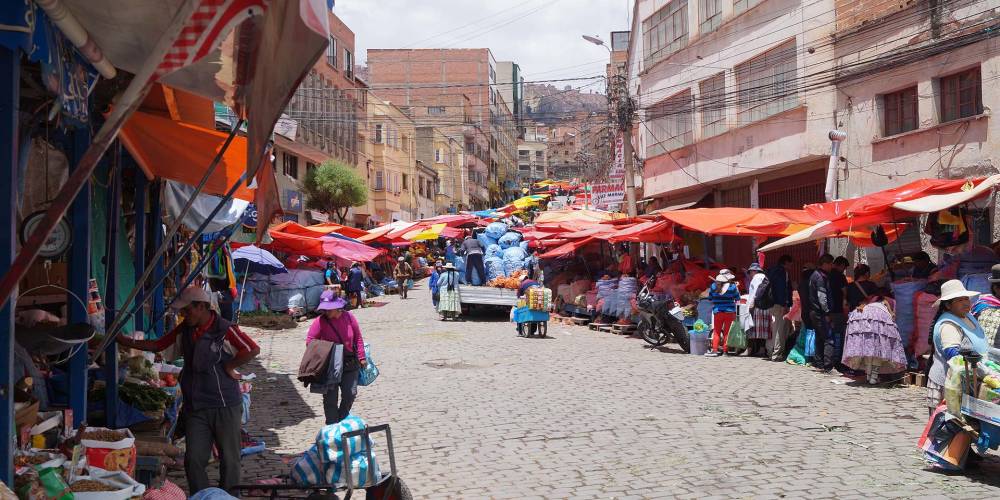
Lecture at the witches’ market: “In Bolivia, you become a witch when you are struck by lightning. You get a witch to build a house. She sacrifices a living llama in the foundation for Pacha Mama.
Big buildings need big sacrifices. The witch must have been struck by lightning twice. She searches the streets of La Paz for a drunken homeless person. There are many of them. She pampers him with food. On the day of the sacrifice, she gets him so drunk that he is barely alive. That’s how he ends up in the foundation.”
The story is true. One escaped and reported. Many disappear. We all keep quiet – and are guaranteed not to let any Bolivians buy us a beer again.
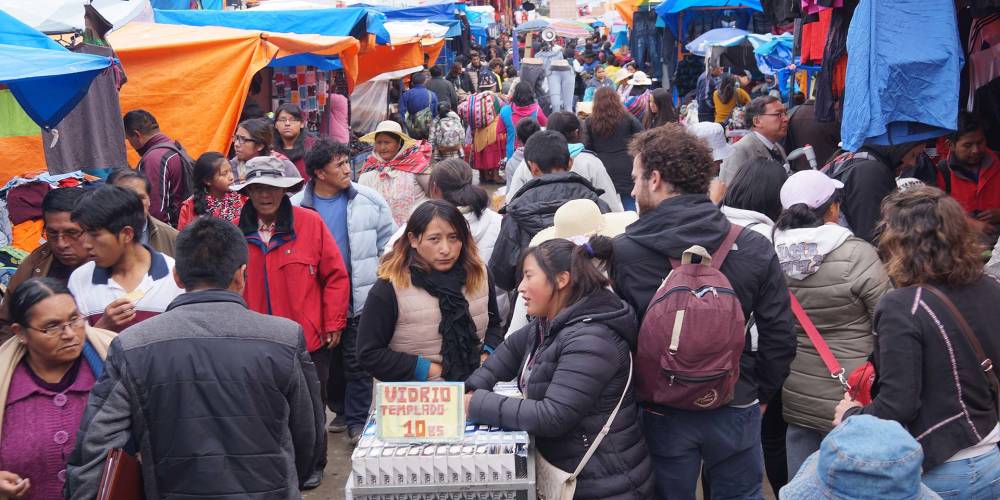
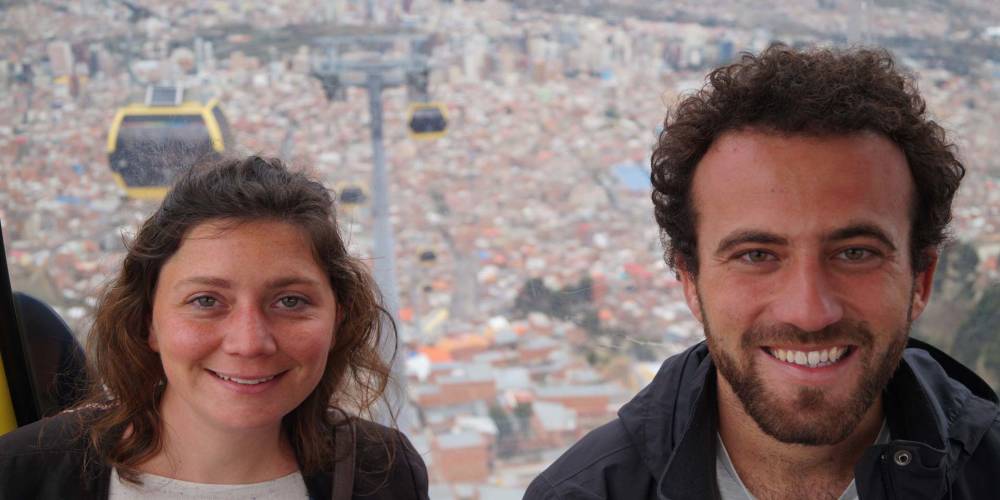
I move on to the metro with a lovely Italian from the tour and his girlfriend. The metro in La Paz is a system of gondola lifts. It takes an hour by bus to get up to the poorer neighbourhood of El Alto. The gondola takes you to the largest flea market in Latin America, which takes place there every Monday and Thursday and is 400 blocks long, in just a few minutes for almost no money – including a magnificent panorama.
In the evening, the Bolivars play against the Tigres in one of the last matches of the season for the Bolivian football championship in the nearby Olympic Stadium. Both are from La Paz. We get black market tickets for very little money and shortly afterwards are sitting in the Tigres’ underdog south curve. Even before the game starts, the first three rows of seats burn down 50 metres diagonally below us in the Ultras area thanks to the lack of security checks at the entrance and a little too much fireworks.
In the second half, the teams quarrel so violently over a foul that the police have to intervene. Rain starts to fall again. It rains a lot here. 36.000 Bolivians buy new disposable plastic ponchos.
The most impressive thing about the evening is the two Ultra blocks. They engage in a fervent two-hour non-stop band battle, fuelling an unparalleled atmosphere.
The Trans Atlas bus the next morning is the first piece of junk of the journey. Ultra-dirty and nothing works: air conditioning, loo, TV (yay!). I sit in the front row and enjoy the view through a hole in the windscreen, which has been cracked across its entire width and is only held together by sun protection film. I meditate on the two litres of water I drank last night due to altitude sickness as I drive through the desert for four hours.
The good Italian Francesco surprises me at Orouro railway station. After my description yesterday, he spontaneously decides to take the train. As he boards the train, he jokes about the sign proudly proclaiming the use of a Fiat diesel engine.
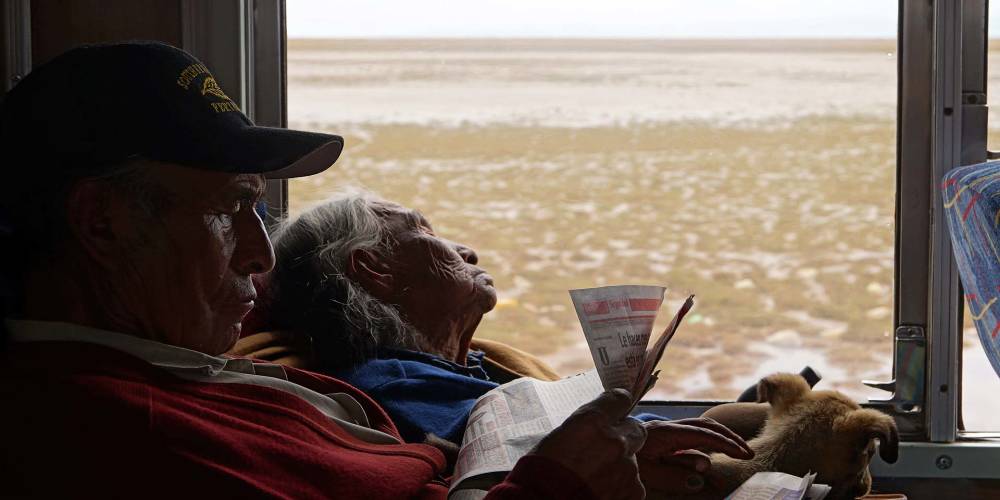
Two hours later, the train suddenly stops rumbling and rocking over its ancient tracks. In the middle of the Bolivian pampas, the engine breaks down. The mechanic arrives by car from Orouro, and two hours later we continue to swing past plastic rubbish and flamingos.
There’s something about the Bolivian railway. Waiters in full concierge regalia bring you good food and drinks for little money. The carriage is swept three times in nine hours. The train kilometre costs one thousandth of the Peruvian price.
Five-year-old children watch in fascination as brain matter is beaten out of a head in slow motion in the on-board cinema. The parents chat undisturbed in the next room. The German is already worried – but also enjoys the incredible freedom of having absolutely no right to criticise.
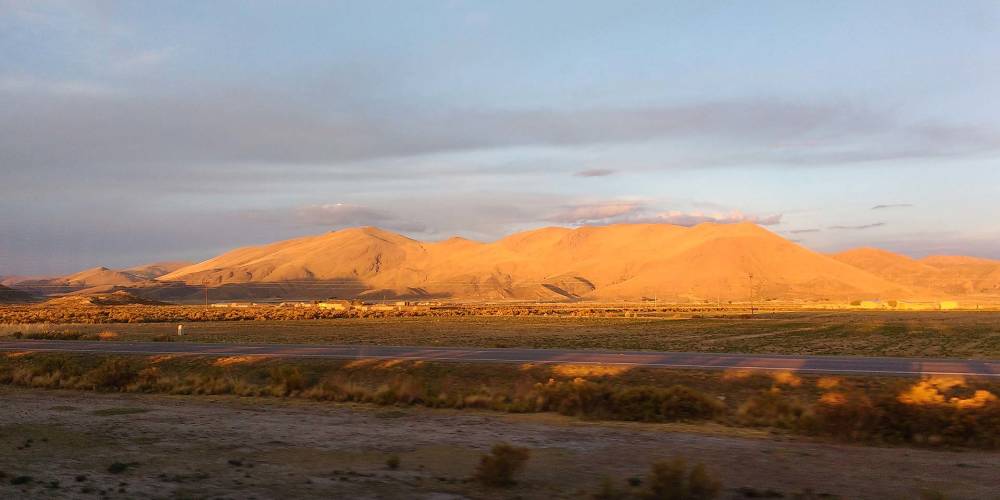
As the sun sets, it shines through the 100 metre-long shadows of the carriages, and the dry mountains behind it glow golden. A long day with 17 hours on the road is far from over…




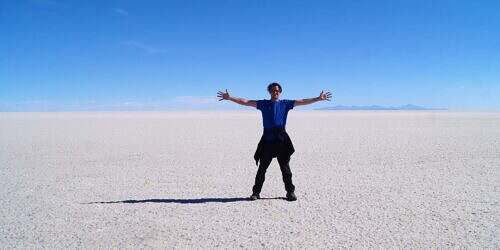
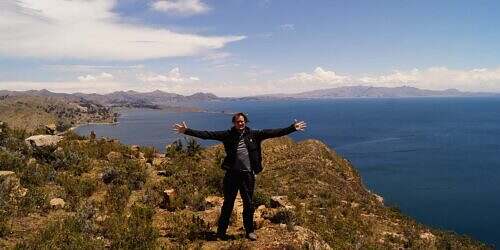
 Frank Woelky, born in 1973. Kitesurfer since 1998. Since 2006, I have been combining kitesurfing and web design on trips lasting several months off the beaten track.