
I join the Facebook group “I drink ouzo and help Greece out of debt”. The Bild newspaper teaches us that we are financing luxury pensions for the Greeks. 22 billion is a drop in the ocean. Every third Greek employee is a civil servant.
That calls for more blind actionism. I fly to Rhodes and immediately start my humanistically motivated aid project “Trivago sells four stars at 12 euros a day”. At these rates, it will only take roughly 780 years until we are king of Greece again. If the plan doesn’t work out, we’ll simply send Stoiber down.
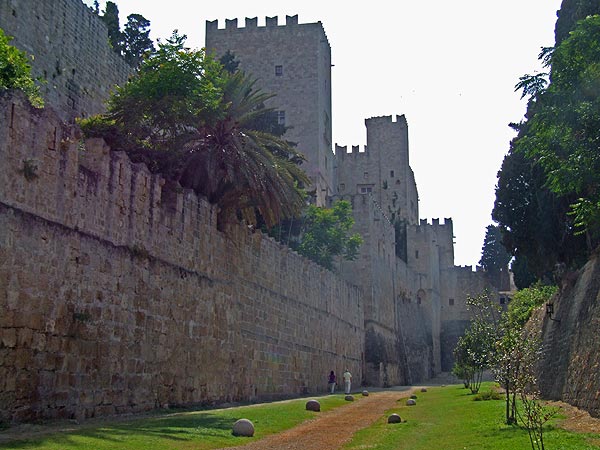
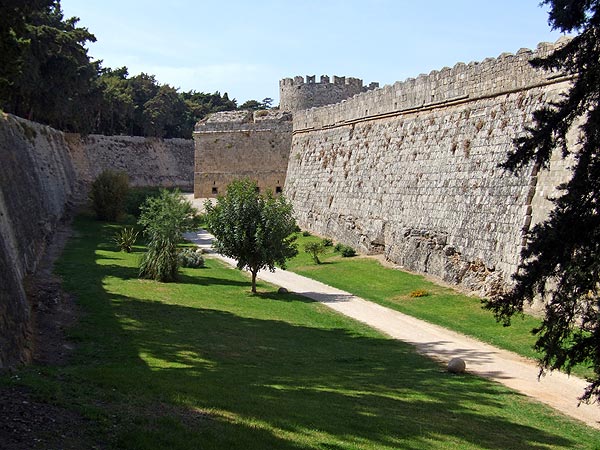
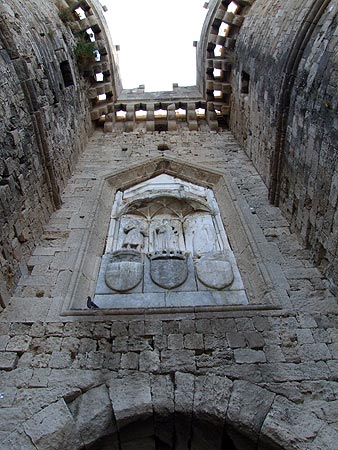
The first day on Rhodes is already my fourth sunny day this year. It’s a pleasant 25 degrees and we walk around the 5-kilometre-long city wall of Rhodes, which is up to 1300 years old. In 1557, under Sultan Süleymann II, the Muslims took such a liking to bowling here that even the Knights of St John were very impressed.
They gave up the exiled state they had founded in 1309 after their bankruptcy in the Holy Land and fled to Malta. There they called themselves the Maltese and were finally disarmed after the Napoleonic Wars. Today they are robber barons again and sail under the Red Cross and the names Maltese and Knights of St John.
Today, the bowling balls lie everywhere outside the city walls, and the bowling pins were neatly restored by the Italians in 1940. Not correct, but still much more impressive than Neuschwanstein in Disney World. Nothing is really real, but feeling like an ant in front of the Great Wall of China is much better than reading funny signs that start with “Here once stood…”.
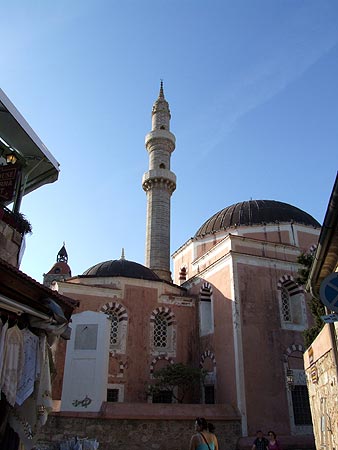
We break through the wall on the harbour side. The Muslims managed to do this on the other side in the area under Spanish rule. Even the doubling of the wall ring plus 20 metres of moat could not prevent this. They ruled peacefully and in harmony with Christians and Jews for 400 years. Then the stupid Nazis came along again and proved that intolerance really is a deeply German virtue.
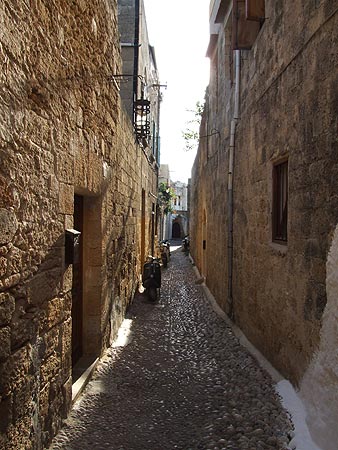
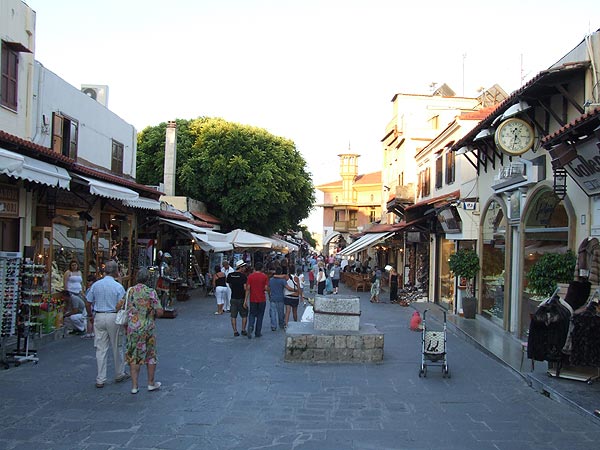
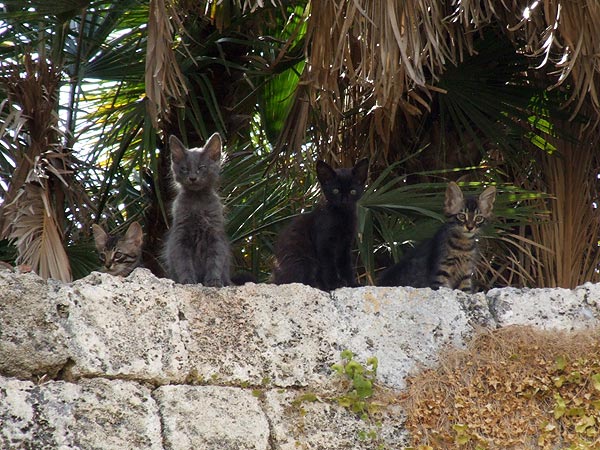
The old town of Rhodes is really old. Knights’ hostels from the 15th century, new boutique hotels with count’s lodges at 350 euros a night and narrow alleyways with dark, heavy wooden doors through which you can look straight into living rooms. A hundred thousand cats as rubbish collectors and a hundred thousand tourists as eager producers. They gather in a few alleyways. Very nice, because everything outside is quiet and empty – even in the Grand Master’s Palace there are just a handful of tourists. The flowers outside bloom quietly in the gentle breeze.
After a 10 km walk, we are just as tired. The next day we take the bus into town. It’s no wonder that Greece has a bit of a national deficit. Diesel belts cost four euros at the market. A pitta gyros for two euros doesn’t make the owner rich either, but it makes us very happy. In Greece, too, there are always really bad gyros. I desperately stick to my plan of eating only gyros for a fortnight.
That might be difficult. The first gyros takes several hours. The waiter breaks into a pre-Hellenistic cellar while serving us. Within minutes we are surrounded by a crowd of cackling archaeologists stretching yellow ribbons. No Greek on Rhodes would ever plan a house with a cellar. Rhodes is history. Everywhere.
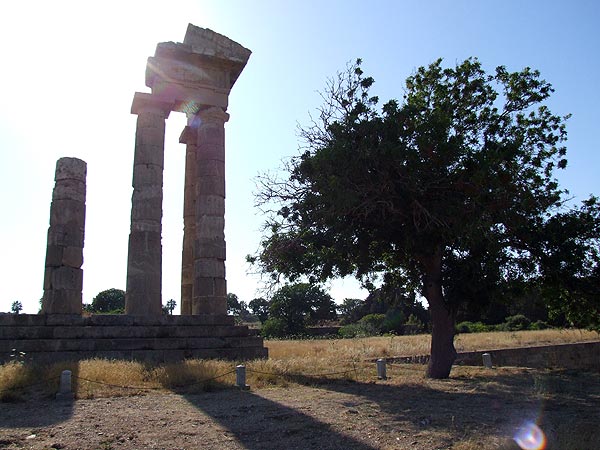
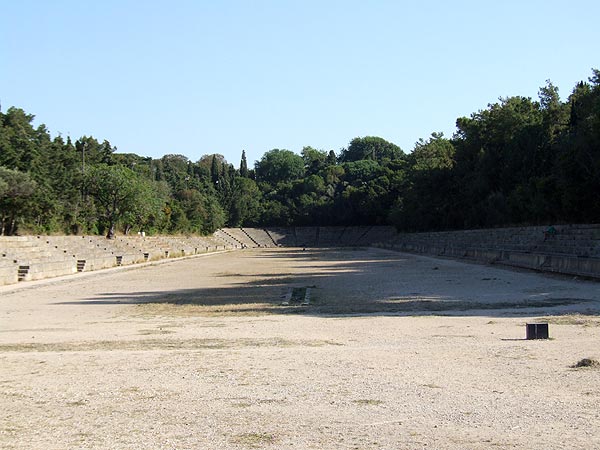
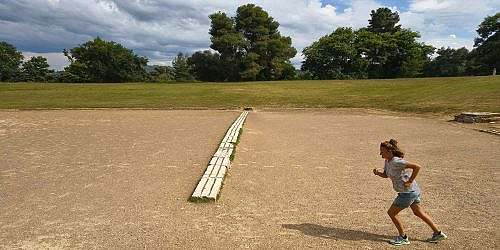
On the hill overlooking Rhodes town lies an ancient stadium and theatre. Even Cicero learnt rhetoric here. Three and a half re-erected columns from an ancient temple stand on the battlefield of history. As a neighbour of Valhalla, that doesn’t necessarily impress me fundamentally. But the young Greeks definitely love history. There are plenty of handkerchiefs and mint-flavoured condoms in the car park in front of the temple.


 Frank Woelky, born in 1973. Kitesurfer since 1998. Since 2006, I have been combining kitesurfing and web design on trips lasting several months off the beaten track.