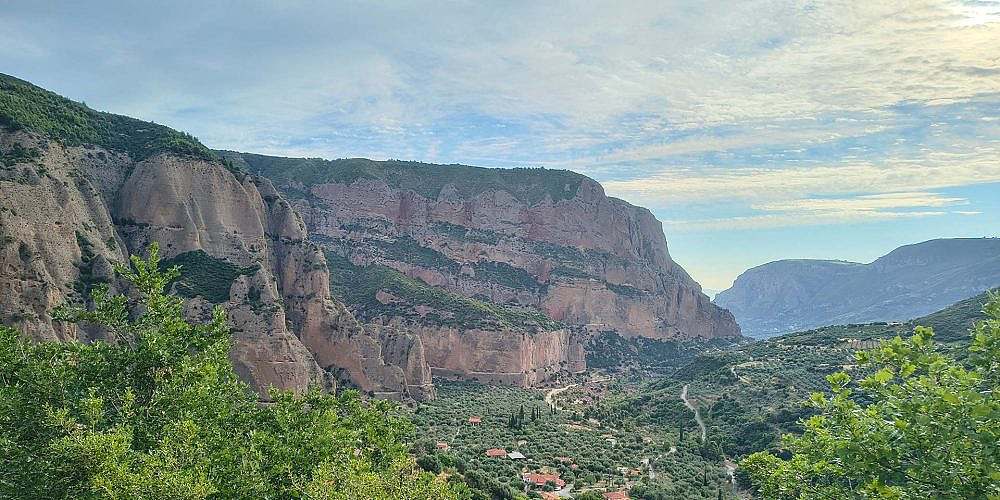
The journey itself remains our goal. So we plan to cross the Peloponnese from north to south along small country roads. At Diakopto, we leave the coast and drive steeply uphill through the Voraikos Gorge into the interior.
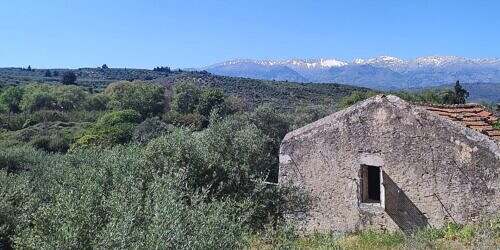
The rock faces glow red in the morning sun. From the third hairpin bend onwards, the mountain transforms into a ring cake. The drop is at least 50 metres. There are no safety barriers whatsoever – just as there were no memorials to road deaths the first time we were in Greece. Presumably they simply lie 200 m further down in the canyon.
We see no cars, just sleepy mountain villages, pure nature and, for over an hour, not a single soul. The old goat herder uses sign language to let us know that the road further south is completely closed. There were no signposts whatsoever. Not even Google Maps knows anything about it.
Frustrated, we drive back 25 km along winding roads from an altitude of over 750 m down to the sea. The motorways in Greece are in good condition, deadly boring and ridiculously expensive. An hour’s ‘time saving’ costs a whopping €20 plus extra fuel. We speed past the Corinth Canal, Mykonos and Sparta.
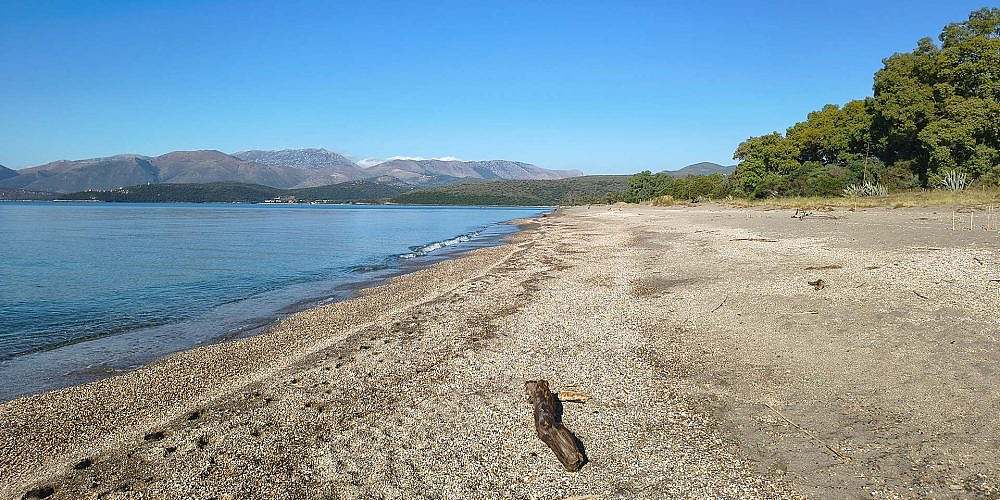
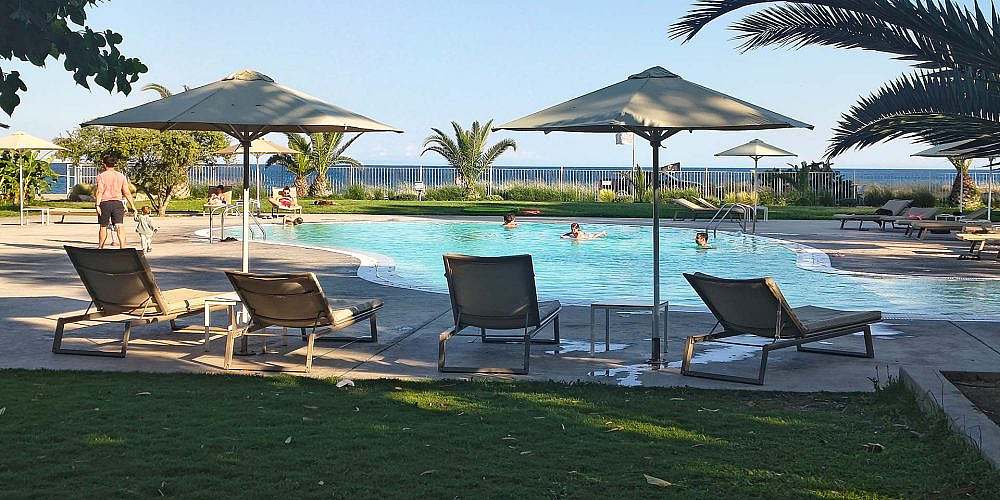
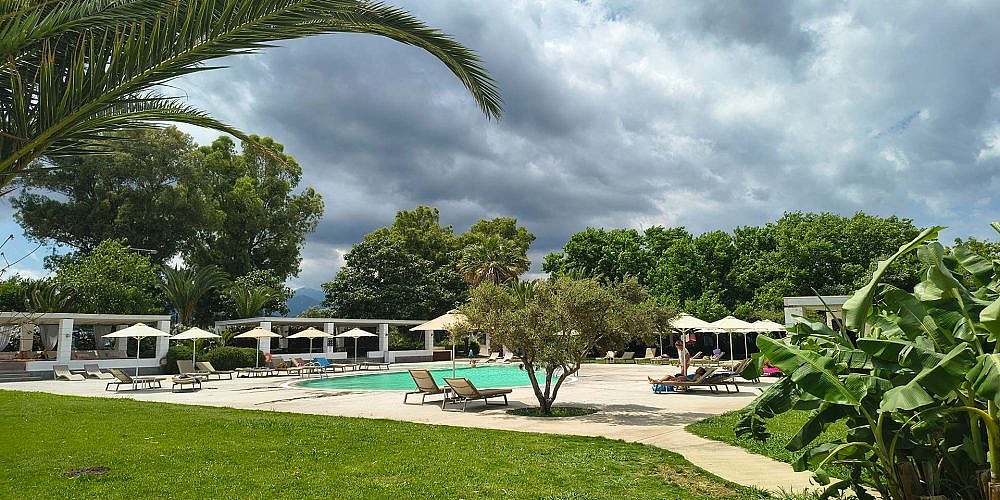
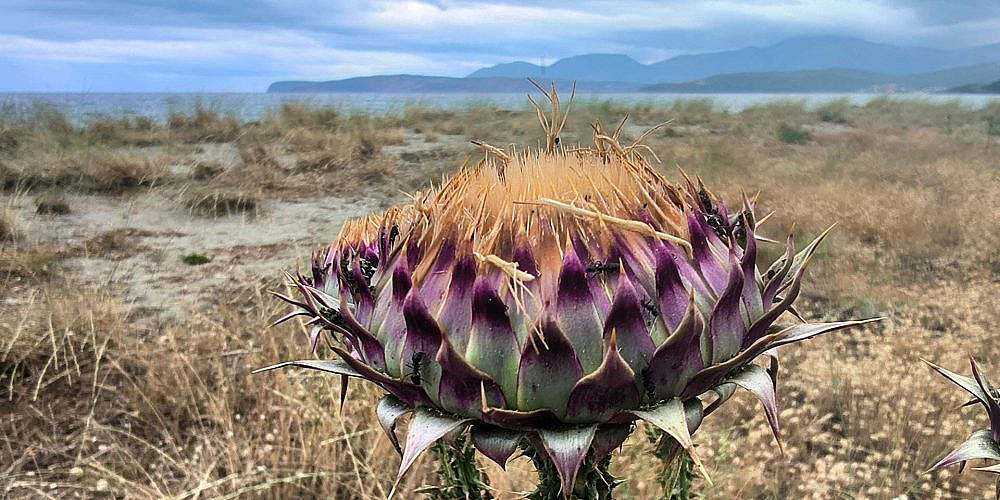
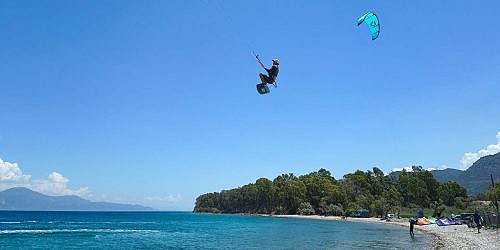
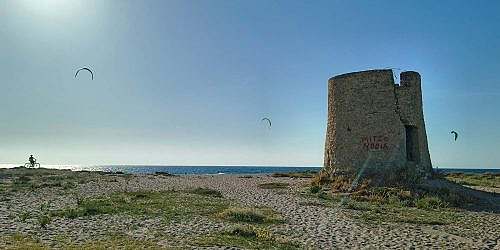
After a good four hours, we reach our destination, Gythion Bay Camping. The luxury campsite with a pool and surf/kite storage is right on Mavrovouni Beach. Sea turtles lay their eggs here every night. During the day, the sun then bakes the turtle eggs. The sand glows on the six-kilometre-wide beach. Turtles, swimmers, kiters and windsurfers live in harmony, almost entirely unregulated.
Both the Meltemi blowing from the west over the mountains and the southerly wind seem to be thermally amplified. The wind usually picks up around 2 pm. The Meltemi from the west was extremely patchy on the first day. Peaks of around 25 knots are interspersed with 5-knot lulls.
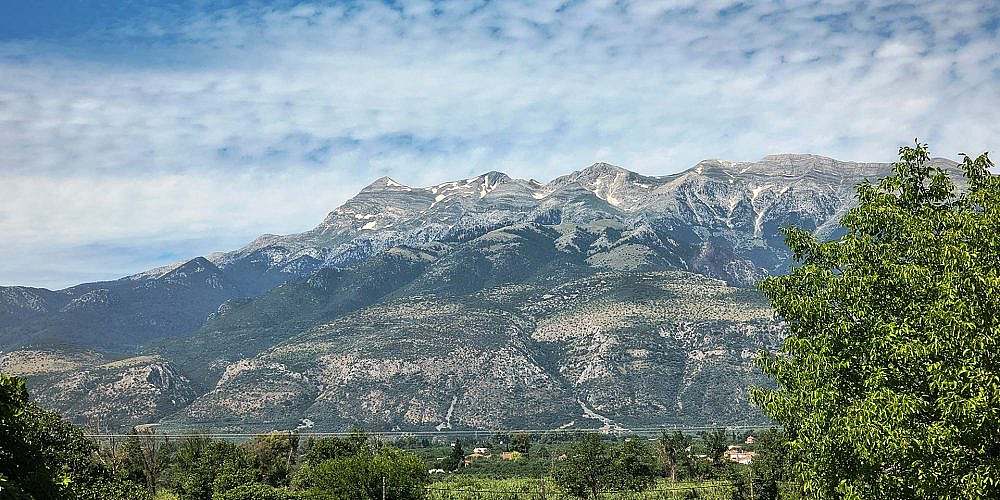
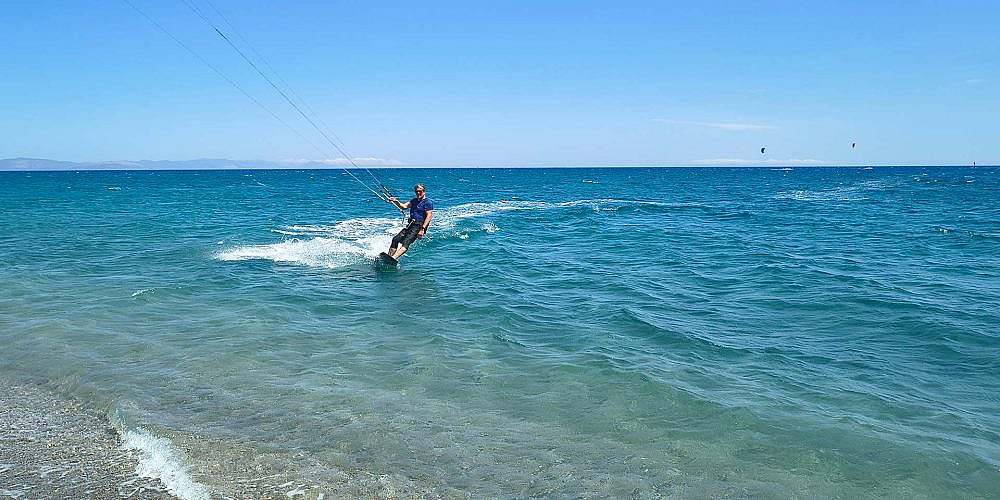
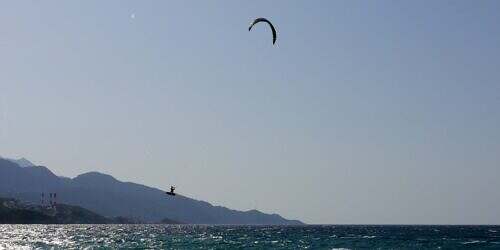
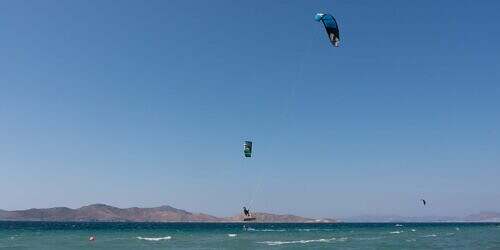
Four kilometres out to sea, my 10m XR falls into the water in a lull – and, despite pulling hard on the front line, won’t come up for several minutes. My pulse races all the more, as a quick check tells me I’m going to drift past the headland. When it finally picks up again, I quickly enjoy the panoramic view back towards the beach. On Profitis Ilias near Sparta, at a good 2,400 metres high, there are still the last remnants of snow. Down here it’s 30°C. That’s unique worldwide, because in both Hood River and Vancouver, you’re guaranteed to be kitesurfing in just a wetsuit even in the height of summer.
Over the last 100 metres before the beach, the wind dies down almost completely. Americans would call the wind ‘holy’. I just say ‘bloody hell’. Two brothers from Athens confirm this.
The Smurf romps around in the pool for hours every day with lots of other children. She’s in heaven. The restaurant serves really tasty food at good prices. The tavern next door even more so. I wonder how they do it. Food in the big supermarket in Greece costs easily a third more this year than in Germany.
In Spain, you pay two euros for cutlery with every meal. In Greece, in some tavernas, you get free water, bread, dessert and an ouzo on top of the excellent and affordable food. That’s a level of hospitality and service that I simply can’t explain, especially given how unaffordable life has become for the Greeks themselves since the war in Ukraine. But it gives me incredible hope that, in some places, the world is still just a little bit alright.
The final day brings another 16 knots of laminar southerly wind. I sail for miles across the bay, gazing up at Profitis Ilias. This is the southernmost point of our road trip. From now on, the journey home begins very slowly…
 Frank Woelky, born in 1973. Kitesurfer since 1998. Since 2006, I have been combining kitesurfing and web design on trips lasting several months off the beaten track.