From Olympia, we continue along small roads through the Peloponnese countryside to Patras. The ro-ro ferries to Andirrio are loaded and unloaded quite quickly. Unfortunately, this time we’ve ended up on the ‘backwards’ ferry. Everything takes considerably longer here – with just five centimetres between us and the next lorry.
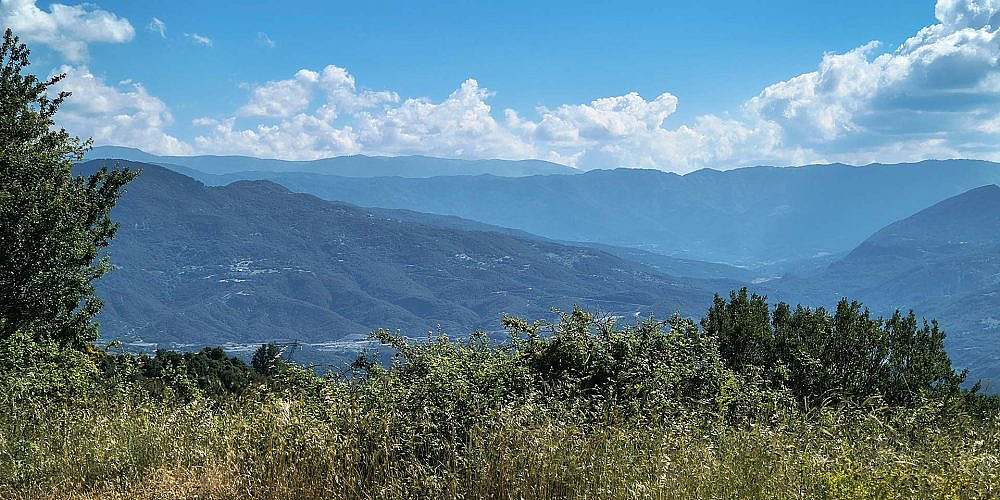
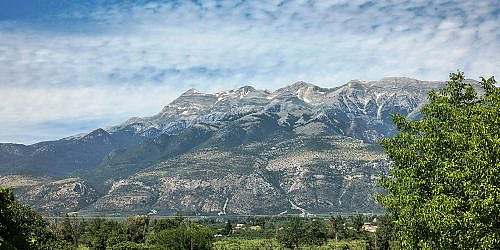
We’ve got a very long way to go today. For the first time, we’re taking a long stretch of motorway. From Ioannina onwards, the A2 motorway becomes quite spectacular. Here, it consists almost entirely of bridges and tunnels. It climbs to an altitude of up to 1,050 metres, leading deep into the Pindos Mountains.
There are ski resorts along the route. We’re driving into the clouds. Before the A2 was built, you had to drive over the notorious Katara Pass, which is 1,700 metres high. I’d love to do that too. But even with today’s journey mostly on the motorway, we’re in the car for almost seven hours. I’m so proud of our little one. She hardly ever loses her good humour, even on long days of travelling. She’s a brilliant traveller.
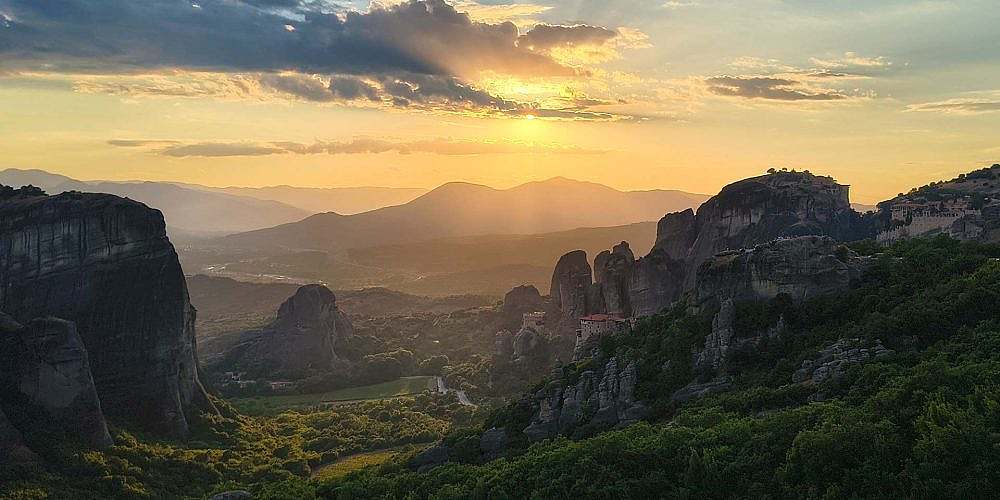
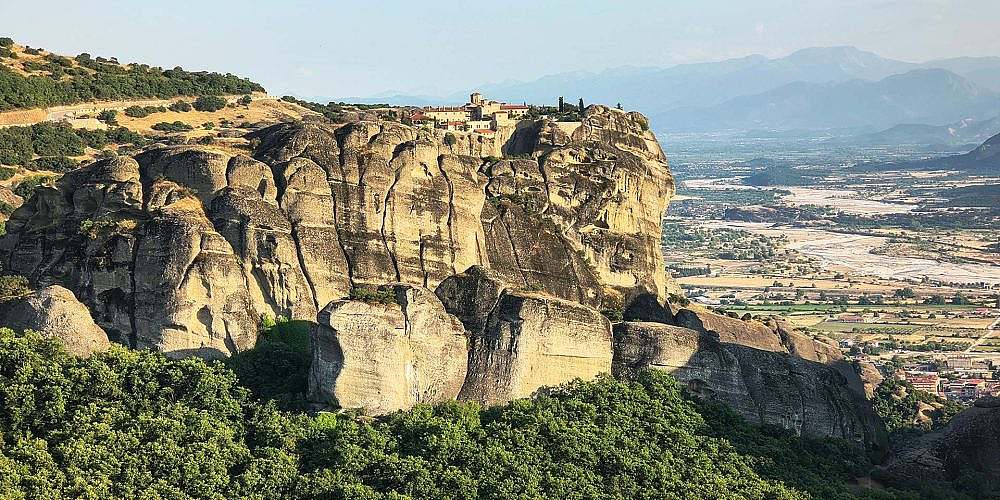
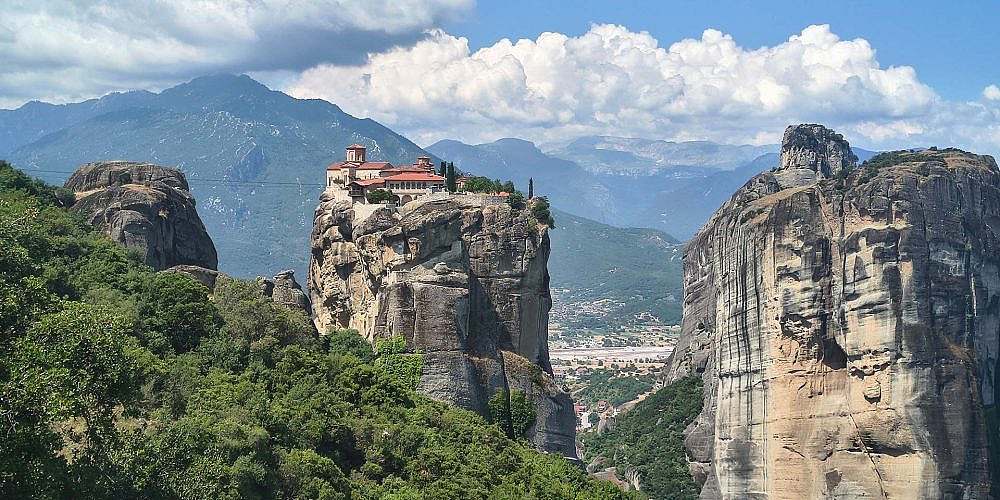
The A2 ends at the top of the pass. We’re stuck in a convoy of lorries on country roads for over 60 km as we descend to Kalambaka, situated at an altitude of 250 m. The Meteora Garden campsite has a swimming pool with panoramic views of the sandstone rocks of Meteora. We pitch the tent, jump into the pool and head straight for Meteora for the first time that evening.
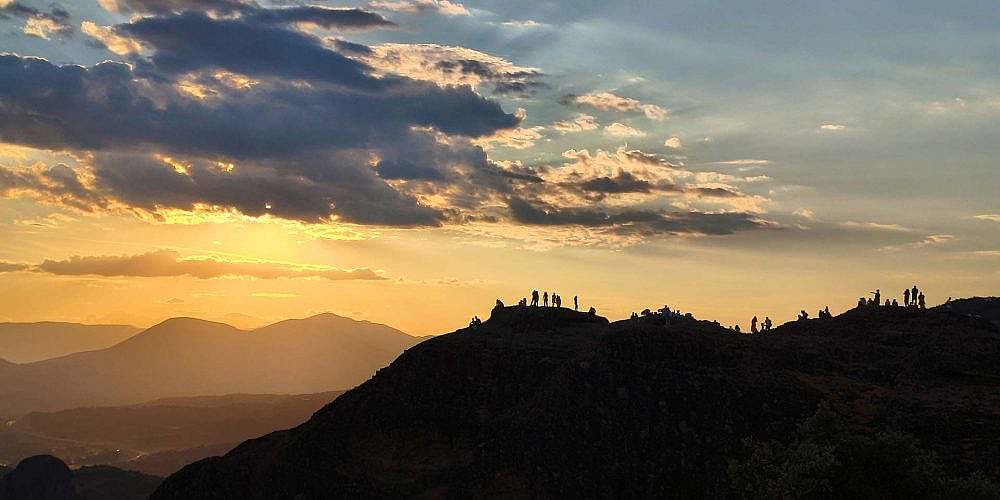
Unexpectedly, there’s a good road leading to the six monasteries of Meteora, which are still inhabited today. And it’s certainly needed. Large coaches bring hundreds of visitors to the panoramic hotspots just in time for sunset. Some spots here are more crowded than the sunbathing rocks of a seal colony. But it’s still possible to find empty spots, even now.
We had absolutely no idea what to expect. The road trip with a child, moving to a new campsite every two to three days on average, is very exhausting. I can barely keep up with my writing. We often don’t plan our next stop until the evening before. There’s usually no time for further preparations, such as reading up on the history. The natural consequence is surprises.
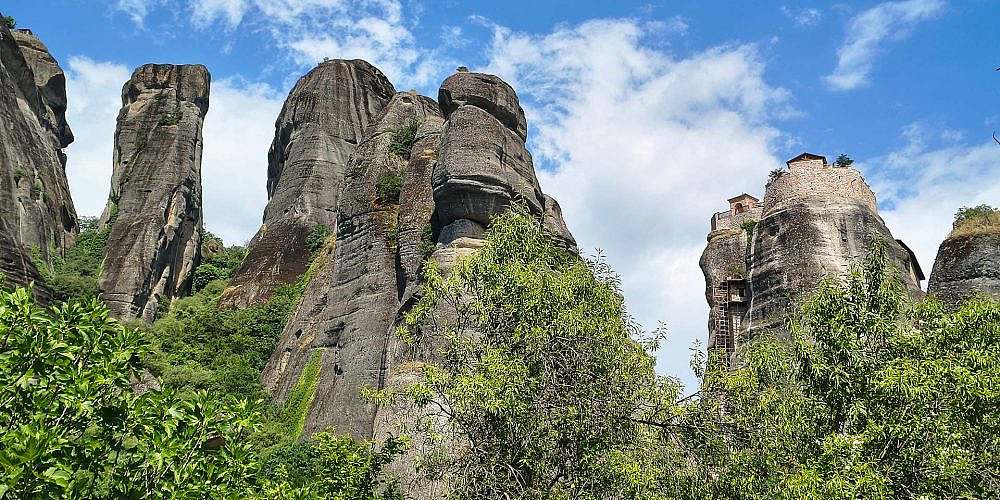
The tallest and steepest cliffs of Meteora have no monasteries. People just climb here. The village at the foot of the sandstone cliffs is called Kastrati. The connection? The best climbers became monks. The rest, who didn’t make the cut, opened inns in the valley as eunuchs.
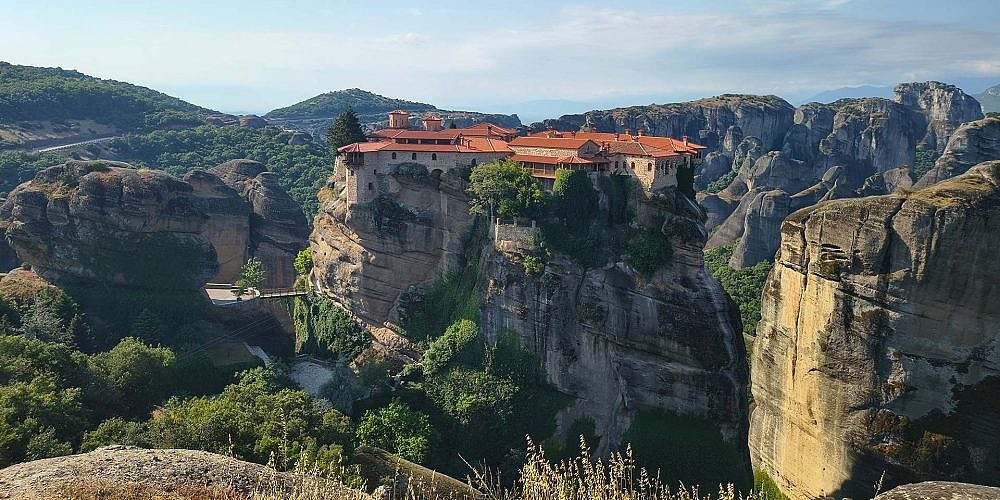
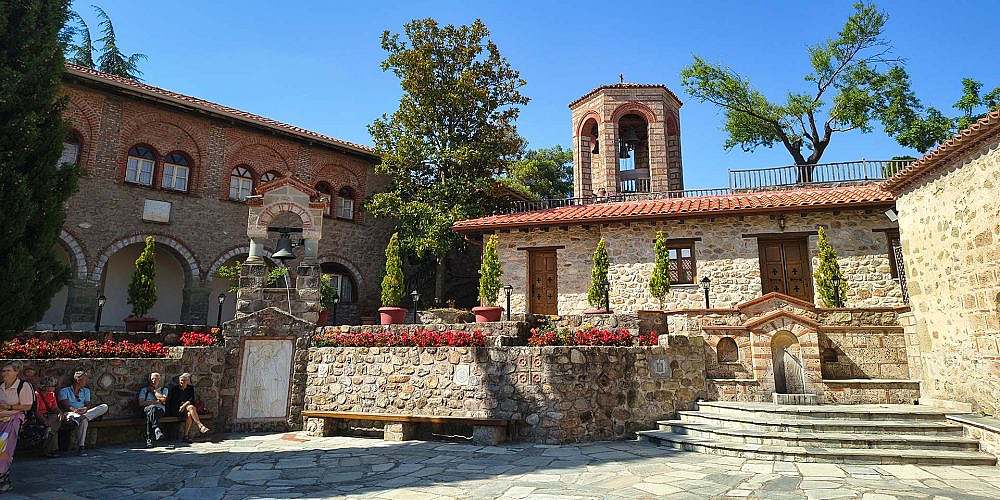
The peaks, topped by monasteries built from the 14th century onwards, are quite far apart. One might actually have expected that. After all, what hermit wants to hear the echoes of their neighbours’ calls all the time? The little Smurf discovers that, up here, the echo comes back twice in some places. Although the monasteries close to visitors at around 3.30 pm, the monks surely still wear earplugs all day long. What’s more, they have terribly thin calves beneath their robes. Every Meteora monastery now has a lift or a cable car.
We only visit the interior of the large Meteoron Monastery. It’s already quite crowded early in the morning. A large group of wealthy Chinese women, fully veiled, set a new record: they manage to visit all six monasteries in under two hours.
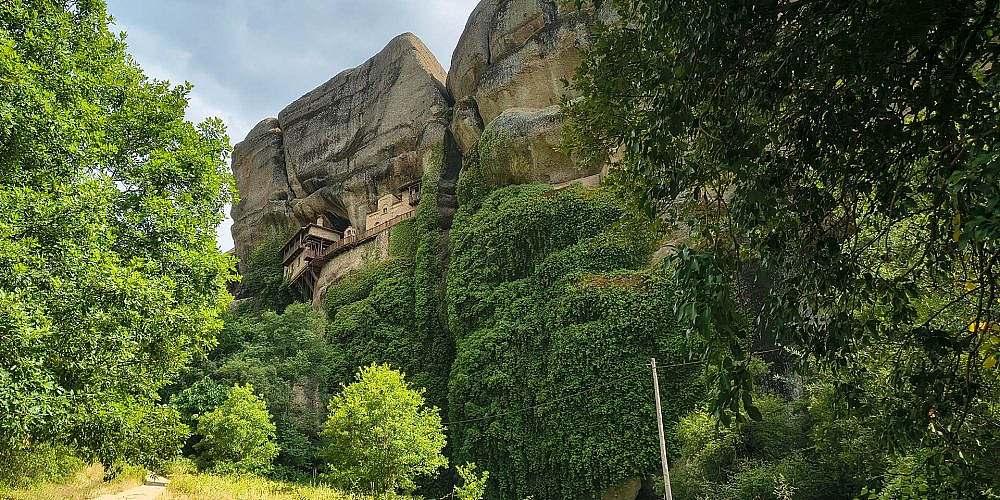
We’re absolutely delighted that we went up the mountain straight after arriving on the first day. The rocks glowed red in the sunset. On the second day, clouds roll in. We try to persuade the little one to go on a hike to the abandoned, remote monastery of Ypapanti. But today she simply can’t be bothered and stays by the pool with Mum.
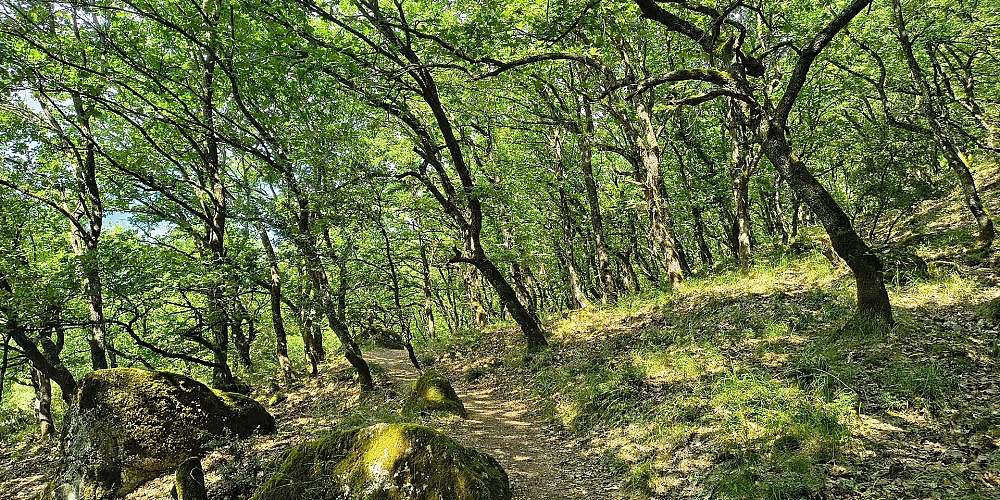
I go for a two-and-a-half-hour hike around the rocks of Meteora. The path leads through a forest of gnarled, moss-covered oaks. Birds are singing. Hordes of bees are buzzing everywhere. The monastery lies isolated on a cliff face. There’s not a soul in sight. A light rain begins to fall. What previously simply smelled of herbs now bursts into my nose like a rain-soaked stew. I’m happy.
After a good two weeks, our time in Greece is coming to an end. Fulfilled yet exhausted, we drive on over high mountains towards Albania and home…
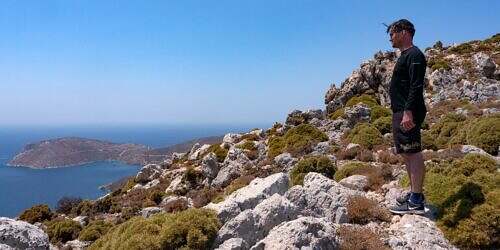
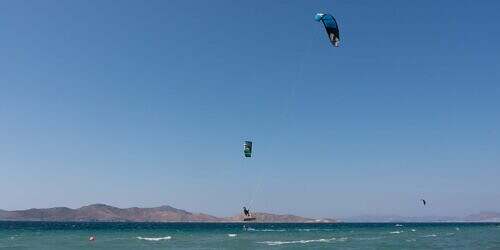
 Frank Woelky, born in 1973. Kitesurfer since 1998. Since 2006, I have been combining kitesurfing and web design on trips lasting several months off the beaten track.