

The Andean trout shouts from below: “I never wanted to be sushi! Feliz Montezuma, gringo! Chinga te!”. Whenever something upset my stomach, it was always a posh western restaurant – never one of the dirty little cookshops. So it was this morning at four o’clock in Cusco.
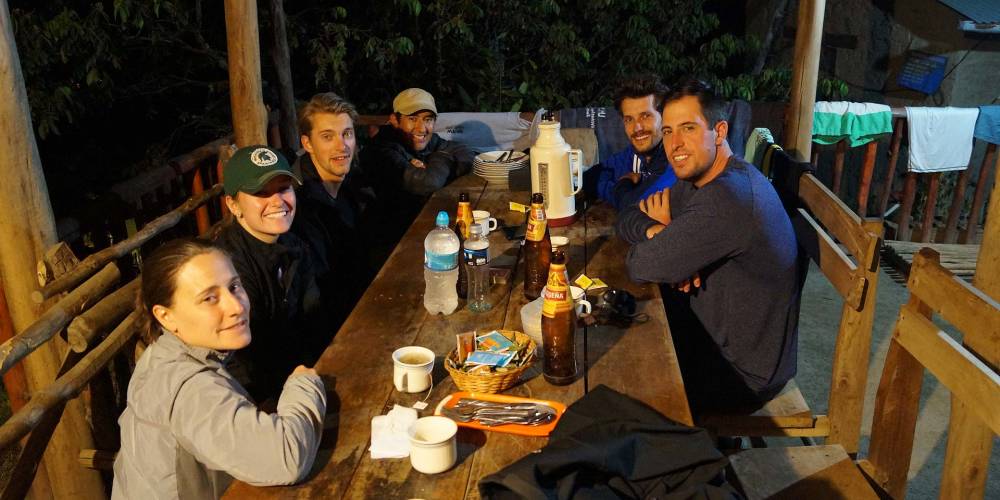
The timing couldn’t have been better. Right at the start of the four-day Machu Picchu Inca Jungle Trail with a small, good group of Americans and Germans, downhill mountain biking, rafting and mountaineering are on the programme.
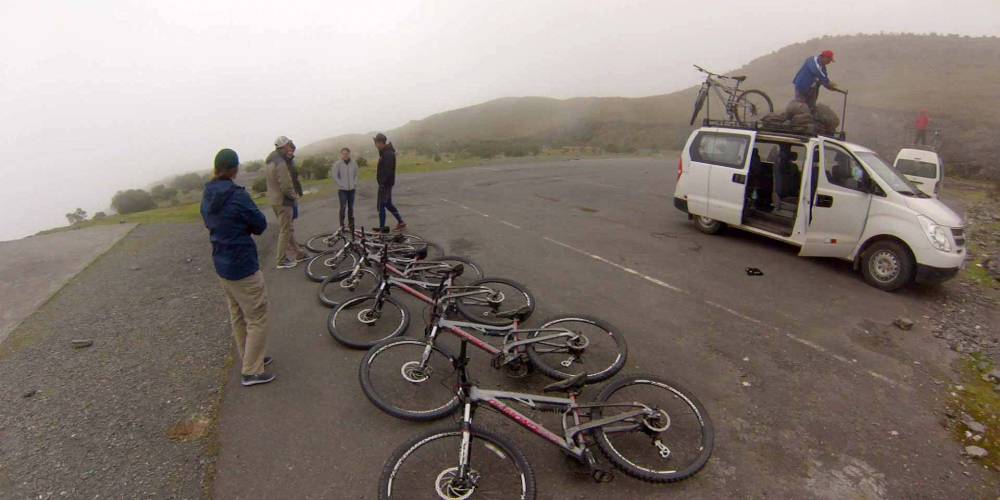
From six o’clock in the morning, we take a three-hour minivan ride past ancient Inca ruins up to the 4,316 metre high Huamanmarka Pass. Shortly afterwards and still in the clouds, everyone is given full-body protection and a good full-suspension mountain bike.
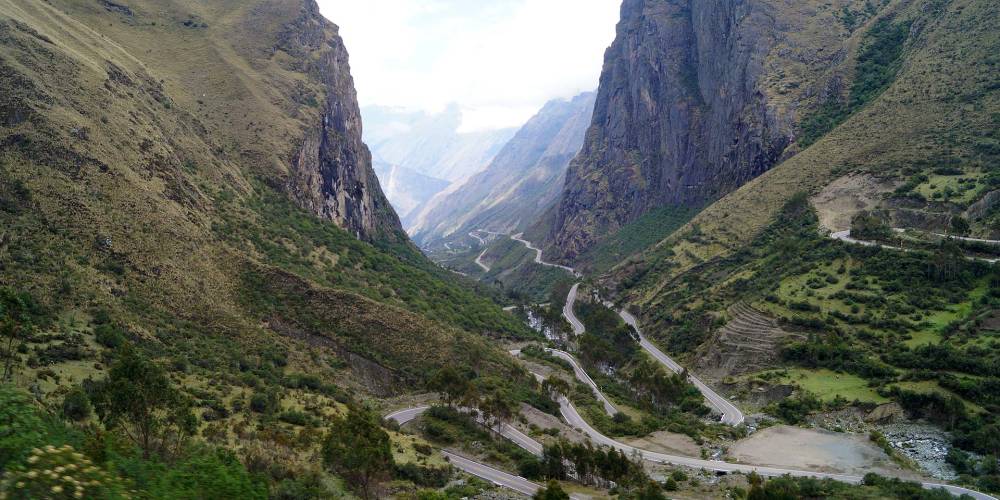
The route leads over 50 km and 3,000 metres in altitude on a tarmac road over numerous small river crossings and spectacular panoramic serpentines down to Huyro at 1,200 m above sea level. At the top you’re freezing with gloves on, at the bottom you’re just grinning and sweating at 25 degrees. Ride of my life…
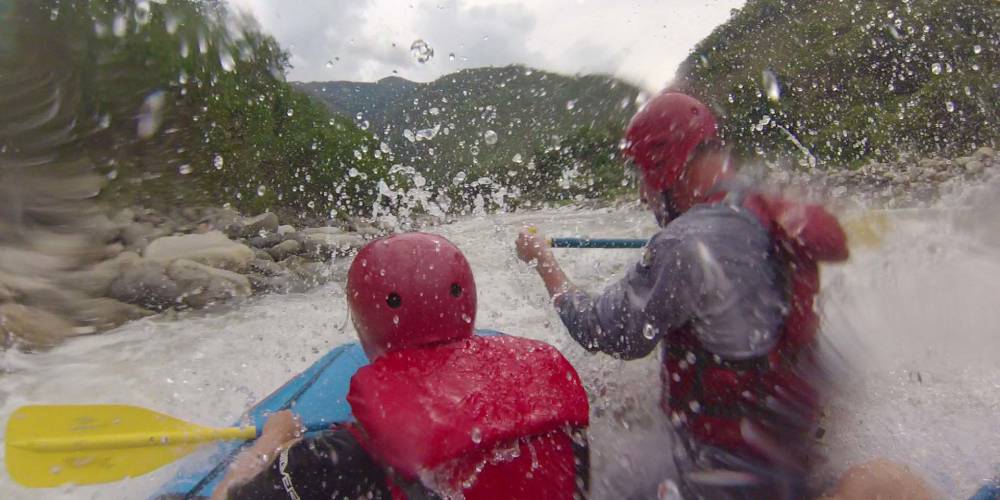
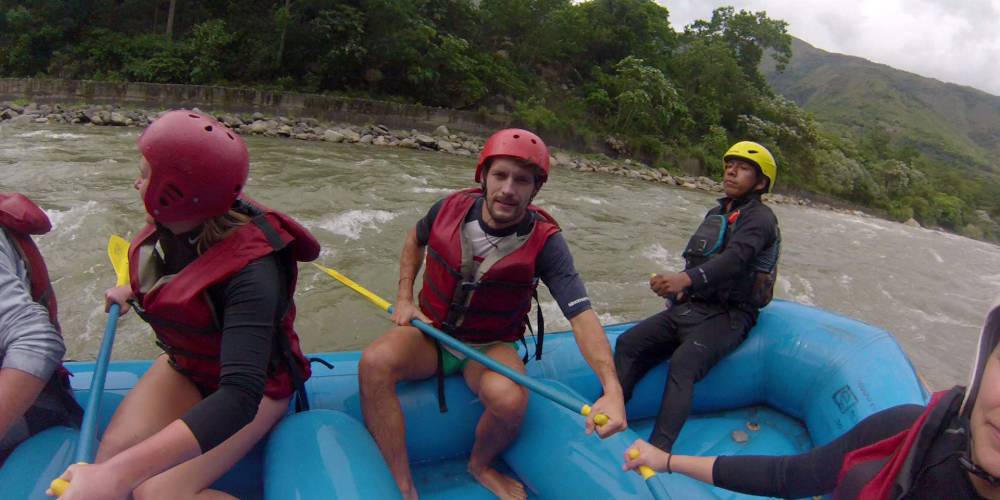
We continue by minivan to the lower Urubamba River. On the one-and-a-half-hour rafting tour in levels two to three, everyone gets really wet. The third standing wave I surf throws me overboard. A mango tree at the exit is plundered, the marijuana plantation higher up remains untouched.
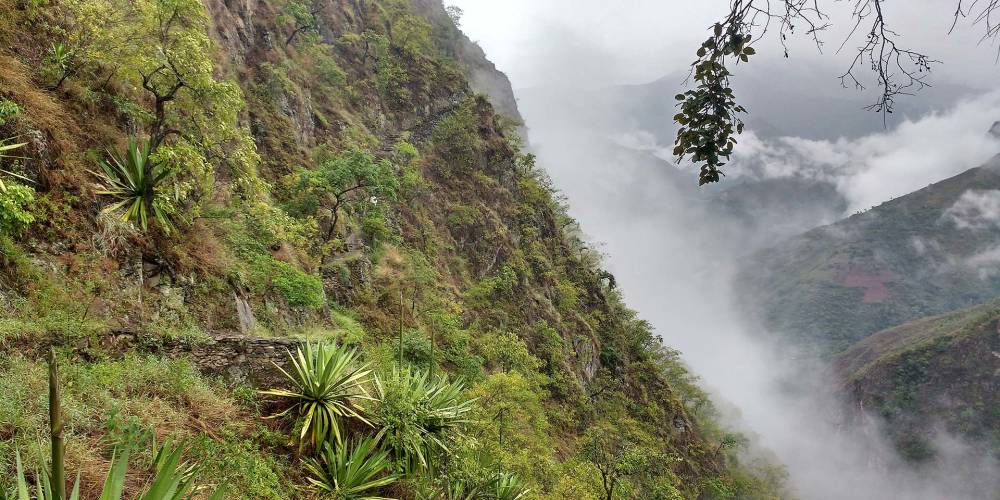
The next van takes us up a bumpy dirt track to our first destination for the day. Through a Garden of Eden full of papayas, mangoes, pineapples, bananas, passion fruit and coffee, we climb 400 metres in altitude and for an hour and a half to a remote mountain farm on the Inca Trail. With a subsiding infection and, thanks to Montezuma, a whole day almost without food, I almost collapse. A dear man from Dresden helps me with the small rucksack.
Heavy rain pelts down on the tin roof all night. The shower is freezing cold and the accommodation, built from rammed earth, is simple and genuine.
In the morning it continues to rain heavily. Clouds rise from the steep Andes mountains. Our good guide gives us a thorough lesson on dozens of local fruits and medicinal plants. Wild parrots and monkeys frolic through the garden while I nibble on a guinea pig leg.
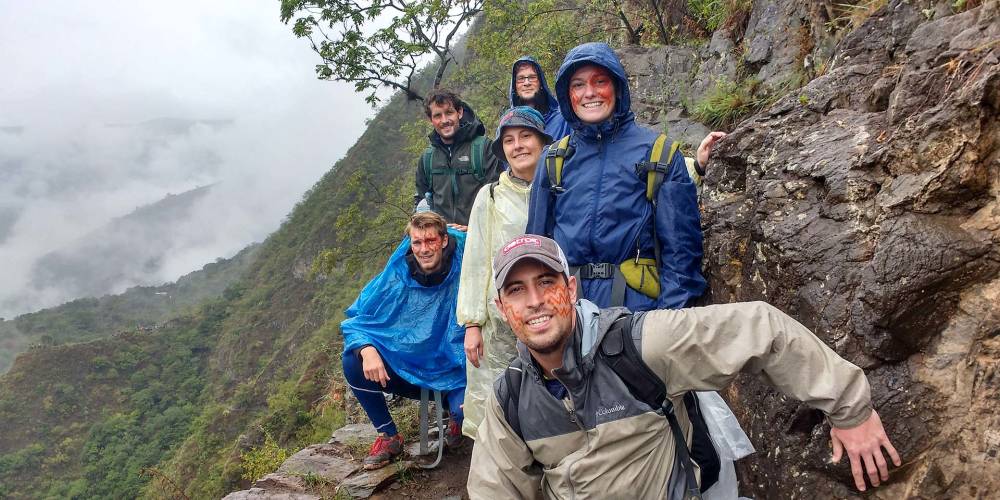
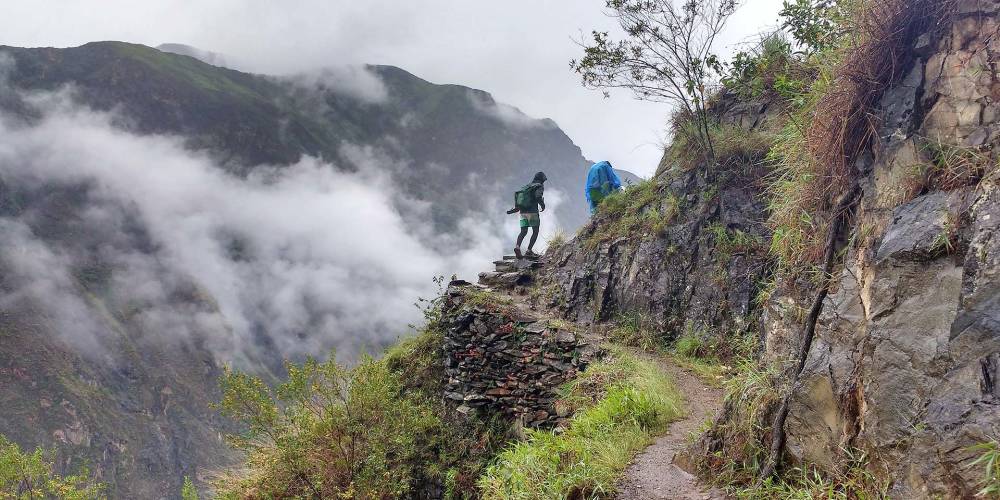
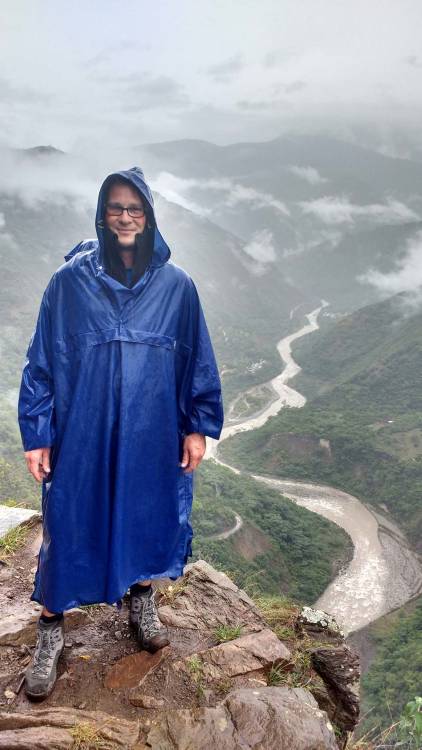
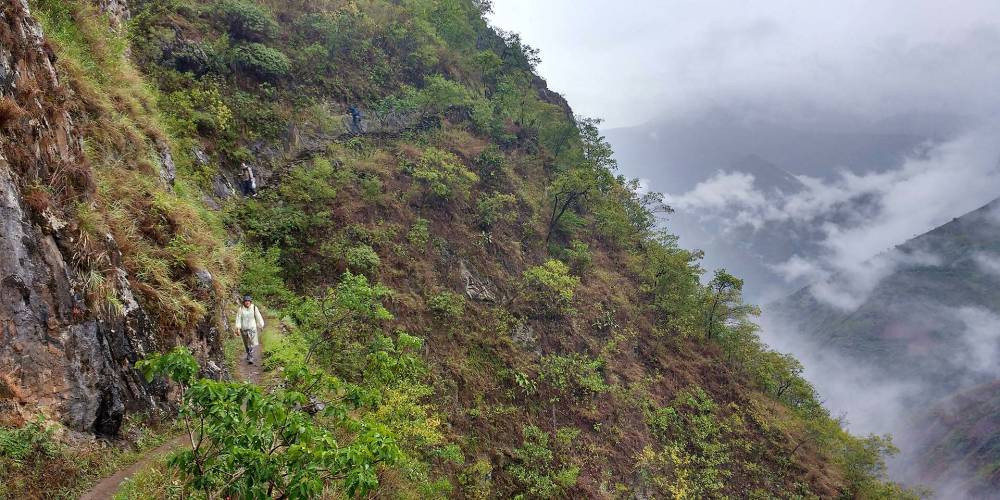
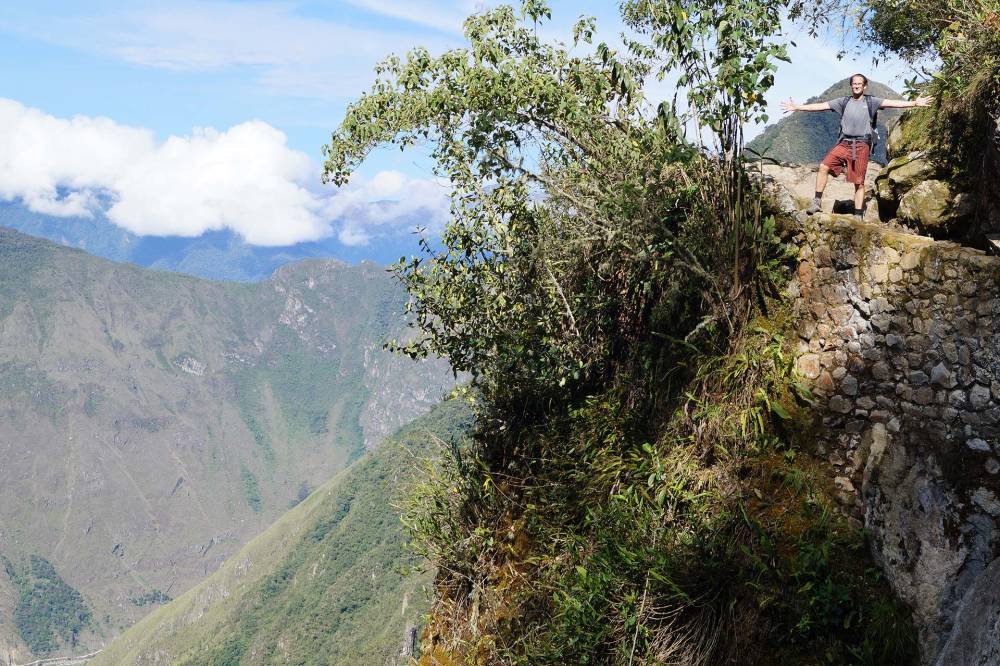
The next part of the tour leads through an exciting cliff face along the old Inca Trail between Urubamba and Machu Picchu. Over 500 years ago, the last Incas fled into exile from the Spanish on this very trail, which was only 50 cm wide in places. On the left, you could get your free-fall licence with vertical drops of up to 300 metres. Apart from slippery steps, there is no safety in the rain.
After the steep wall, we continue for two hours through steaming jungle down to the Urubamba. Simple, good food and sleeping in hammocks under a mango tree to the sound of the wild river.
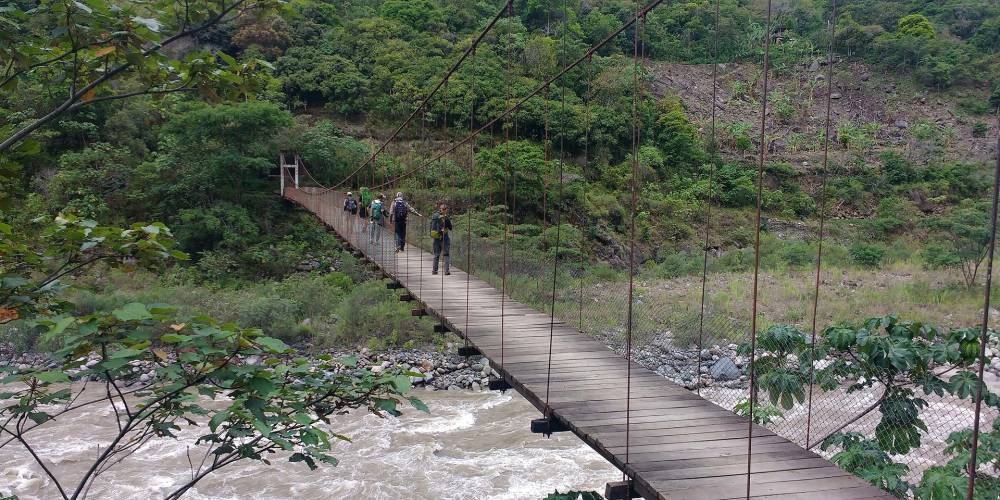
In the afternoon we continue along the banks of the upper Urubamba. The river becomes wilder and surges up to white water level four. Several tributaries are crossed over wobbly bridges – and at the end of the Urubamba itself over a suspension bridge and a little later back over a zipline.
Through a 50-year-old tunnel for a road that is guaranteed never to be built, we reach our second destination for the day, the thermal springs of Cocalmayo. After six hours of walking over 15 km and 1,000 metres in altitude, the hot bath is the best possible end to a tough day. A wild macaw predates from table to table.
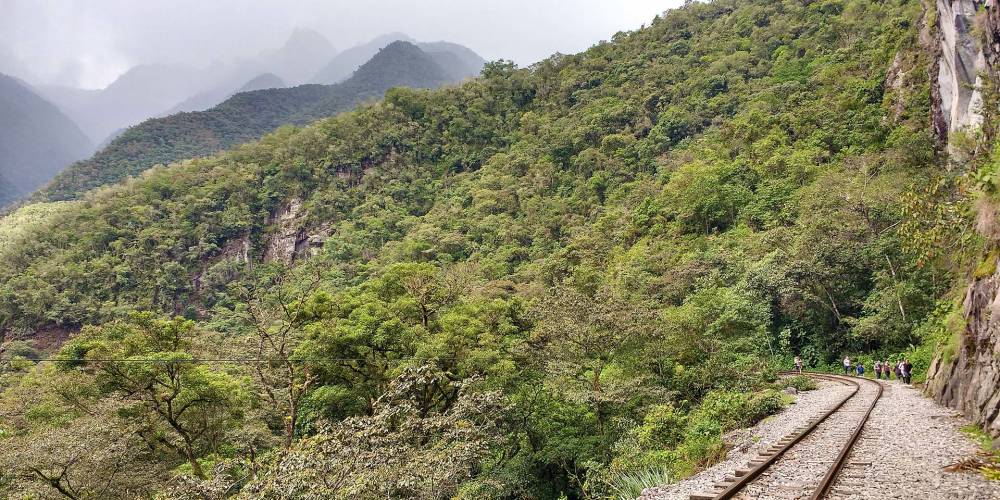
The next day, we take another minivan to the upper Urubamba Valley. Next to and on the tracks of the railway to Aguas Calientes from the 1920s, we hike eleven kilometres to the foot of Machu Picchu through highland jungle and light rain. Ants over a centimetre in size crawl across the path. Giant butterflies fly around our heads and huge numbers of sand flies turn every open body surface into a blood crater landscape.
Aguas Calientes is like any Smurf village on the brink of UNESCO World Heritage status: international and extremely lively. A scoop of ice cream costs €2.50, a steak €40. Only alcohol is cheaper than anywhere else in Peru. Everyone is here for Machu Picchu, and the climb starts at five in the morning at the latest.
The local buses have been brought in by train. There are still no roads leading here. The buses only serve to cart up to 8,000 lazy-footed tourists per day over eight kilometres of gravel road to Machu Picchu.
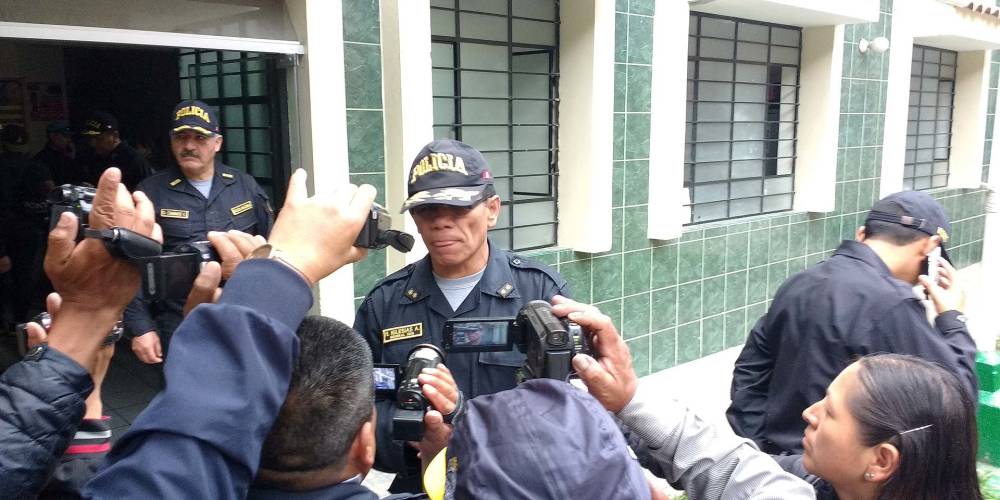
Today there are no buses, they are on strike and blocked. The local population has something against the bus monopoly of $24 per journey. In front of the police station, the commander promises some reporters and me that the problem will be solved quickly. A short time later, hundreds of armed paramilitaries stream through the crowded streets of Aguas Calientes.
Our small group sets off for the entrance to Machu Picchu at half past three in the morning. The first to follow us are a whole dozen breakfast-hungry dogs. When the lower gate opens at five o’clock, there are already several hundred travellers behind us.
The mass start is the first attraction of the day. A wave of World Heritage-loving hiking gnomes roll over me from behind at a monkey’s pace, defying all laws of gravity. Some of them will complete the 450 metres in altitude and 2,000 crazy steep steps in under half an hour. I feel like I’m in a fast-forward zombie film and switch to the pleasantly ascending and completely empty bus track early on.
It takes me 70 minutes to reach the second checkpoint at 2,400 metres, which is a little too slow according to the official ascent plan, and I lose my group and the lead through Machu Picchu. The second noisy queue in front of the upper checkpoint sweetens my wait.
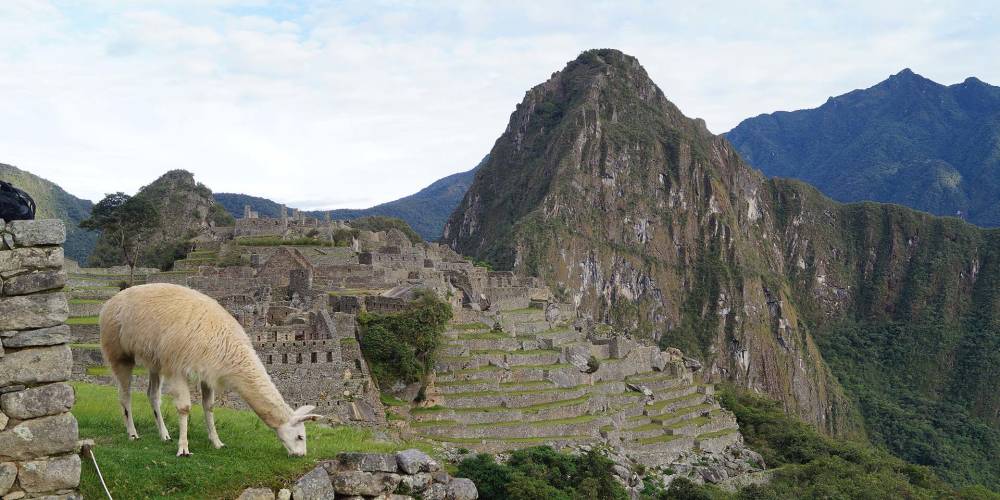
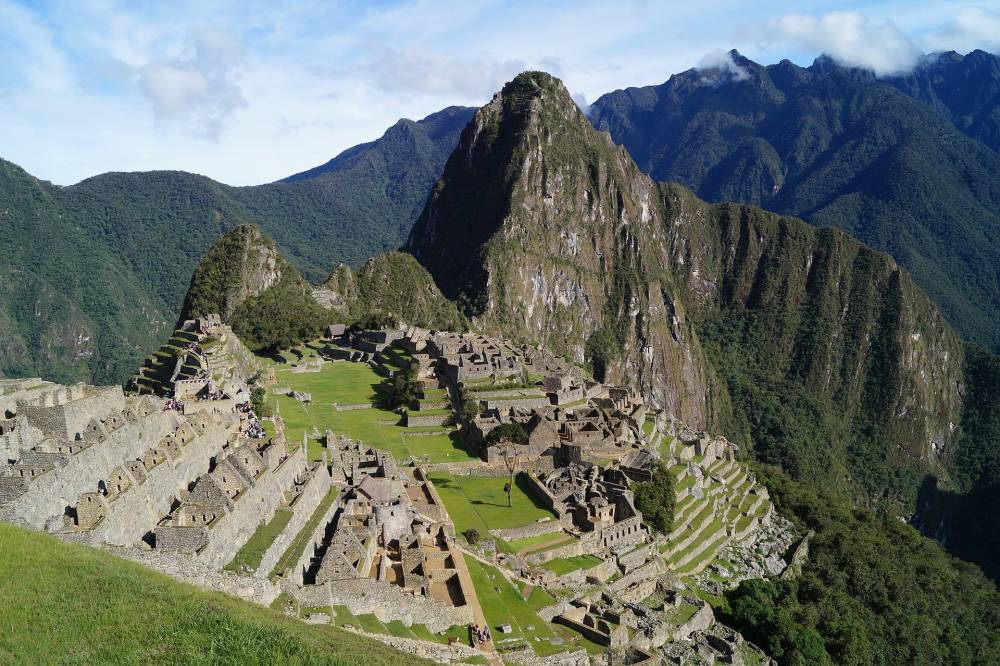
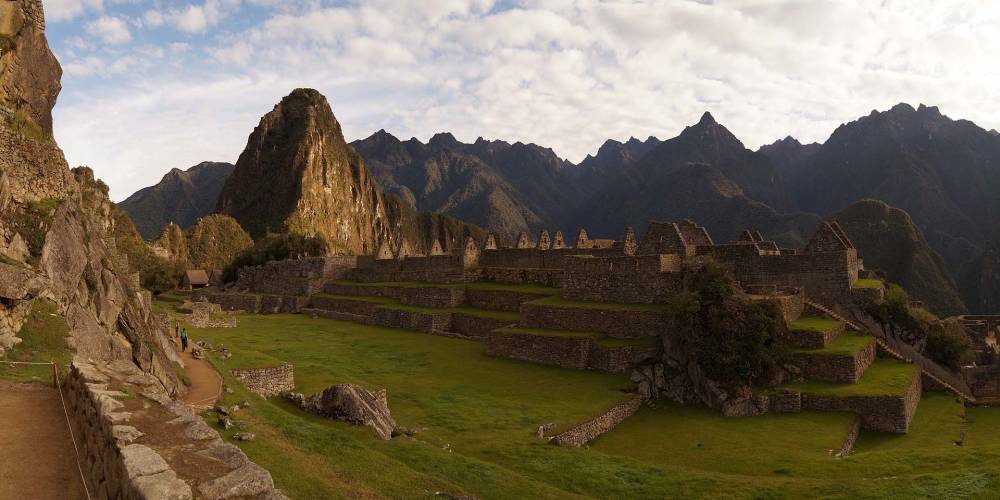
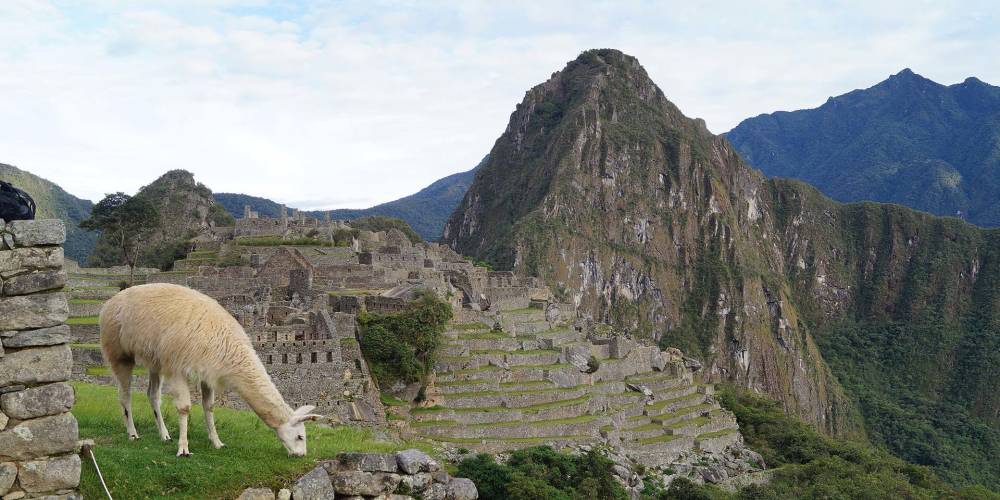
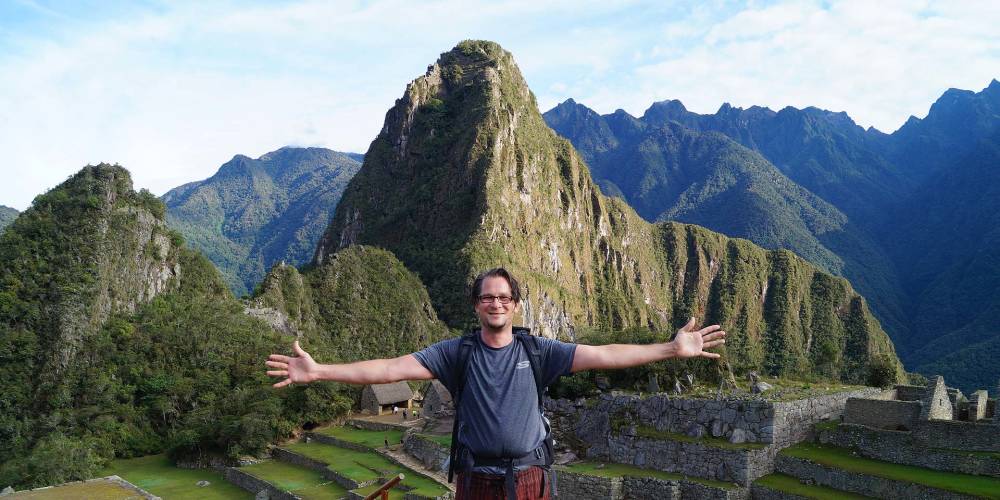
I am inside before sunrise: the world heritage site, the wonder of the world, the “must do” for every South American traveller. Machu Picchu is impressive, especially at this time of year when the weather is rather rare. But like every “miracle”, it is also disenchanted by far too many miracle seekers.
Peru wants to bring even more wonder-seekers up here with a gondola. UNESCO, on the other hand, has long been clamouring for the number of visitors to be limited to 800 a day in order to prevent Machu Picchu’s destruction.
In the meantime, the cultural concentration camp guards, equipped with binoculars and radios, are whistling for the up to 8,000 inmates to return to the basic rights they have acquired as part of the €50 ticket.
Once I decide to take the wrong turn and for the first hour I can’t get off the path towards the exit in a rigorously implemented system of one-way streets and checkpoints.
According to the guard, there are currently only 1,500 visitors in Machu Picchu, so the risk of a fatal pile-up due to ghost tourists is rather low. But he thinks flexibility is something to eat.
I’m escorted out the door with a loud cry of “FUCK IT!” in violation of the first Machu Picchu rule. It’s no big deal the first time. The second time, that’s it for the €50 miracles.
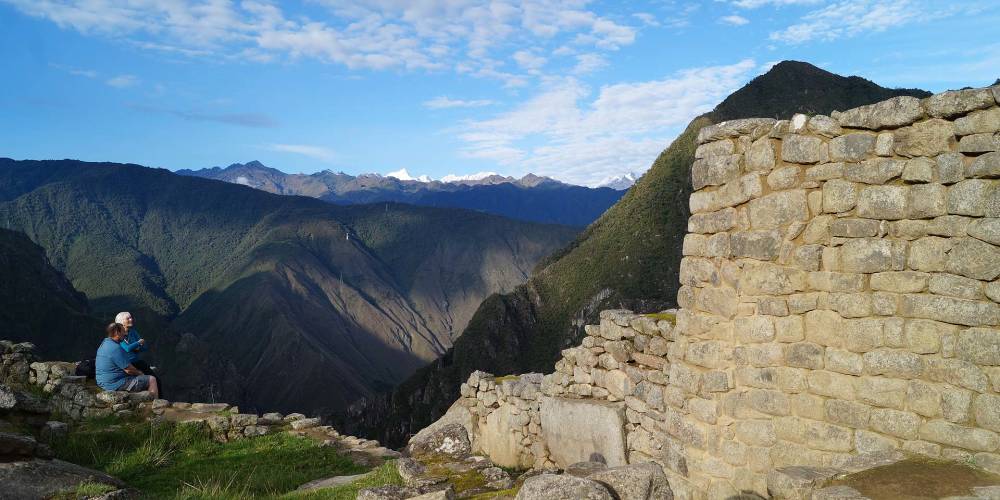
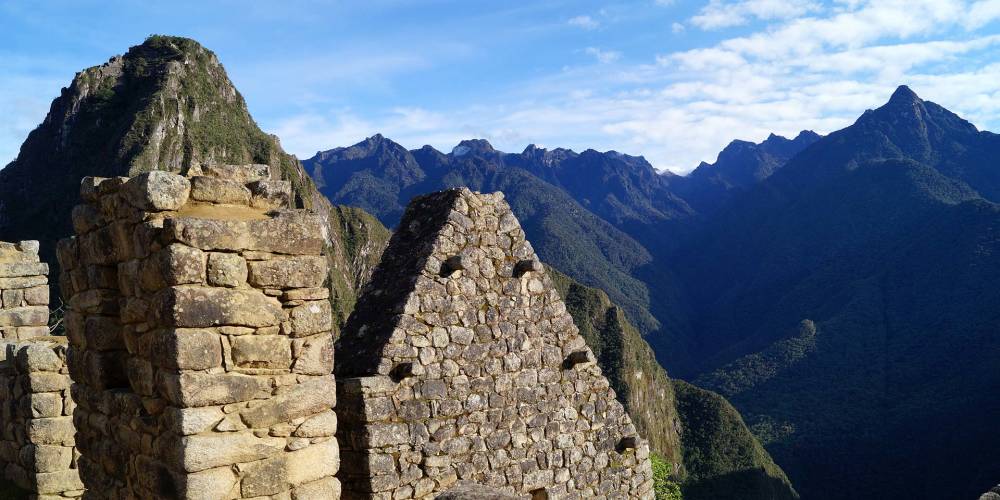
The sun comes out over the high peaks of the Andes. Machu Picchu shines golden. The remote Inca Bridge is a quiet and spectacularly exposed part of the Inca Trail.
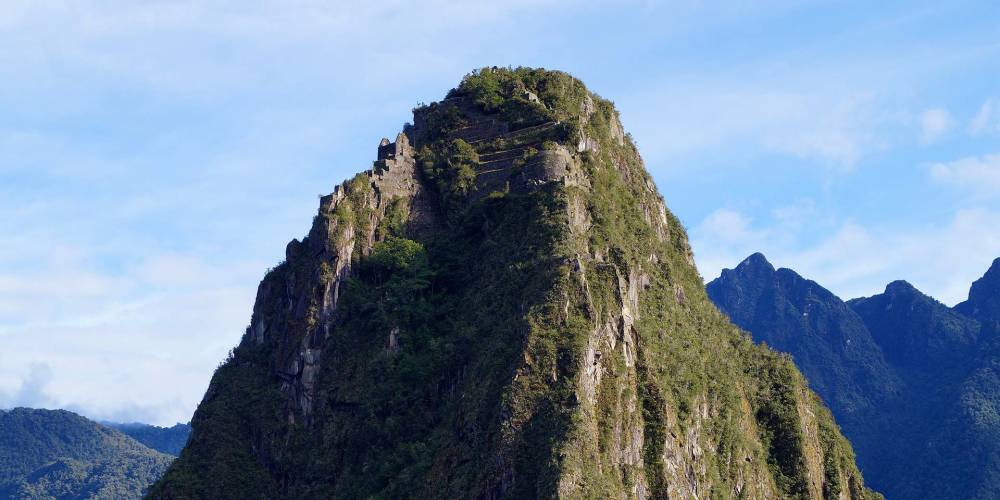
I should have booked the almost vertical Huayana Picchu months in advance. But there were still tickets available for the even higher Machu Picchu mountain. Crazy steep steps lead through a bamboo forest directly into the sky.
On a platform halfway up, I notice hummingbirds repeatedly dipping their beaks into the orchids in front of Machu Picchu. Whenever it gets quiet for a few minutes, they come back. I make many visitors fall silent. My peak is here.
The way back down a good 700 metres of steep steps is tough. My kiter’s knee buckles and from checkpoint two I walk the whole way down the long but flat bus track.
I reach Aguas Calientes after seven hours of walking and just in time for my train, which is perversely expensive at €27 per eleven kilometres. Six hours in a minivan over exciting “on the edge” mountain tracks to Cusco make writing a pleasure…
Tips for booking the Machu Picchu Inca Jungle Trail (and other Machu Picchu tours): Despite Machu Picchu strictly limiting the number of visitors to “only” 8,000 a day, it is usually not necessary to book in advance for a longer period of time. Yes, you can only get in with a guided tour. But there are almost always places available. Booking in advance is always much more expensive.
Prices vary from €60 for a day tour booked on site in Cusco to €1,600 for a 5-day tour booked long-term online, e.g. via the Salkantay Trek. The profit margin is huge despite the mostly very similar services, so it’s worth comparing.
I found the cheapest online tours via Kanoo Tours from La Paz. Four days three nights including transport, accommodation, three meals a day, downhill mountain biking, rafting, Machu Picchu and climbing Machu Picchu mountain cost around €240. A few people from Dresden booked the same thing locally in Cusco via “Peru Adventures” for €150. Some others paid up to €800 online. So: stay cool, book locally!






 Frank Woelky, born in 1973. Kitesurfer since 1998. Since 2006, I have been combining kitesurfing and web design on trips lasting several months off the beaten track.