

South Africa is colourful. The change from quiet Langebaan and the end-of-the-world chill-out in Witsand to the four million inhabitants of Cape Town couldn’t be more dramatic. On our journey, we make a detour over the Tradouw Pass into the wine country behind the mountains and inspect a potential shallow water spot near Hermanus.
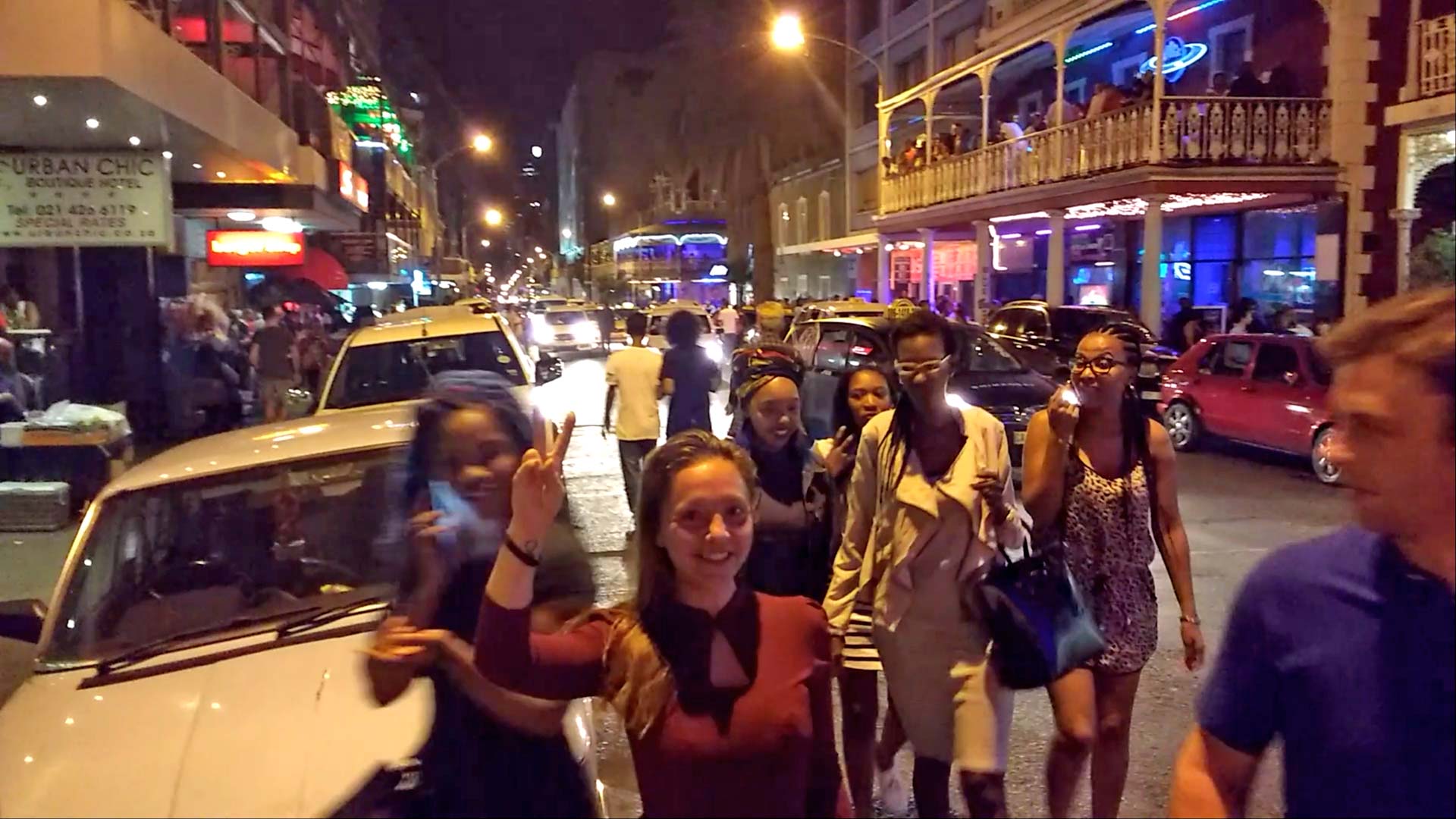
Our hostel looked a bit out of the way. In fact, the Cat and Moose with its beautiful old rooms is right in the centre of Long Street. Long Street is the Bourbon Street of Cape Town, an incredible party mile with countless restaurants, pubs, live clubs and fine house venues. As we have also booked for the weekend, we have a pretty hefty day & night double programme.
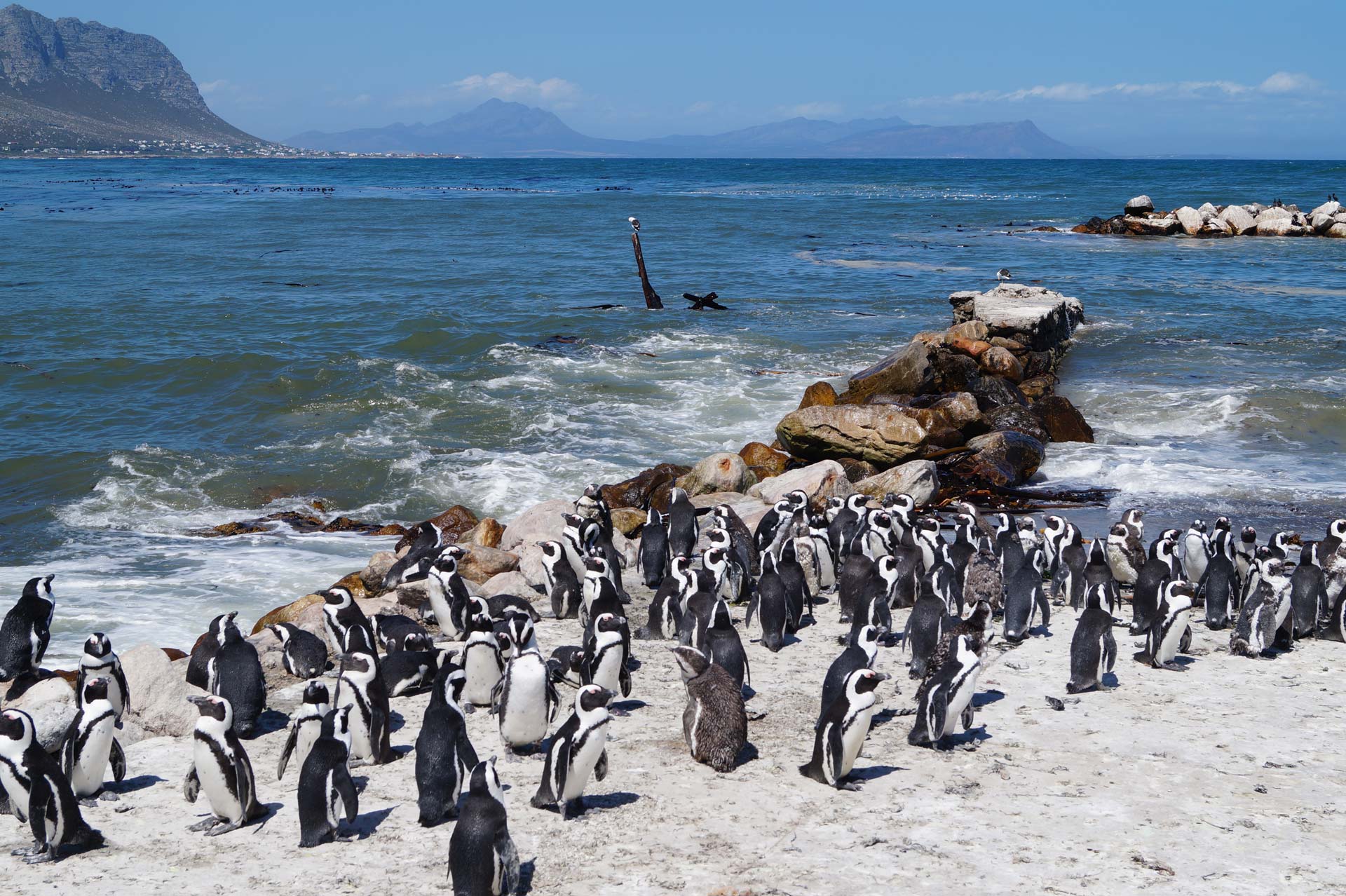
We tour the Cape Peninsula and visit the penguins in Simons Town. It rains cats and dogs, rain that Cape Town desperately needs. After ten days and a good 1,700 km, we return our hire car to the airport. It’s been through a lot on the gravel roads of South Africa – and even the boot lid we forgot to put in the car doesn’t seem to be charged for.
The bus takes us past countless townships back to the city centre. All the warnings from friends about the dangers are cancelled out by themselves. Develop a feeling for where things get dicey! Don’t carry anything you don’t need! And trust that bad luck usually chooses fearful people as play partners. If you think the centre of Cape Town is dangerous, please travel to Venezuela, Honduras or a large Brazilian city – then Cape Town will seem as chilled as a mogwai on yogi tea.
Cape Town has a rhythm all of its own. Throughout the city centre, there are security guards at least every 100 metres or four cycles. In between, for every ten car parks there is a guard at 3/8ths intervals to ensure even more security – not only for your car, but also for your health. Every second one wants to sell you really safe weed, unlike the numerous and terribly unsafe street dealers. There are three beggars for every ten metre gap between security staff and parking attendants. It’s hard to go on and believe that alms in response to the bitterly sad minor of their voices will only generate more suffering.
There are a lot of hard drugs circulating in Cape Town, even in the centre and not only in the veins of black people. The guy who runs up and down Long Street every day, lightly dressed, sharing essential realisations like “Oh, it’s so cold.” with you with red eyes is still amusing. A yellow-eyed freak in tattered trousers catching imaginary flies from the ground on the grass verge is harmless. It gets scary when a barefoot crackhead lies in the street, thrashing around wildly, until enough black people have looked away – and the ambulance finally arrives.
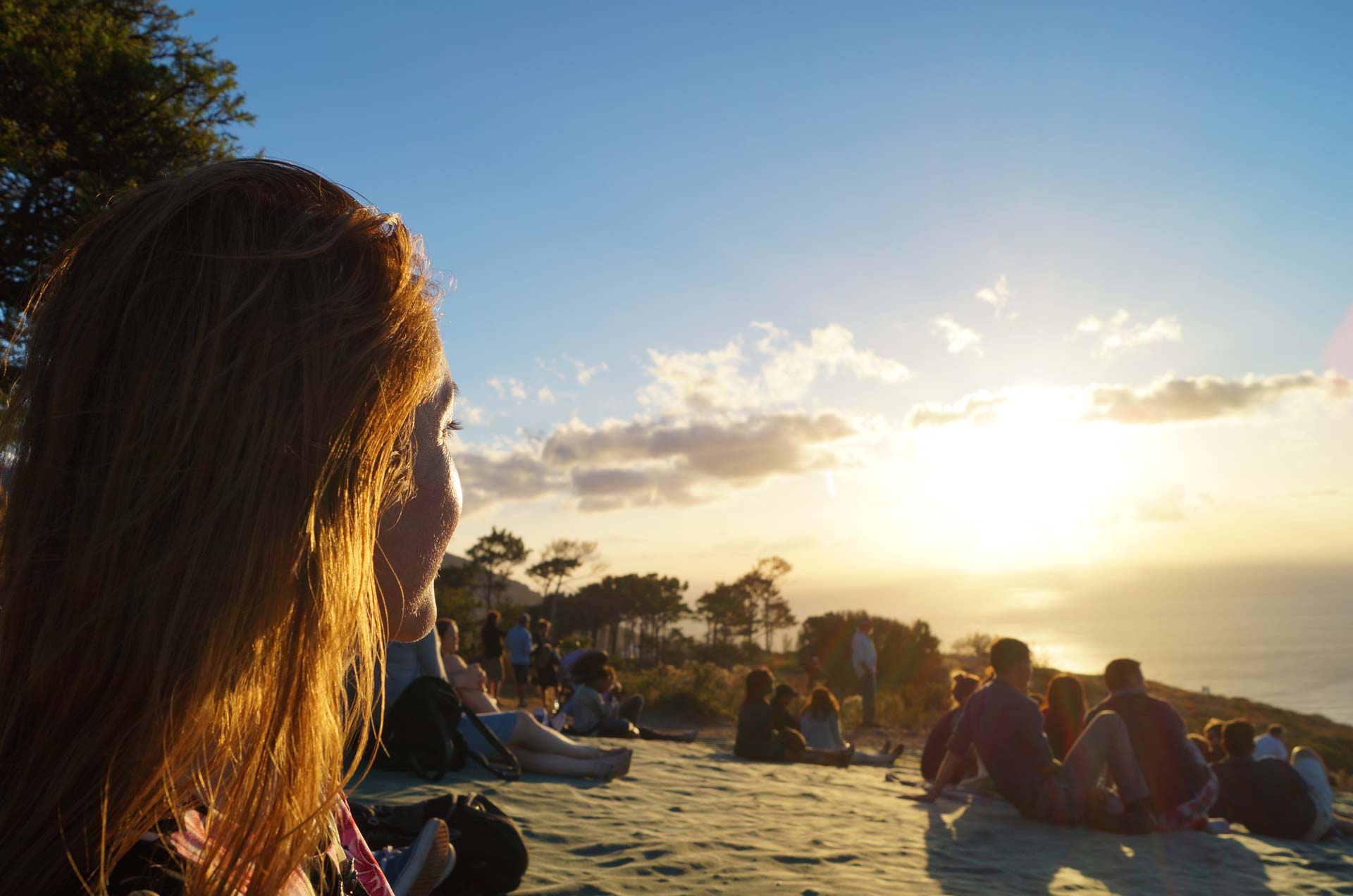
We drive up Signal Hill and drink wine in the sunset with the Capetonians and visitors from all over the world. Verena is delighted by the proximity of two vegan restaurants and I am delighted by the excellent and varied cuisine from all over the world. A few times we get really bad food. But 1.5kg of sizzling steak on a mountain of rice and noodles, doused with sweet and sour sauce and fries on vanilla sauce-soaked muddy vegetables – served by an Indian for the proud price of four euros – just makes us laugh. All the other food is great.
In the harbour district on the Victoria Waterfront, the world’s luxury brands are lined up in endless rows of upmarket shops. The skylights of the modern Robben Island Museum next door are completely covered in white pigeons. Black ones then clean them again. It seems like a picture of a country that is either very forgiving or at a standstill. Three blocks away, homeless people sleep under cardboard.
Our first night on Long Street is really long. Good food at the vegan Plant, then good wine at the Cockteil Emporium. A detour to the Arcade Club, then on to Papagallo for a live concert, before finally philosophising about South Africa’s future with two young South African students over even more live music at Mojito until closing time at two.
Apartheid and the wall came down around the same time. But much less has happened here. The whites are still the masters, the blacks are at best employees. It is rare for a white person to serve you. The blacks stand on the street in front of every building site with a flag and wave all day until their arms fall off. Yes, a bad job is better than no job at all. But the image has stayed with me. A human life here is still worth less than the electricity for a flag waver. Few black people make it. And when they do, they celebrate on Long Street. This is the first place in South Africa where people are, if not equal, then at least a lot more equal than in the rest of the country.
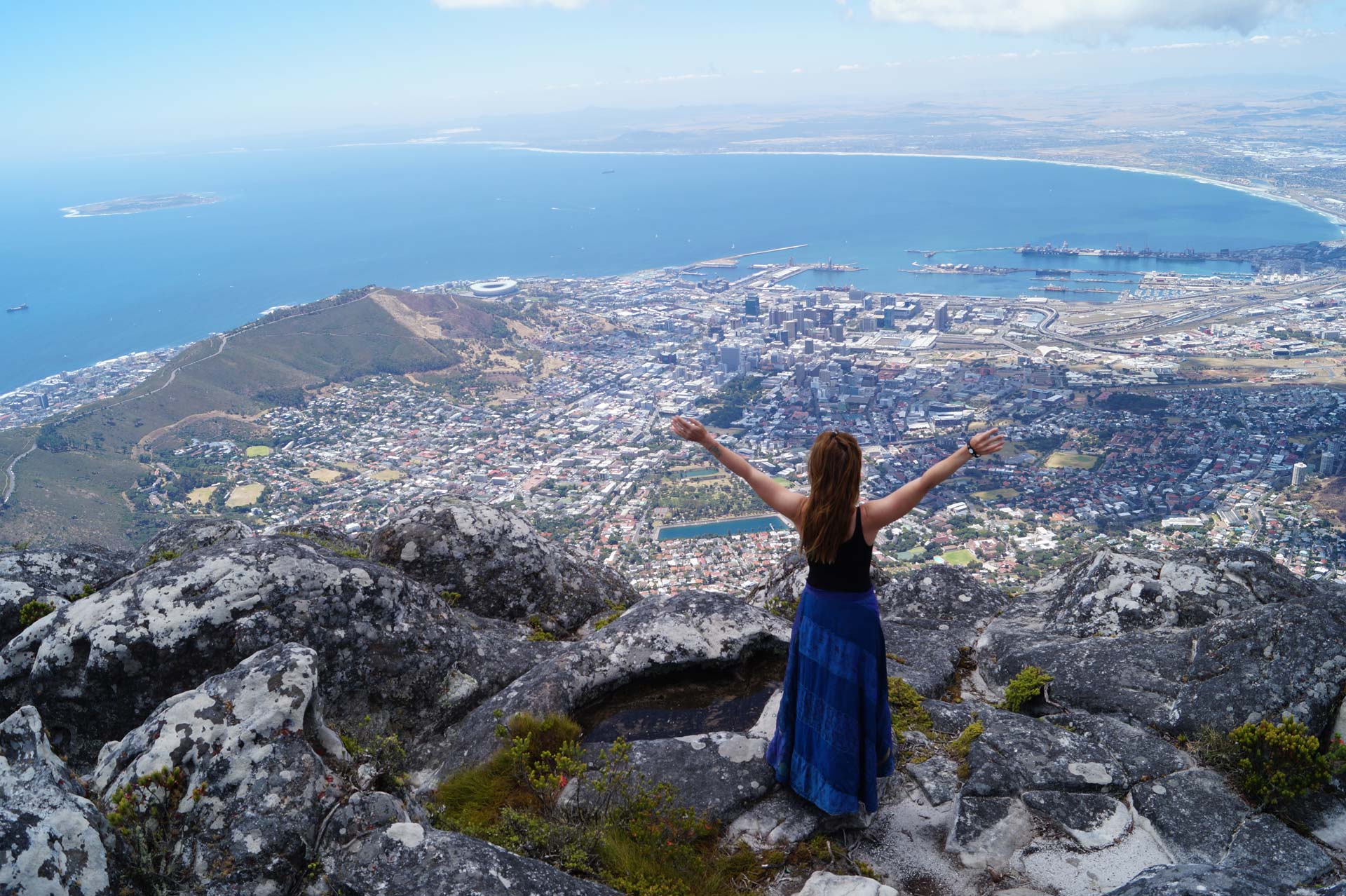
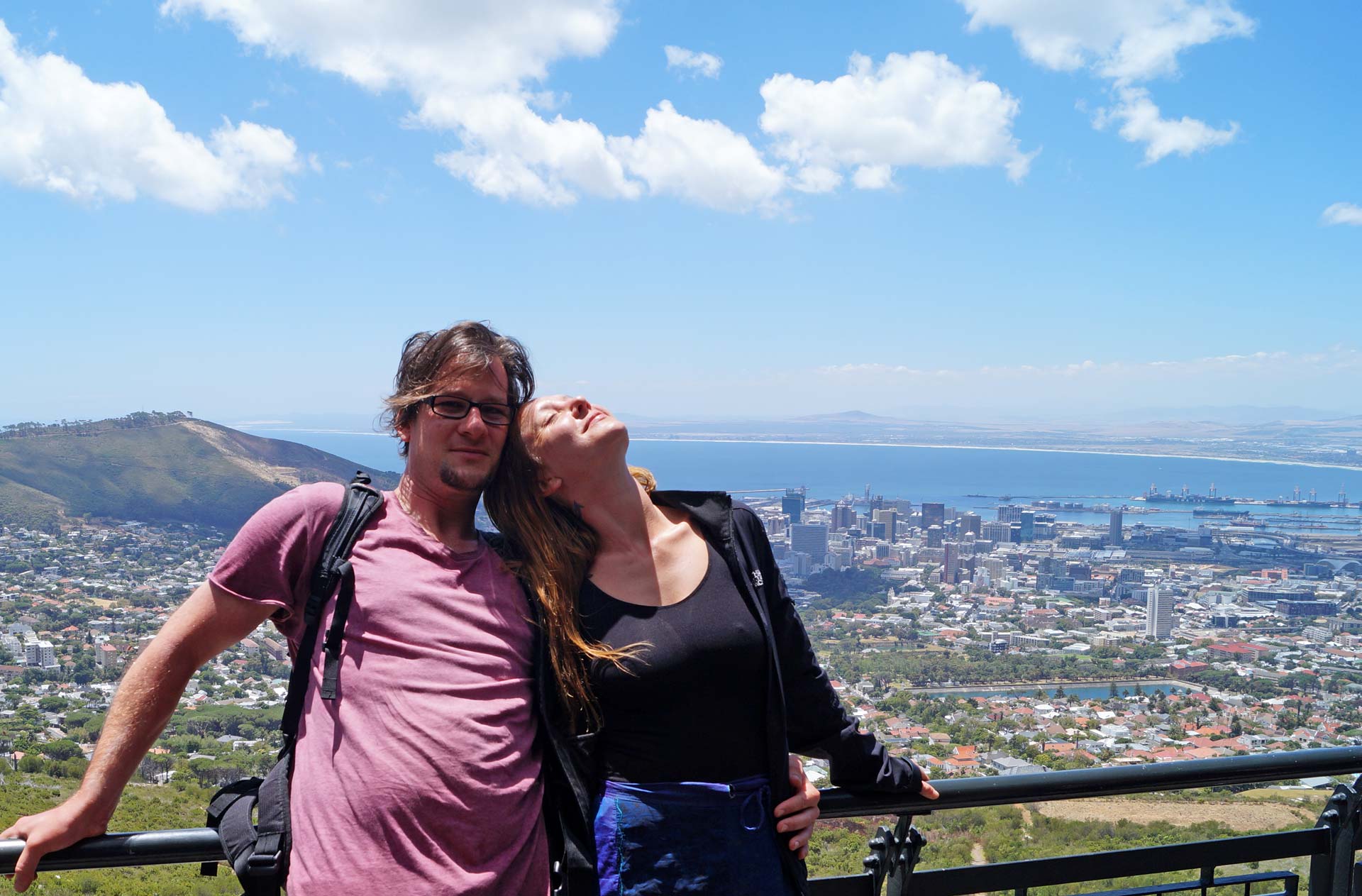
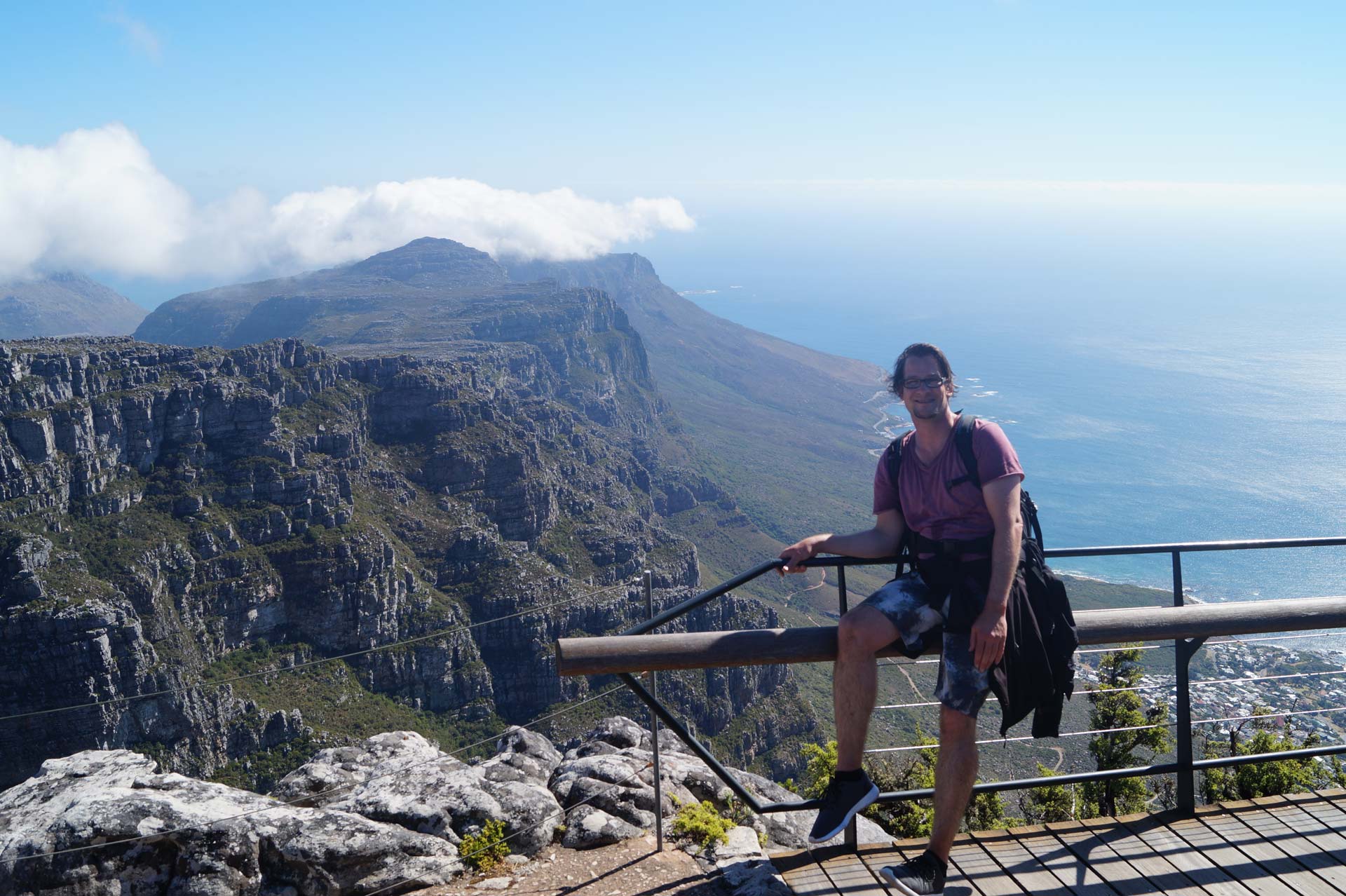
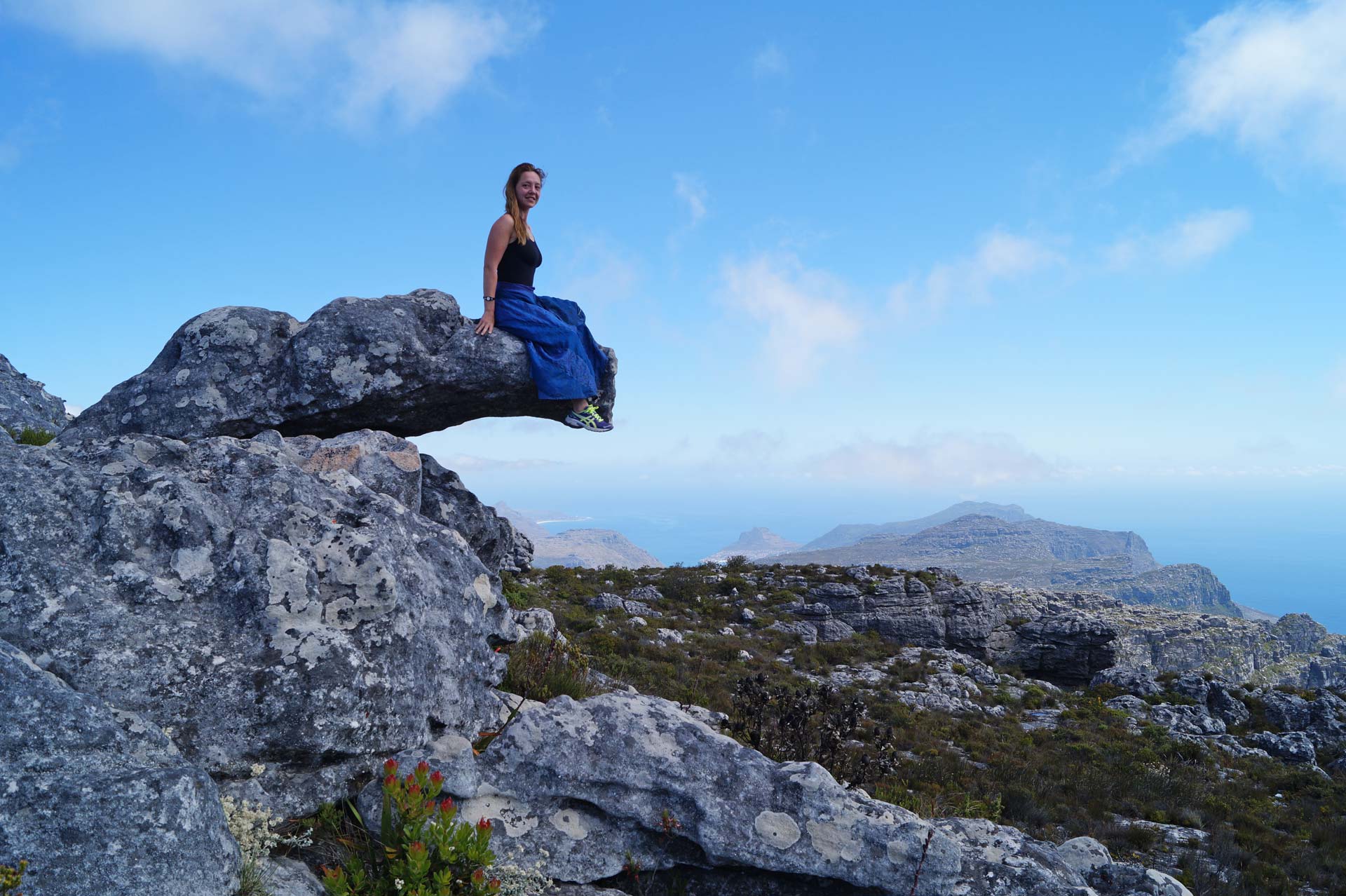
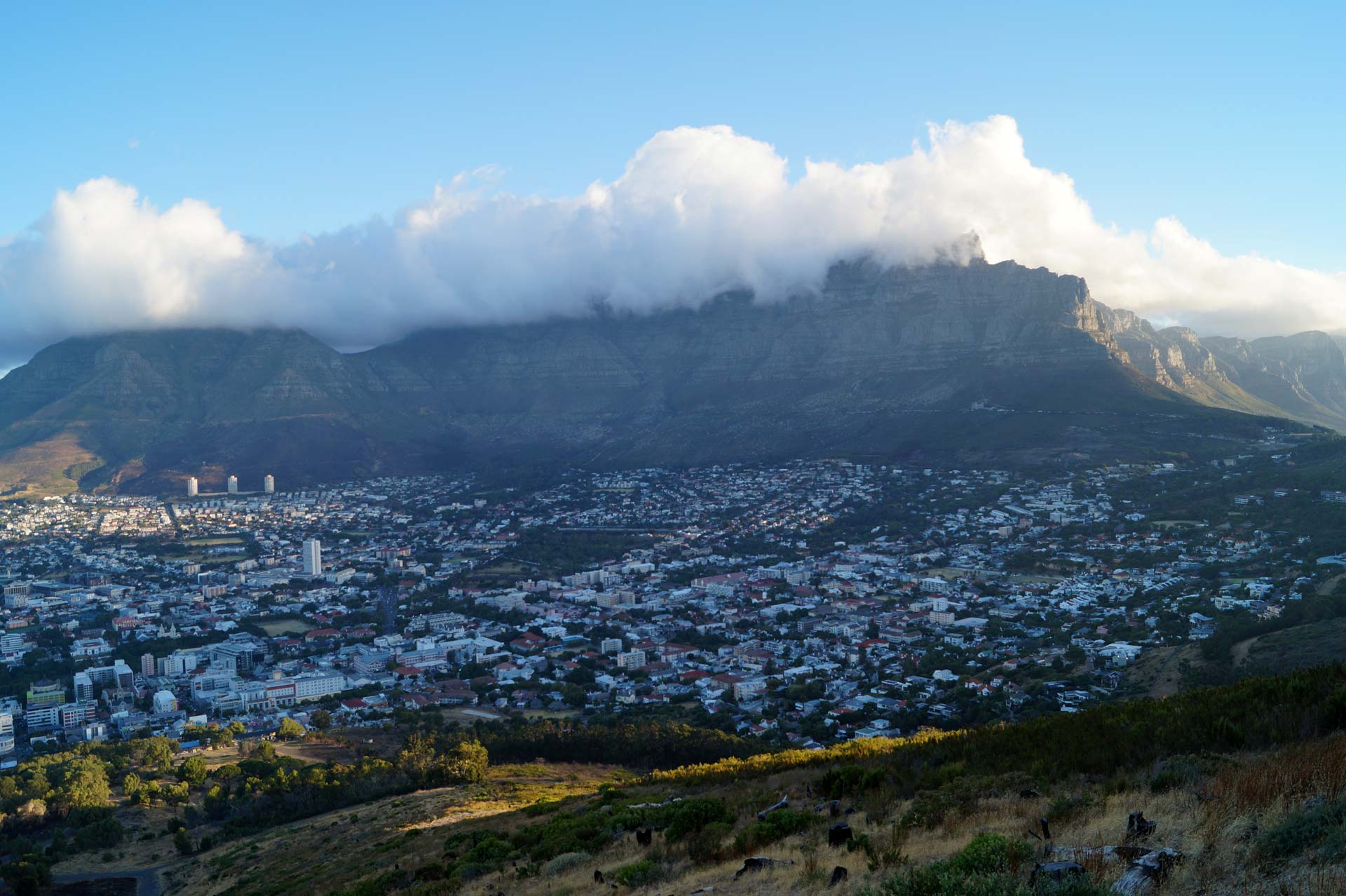
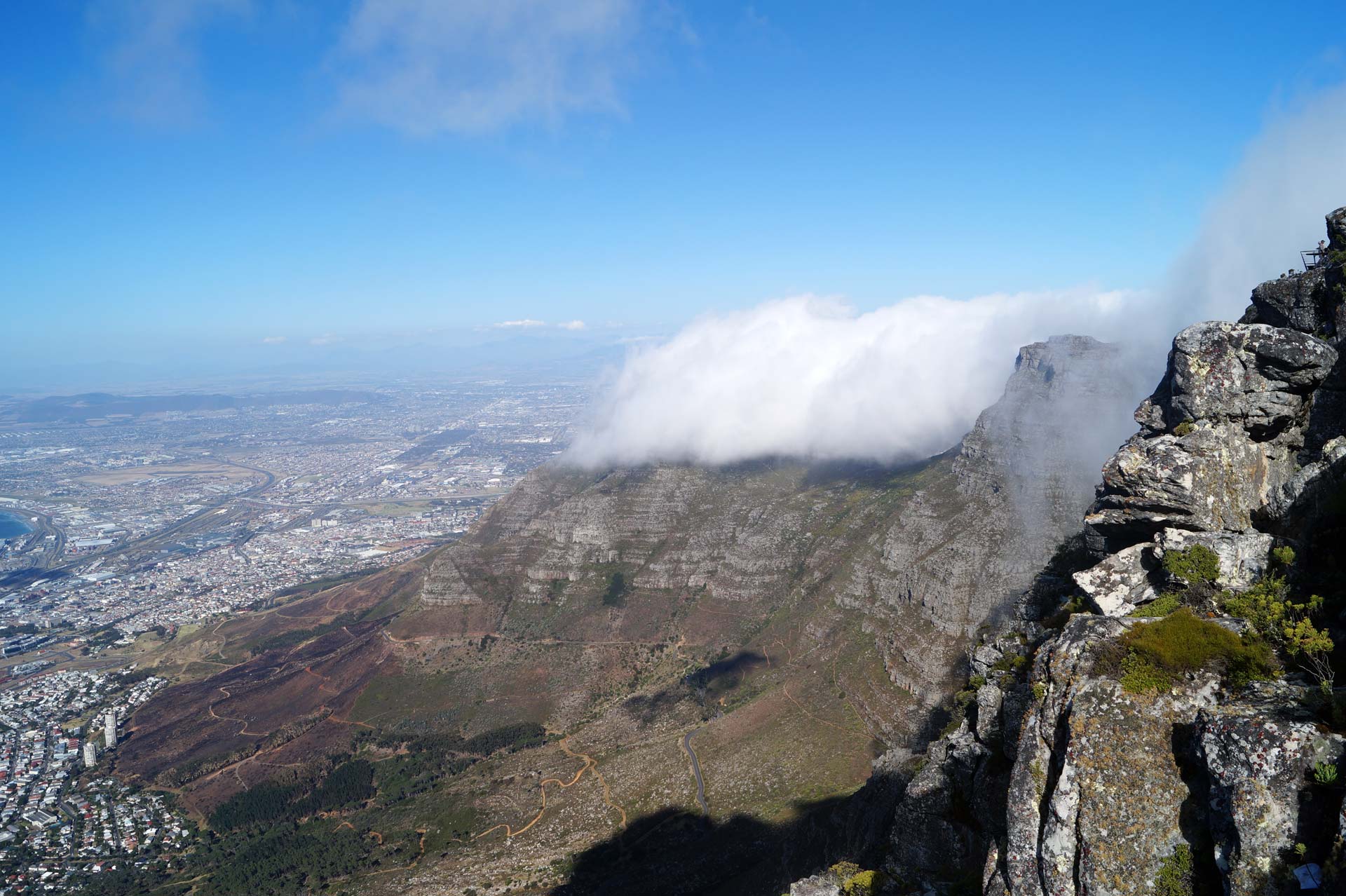
Somehow we have developed a soft spot for mountain climbs after long, heavy nights. On Saturday morning, Table Mountain is completely cloudless. it is closed 200 days a year due to strong winds, and 75 other days it is covered in clouds. After a quick breakfast, we take the bus to Table Mountain. We decide to take Sir Edmund Hillary’s really tough ascent route: he took the cable car up. We quickly queue for an hour and a half for the cable car, then we climb the mountain at a steep angle and without supports. At 260 million years old, Table Mountain is almost ten times as old as the European Alps. The more than two million tourists who have visited so far also carry a certain weight. We are flat on a flat mountain.
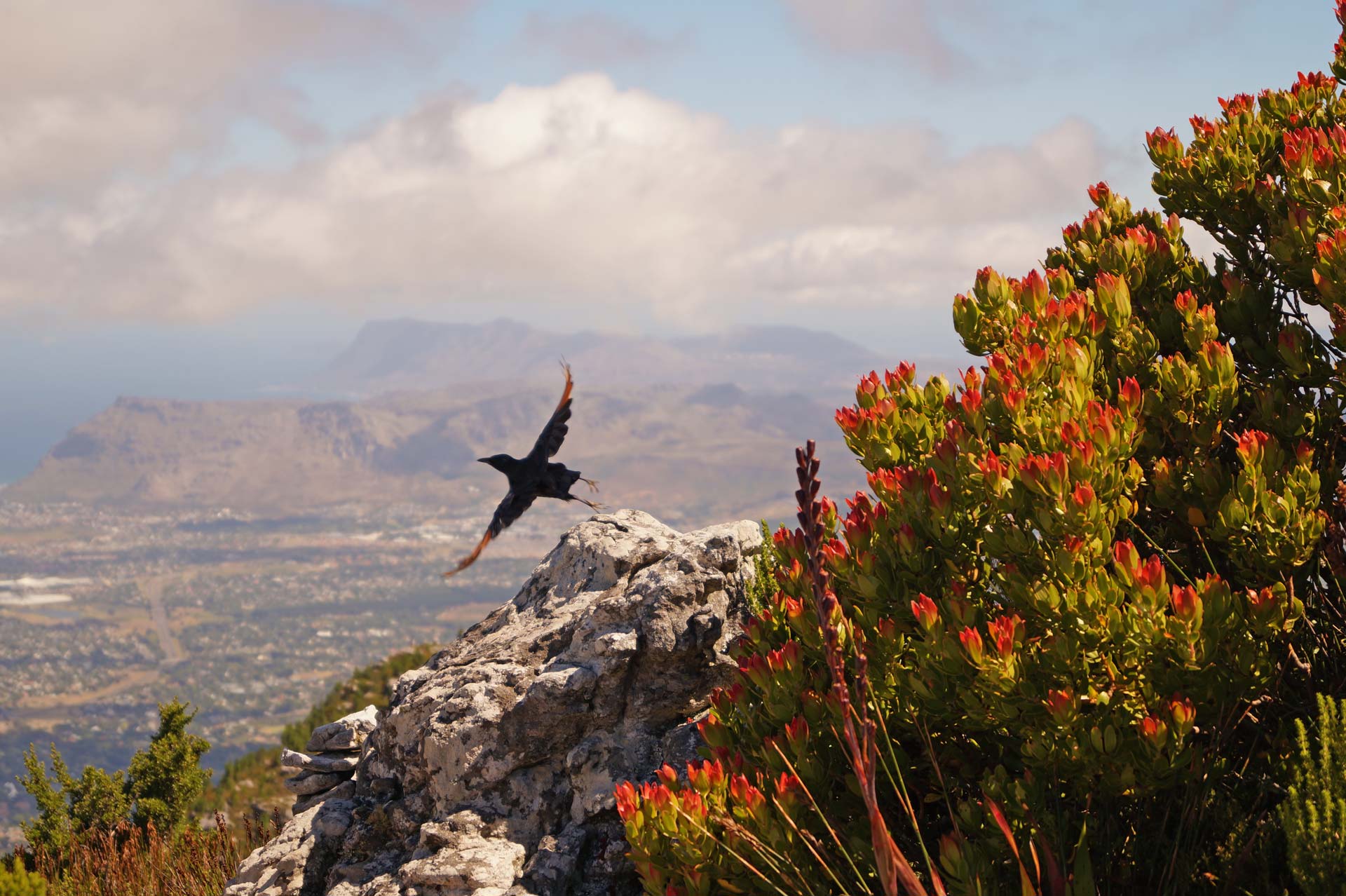
We decide to do just a short inspection tour. Unfortunately, the views, the gorges and rocks as well as the changing vegetation at the far end with a small raised bog are so varied and fascinating that the short inspection tour turns into a three-hour hike with a few detours to the far end at McLarens Beacon. Without water and in blazing sunshine. We complete the one-hour queue for departure on standby.
The second night on Long Street takes us to the last open Neighbourhood, a Wilhelminian-style complex with large old salons and small, well-lit corners. Watching the hustle and bustle on the street from the balcony almost feels like Mardi Gras in New Orleans. A jazz club has taken up residence in the crypt beneath St George Cathedral. But the band doesn’t rise above the level of lift music today. Instead, we hit a swing party, check out a few more bars and end up in the Waiting Room. A friend of Verena’s is playing some very fine electronica and some party master is throwing up in the middle of the small dancefloor. Unfortunately, this club also closes at two o’clock.
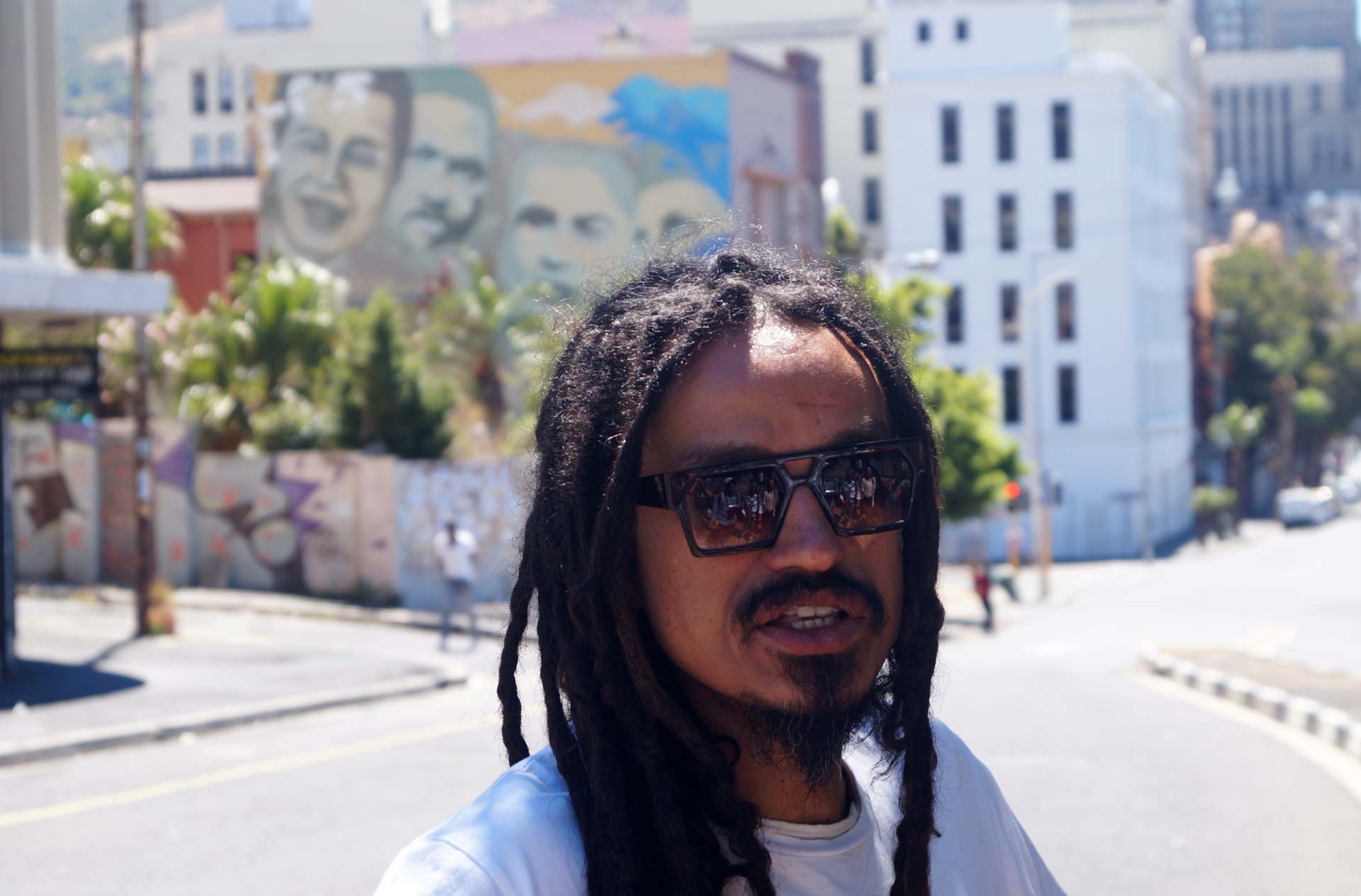
On Green Market Square, Cape Town offers various free guided tours by dedicated locals. Our guide in District Six is a first-class Rastafarian who always talks with his whole body, almost dancing. For centuries, District Six was a functioning melting pot of all races and religions. Blacks and whites met in jazz clubs to celebrate together. in 1964, apartheid moved in with bulldozers, flattened the architecturally valuable homes of 60,000 people and relocated them 40 kilometres away to the townships on the outskirts of the city. Today, the technical university is located here. Black students smoke pot in front of the halls of residence. Around it, even 40 years later, empty meadows wither in the hot sun. Hardly anyone has ever been compensated.
Between District Six and the harbour lies the former working-class neighbourhood of Woodstock. We get off the bus on the wrong side and for the first time don’t see a single white person for half an hour. The Danger-Meter rises to a breathtaking 20% – and provides us with the highlight of the excursion, because what all the guides call the hipster and design centre of Cape Town, we simply call a few very nice but hopelessly overpriced design shops that will probably soon displace the otherwise still quite poor population.
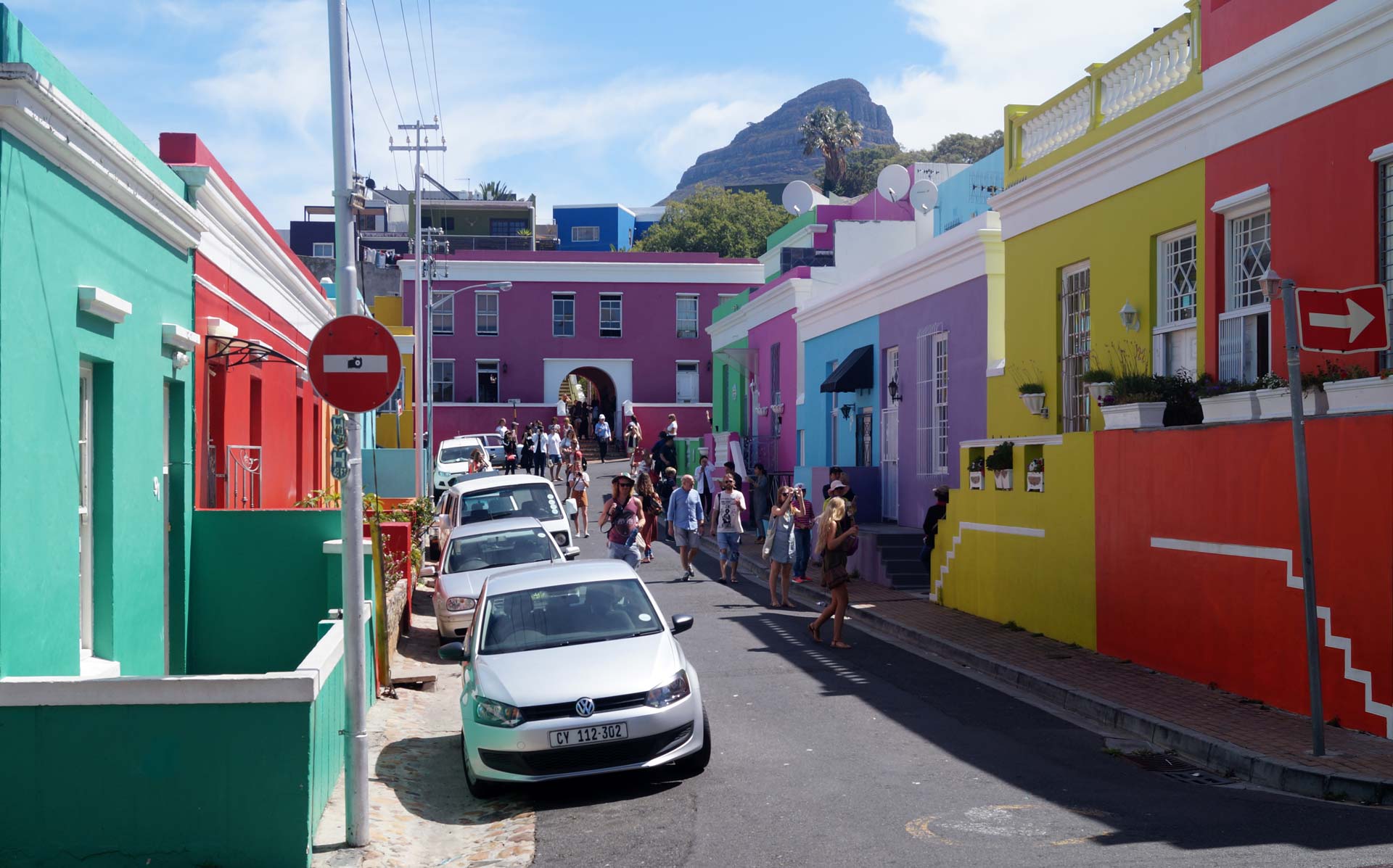
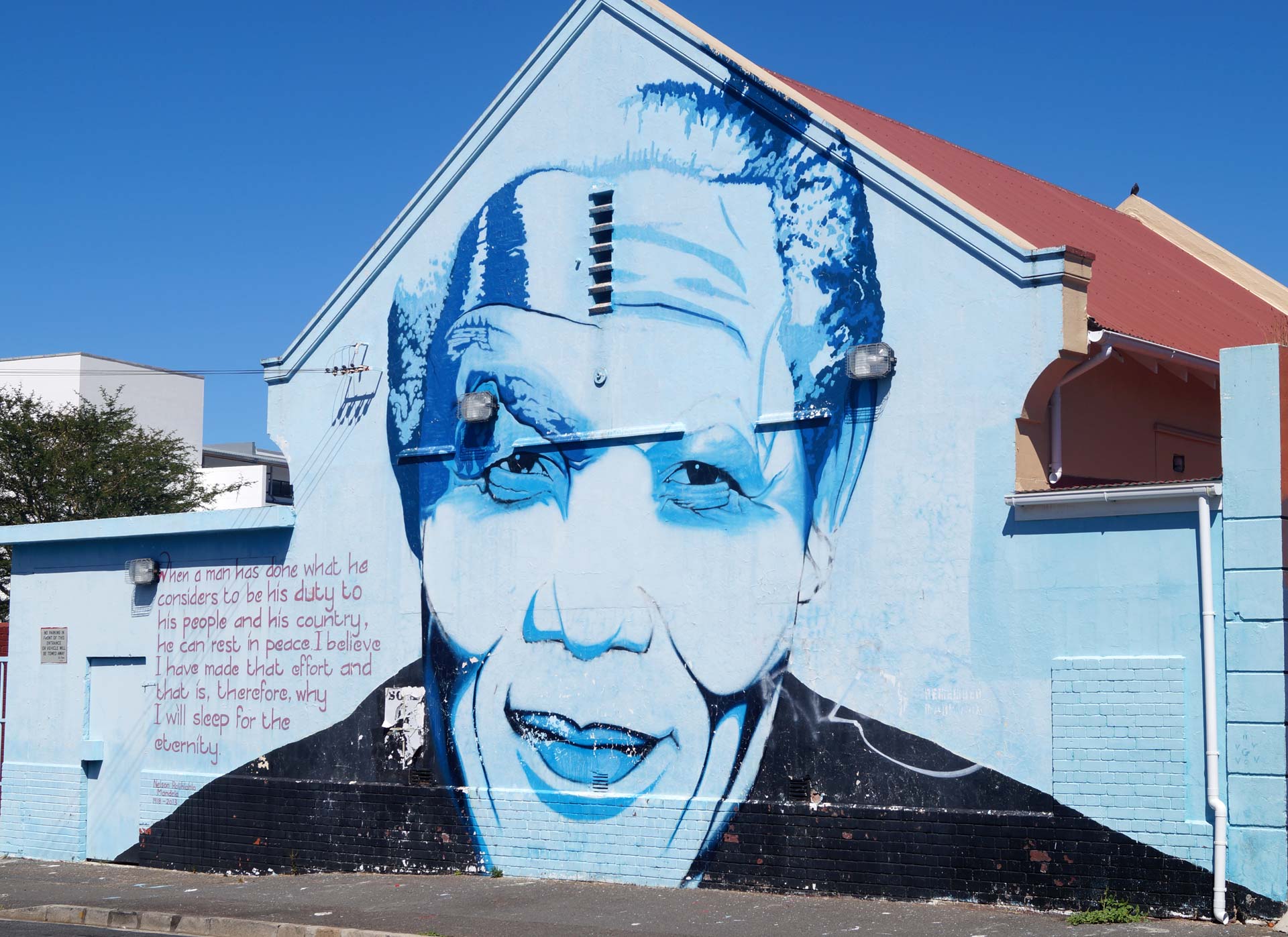
The second tour to Boo Cape, the old Malay Muslim neighbourhood of Cape Town, is much more interesting. The prisoners cut the granite on Robben Island for the narrow streets at the foot of Signal Hill. Small colourful houses and a few mosques line the rather crowded streets. There have been expulsions here too. But never war or violence. The religions live peacefully side by side in Cape Town. Nelson seems to have done some things right: living together counts more than looking backwards. People forgive each other. It may be that less has changed here since reunification than in Germany. But: we now have plenty of Nazis. And South Africa still has no hate.
 Frank Woelky, born in 1973. Kitesurfer since 1998. Since 2006, I have been combining kitesurfing and web design on trips lasting several months off the beaten track.