We spend two weeks travelling all over Crete with the little one. Avoiding the storm on the west coast, we first land in Platanias. Almost everything is still closed before the Greek Orthodox Easter.
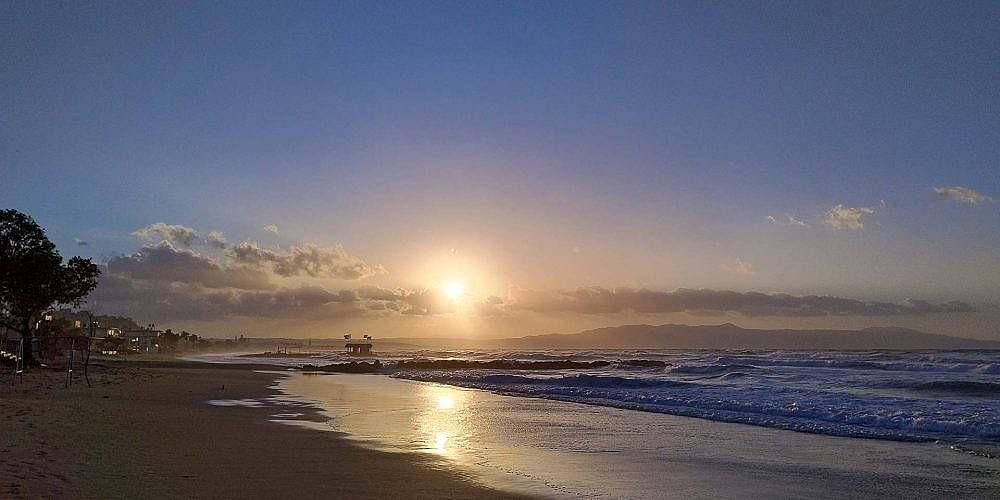
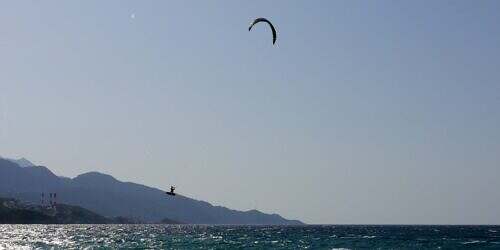
The sea is boiling with 13°C water and 17°C air in big waves. Our small flat is right behind it. But the wind is a little too lusty for me to be thrown into a frosty second kite session without a wetsuit.
Platanias
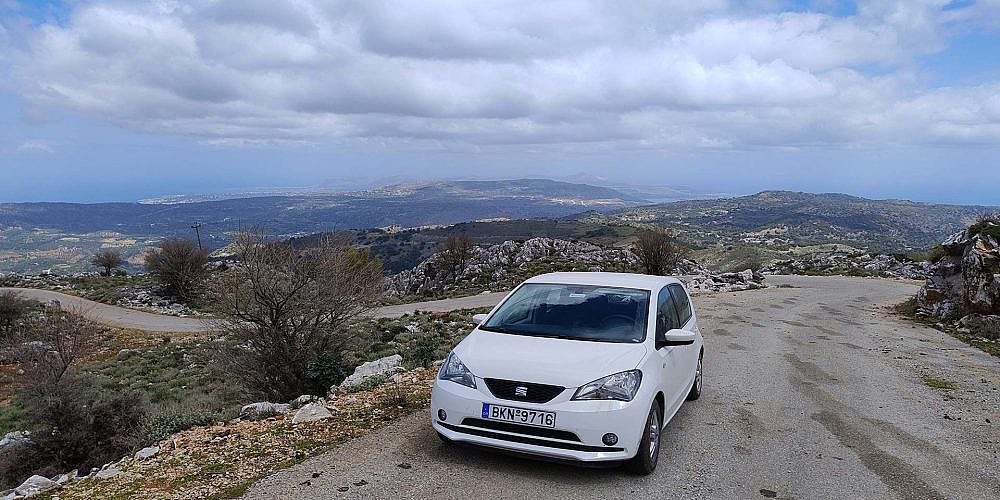
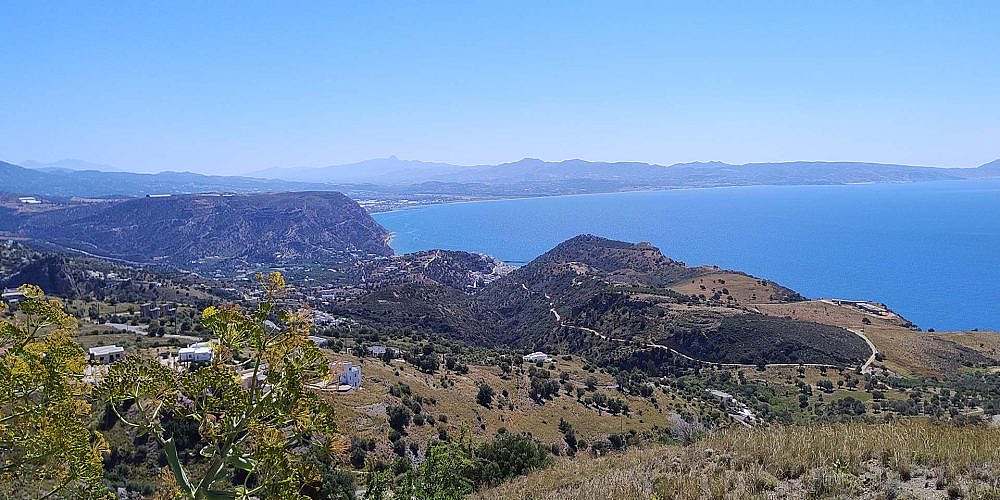
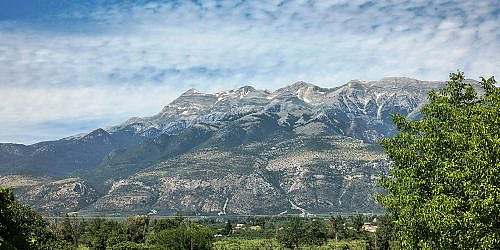
Instead, we look for the best view of Pachnes, the second highest mountain in Crete at almost 2,500 metres. Although we get almost halfway up by car on the loneliest of roads, you can’t see a thing of its snow-covered summit here. No matter.
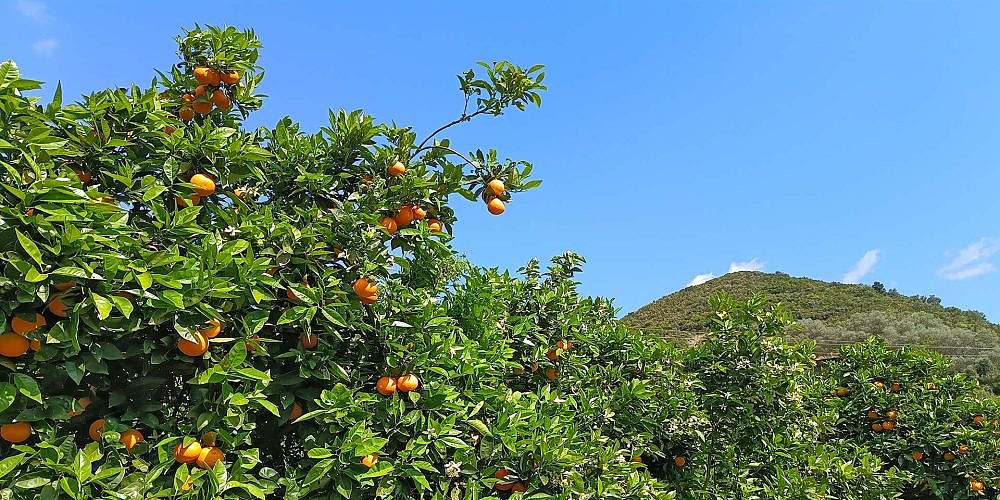
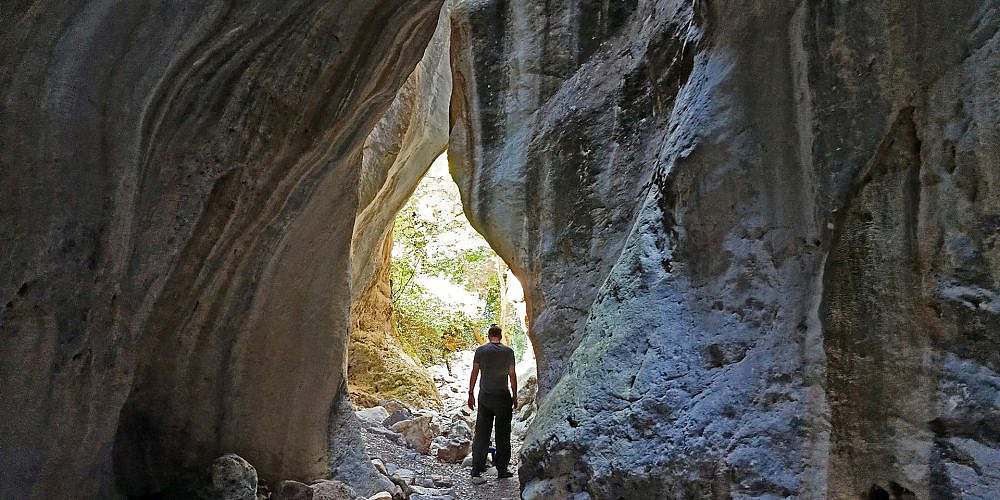
The little one is out hunting goats. There can never be enough. Without the trip, we wouldn’t have found the wonderful Sarakina Meskla gorge, which is easily accessible even with a pushchair. The little one loves the canyon and is good at climbing over big rocks. Only the helping hands cause her to freak out. We return to the sea via a valley full of orange trees.
Driving in Crete
Hardly any of our roads have a central reservation. Especially on the winding, narrow mountain roads of Crete, you are almost always allowed to drive at 90 kilometres per hour. However, this is usually an unattainable speed here. Motorway-like 12-metre-wide highways, on the other hand, are often restricted to 50 km/h or less for kilometres.
The Cretans pay tribute to this legislative schizophrenia by completely ignoring any rules. No stopping, no helmets, no overtaking or simply keeping to the speed limit: it doesn’t matter. I would like to eavesdrop on a negotiation behind one of the numerous speed cameras, which are almost always clearly signposted. It would certainly be a divine comedy. “Are you the egg? Allow me? Police hen. Papers please!”
Almyrida
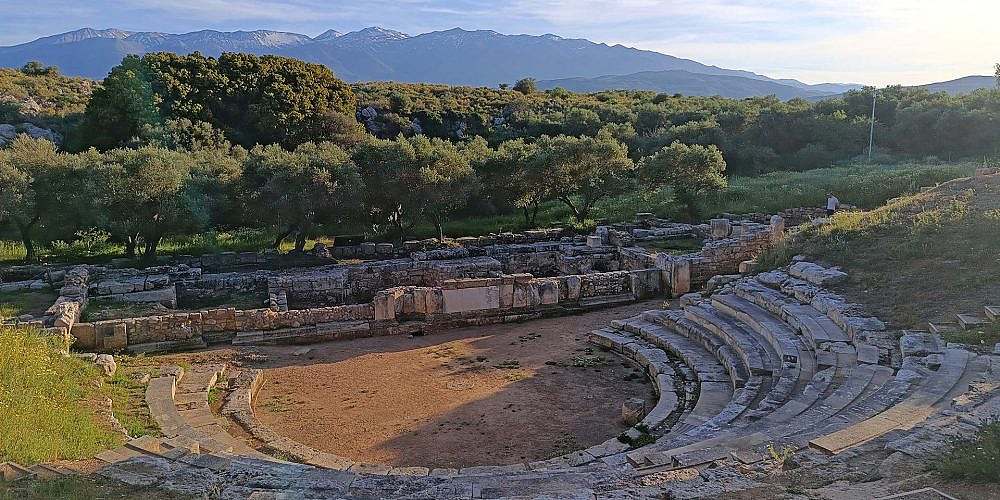
Our next stop is the small fishing village of Almyrida. In the amphitheatre of the nearby archaeological site of Aptera, which has been inhabited for over 3,000 years, we finally find it: the best view of the snow-covered Pachnes.
You have it here today because the residents of the nearby village started digging on their own in the 1980s. Their serious aim was to create a space for the local farmers’ theatre. After the Disneyworld-like restoration of the Minoan palace of Knossos by “archaeological professionals” at the end of the 19th century, self-initiative seems a negligible evil.
Aradena
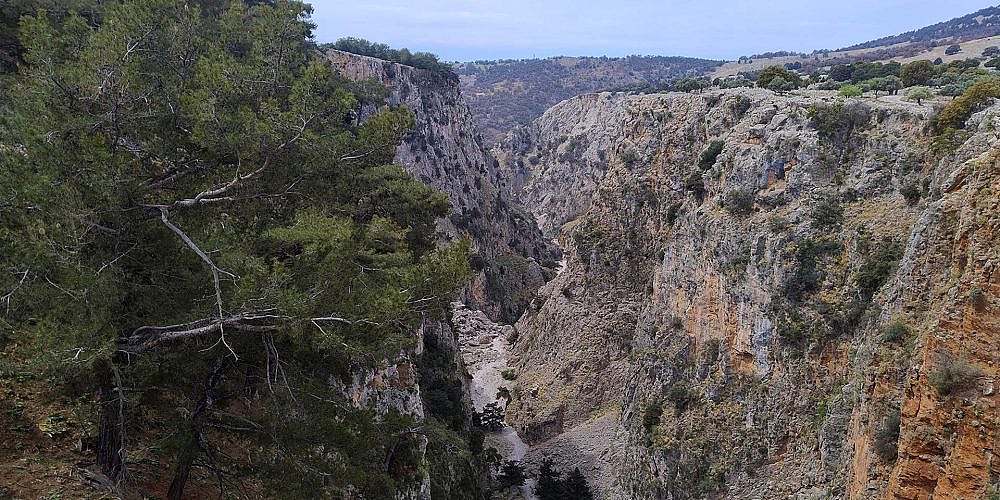
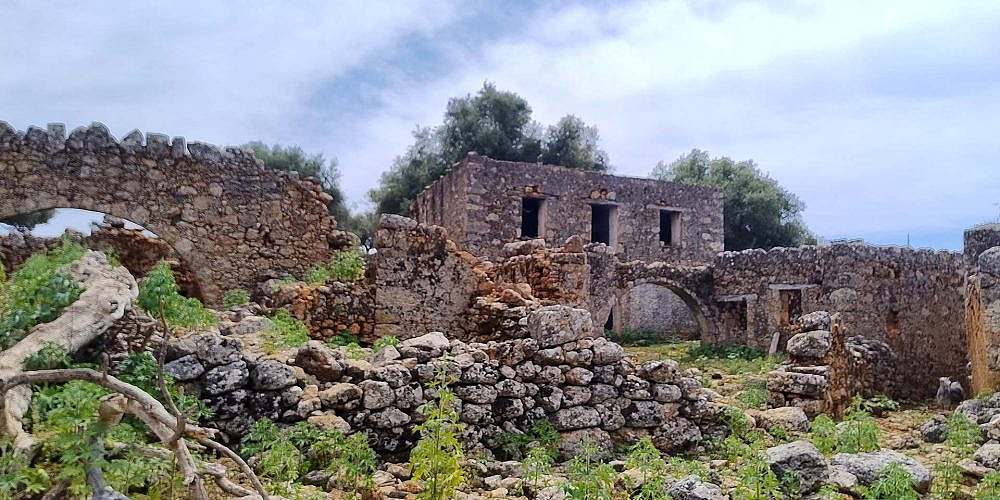
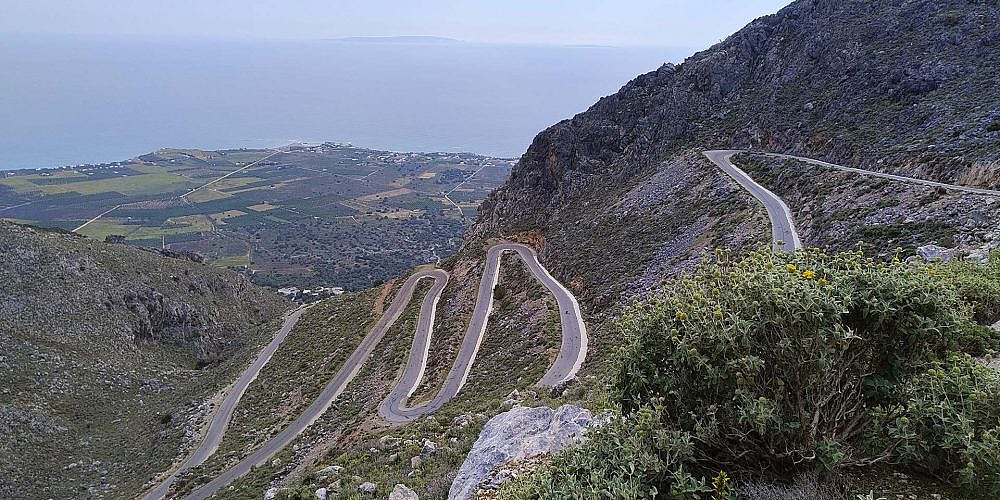
A second trip to the south side of Crete leads over spectacularly steep hairpin bends to nowhere. For centuries, Aradena was a prosperous and important town in Crete, protected by a deep gorge from the infinitely distant rest of the world. In the absence of other social activities, the inhabitants instigated a highly successful vendetta at the beginning of the 20th century. The last survivors left Aradena in the 1940s.
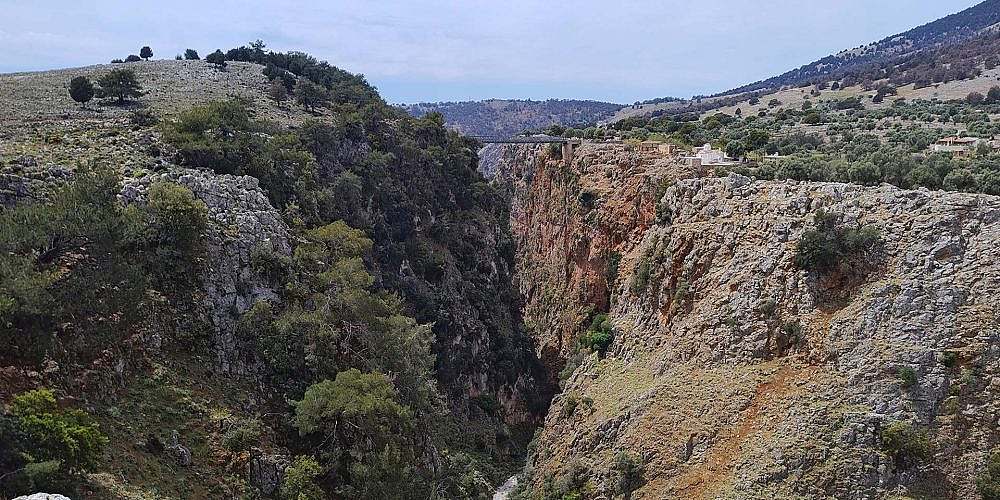
Today, goats and sheep graze peacefully between ancient olive trees and ruins. Four hermits have settled here again. In the 1980s, an expatriate from Aradena donated a single-lane bridge over the gorge. At 136 metres, it is now the second highest bungee location in Europe. Fit hikers descend the steep old donkey path and hike 600 metres in altitude through the canyon to the sea.
The inhabitants of the nearby village of Sfakia successfully rebelled against foreign rule for centuries. Even today. Parking costs three euros an hour everywhere. The nearby Venetian occupying fortress Frangokastello from the 16th century, on the other hand, cannot be visited even if you pay. The Sfakians have clearly won.
Plakias
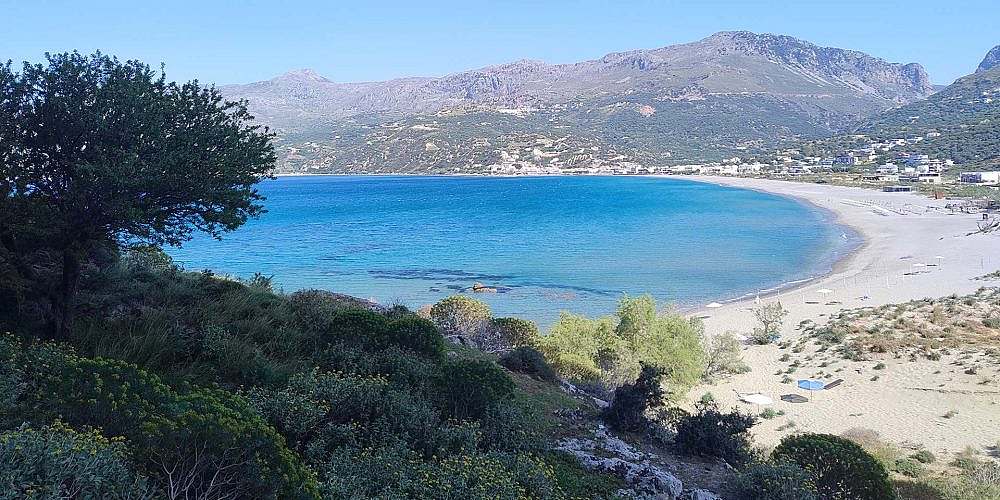
For the last few days of our trip, we move to Plakias on the south side of Crete. The south is completely different: rough, lonely and not all-inclusive. Finding a hotel with at least breakfast is much more difficult.
Deep canyons flow out of steep, high mountains into the sea. Gusts of 30 knots and more storm down the steep mountain slopes non-stop for days on end. There is no wind at all in the north. It comes out of nowhere in the middle of Crete’s mountains and – unlike an evening sea breeze – travels across the sea towards Africa early in the morning.
Crete’s wind system is somehow reminiscent of the Andes in miniature(Embalse de Puclaro and Cuesta del viento). High mountains as a motor in the centre – and strong winds on both sides towards the sea. The only difference here: there are no “safe” mountain lakes – and the next landing site in the offshore wind is almost 500 kilometres further away in Libya.
Kourtaliotiko Gorge
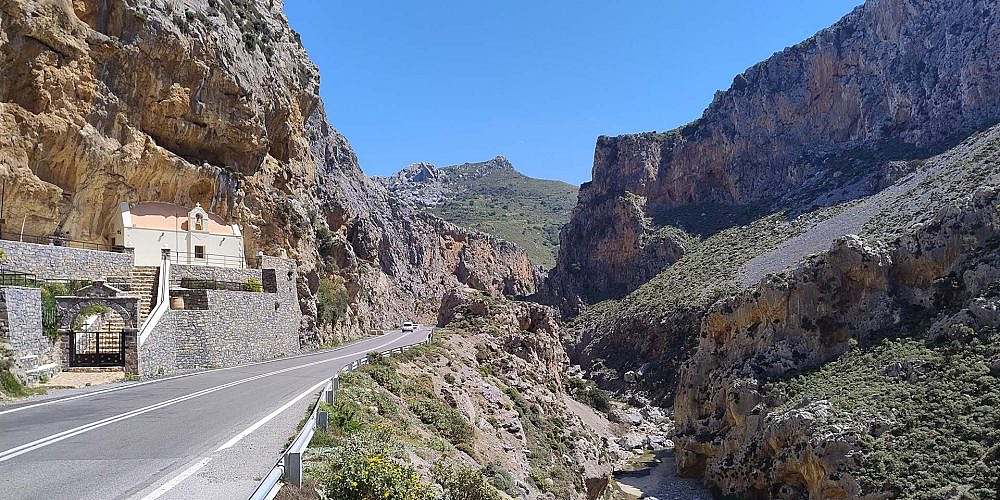
Plakias is a nice little village in the centre of the south side. Despite a long drought, there is still water in a few canyons here in April. We enter the Kourtaliotiko gorge with the children’s buggy. A bit of pushing even works at first on the gently sloping gravel path. But we have to carry the buggy for most of the way.
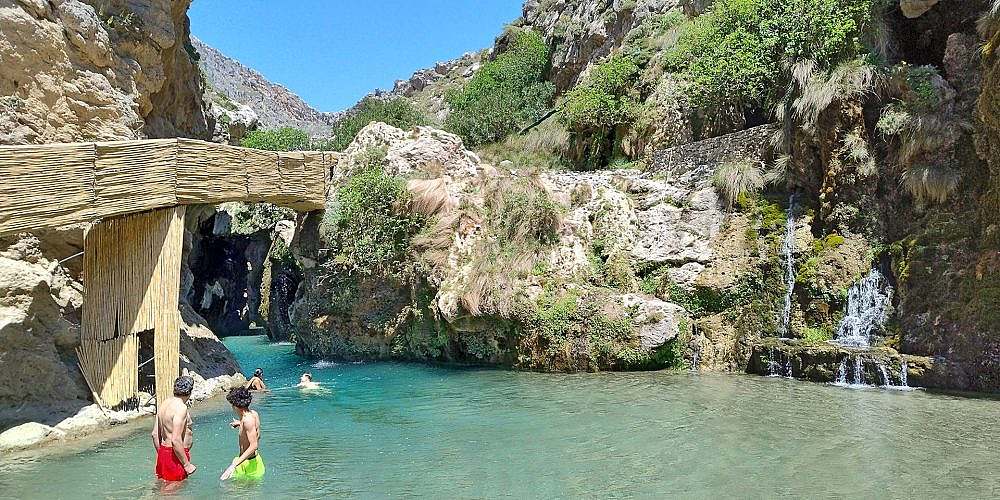
We always try to do as much as possible, even with children. But according to numerous comments from oncoming hikers, this trip falls into the category of “pilgrimage on your knees without enlightenment”. I can only climb the last 70 metres into the canyon on my own. Waterfalls and ice-cold water are a brief reward in 26°C air.
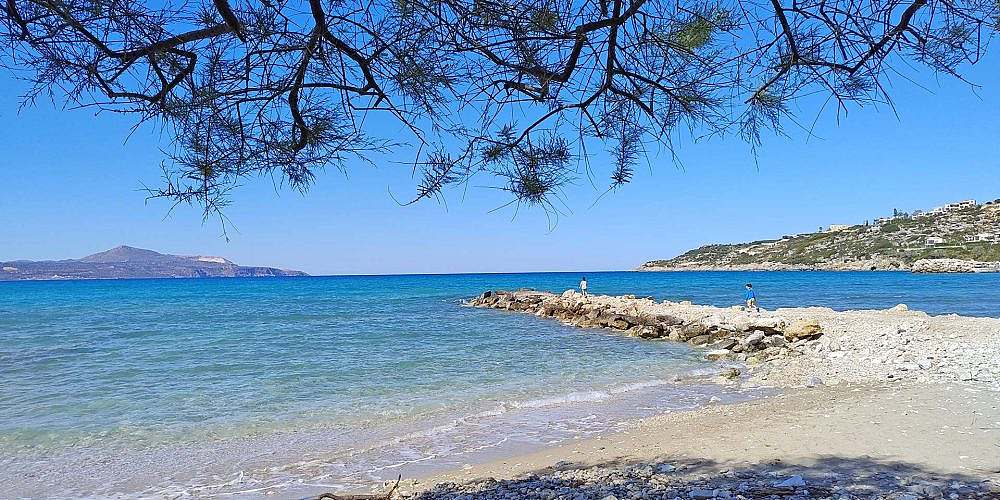
Our hotel Kostas & Chrysoula is located directly behind the village beach of Plakias. The little one can let off steam in her favourite playground. Only the water is still too cold for the frostbite.
Matala
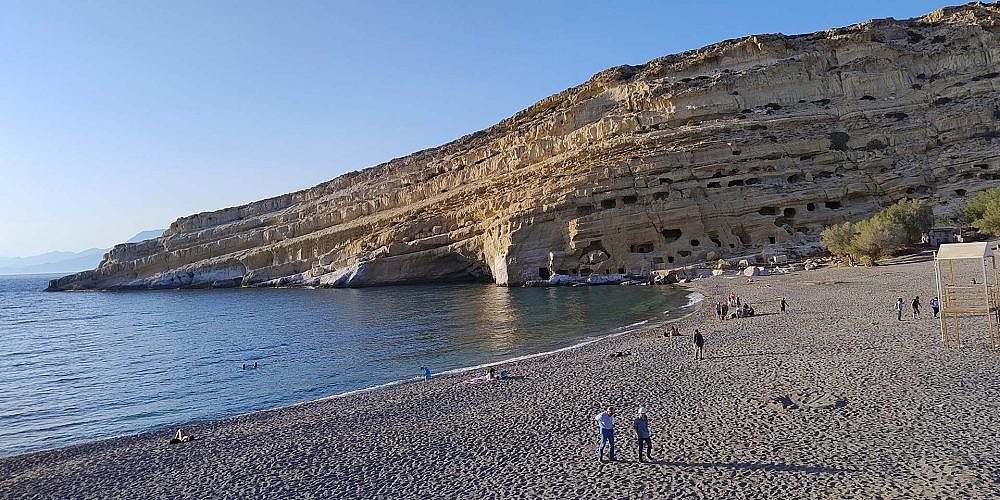
The last stop on the journey is Matala, which is pleasantly quiet in the low season. Large car parks tell of a horror peak season. It must be forgiven. Where Zeus was the first to set foot on land and the Saracens landed for the first time, tourism can only be a short stage.
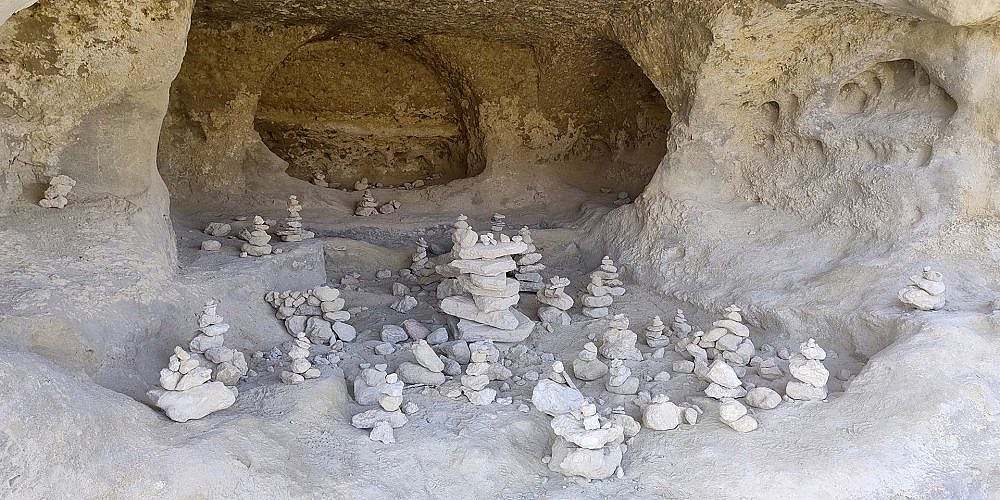
A few of my favourite hippie musicians, such as Joni Michell and Cat Stevens, found shelter in the 60s around the caves, which were carved into the soft sandstone cliffs around 2000 years ago, and founded a commune. Today, a four euro entrance fee successfully keeps the former homeless and the foul stench of piss away. Every other wall is adorned with flower power slogans and colourful bullies. Morning has broken.
The ancestral home of the Minoans is the palace of Phaistos, which is over 3,000 years old. Little archaeological information and a manageable number of wall remains do not justify an eight euro entrance fee.
Heraklion
With the exception of a few Venetian buildings and the Orthodox cathedral, the “old town” of Heraklion is one pathetic pile of prefabricated buildings. A quick spot of shopping and a delicious lamb anticristo from the open fire grill in the fantastic petousis.gr restaurant just outside Heraklion. The little one runs riot in the supervised attached kindergarten. We enjoy the only quiet hour of a 1,400 kilometre road trip across a large island.
What remains is the laughter of the little ones. The way she uses “Thank You”, “Efcharisto”, “Yassas” and “Kalimera” almost always in the right situation – or in adorably wrong ones. How she dances, digs in the sand and discovers the world – or simply ruthlessly dissects it. “Another holiday” she said at the end…

 Frank Woelky, born in 1973. Kitesurfer since 1998. Since 2006, I have been combining kitesurfing and web design on trips lasting several months off the beaten track.