

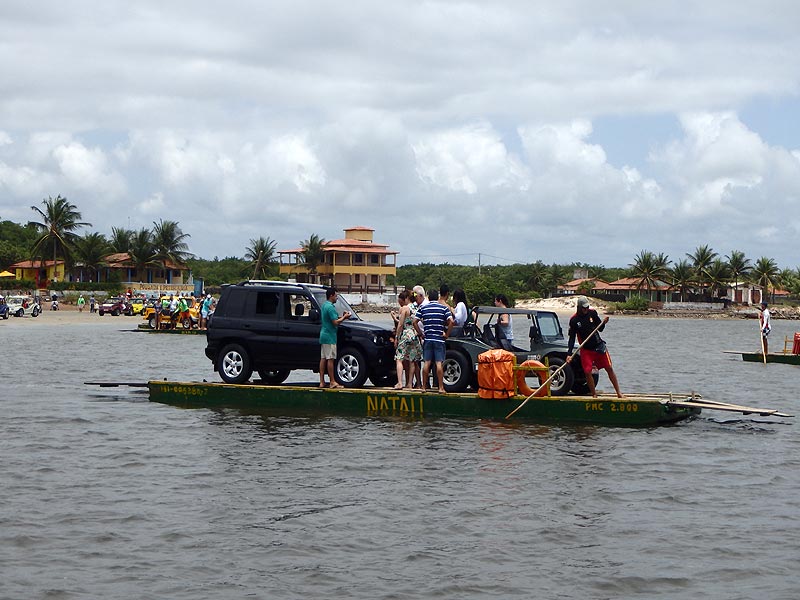
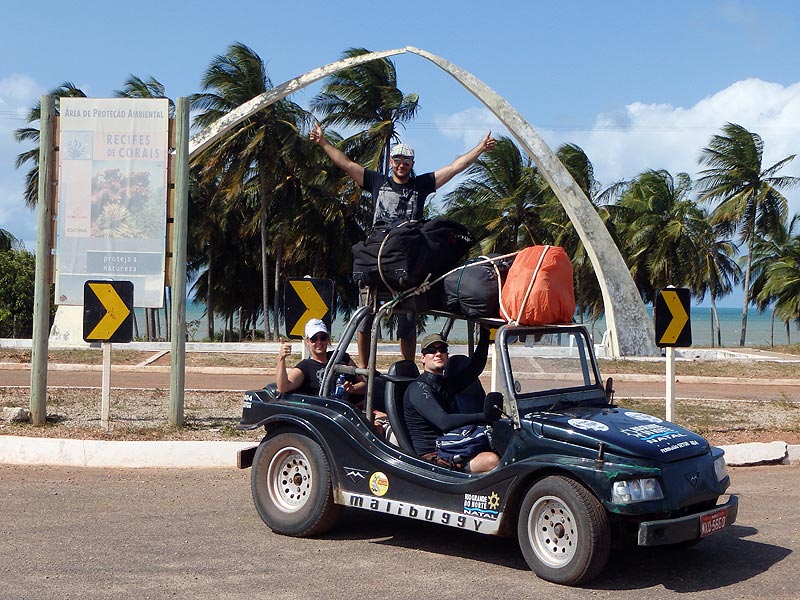
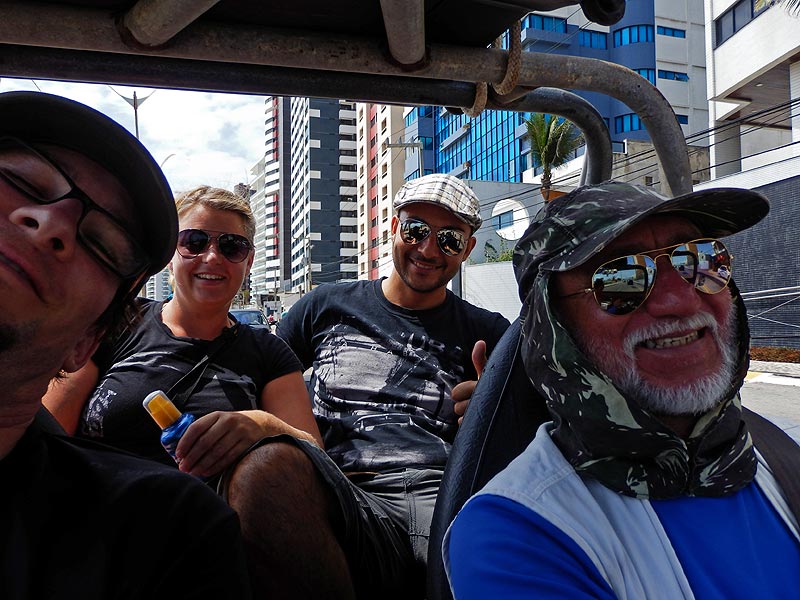
Bob booms cleanly out of the box. The sound system drowns out the loud roar of the VW engine in the back of our beach buggy. Water splashes through the floor in the footwell when we cross rivers. Handel’s water music plays. I’m on my way to the promised land with two long-distance travellers from Australia. The strong trade winds start pretty much at the north-eastern corner of Brazil. We drive around it for two days and 170 kilometres in the Captain Maol beach buggy.
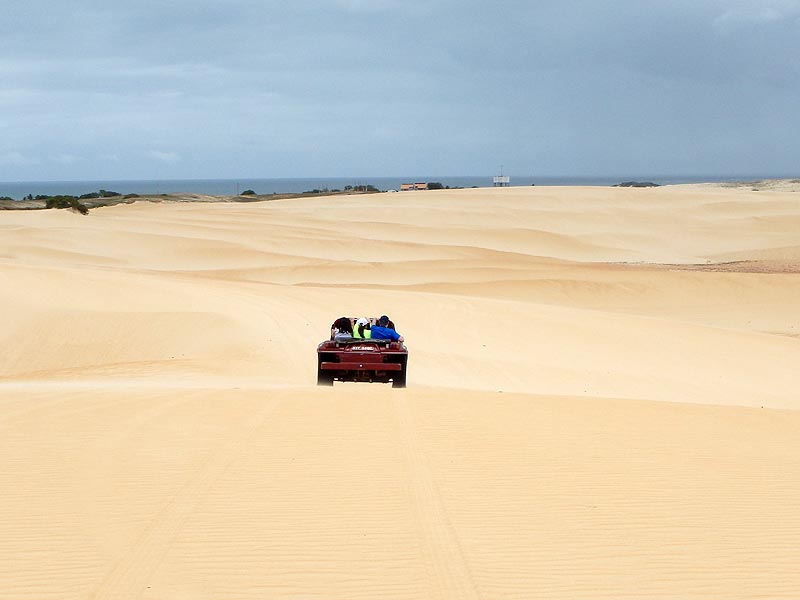
Maol is 65 and has been riding beach buggies for 30 years. As an enduro biker, I’m sceptical at first. I still remember well how my grandma used to ride. But my worries are completely unfounded. Before the first sand dunes north of Natal, he reduces the tyre pressure. Then he really steps on the gas.
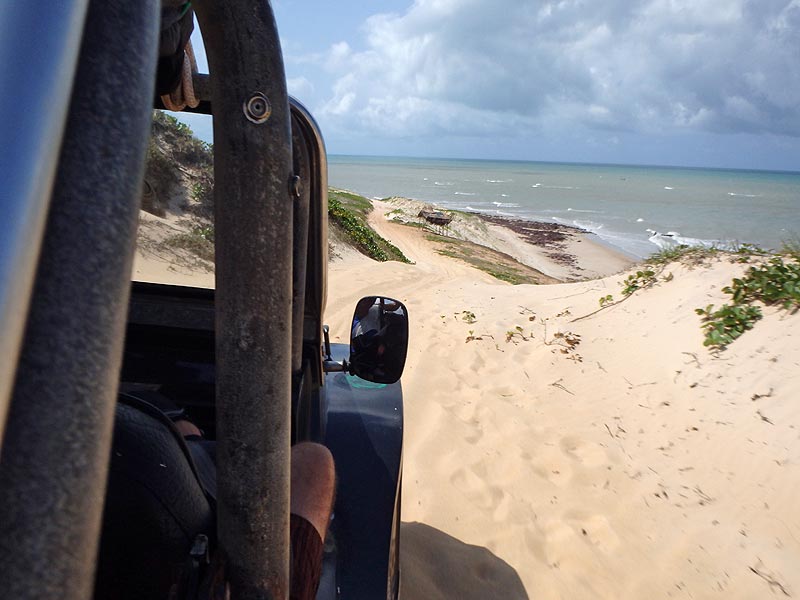
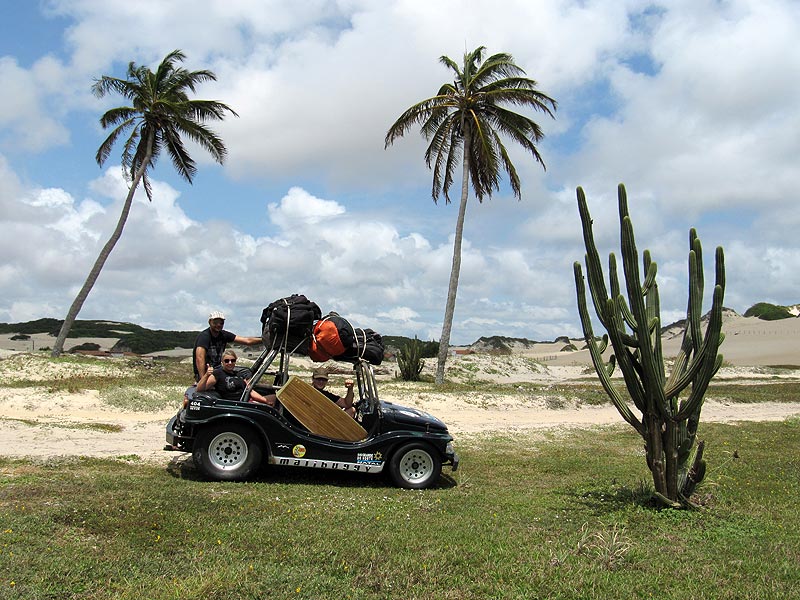
Up the dune, into the steep bend, down 45°, over the next crest and down the side at a 30° angle. We lashed our luggage and kite equipment to the roll bar. After the third re-tie, it holds almost until the end of the first day’s stage.
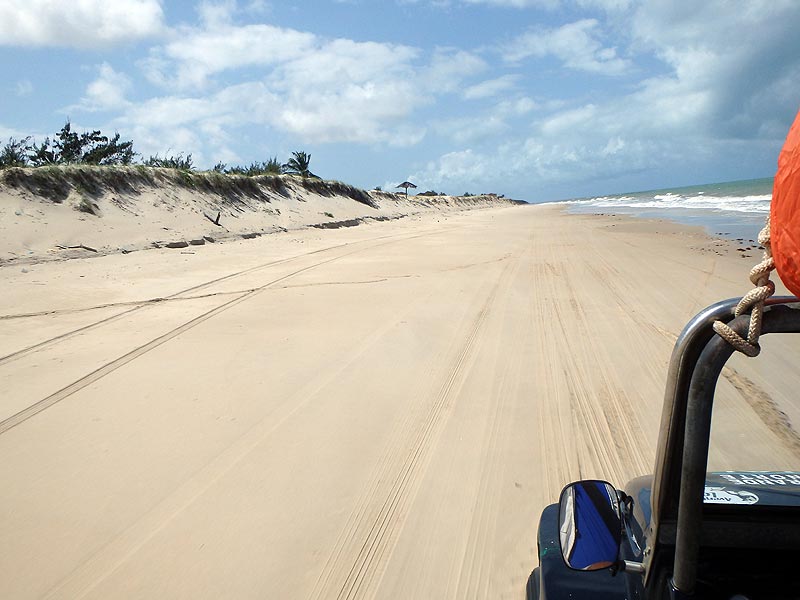
Maol looks like an old hippy – and drives like an alcoholic hangman – but he’s good. Not a single other beach buggy overtakes us the whole first day. A bit of jumping every now and then, then down to the beach and on northwards at 100 kilometres per hour. That’s how it goes the whole first day, 90 kilometres.
We arrive in Sao Miguel do Gostoso in the afternoon. The sleepy little village has a wide beach and is developing into a small kitesurfing hotspot with its first two surf centres. In the evening, after a long day with lots of “active sitting”, we go out for far too long and heavily. There’s no need to apologise. I’m travelling with Australians.
Early the next morning, Maol picks me up with a big grin on his face. Beach buggy drivers are very popular with the local females. They have a woman in every village. We lash the luggage to the buggy again and continue northwards. Hundreds of wind turbines line dozens of kilometres of secluded beaches.
The nasty noise, which yesterday we thought was a stone stuck in the brake disc, suddenly becomes worryingly loud in the deep sand and a good 15 km from the next village. A little later it turns out to be a major gearbox failure. Maol drags us along in second gear to the next village, Caicara do norte. Then it’s over.
For the last 30 kilometres, we switch to a friend’s beach buggy and drive on to the Brazilian kite highlight of Galinhos.
Video Kitesurfing Galinhos, below without sound. Better: with sound via videodoubler.

 Frank Woelky, born in 1973. Kitesurfer since 1998. Since 2006, I have been combining kitesurfing and web design on trips lasting several months off the beaten track.