

Ilha do Guajirú is the first place in Brazil where we have to search for free accommodation. “Something” takes five minutes and finds us a pousada right on the beach for very little money. The rusty compressor rattles loudly and the meal takes ages. We immediately feel at home in the Pousada Portal da Barra. There are few places in the world where you can kite in strong winds on flat water just ten metres from your room.
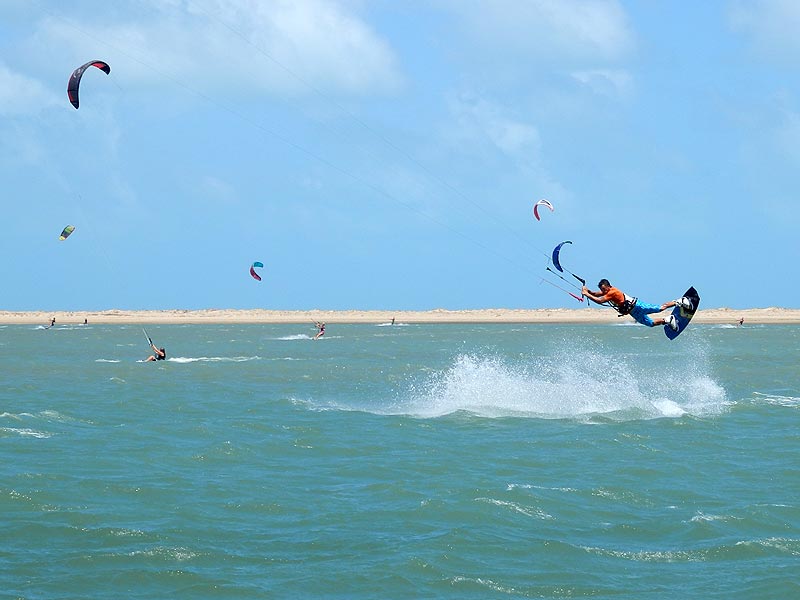
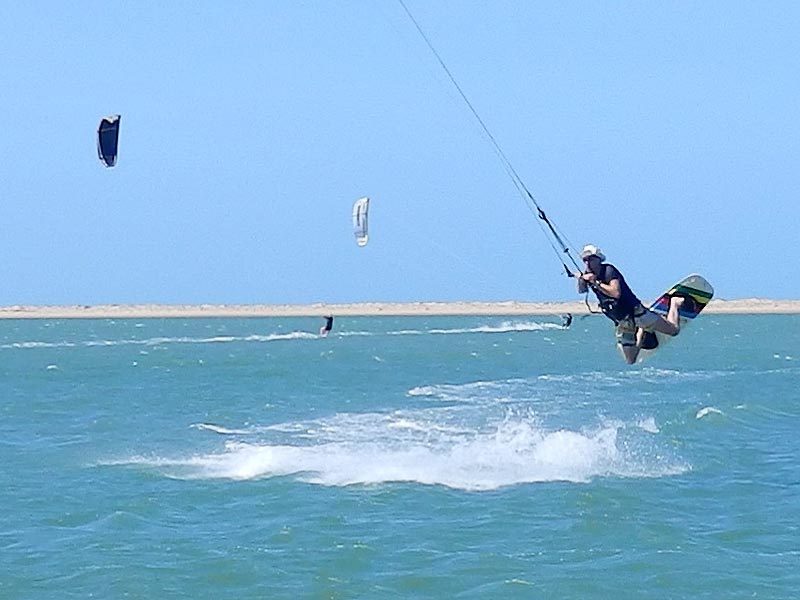
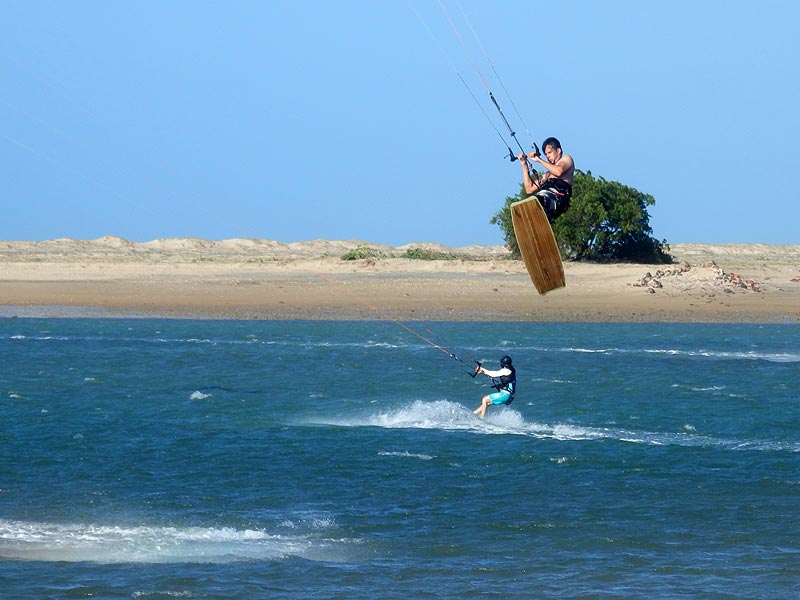
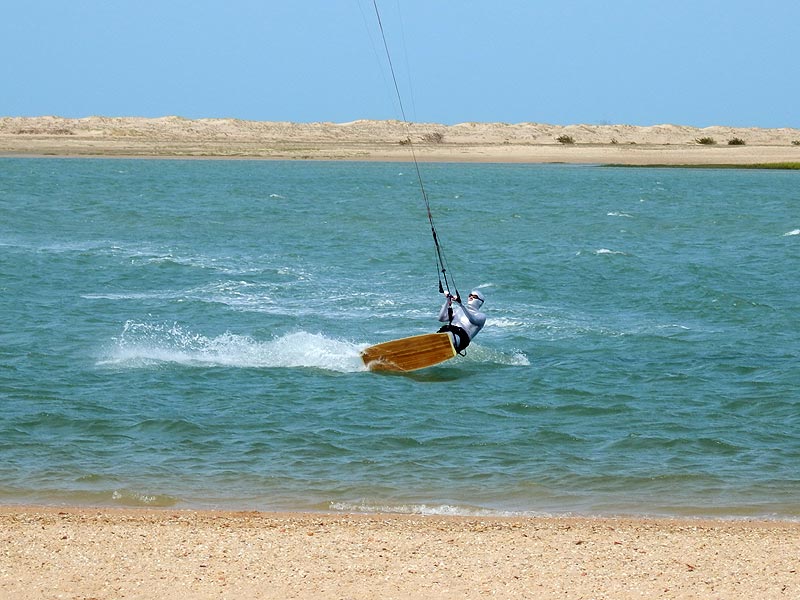
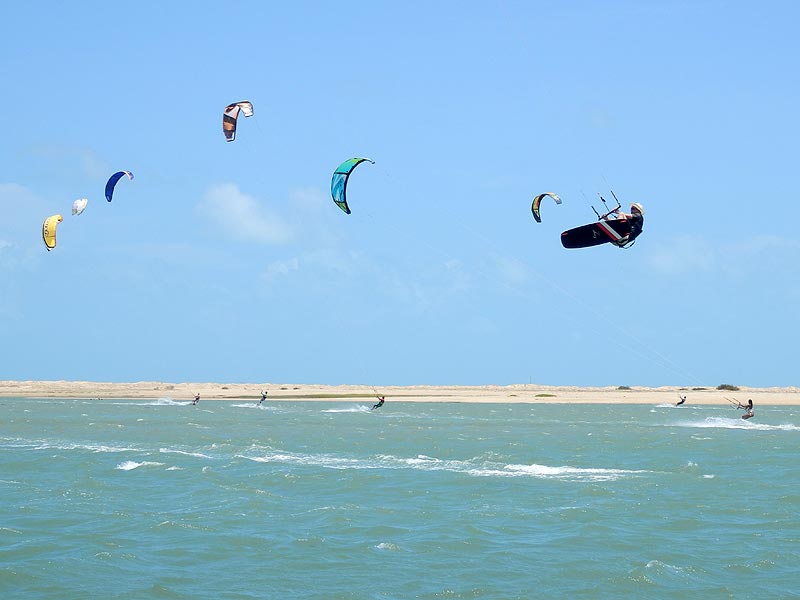
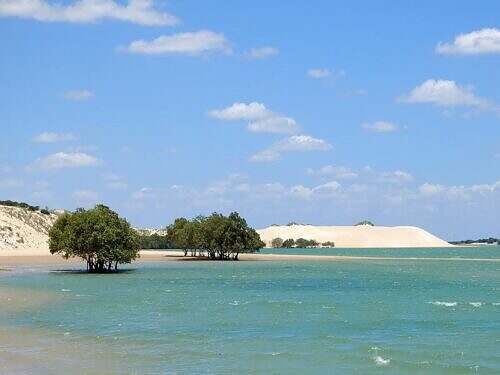
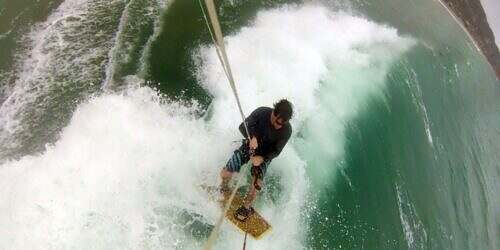
The wind blows mightily in Ilha do Guajirú. During the three days of our stay, it only rarely and briefly blows at less than 20 knots. During the day it always blows at 20 to 30 knots. Ilha do Guajirú is a dream for flat water kiters. Situated behind a long sandbank, the low tide reduces a long river estuary to a barely mirror-smooth space. At high tide, up to 60 kiters ride the gentle wind waves of the 300 by 1000 metre slope.
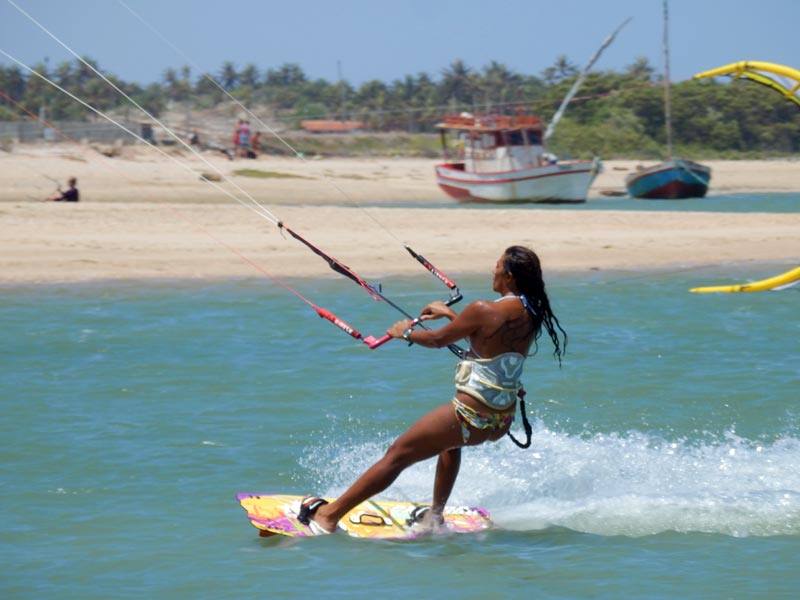
Kiters are among themselves in Ilha do Guajirú. Only a few other travellers stray into one of the six small pousadas on site. There is only one bar, and to our delight it is full every day. Our nights in Ilha do Guajirú are short, so the days are all the longer. We kite for up to four hours a day, until our muscles cramp in the evening, and occasionally cry out when our feet step on our hands again. To the east, wide mangrove groves stretch out in the wind, which becomes increasingly stronger and weaker. The reward for the upwinder is very even, beautifully steep little wind waves and more space. Everything is reminiscent of Galinhos, only the space is much less.
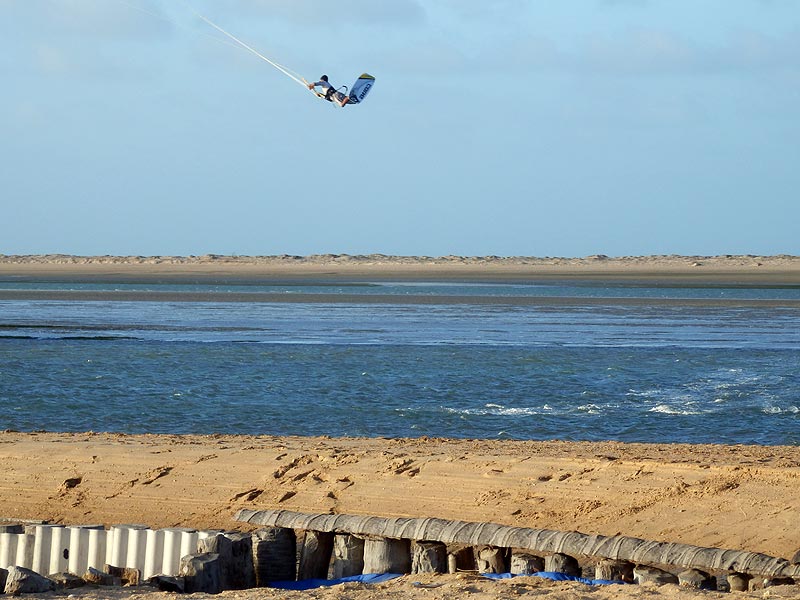
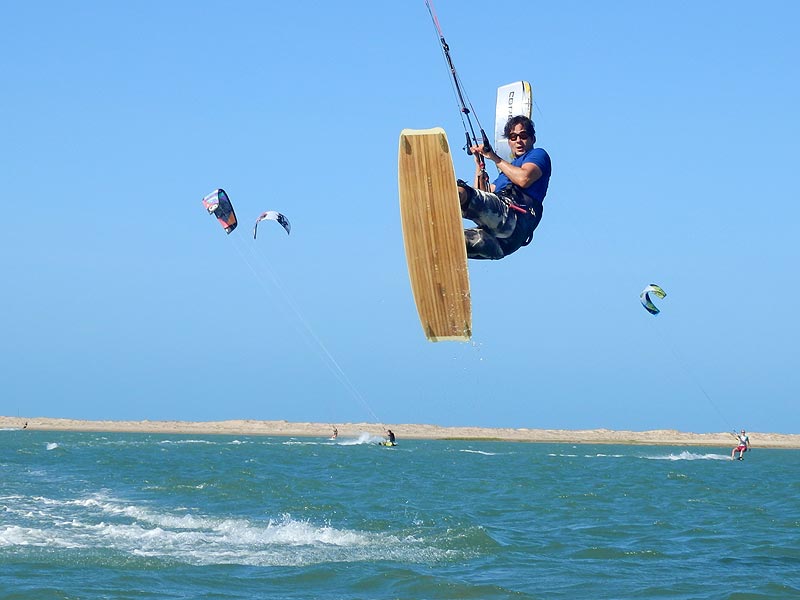
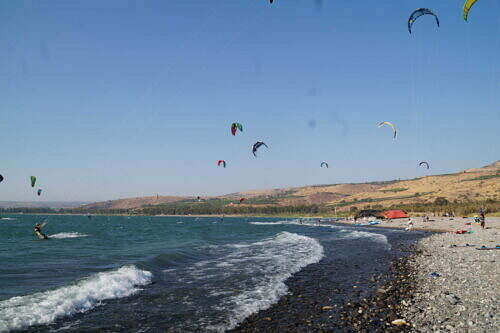
A few hundred metres to the east, constant wind is still crying out for big sets. We give you Ilha do Guajirú. The sight of the kiters in front of the pousadas in the centre is reminiscent of Grzimek’s expeditions into the animal kingdom: leaping gazelles in the African steppe. Jumping is not always without danger. Even in the centre of the estuary, the water is sometimes only a few centimetres deep, depending on the tide. Especially near mangroves, the silt at the bottom is often garnished with sharp shells. Some kiters have thick plasters on their feet. We barely touch the bottom for three days.
The local property shark is Dutch. Nobody likes him, the pousadas hate him. According to his masterplan, which has already been distributed in Cumbuco, Ilha do Guajirú offers incredible returns and plenty of space for new expensive hotels. The only thing he doesn’t take into account? Even before the current six pousadas on Ilha do Guajirú, things can get tight. Crashes occur not only on the beach, which is strewn with sharp rubble. After 14 years of kiting with just one collision (sorry, Dominik!), I manage to shoot down two kites in a single day in the crowded Ilha do Guajirús. The first one is partly to blame. When I steer my kite back to 12 o’clock for a small jump and immediately make contact with the enemy, there’s a lack of distance.
The second kite contact proves that people who kiss the sky every day must have absolutely no idea how to spell lucky kite. Whilst rescuing a lost kiteboard, I get caught in the lines of another German kiter. As it’s not immediately clear whether the lines are clean, we release the safeties. She immediately starts grumbling about what kind of “complete idiot” would save the board of such a “cunt” and dare to desecrate her “not yet fully paid off Slingshot”. She doesn’t stop grumbling for another half hour. I apologise. I catch up with her and my lines and secure our kites by swimming to the shore 100 metres away. I rescue our boards, which have drifted a long way. After I “completely messed up her jump training”, she prefers to have her kite relaunched by her private instructor in exactly the way I suggested. The arse may be a Brazilian invention. But the arsehole is guaranteed to be from Germany.
 Frank Woelky, born in 1973. Kitesurfer since 1998. Since 2006, I have been combining kitesurfing and web design on trips lasting several months off the beaten track.