

A local asked me not to write anything about Cape Drepano. I’m doing it anyway, because none of the reports I’ve read even began to hint at just how dangerous the spot is. Cape Drepano is definitely not for at least 95% of all kiters.
We leave Lefkada early and make good progress southwards thanks to a few toll-free kilometres of motorway. For the rest of the journey, we take the old A-road to Andirrio. Deserted ghost villages beside the motorway tell of the loss of all income.
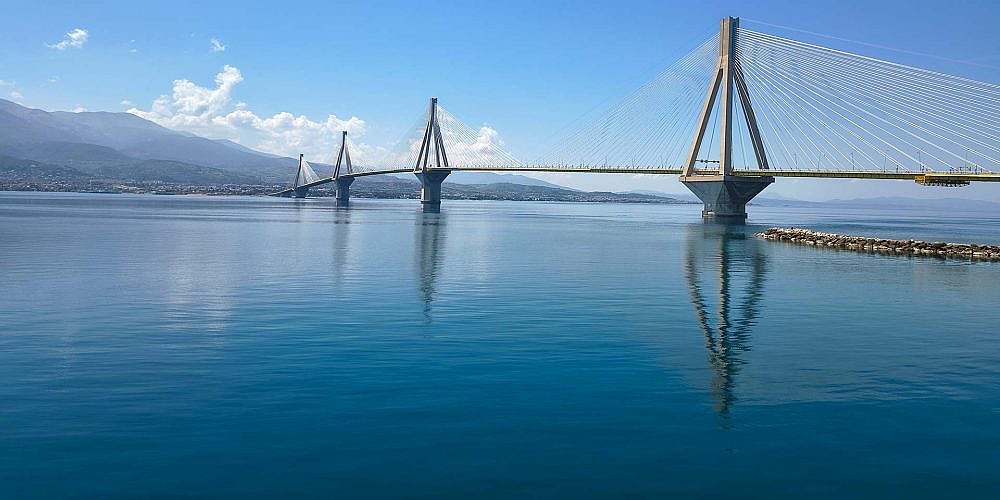
In Andirrio, we take the car ferry to the Peloponnese, which departs every 20 minutes. The Smurf cheers at the sight of the bridge, which is twice as expensive. After another 30 minutes on country roads, we arrive at the beautiful but expensive Tsolis Camping.
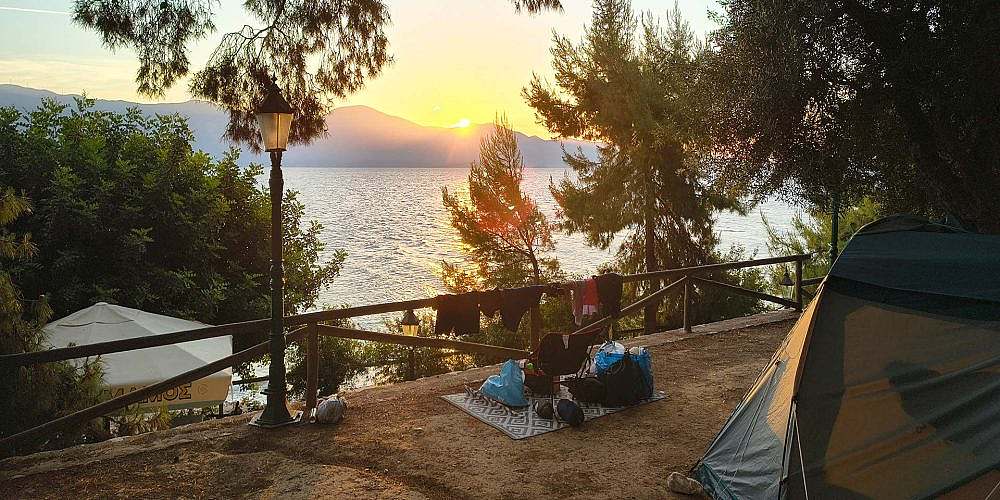
The campsite is situated in a terraced grove with panoramic views of the Gulf of Corinth. There is no other campsite in the area, let alone one closer to Cape Drepano. After a 20-minute drive, we’re the first ones at the spot by midday, with a good forecast. The last part of the route is a gravel track with a few deep potholes. We set up camp.
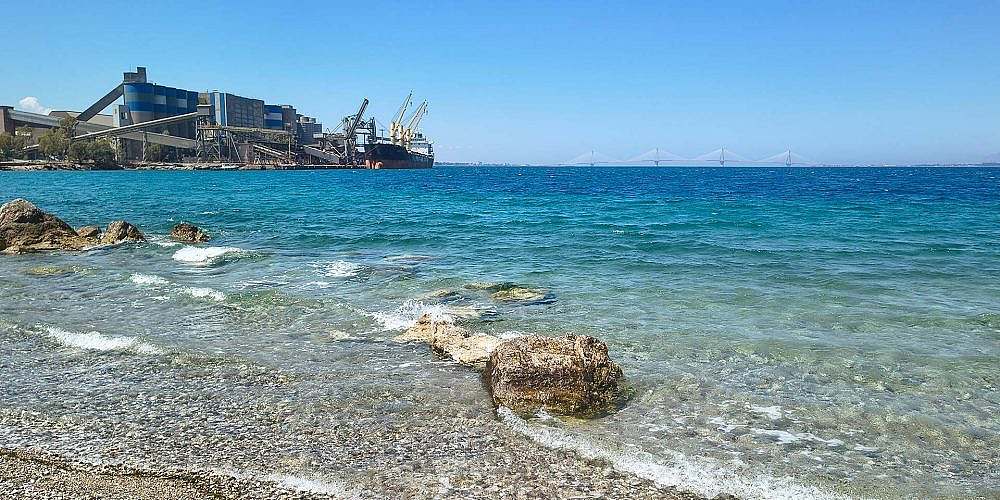
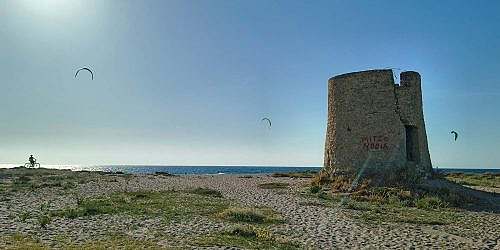
Cape Drepano has a certain ‘austere industrial romance’ about it. The Rio Andirrio Bridge lies just six kilometres to the west, upwind behind the 100-metre-long gravel bank. Directly behind it is a large, cordoned-off cement works, in front of which large ships are still being loaded today.
To the east of Cape Drepano, a factory producing asbestos cement closed in 2005. Around 80% of the several hundred workers there died, and are still dying, in agony from cancer. Even today, we find fragments of Eternit on the beach at Cape Drepano. Although asbestos is not dangerous when bound in cement, Eternit does eventually disintegrate. The former factory site is heavily contaminated and, fortunately, lies in the lee of Cape Drepano. Nevertheless, I cannot help but feel uneasy.
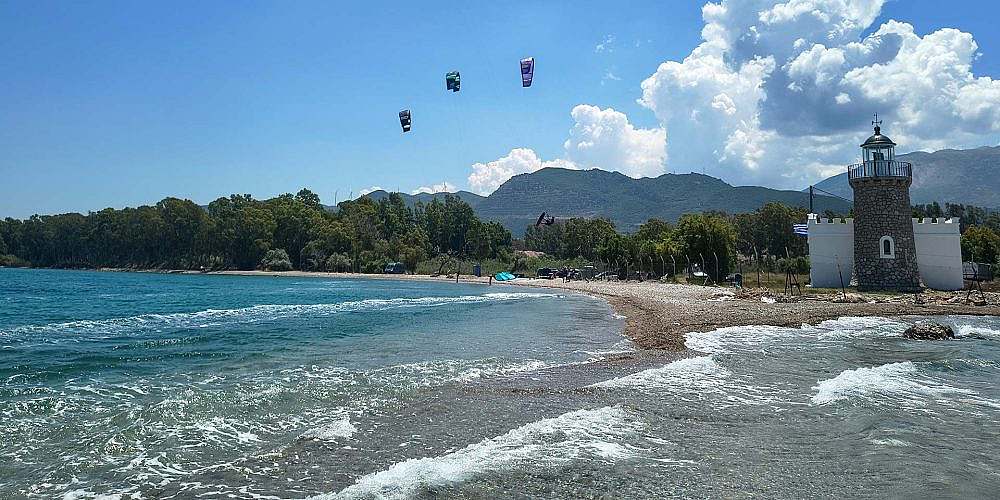
At Cape Drepano there is a large unpaved car park, where people apparently camp wild from time to time. Two showers standing in the middle of the unshaded pebble beach are in working order. A portable toilet stinks to high heaven. Two mats measuring a total of ten by three metres serve as a base. That’s all there is.
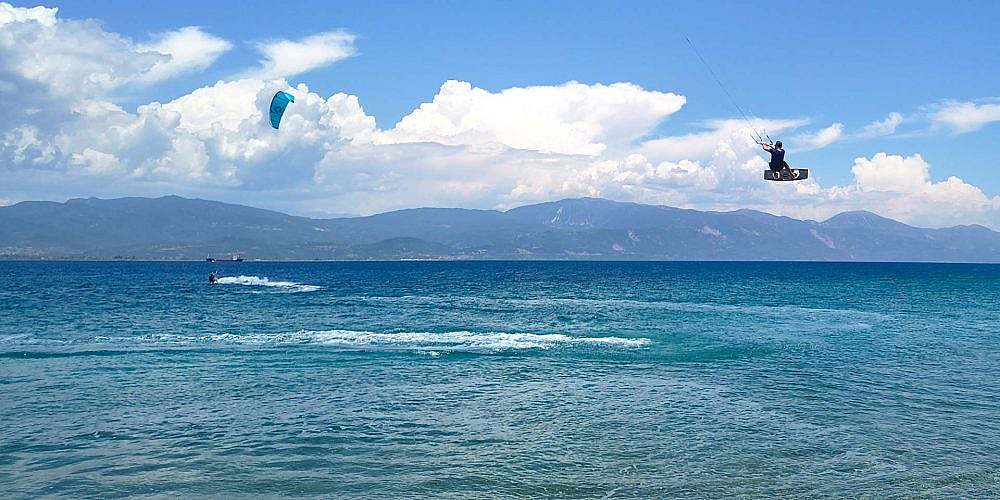
Cape Drepano has become legendary in recent years, particularly among pro kiters, for two main reasons: 300 days of wind a year, with gusts and thermals sometimes reaching 25 knots or more. Secondly, because of a small flat-water area that is unique in the wider region.
The standing area is only five metres wide. The launch area is very narrow, with a maximum of seven metres up to concrete benches and parked cars. There’s also some undergrowth and broken, sharp bamboo lying about.
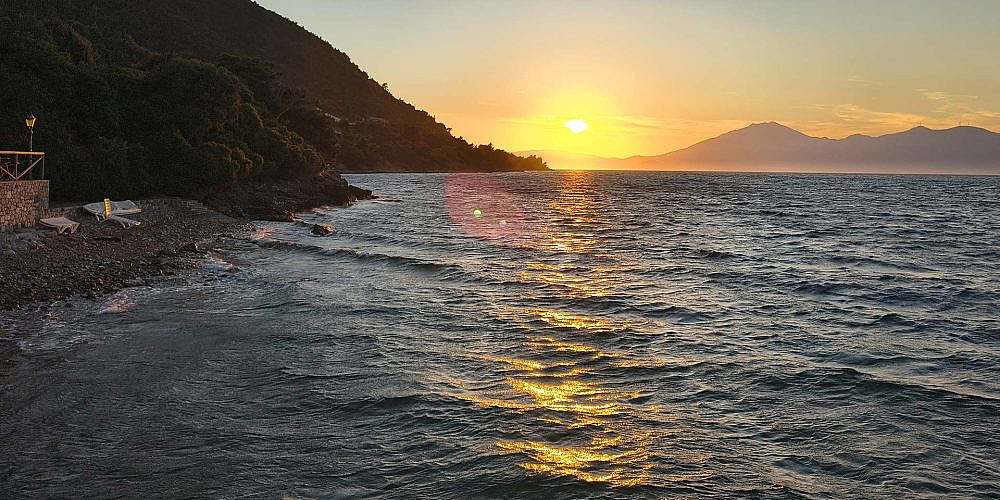
We head out briefly onto the sandbank. The incoming tide further intensifies the current, which is already running at a good three km/h. It feels like standing in a mountain river. Further out in the Gulf of Corinth, the current is said to be even stronger.
The wind at Cape Drepano usually blows side-offshore. If you mess up here, you’ll definitely mess up big time. Even the pros need a helping hand now and then to get their boards back. You can’t swim against the current. The only emergency exit is a small beach about 800 m further on, full of parasols and sun loungers. Up to that point, the forest stretches right down to the coast.
At high tide, the gravel bank is completely submerged along its entire length. Behind it, the shallow water turns into some really nasty choppy waves. Only the last 20 metres in the small bay remain shallow.
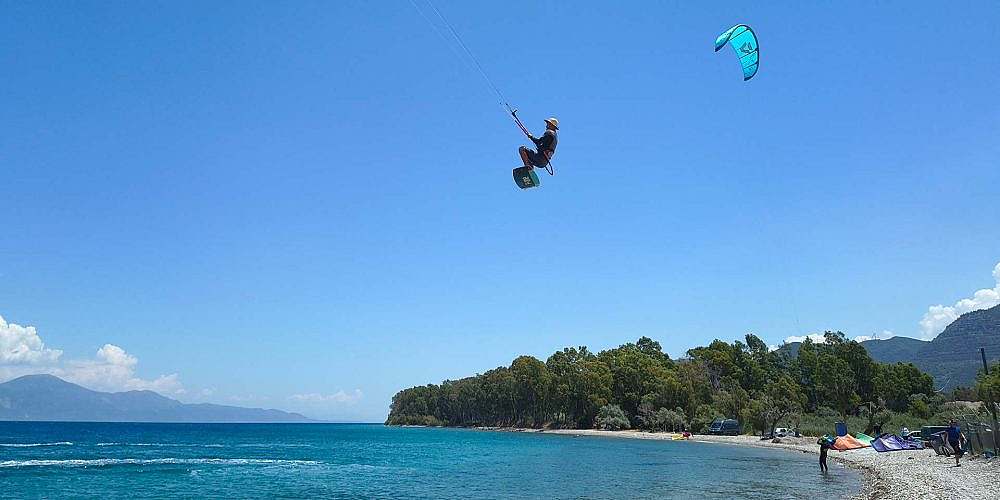
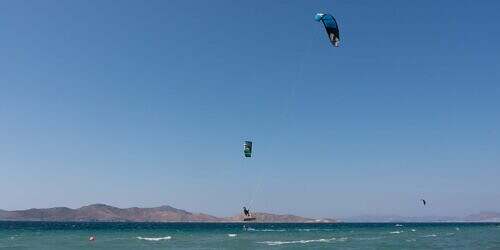
At Cape Drepano, it’s just the freaks and pro riders. Once again, I’m the goldfish in a shark tank. Or, with a five-and-a-half-metre kite in 24-knot winds, the Big Air Baby. The craziest tricks are flying every ten seconds, 10 metres above the small beach. We’re all thoroughly amazed. Kiting here is one big launch ramp merry-go-round.
A huge thank you to absolutely all the locals. At spots like this, the dark side of kitesurfing often comes to the fore, even if you’re well-behaved. The better the rider, the bigger the arsehole. Not at all in Cape Drepano. Everyone was friendly and considerate.
Cape Drepano kitesurfing spot pros:
- Depending on the tide, a smaller or larger flat water area
- 300 wind days a year, often with 25 knots or more
- Just watching is great fun
Cape Drepano kitespot cons:
- Very narrow launch/landing area with a few sharp pieces of broken bamboo
- Wind direction: side-off
- Strong current
- Hardly any standing area
- Difficult/no emergency exit
- No lifeboat
- Hardly any infrastructure
- Rough gravel track for the last few metres
- Contaminated site from an asbestos cement factory
 Frank Woelky, born in 1973. Kitesurfer since 1998. Since 2006, I have been combining kitesurfing and web design on trips lasting several months off the beaten track.