

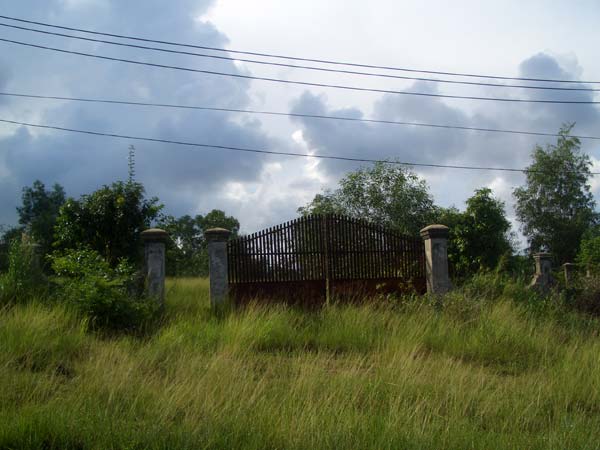
I take the bus for a few hours to the coast. A small town called Nowhere. By motorbike to empty sandy beaches in the off-season. The first signs of Kamibiza appear in the form of large concrete castles. Old majestic wrought-iron fences from the colonial era are everywhere. They surround empty fields. Other walls stand in the air on 2 metre high stilts. Escher would certainly have liked that.
Posters against child prostitution hang everywhere. There are some helpers on the bus wearing T-shirts from a home for street children in Nowhere. I am worried. It is reassuring that child prostitution is being publicised. What is worrying is that it seems to be necessary.
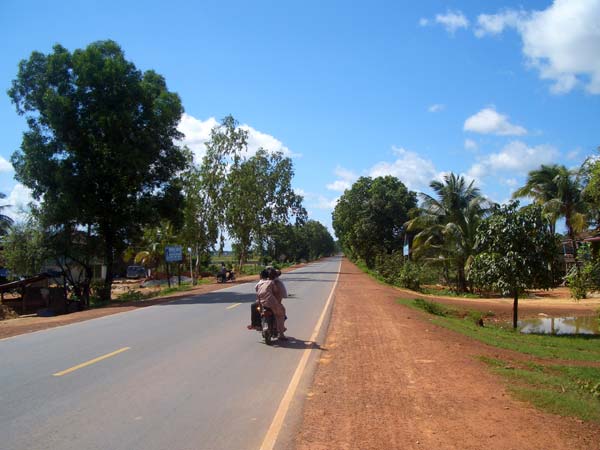
The city of Nowhere looks so normal. I am at the market. Traders trade and buyers buy like everywhere else. I’m on the beach in Nowhere. So clean and white, and behind it gleaming white concrete castles. A paradisiacal beach bar, mango-vanilla smoothie. Then strangely far out building sites for completely isolated luxury hotels. Cambodians dozing in hammocks. Streets made of mud.
Everything completely normal, so completely normal. Sun, sunscreen, sea, rubbish incineration, palm trees, swamp, tourists, Cambodians, fences, roads, traffic, petrol prices, room prices, food prices, drinks, food, room, fan, bathroom, bed. Everything is so normal.
Madness creeps between all the normality. Naked, heavy and dark. It hides during the day. At night it creeps out. I go out for pizza in the evening. Ay, that’s a lot of bars. And lots of women. I eat. Look out of the window. Women? I keep eating. Keep looking. Look again. Clean my glasses.
Girl.
They’re not women. They are girls. They almost look like women. But they are children. They call after the men. Waiting. Looking into the night. What is this place? Was the pizza chef in the Foreign Legion? Excuse me, naivety is sometimes protection. I don’t want to believe this. I don’t want to.
Nevertheless, I feel like I need to take a closer look to avoid prejudice. Where are these posters actually printed, and who designs them, who sticks them everywhere in Nowhere, who pays for them? I take a closer look. A girl’s head turns in the light of a lantern. She looks like one of the victims of the Khmer Rouge in the museum. I pay and flee to my hotel bar.
Sitting alone on the terrace, writing. I’m invited to play a game of dice. Dice games, oh yes, fine, of course, cheers, right away, how’s that going ah yes okay I’ll manage cheers come on give me your best roll. Roll the dice. Beer. Smoking. “No no, the waitress is 20, she just looks so young,” says my mate.
“Oh yes, and the law has just been changed in Cambodia.” Cheers. If you only pay 16-year-old girls after intercourse, it would no longer be child prostitution. Cheers. “Relationships from 16 are now legal”. Cheers. “So just don’t pay beforehand,” I’m advised. Cheers.
He wins at chess, so he must be an intelligent person. Cheers. We show each other card tricks. Cheers. Then he chases a waitress around the pub. Julio Iglesias sings along. Cheers. All quite normal, somewhere in the middle of nowhere. Cheers. So completely normal. Cheers. “Can I pay?”
On RTL Explosiv, every German is told where they can quickly turn the nearest paradise into hell. So please: do me a favour and ask me where I’ve been! Everything is completely normal. Everything so completely normal, somewhere in the middle of nowhere. Abnormality has rarely been as valuable as it is today.


 Frank Woelky, born in 1973. Kitesurfer since 1998. Since 2006, I have been combining kitesurfing and web design on trips lasting several months off the beaten track.