
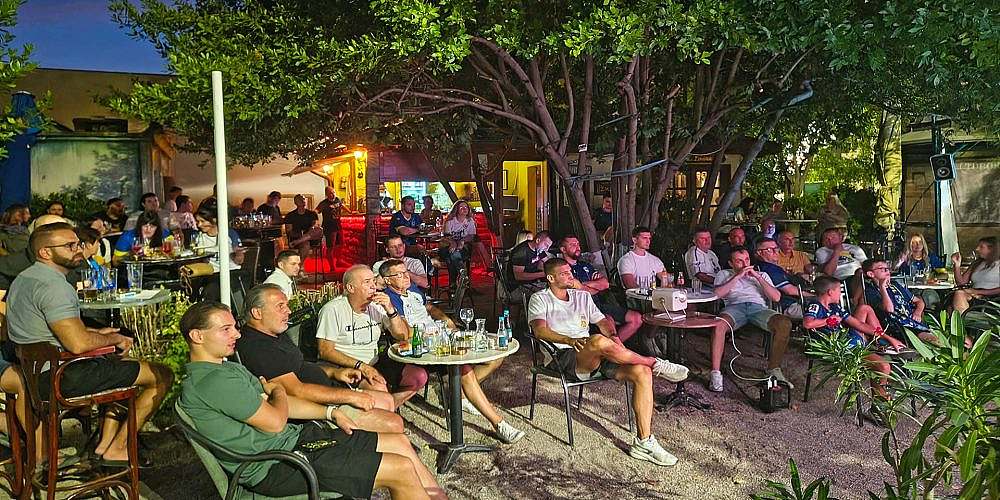
Bosnia and Herzegovina beat Qatar 3–1 in the World Cup. This means they might reach the round of 16. The result? Flares. Fireworks and loud firecrackers. Tears of joy. Motorcades with three-metre-high flags. When Germany reached the semi-finals during the ‘Summer Fairy Tale’ of 2006, the celebrations were considerably more subdued.
We Germans lost our sense of joy a long time ago. Yet there’s still so much we’re good at: being punctual. Reliable. Innovative. When I look at Germany in 2026, it strikes me as the exact negative mirror image of the Bosnians’ joy in football. We grumble, whinge, argue – and completely forget what we stand for.
The journey to Mostar was, once again, a bit of a slog. At the border with Montenegro, things move along quite quickly this time, with just a half-hour wait. Entering Bosnia and Herzegovina a good two hours later takes considerably longer. Bosnia and Herzegovina is uncharted territory for all of us. None of us has ever been here before.
In the green paradise of the Dabar Valley, there are just a few small, dilapidated settlements. Suddenly, we find ourselves in the middle of a huge construction site full of Chinese workers. China has proudly hoisted its flags. We Europeans have long since forgotten Bosnia. As in African and South American countries, China has been keen to ‘come to the rescue’. A bit of research brings to light a massive mess.
Due to its spongy subsoil with numerous caves, the karst valley of Dabar is of vital importance to the water balance of large parts of southern Bosnia and Croatia. It balances out dry and wet periods and supplies large quantities of water – mostly underground and over long distances – to drier regions of Bosnia and Herzegovina and Croatia.
The Chinese state-owned enterprise China Gezhouba Group Company, in collaboration with the Export-Import Bank of China and with the consent – and under heavy debt – of the Bosnian side, intends to seal off large parts of the Dabar Valley, construct water tunnels and build a 41-metre-high dam. Ultimately, everything is to be submerged in a reservoir.
Entire communities have been expropriated for this purpose. The hydroelectric power station is intended to supply green electricity in future. However, the price is likely to be extremely high: the drying up and salinisation of the fruit-growing region in the Neretva Delta in Croatia. Widespread disruption to the water balance of two countries – and much more besides.
Mostar has the most exorbitant parking charges. At up to €60 a day, the price includes the peace of mind that comes from doing your bit to support the host country’s labour market as best you can. Bosnia and Herzegovina currently has an unemployment rate of around 12 per cent. Mostar, however, enjoys full employment. A large proportion of its residents work as car park sign guards.
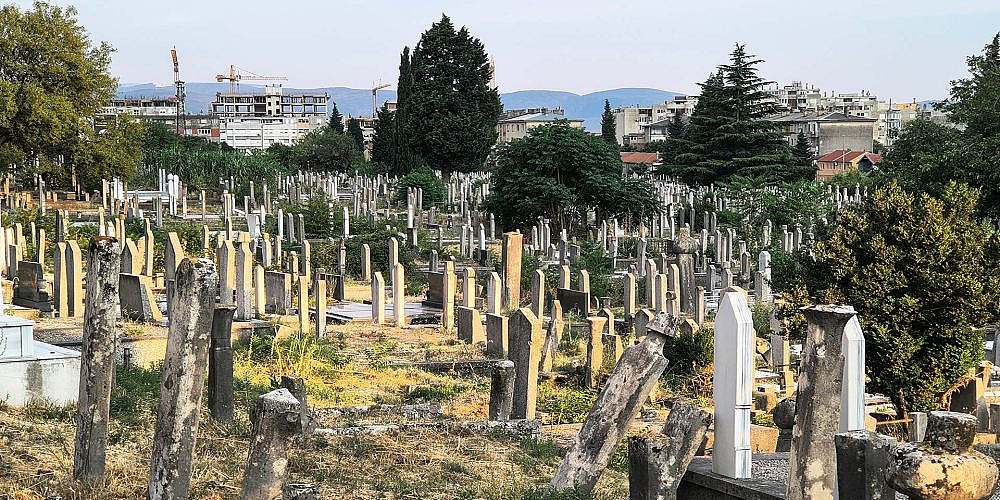
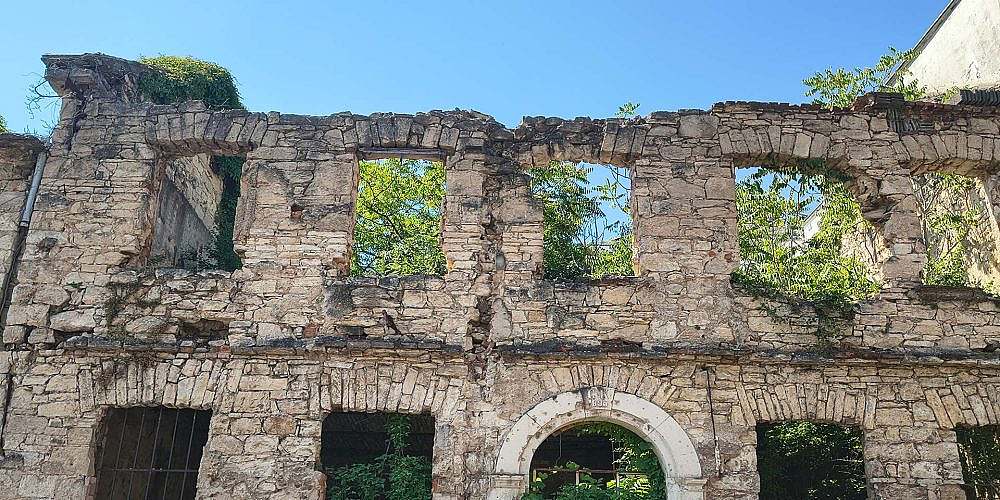
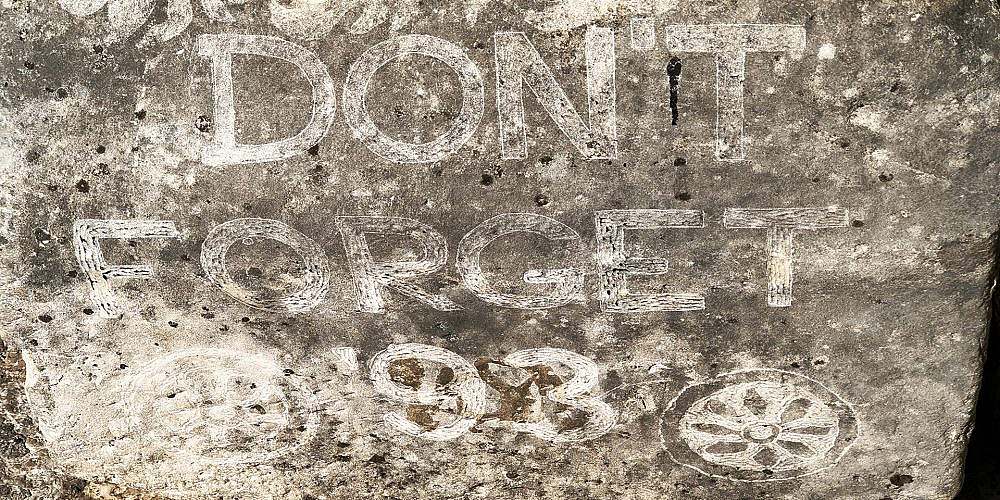
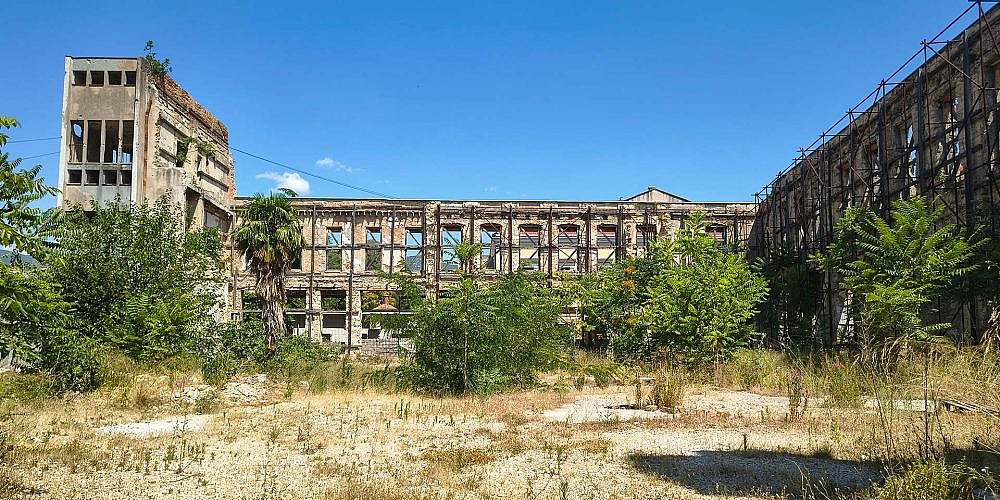
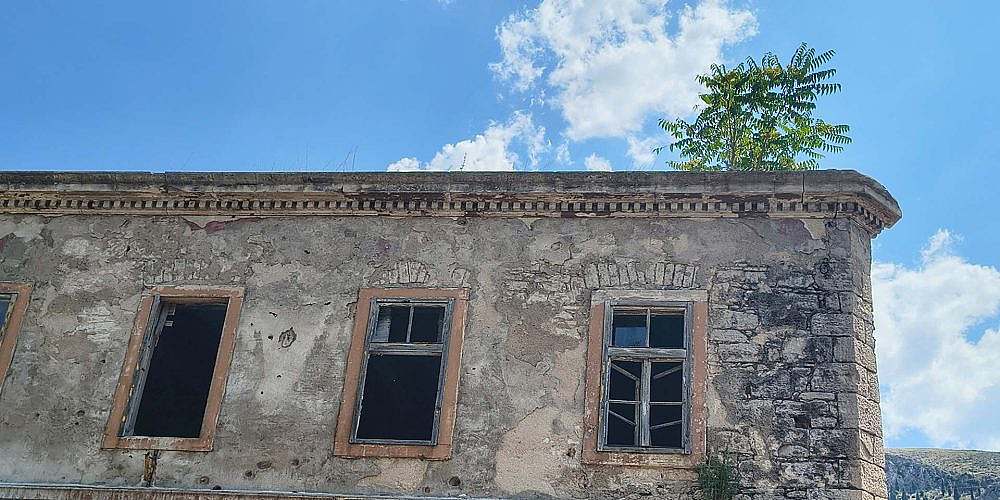
All over Mostar, there are still masses of shrapnel-riddled ruins from the Balkan War some 30 years ago. I hope they will soon be better preserved – but never renovated. Firstly, they are the best memorial against genocide. Secondly, they lend the city a morbid charm that even Vienna cannot match. Thirdly, remembrance is more important today than ever before.
During the Balkan War from 1991 to 1995, the whole of Europe looked the other way for far too long. The genocide was known quite early on and was undeniable. Yet no one spoke out. If you compare this with the relatively resolute – and at least financial – support for Ukraine from large parts of the EU today, one has to wonder why we looked away so concertedly back then.
Today, in any case, Bosnia and Herzegovina is making its mark with its museums. Coming to terms with guilt seems to be a fixed item on the agenda for many visitors from the EU. Both the €8 for the war photography museum, but even more so the €10 for a few posters in the small genocide museum, are nothing short of extortion.
The Marriott Hotel is slowly crumbling away as a ruin on the Croatian side of Mostar. According to the owner of the neighbouring restaurant, it was a money-laundering operation run by a wealthy Russian. But the Bosnians no longer like laundries – or Russians. That’s pretty much their only social cohesion. They excommunicated the Russian and closed the hotel.
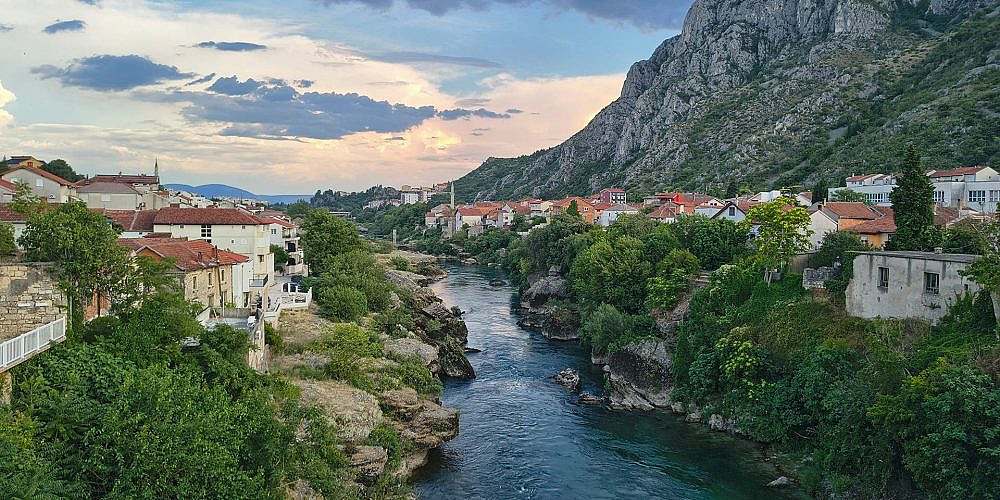
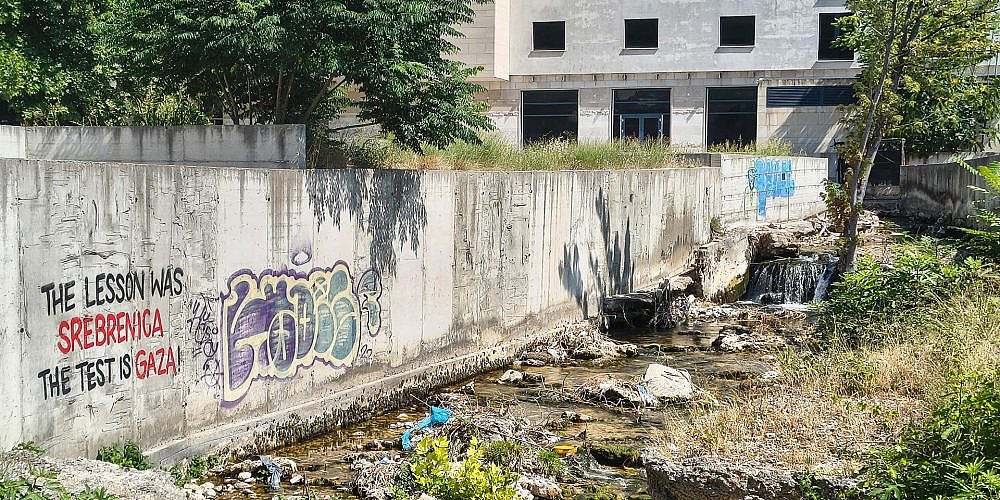
Below the ruins flows the Radobolja stream, which joins the Neretva just below the old bridge. It’s full of plastic rubbish. Not even right next to one of the greatest UNESCO World Heritage sites can we manage to hide the lies of the plastics industry. On the wall above, one of Mostar’s many political graffiti slogans proclaims:
“The lesson was Srebrenica.
The test is Gaza.”
It fits like a glove on the very day the UN has finally found its backbone and recognised Israel’s genocide as such. I’m already melting away in a pleasant 35°C by late morning. Mostar is supposedly the hottest place in the whole of Bosnia and Herzegovina.
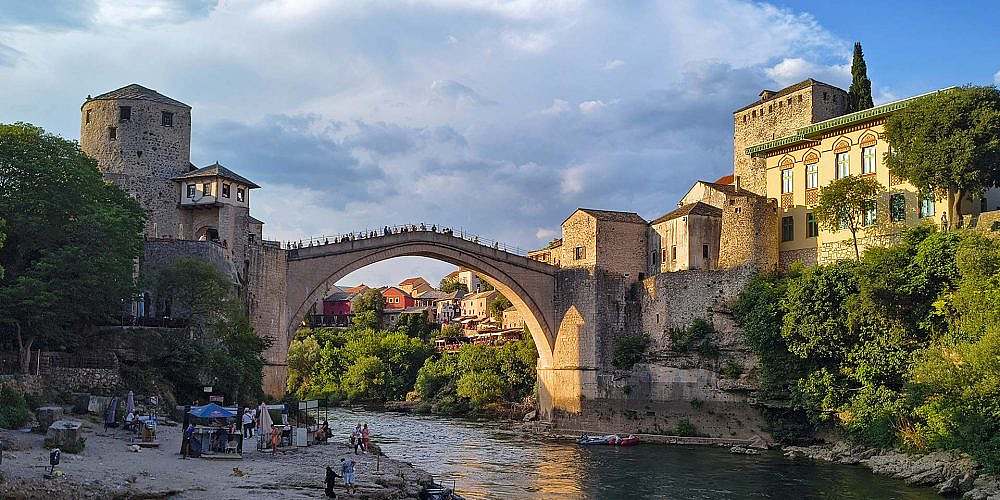
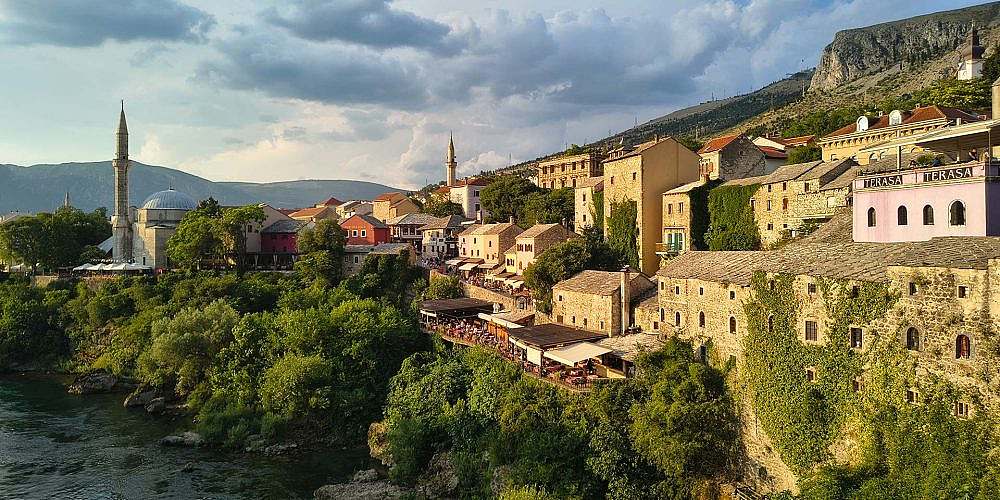
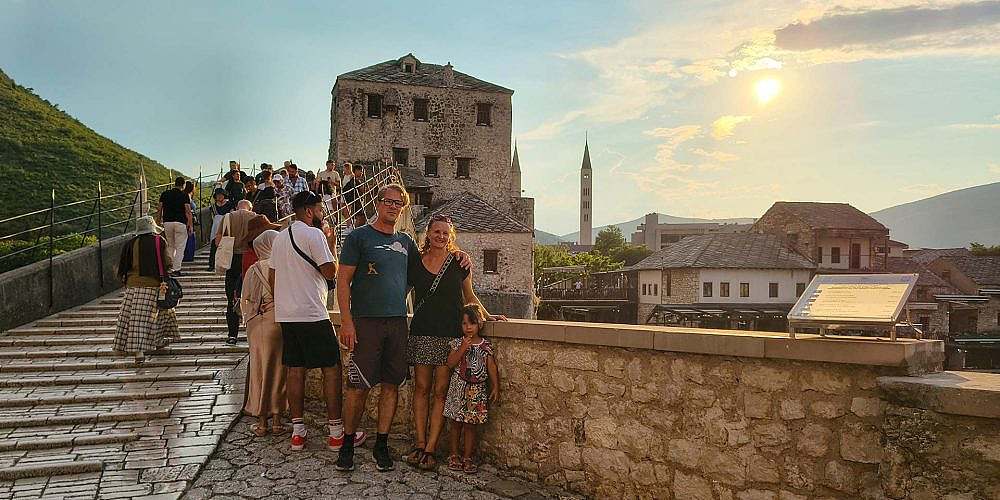
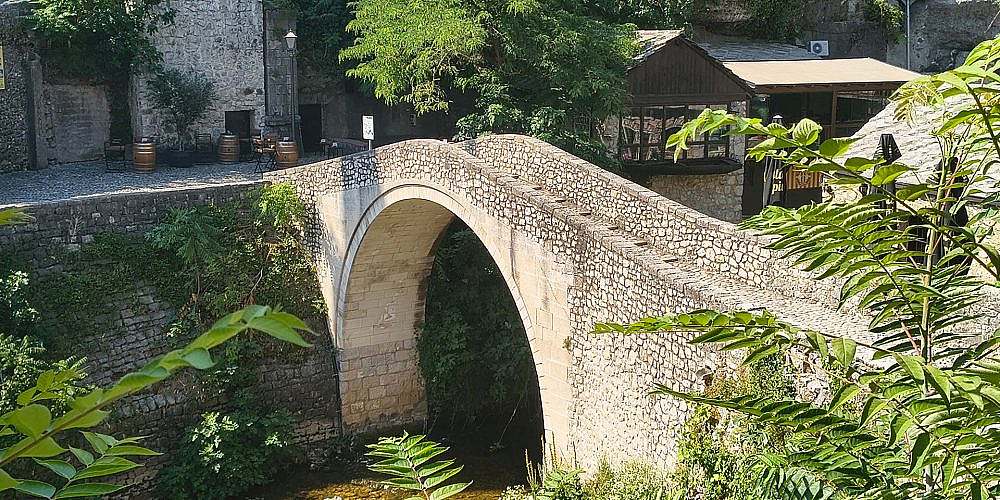
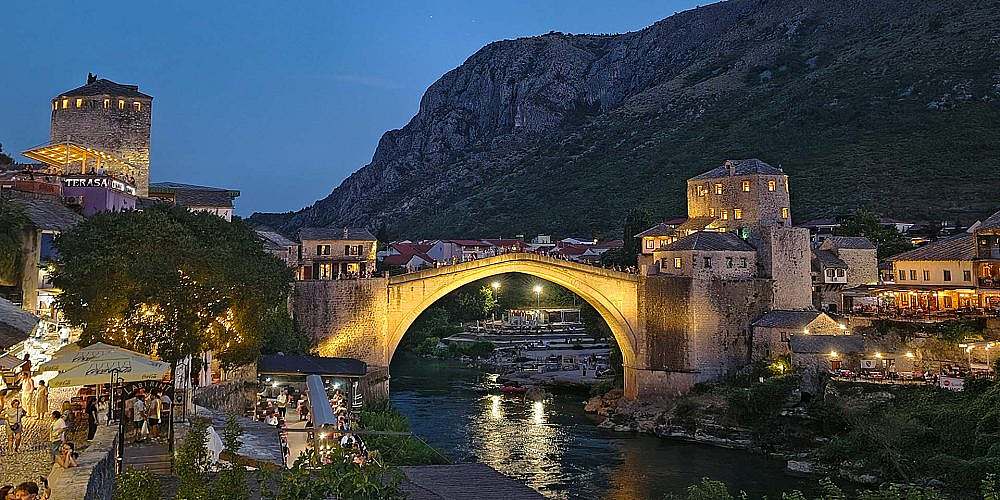
Even after the reconstruction of the old bridge in 2004, funded by the EU to the tune of 14 million euros, Mostar remains a deeply divided city. Traditionally, Christian Croats live to the west of the Neretva Gorge. On the nearby Mount Hum, they have erected a huge cross, and on the nearby Planinica, a red-and-white chequerboard measuring a full 50 metres square.
The eastern part of Mostar is home to Muslim Bosniaks. In the restaurants here, alcohol is generally not served. Somehow, even the Serbian Orthodox cathedral seems to have ‘jumped’ over to this side as a sign of reconciliation.
The division, which persists to this day, goes so far that Mostar – a city with a population of just 75,000 – even has two football clubs: one Croatian and one Bosnian. A local derby here therefore certainly has the potential to spark the next Balkan war. It’s only during the World Cup that they don’t blow each other up with massive firecrackers, but celebrate together.
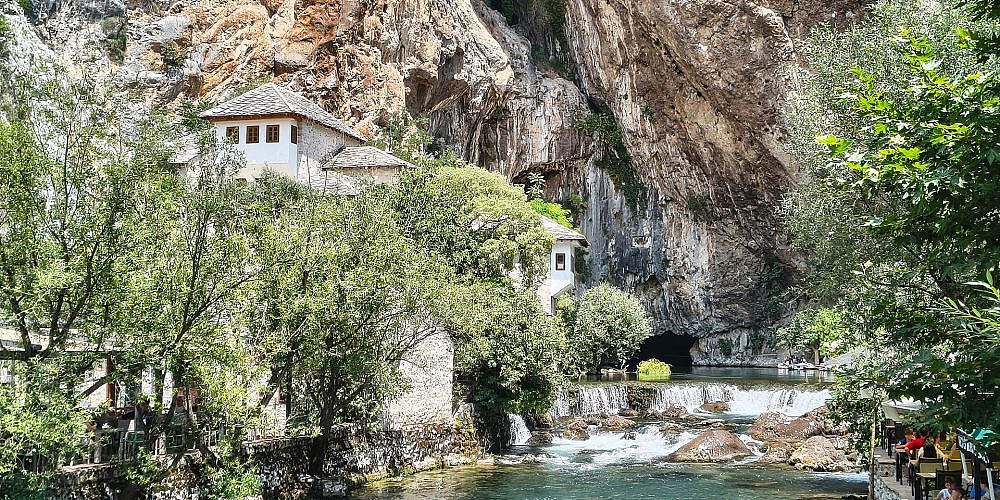
Very close by, the River Blagaj rises from a cave behind a Muslim monastery. With a flow rate of 40 m³ of water per second, its source is the most abundant in Europe. By way of comparison, that is almost 1/30th of the volume of water that plunges over Niagara Falls at night.
The small waterfall in front of the spring indicates that a large proportion of the water emerges underground. At eight degrees Celsius, it is freezing cold and comes from a depth of over 100 metres. That is the deepest point ever reached by a cave diver here. It is thought that tunnels over 20 km long feed the spring. Now, guess which direction they come from? That’s right. From the Dabar Valley.
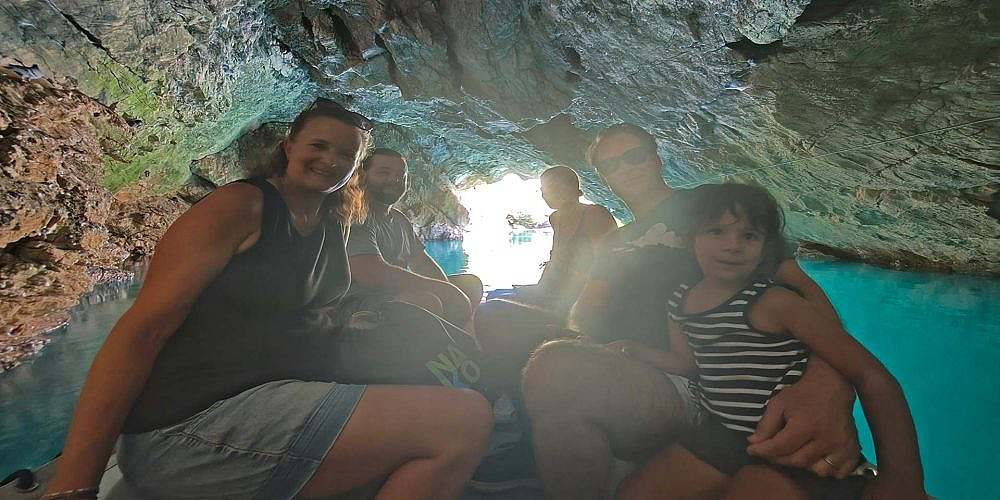
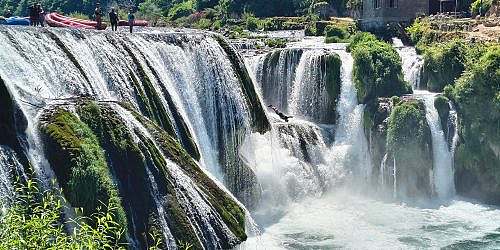
A few kilometres further downstream, the Blagaj and Bunica rivers converge at a bathing spot popular with the people of Mostar, though unfortunately it is quite littered. The water in front of the small waterfalls glows turquoise. Depending on your position at the confluence, the water is between ten and 18 degrees. Today I opt for the ten-degree spot, just as a small dust tornado swirls about in 42°C air.
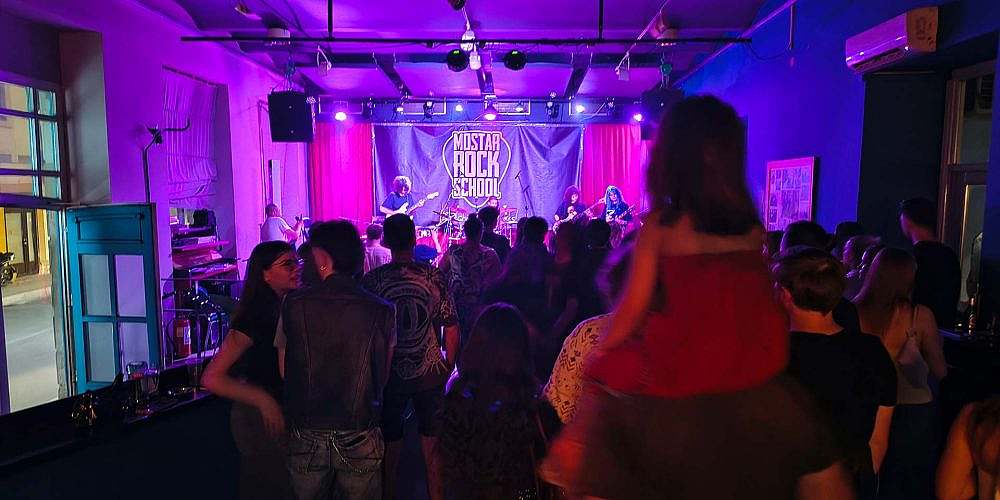
On my last journey back from the city, loud music blares out onto the street. The Mostar School of Rock is hosting a concert. The music centre was funded in 1997 by proceeds from the “Pavarotti and Friends” tour and the single “Miss Sarajevo”. Pavarotti was there in person and called the project “the proudest moment of his entire life”. His name is proudly displayed at the entrance. We rush into the free concert. The Smurf is sitting on my shoulders, waving a devil’s horns sign. Her comment on the way home: “They really metaled!”
 Frank Woelky, born in 1973. Kitesurfer since 1998. Since 2006, I have been combining kitesurfing and web design on trips lasting several months off the beaten track.