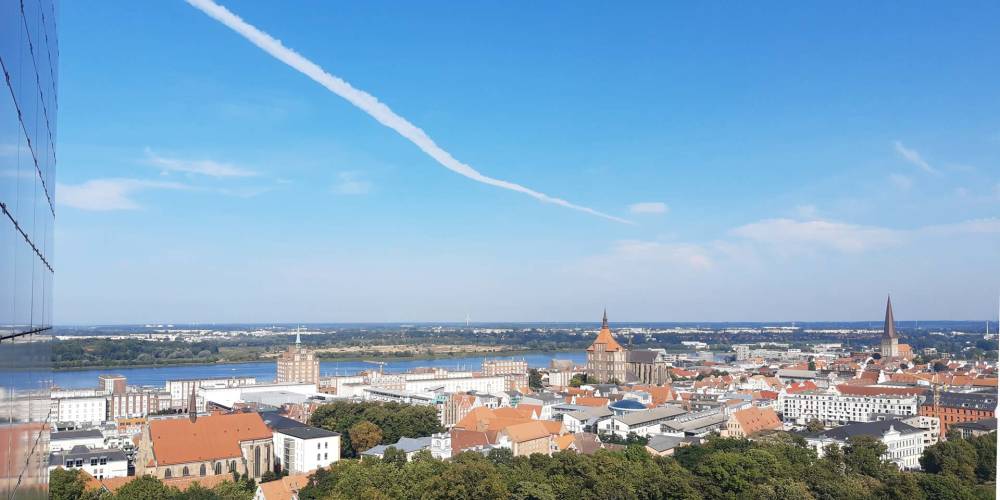
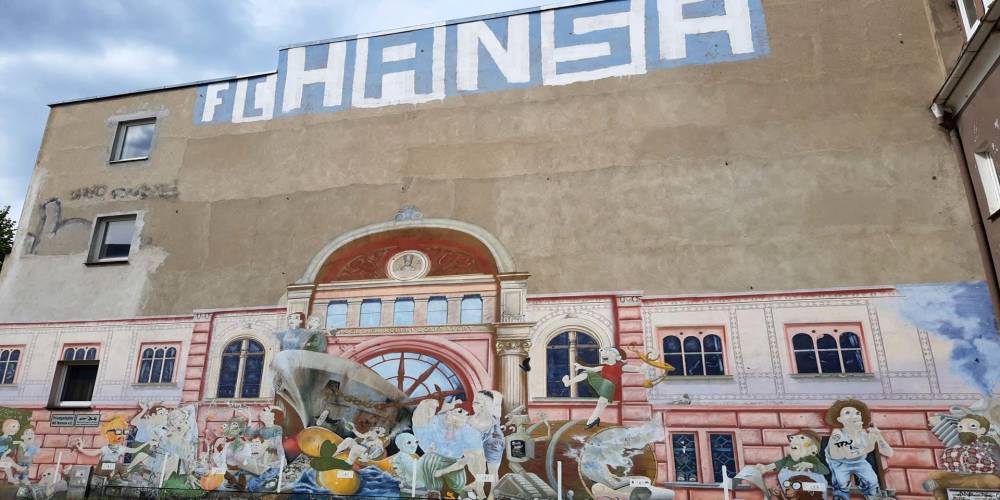
The only thing I knew about Rostock was the Sonnenblumenhaus. A good quarter of a century later, I knew little about it either. Or maybe never? So I wanted to see Rostock. The greeting in the middle of the KTV district, which is more colourful than Berlin, is “Welcome to the commune!”. A little surprised, I grin invisibly to myself.
Rostock is hard to grasp. Full of contradictions, colourful and still cruel in many areas. Cars drive on the left. That’s how you express your attitude. By parking in the centre of intersections you express your social vein. Every traffic light on main roads is red if you drive correctly. The speed cameras are at close intervals and the parking attendants love foreign licence plates. In the morning everything jams into the centre – in the evening outwards. Fortunately, kiters have the opposite rhythm.
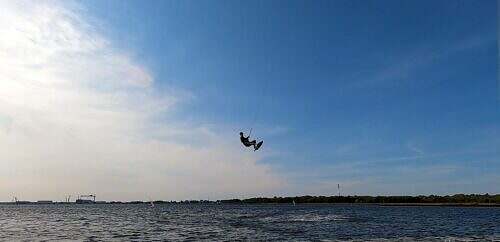
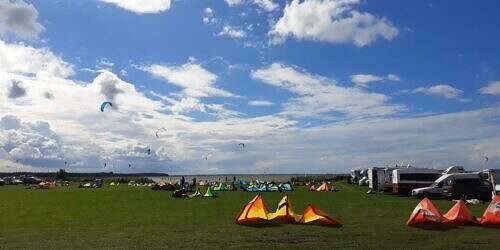
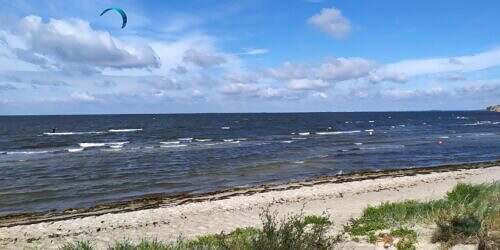
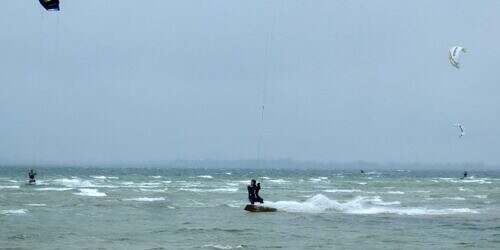
The wind is pretty crazy this late summer. Despite a lot of riding, there aren’t even 15 knots minimum for good kite sessions every third day. But that’s not so important. Many old and new friends are in the north. On some weekends there’s a chain of south kiters from Hamburg to Rügen at 50-km intervals. I meet quite a few. They’re all gold.
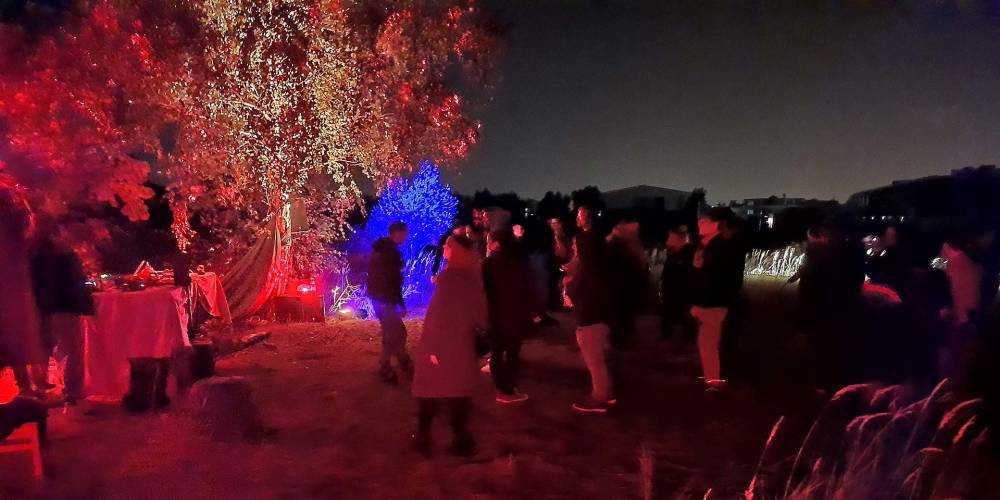
The commune rocks with colourful people and wild drag queen parties. Italy, Syria, Germany and the best “Georgia” karaoke of a part-time lover make the nights glow. My favourite pair of 20-year-old flats permanently dematerialise on the way from living room to bed, which is certainly completely unrelated to a young man-girl’s feeling too old.
The next day I dispose of the empties. With a well-loaded shopping trolley, I bump into the top edge of the entrance door at Kaufland. The grins of the oncoming shoppers are even visible through the coronavirus masks. An older woman advises me to use the magic four-letter word more often in the flat share. Me: “Alki”? But she meant “no”.
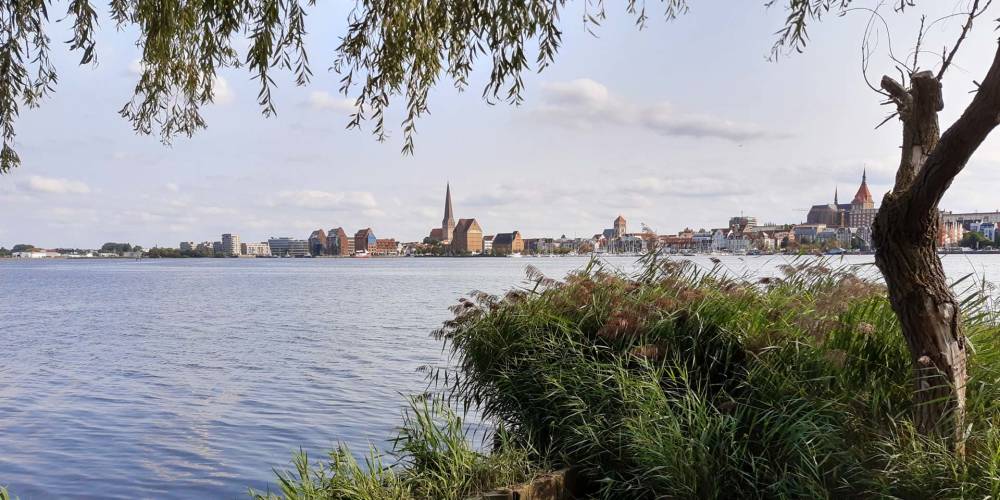
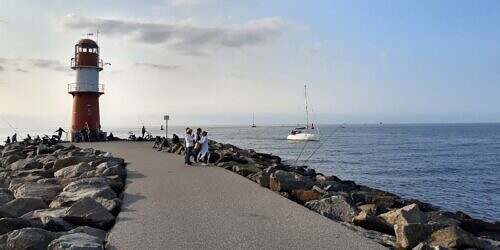
I cycle around the Rostock harbour basin in bright sunshine and calm. Due to detours and the lack of cycle paths right by the water, what I thought would be 25 km turns into a whopping 55 by the evening. The last few kilometres through Lichtenhagen are flanked by the brightest colours of old GDR plates to combat my all-encompassing tiredness. They scream a “no” into a grey and colourful future. The largest post-war Nazi crime in Germany has not been forgotten – but the scattered memorials are as hard to find as the reasons for the multiple organ failure of an entire country.
The Sonnenblumenhaus was not the only accommodation centre for asylum seekers to burn in 1992. In the months before and after, numerous others burned throughout Mecklenburg-Vorpommern. People died. There were more Nazis than in Saxony today. But the Tagesschau didn’t tell us that – or I’ve forgotten. Something was brewing. Long and powerful. Everyone watched with blind eyes. Rostock didn’t react appropriately, because asylum policy is state policy – and if it can’t be seen or found in Schwerin, then at the federal level.
The saddest detail in Lichtenhagen was the inexperienced police officer who only learnt from the radio that he was protecting an empty asylum seeker shelter. For two days, the under-equipped police were often outnumbered 10:1 by up to 3000 right-wingers. Only when they withdrew did the Molotovs start flying. Three days later, the police magically had everything under control. 3000 left-wingers protested peacefully against crime. After days of universal failure, the police suddenly countered one-to-one in terms of numbers. I understand that the police, by definition, must generally be on the right. They protect the status quo. But this year more than ever, I ask myself: how right-wing are our police?
Until I left, many people I spoke to couldn’t answer how far the Sunflower House was the root of Rostock’s current colourfulness. I just want to see it that way. After horror comes peace, tolerance, openness and freedom. Certainly not just cream cakes. But the jazz musicians in the quaint café next door and the punks in the Molotov (sic!) a street away give me a lot of hope that I’m right…



 Frank Woelky, born in 1973. Kitesurfer since 1998. Since 2006, I have been combining kitesurfing and web design on trips lasting several months off the beaten track.