
They still exist, even after 20 years of kiting. The little unexpected surprises. Surprise is an understatement. I’ve already visited Schnatermann, the nearest kitespot to Rostock, twice. Once I was too flat after a wave session in Markgrafenheide. The second time, the wind was too light even for fish and 13m².
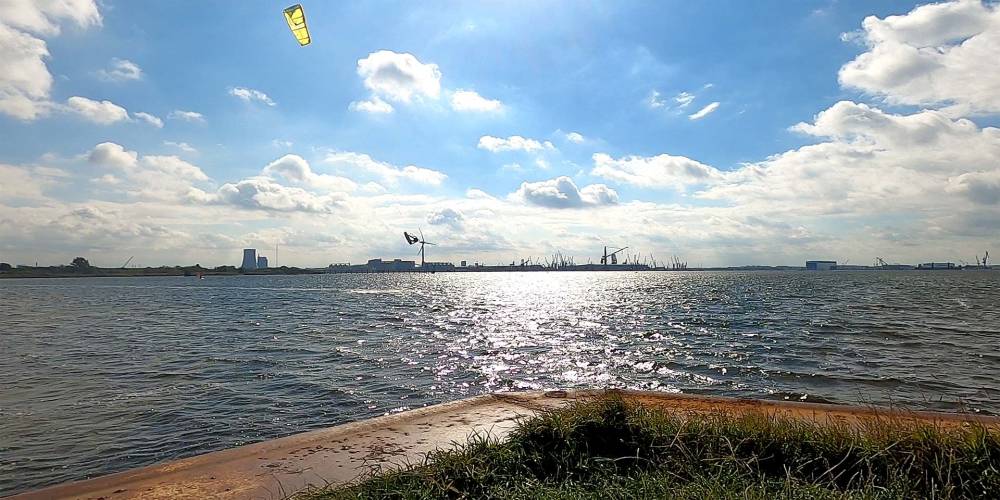
Today the forecast was right. Fortunately, the predicted 38-knot peak didn’t materialise. I’m more than happy with 16 to 26 knots, which isn’t a bit of a bump but still fluctuates a lot. I find my favourite spot in Rostock under 10m² and mostly royal blue late summer skies.
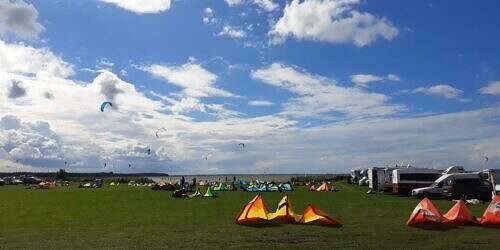
You can park at the restaurant 250m from the industrial-romantic kitespot located in the north-eastern harbour area of Rostock. The Schnatermann is the only kitespot I know of within a radius of at least 50 kilometres where you don’t have to pay between €5 and €10 per day for parking. Over the course of a month, parking adds up quite nicely. Not here – and the restaurant always grills really great game kebabs for little money on Sundays.
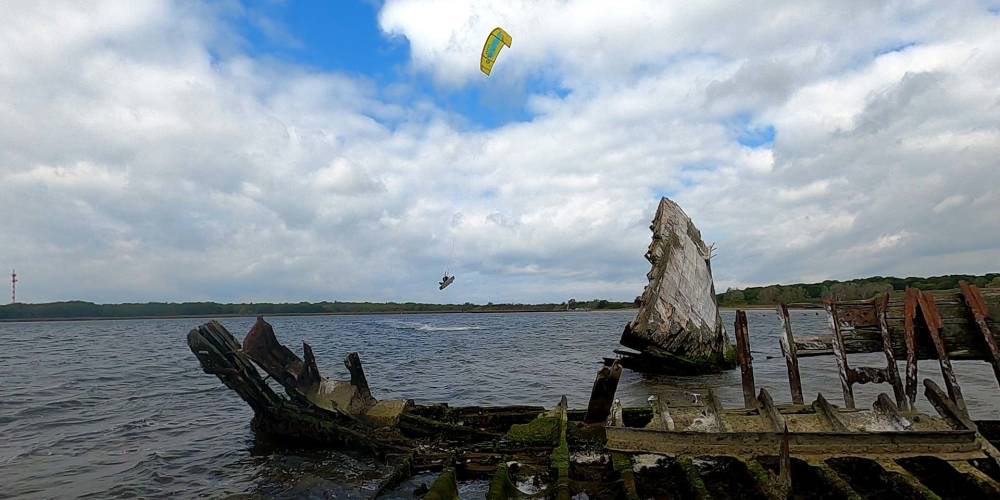
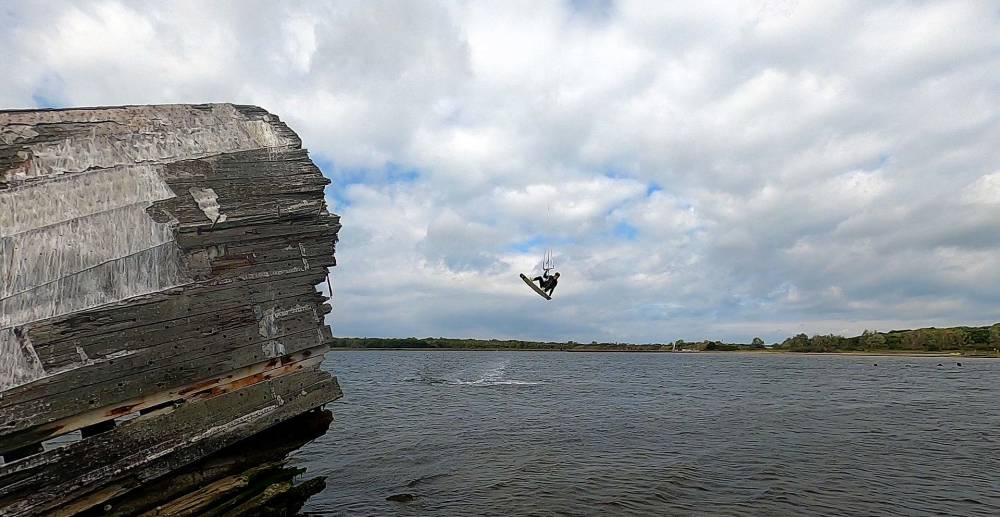
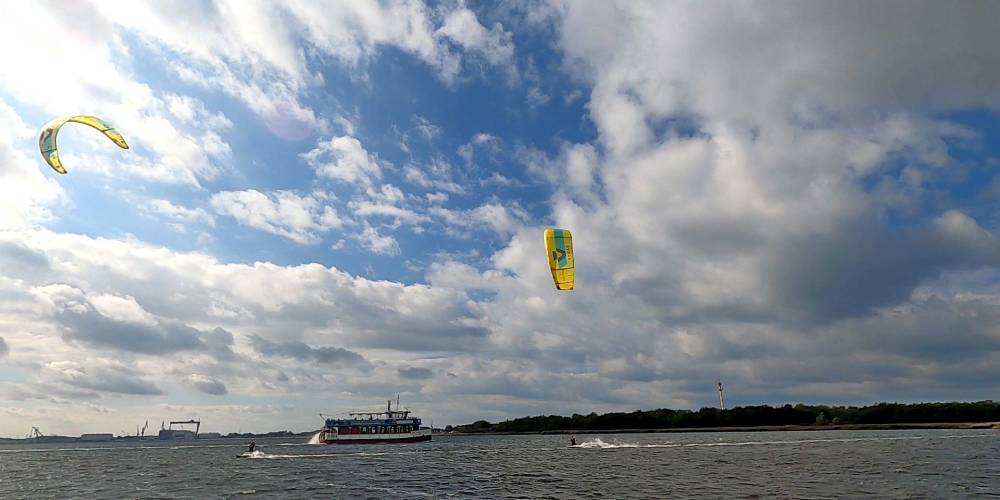
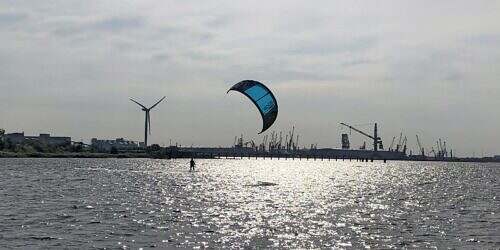
The Schnatermann kitespot borders the Rostocker Haide nature reserve. Everything around us is green. To the west, old shipyards, cranes and a power station cooling tower tower up against the horizon. Ocean liners from Scandinavia arrive in front of the skyline. The wooden skeleton of an ancient shipwreck is leisurely decaying in the southern part of the bay. To the north, the bay is bordered by an 80 metre long quay. Small tour boats dock on its northern side every few hours. One of them is a small Mississippi paddle steamer.
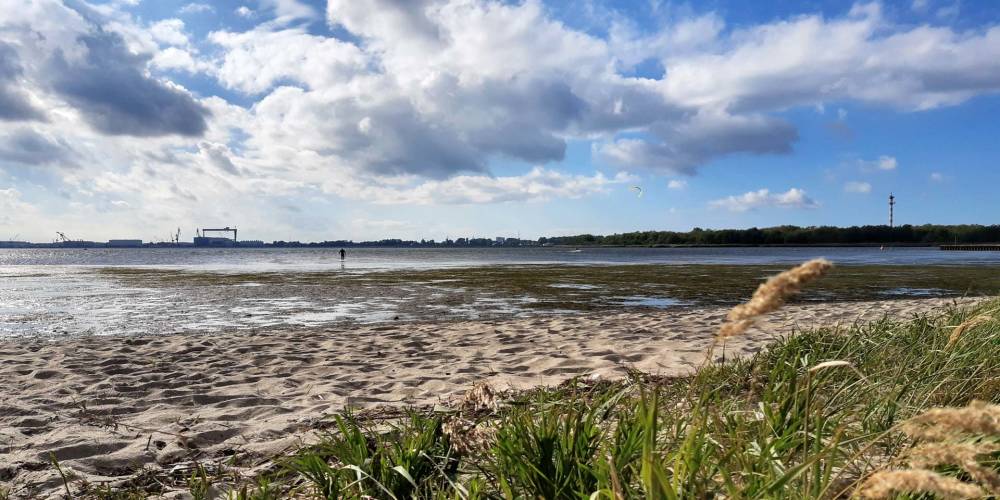
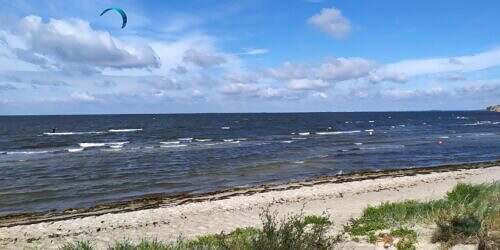
The westerly wind comes full onshore into the bay, which is only 200 metres wide. The water is low for the first 100 metres and very low to non-existent at low tide. There are no dangers on the beach apart from a barbed wire fence to the south. In the water near the beach there are five small rocks about 20 x 20 metres close to the jetty – but no one should drive up to them anyway. Behind the quay, you can drive up to the northern shore full of rushes. However, there are some large rocks just below the surface of the water that are difficult to see.
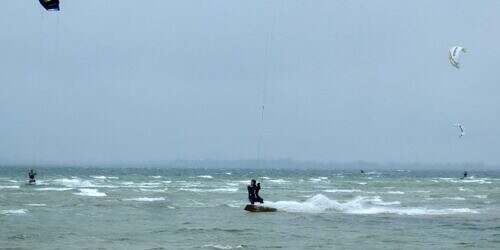
We are the only three kiters today. If you come here to take advantage of the excellent flat water, the small bay is full from the 8th kiter at the latest. Further out, from 100 metres, there is plenty more space – but the deeper water means that choppy waves come up quickly. We are here for the flat water – and what a flat water it is!
The first 100m are a maximum of 40cm deep. With the wind blowing fully onshore, I land everything thanks to my increased motivation. That’s up to 8 metres today, standing in 10 cm deep water. There is only a very narrow area of maybe 20m where the waves are still low but the landing zone is at least 40cm deep. I miss it all the time. The spot is not suitable for beginners, despite the few dangers. The space quickly becomes narrow. The water is too low at first and then quickly becomes too deep further out.
Together with my kitesurfing buddy Max and his friend, I spend half the day cruising from corner to corner of the Schnatermann, occasionally ploughing the soft Baltic seabed with my fins and having endless fun. Max keeps throwing out rotation hammers that I don’t even know the names of. Seagulls hover over the kites. Deep peace with a pinch of Highway To Hell…



 Frank Woelky, born in 1973. Kitesurfer since 1998. Since 2006, I have been combining kitesurfing and web design on trips lasting several months off the beaten track.