

We cruise another 500 kilometres to Knysna in the east. Our first tour along the Garden Route ended in Mosselbay. We didn’t think much would change there. We were completely wrong! The steppe east of Cape Town, which was scorched brown just three weeks ago, is now green again after a few rains. From George onwards at the latest, you feel like you’ve arrived in a completely different country.
Every few kilometres, rivers flow into the Indian Ocean via large reed-covered bays. Flamingos, storks, herons and cranes strut between them. The clouds clinging to the steep coastal cordillera, up to 1600 metres high and 15 kilometres inland, regularly bring heavy rain. The forests from there to the coast are as green as New Zealand rainforest. There are ferns and even the New Zealand Christmas tree with its red flowers. (more…)


Cape of Good Hope & Muizenberg
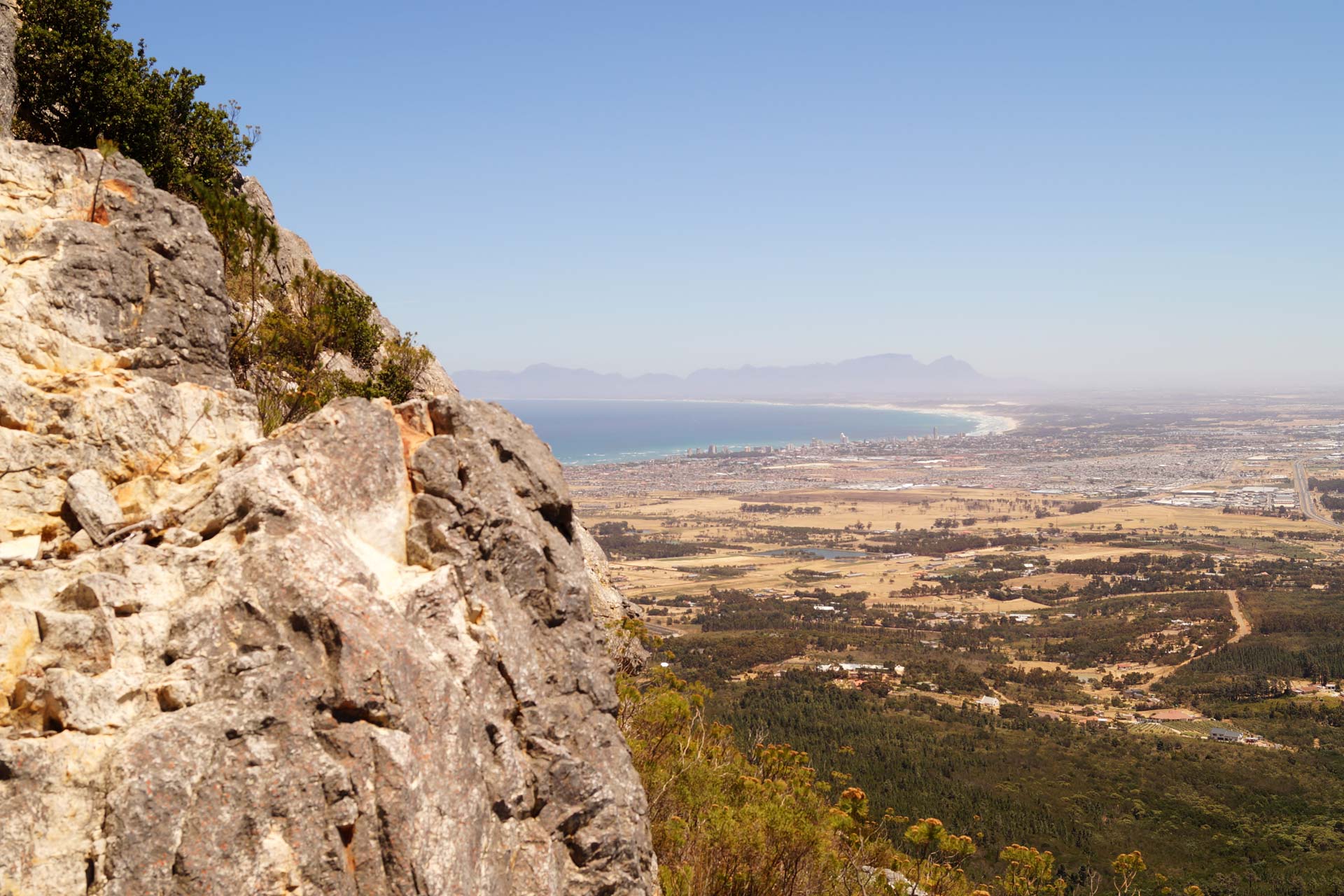
We check out the small Sandvlei Lake behind Muizenberg from Blouberg. According to local residents, you are allowed to kite there, although part of the lake is a bird sanctuary. There is a grassy park to set up in, and the best way to get in is on the windward side of the lake via a small sandy beach. The exit is steep and rocky to leeward. The wind is still offline. We drive on.
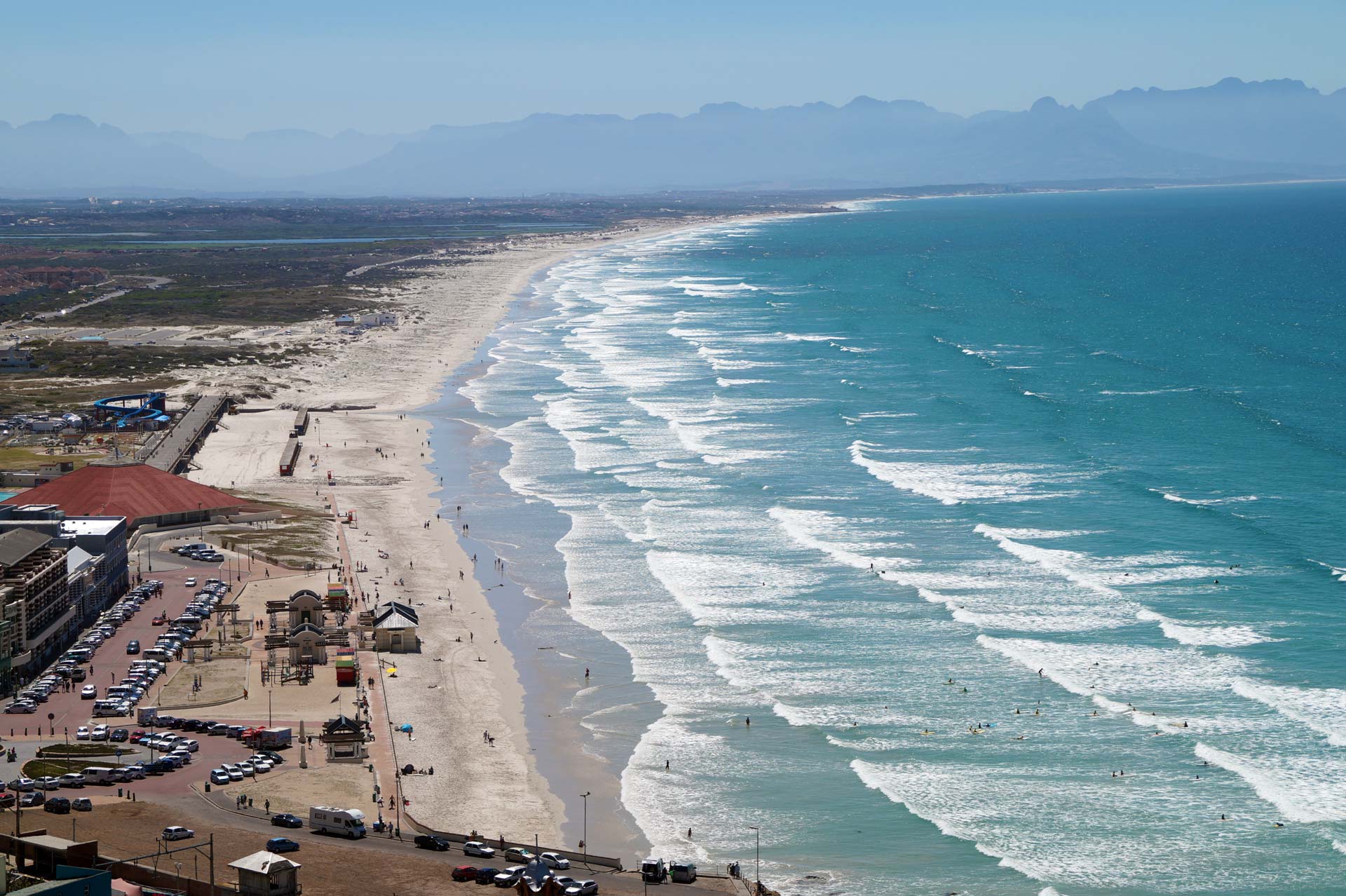
Dozens of surfers let off steam in the waves on Muizenberg’s colourful beach. The Boyes Drive from Muizenberg to Fishhoek offers endless panoramic views. As South Africa is a little too expensive in some places, we opt for the “stowaway under a load of kite luggage” method at the entrance to the Cape of Good Hope National Park. This saves eleven euros for a beautiful but rather lifeless park. (more…)
Langebaan for the second time
During the Cape Town rush hour, I pick up our new hire car at the airport, which is a good hour and a half away by bus. We move over to the nearby Saltycrax Hostel. In recent years, the owner has set up a programme for volunteers in the townships. There are currently a whopping 70 volunteers accommodated in the hostel and nearby houses.
Fortunately, our room is overbooked. This gives us the opportunity to shorten our time in Blouberg considerably. The waves are too rough for me, the water is really cold at around 13 degrees and I don’t need more than 25 knots of wind. Blouberg is a white luxury ghetto with no charm. The volunteers dream of world peace, the kiters of the waves and the rest of us of safety. (more…)


Blouberg & King Of The Air
Every kiter knows that the biggest big air competition in the kiting world takes place in Cape Town. What we didn’t know was that it takes place just two kilometres away from our new accommodation at Blouberg Kite Beach – on the very day we are moving.
The waves at Blouberg beach are still quite comfortable on our arrival day at just over one metre. The wind is rattling side-on at a good 20 to 25 knots on the wide white beach with a dream panorama of Table Mountain and Cape Town. We count over 200 kiters on the water. The beach is ten kilometres long – but in these conditions, even the 15 kiters on “my” 200 metres are too much for me. After just under an hour of scaredy-cat kiting on the nine, I’ve had enough. (more…)

Cape Town
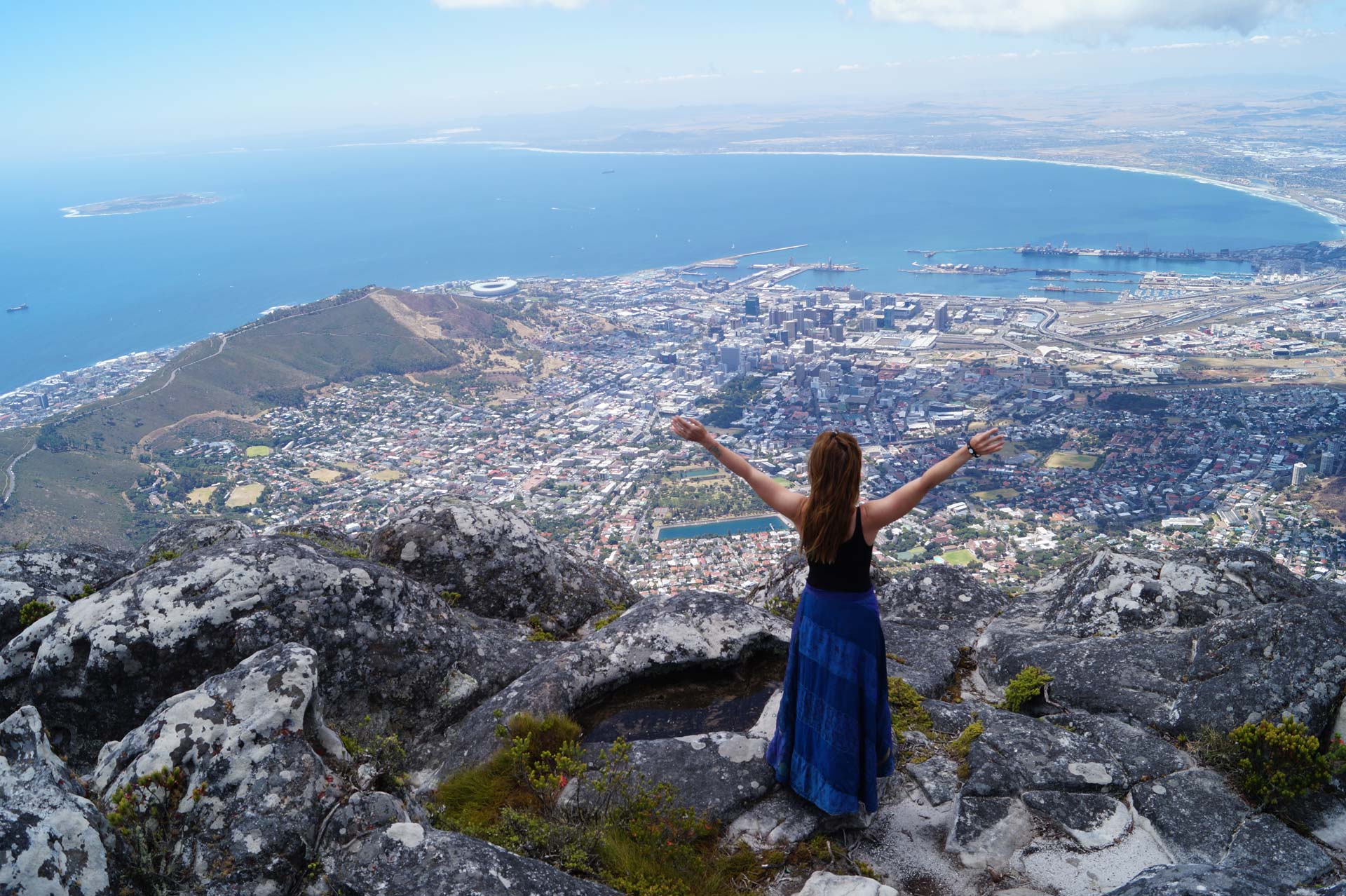
South Africa is colourful. The change from quiet Langebaan and the end-of-the-world chill-out in Witsand to the four million inhabitants of Cape Town couldn’t be more dramatic. On our journey, we make a detour over the Tradouw Pass into the wine country behind the mountains and inspect a potential shallow water spot near Hermanus.
Our hostel looked a bit out of the way. In fact, the Cat and Moose with its beautiful old rooms is right in the centre of Long Street. Long Street is the Bourbon Street of Cape Town, an incredible party mile with countless restaurants, pubs, live clubs and fine house venues. As we have also booked for the weekend, we have a pretty hefty day & night double programme. (more…)
Witsand
South Africa is huge. Our journey takes a good five hours past Cape Town eastwards along the Garden Route. The country is also very dry on the Indian side. It hasn’t rained a drop for months. On the Sir Lowrys Pass, monkeys go about their business of mouth robbing. The dam behind it has dropped to 40% full. Cape Town will run out of water in 80 to 90 days.
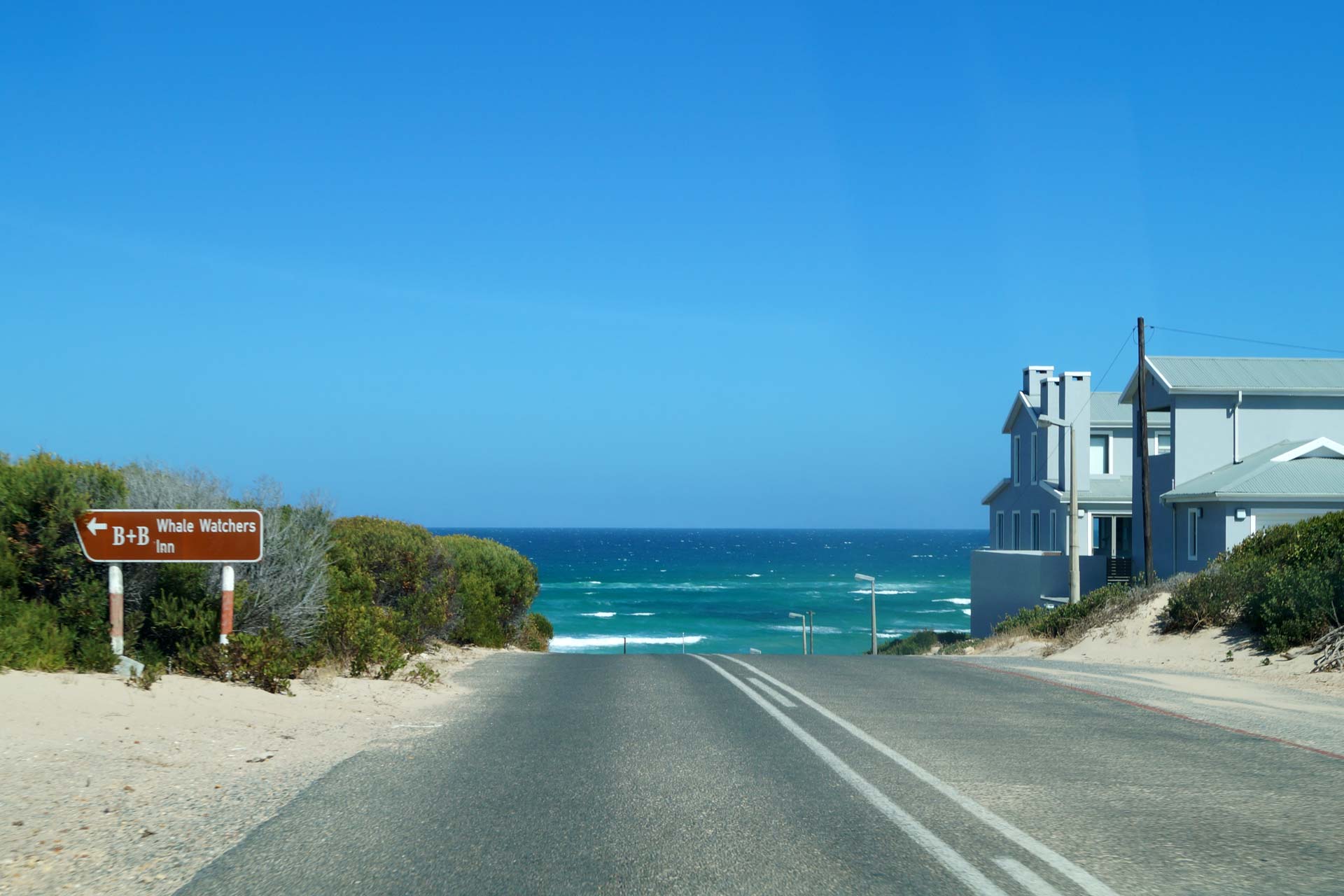
After a good 400 kilometres through endless expanses of harvested wheat fields, we follow the sign to Witsand. The last 50 kilometres take us along a high-speed gravel road lined on both sides by ostrich farms. The small village of Witsand is idyllically situated at the mouth of the Breede River, one of the largest rivers in South Africa. Behind large dunes, the 300 metre wide estuary conjures up one of the most beautiful shallow water kite posts in the world. (more…)
Langebaan
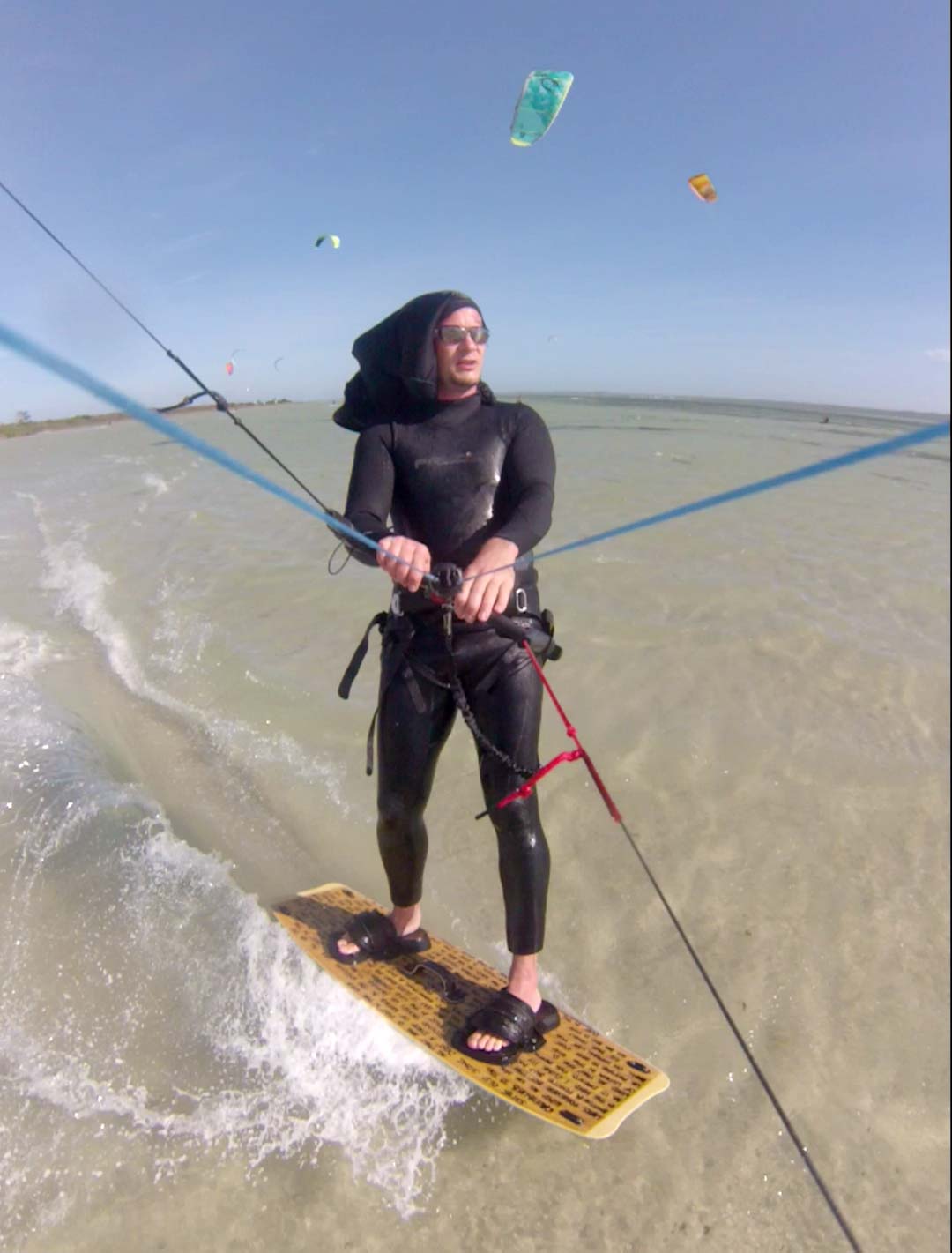
South Africa is strange. After 150 kilometres with 3 bends through the most monotonous Brazilian pampas, we arrive in Langebaan. Langebaan looked like a big city on the map, but 90% of the houses are just holiday homes, and they are all empty even in the middle of the high season – behind thick nasty fences on far too much empty space.
As strange as the surroundings are, the people are wonderful. The first is Dane Per. At 88, his father Poul was the oldest kiter in the world. He died happily in his wetsuit from a heart attack. 150 kiters gathered in a circle in the mirror-smooth Danish Sea, like King Arthur’s table in XXL. They scattered his ashes. Suddenly the dead sea came to life. (more…)
Kite Spots Sardinia
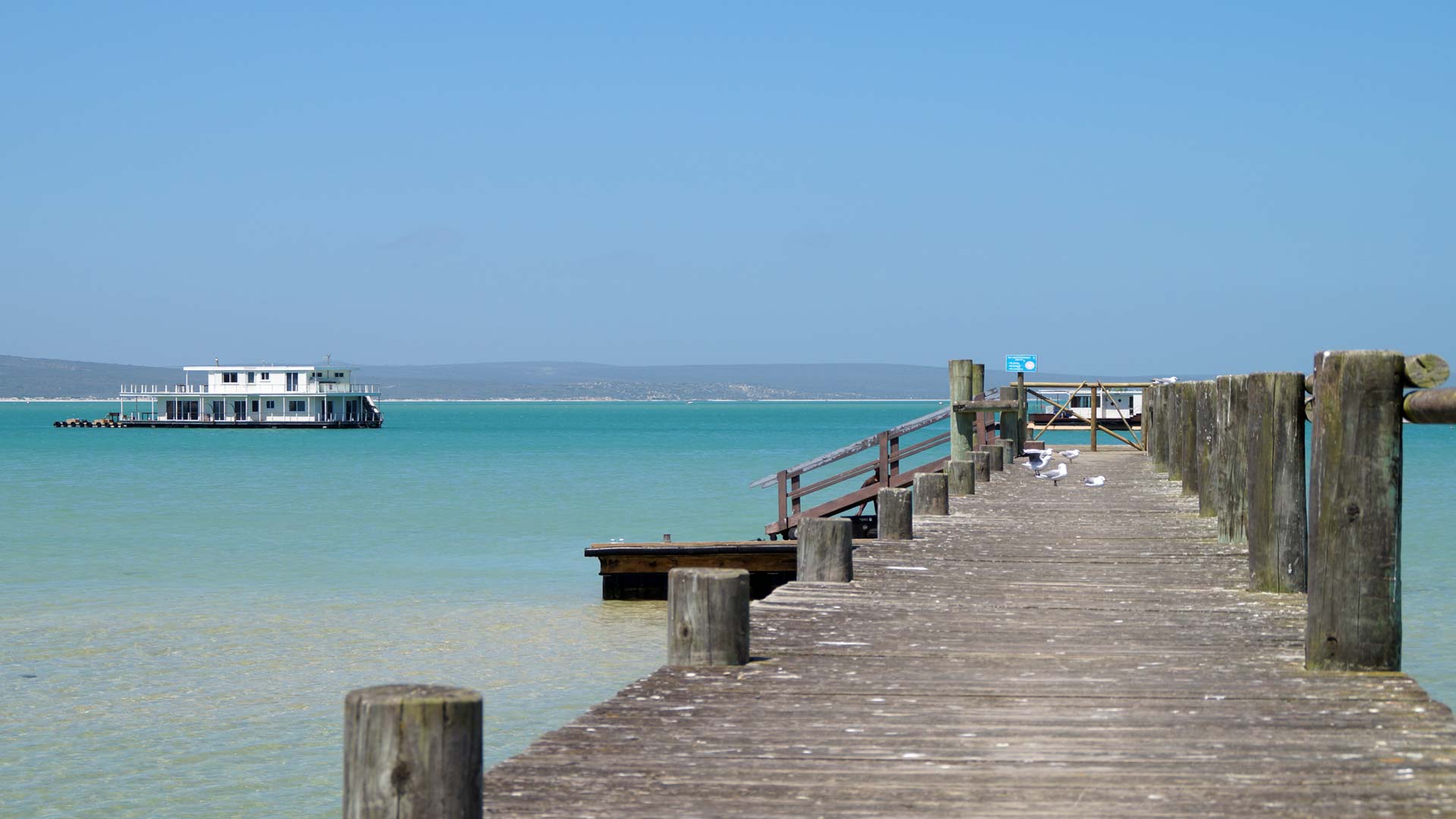
Porto Pollo is only the most famous but by no means the best kitesurfing spot in Sardinia. Due to the jet between Corsica and Sardinia, the wind here usually blows at 5 to 10 knots more than on the northern west coast when the mistral is blowing – but it is also significantly stronger, especially when the mistral blows from the south. Porto Pollo works in all westerly winds, the main wind direction in Sardinia.
The beach is wide, coarse sand without stones or other obstacles – at least in the low season. There is no standing area at all. The waves are quite choppy, especially in strong winds over 25 knots, but there are no big ones in the bay. On some days, they come from all directions like a bathtub – especially near the Isola dei Gabbiani. (more…)
And I could walk 5000 years!
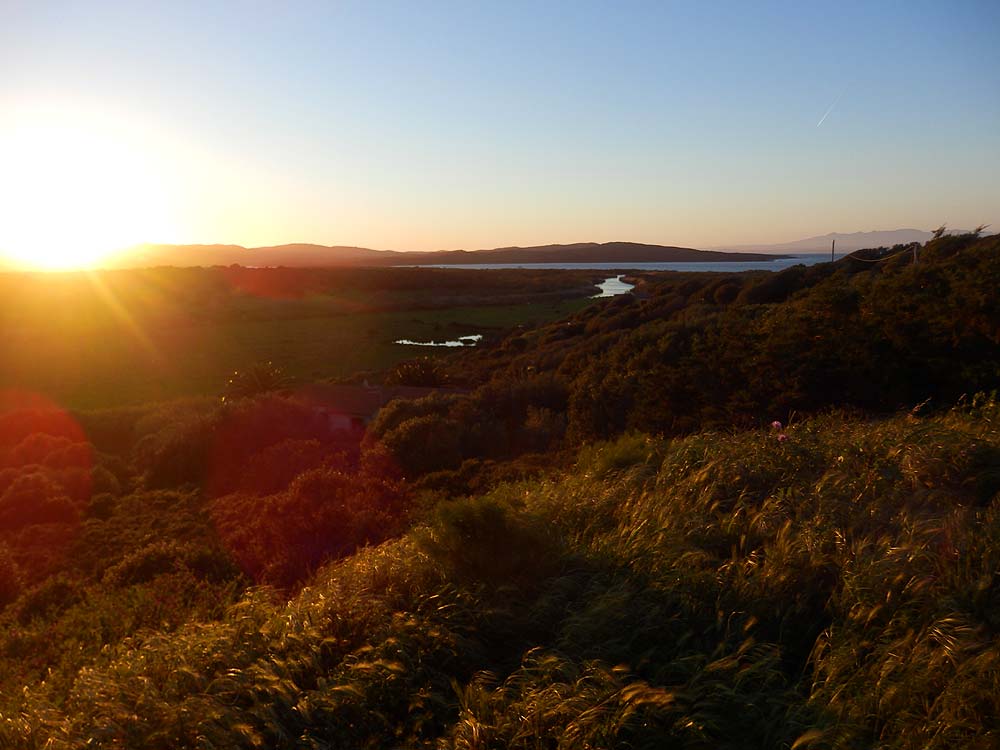
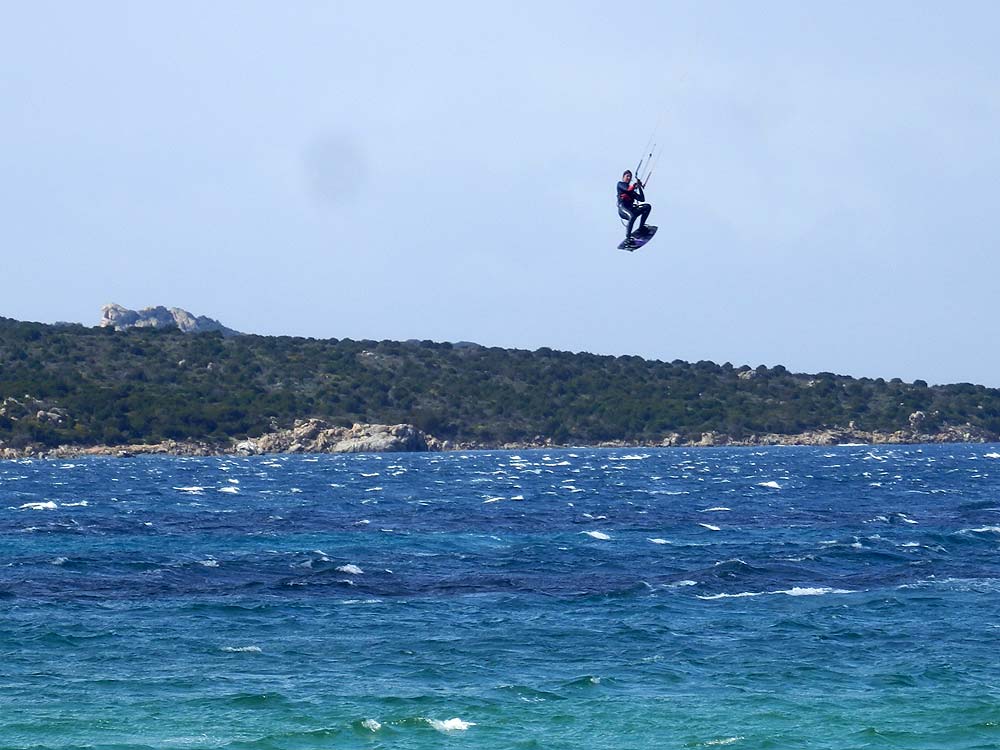
The day before yesterday, the Sardinian wind showed its teeth for the first time on the west coast in the UNESCO World Heritage Site of the millennia-old mines of Sulcis Iglesiente. It was blowing full offshore at 15 to 30 knots, gusting west of Iglesias over the old silver mountains and steep cliffs with mine ruins reaching down to the water. My breakfast baguette flies for a swim.
The coastal road to the north leads over breathtaking rollercoasters on steep slopes through old mining towns such as Nébida. The stub roads into the mines above Buggeru are completely unsecured and therefore offer sweeping views. On the motorway, the Sardinians really do slow down every farting hobo at 30 km/h – but if you need a jeep and blinkers to get up a mountain, there’s definitely nothing at the bottom. (more…)
Kiting with jellyfish
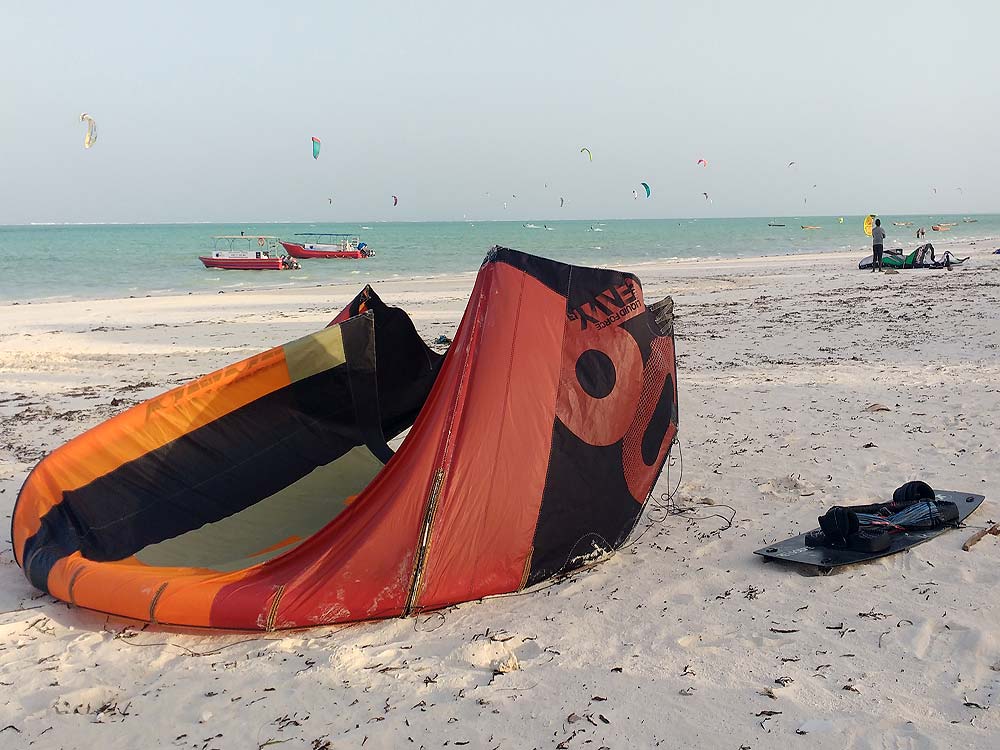
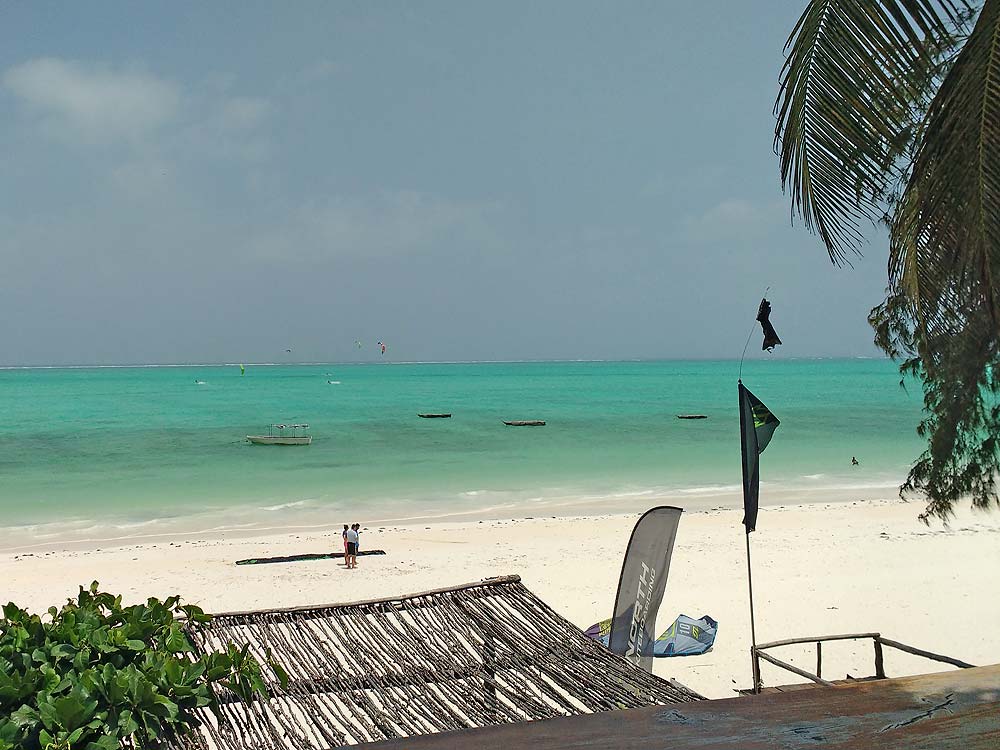
All the locals and long-term kiters say that the wind on Zanzibar has been exceptionally bad since December 2015. At the end of my second week, with just three good days so far, it finally arrives. For six days, the wind blows at 14 to 22 knots for a few hours every day. We have a lot of fun in the shallow water on the beach and in the waves up to two metres high on the outer reef.
The wind statistics published on Kitereisen, for example, give us false hope. For January it gives almost 100% gliding wind. It defines this as 4 Beaufort = 11 to 15 knots. 11 knots are actually reached almost every day, for a few hours, and often only in peaks. The basic wind rarely gets much stronger. Since mid-December 2015, there have been few days with at least 15 knots of basic wind. (more…)
Isla Holbox
Holbox is the last surprise of my Pan-American journey. In Belize, a Swiss man said: “The best wind in Mexico blows there!”. He was right. Every day 16 to 23 knots and beautiful waves along with ten kite buddies on Holbox will be my last kitesurfing paradise.
Until 2013, kitesurfing was completely banned on Holbox, which is largely a nature reserve. Today we are allowed to kite – for a €10 wind usage fee, and only on a single beach one and a half kilometres north-east of the town centre. The wind is almost always from the east, so the kite beach lies sideways in the lee of the island. The only option is to take the kite school boat seven kilometres around the corner of the island every day for €14. (more…)

El Cuyo
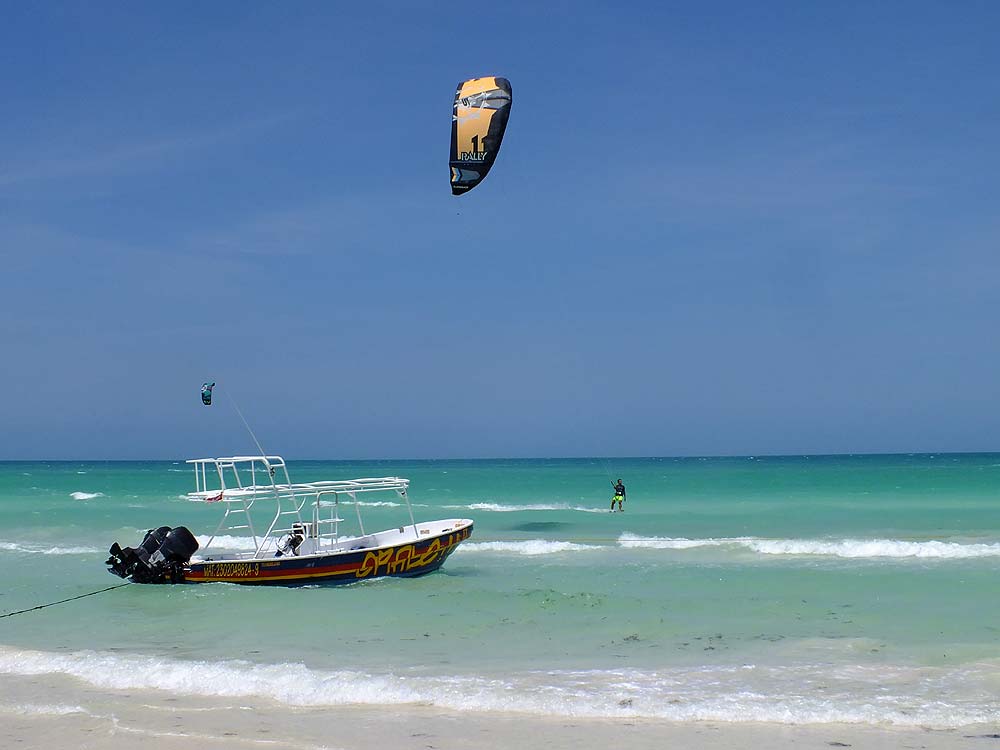
El Cuyo is located in the very north of the Yucatan Peninsula. Open Street Maps recognises exactly one POI in this small, sleepy fishing village at the end of the world: “Iglesia”. The pampas between the last town of Tizimin and El Cuyo are supposedly also crossed by buses and collectivos, but so rarely that I need a cheap taxi for the last 85 kilometres.
Even during Semana Santa, it is no problem at all to find accommodation here. After five minutes I have a small, cheap hut on the beach. I am the only gringo among a handful of Mexican day trippers in the whole of El Cuyo. From the palm leaves rustling softly in the wind, a higher power whispers to me: “This is your task!” I shiver in 33° Celsius on the turquoise blue sea: “Huh?”. (more…)
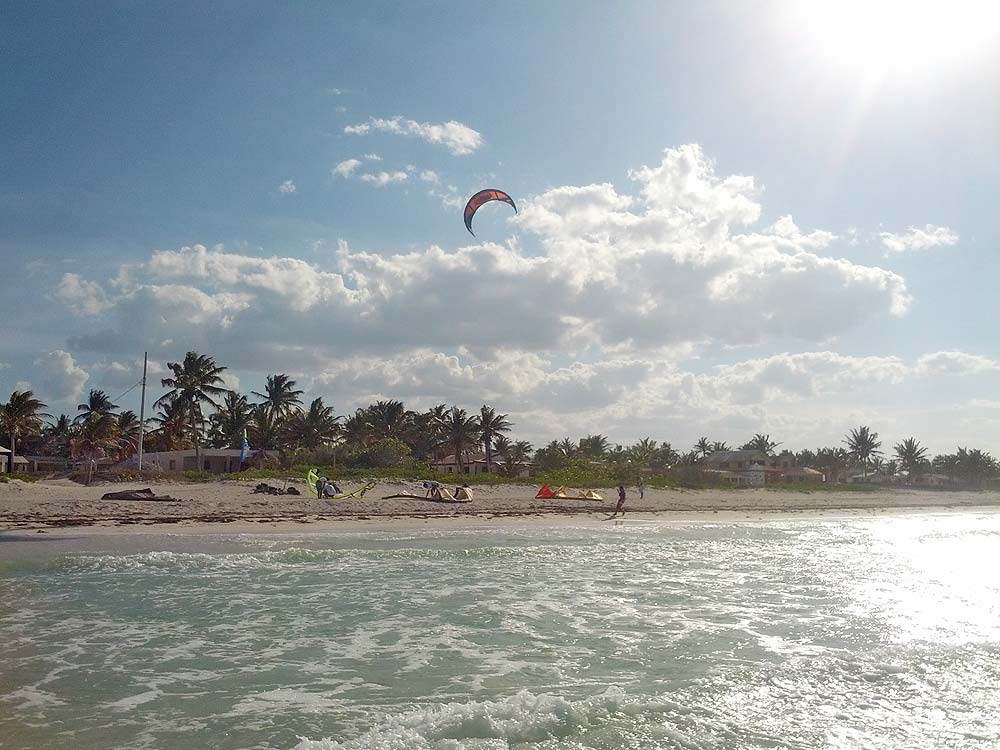
Ometepe
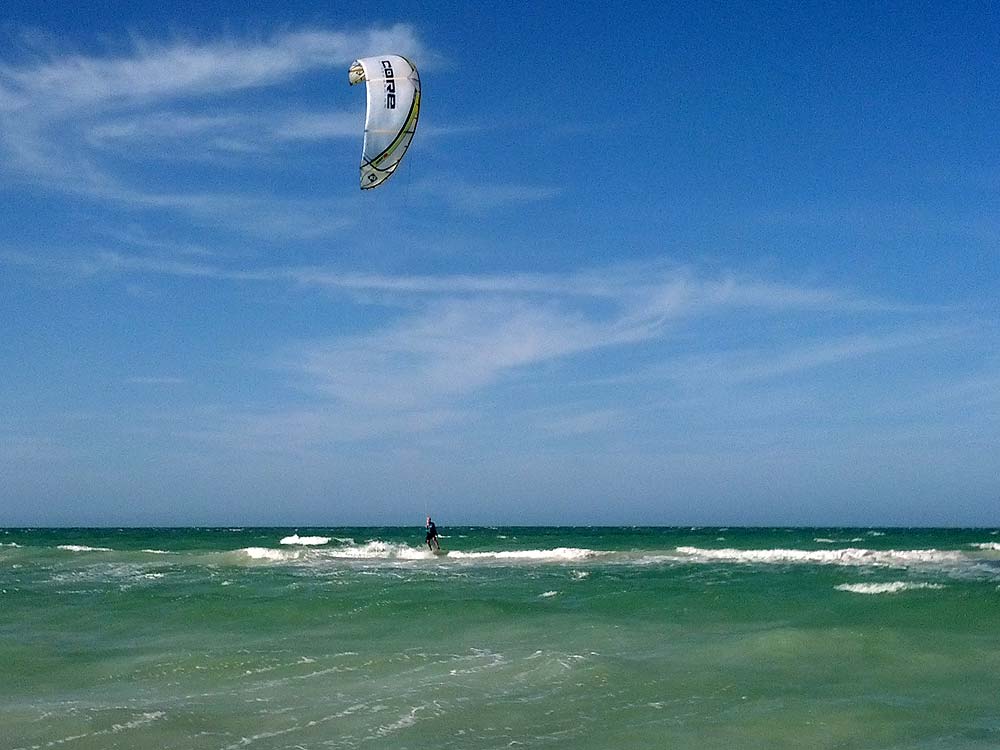
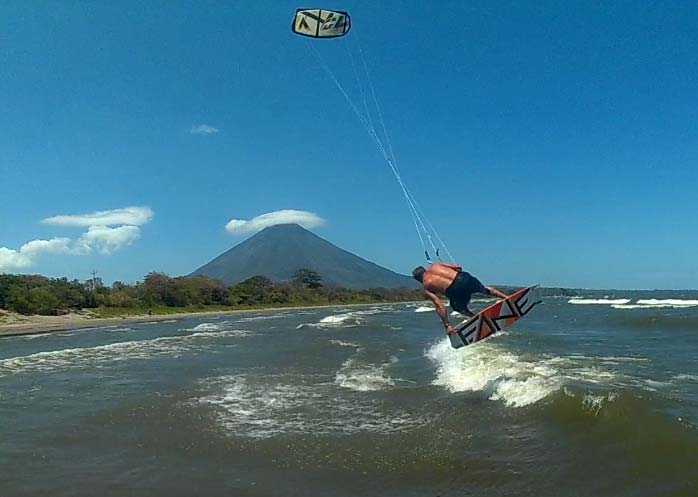
The island of Ometepe, located in the middle of Lago Nicaragua, is the biggest surprise of my Pan-American kite trip so far. In Costa Rica, everyone said the wind on Ometepe was much weaker. It is almost as strong. On five out of five days, I was mostly on the water with the nine kite.
In the morning, the wind usually blows very laminar with 20 to 25 knots side-on from the right. It likes to take a siesta at midday. In the afternoon, it freshens up considerably to 35 knots. In the evening and at night it blows violently. Santo Domingo beach is the only kiteable beach on the whole of Ometepe. I circumnavigated both volcanoes on the Enduro on 80 km of gravel track. (more…)
Km 2,256: Dance Dance @ Bahia Salinas
I open the car door a crack. The wind immediately snatches it out of my hand. When an old bony tree dies in the dry steppe here, it simply collapses in the strong wind. Our beach house is 300 metres from the spot and has room for eight people. As the only guests, we decadently treat ourselves to separate bedrooms after three weeks of travelling together.
The wind in Bahia Salinas is the strongest I have experienced in 16 years of kitesurfing. It never actually blows at less than 20 knots – with gusts of often over 50%. At high tide, the beach is completely gone and there is only a small dusty spot to launch from. (more…)
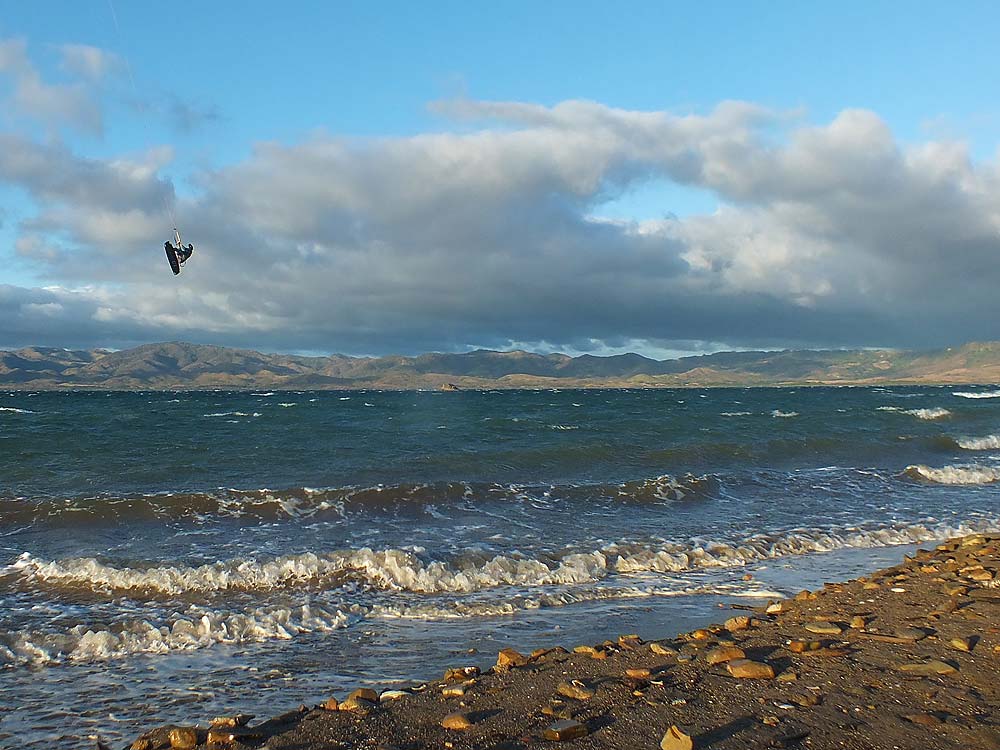
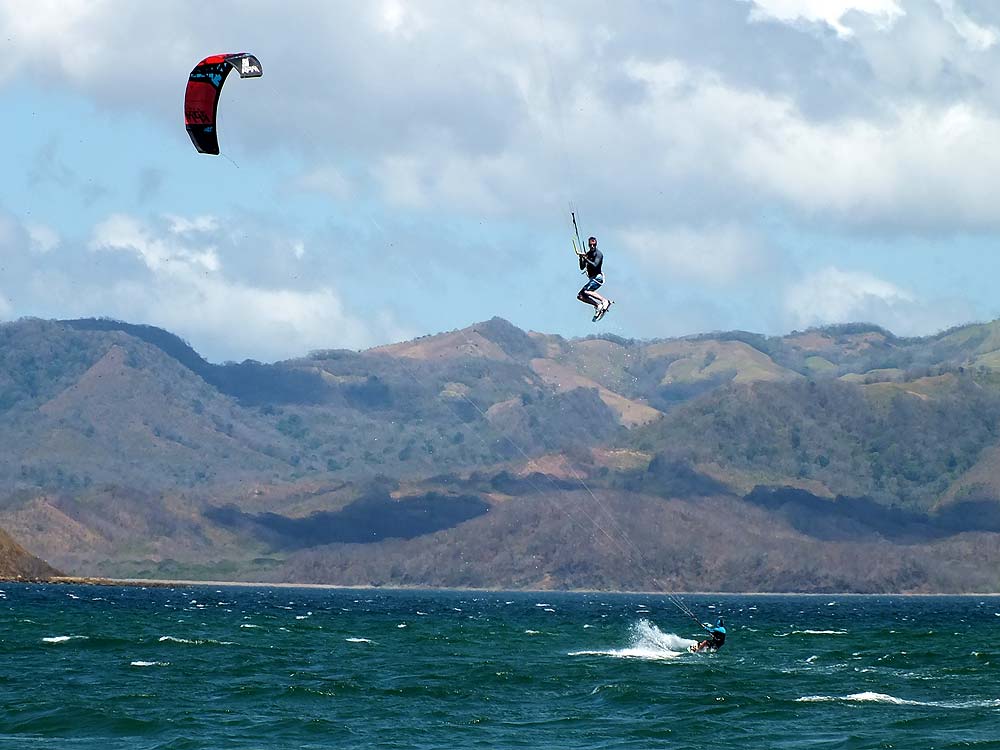
Kitesurfing @ Laguna De Arenal
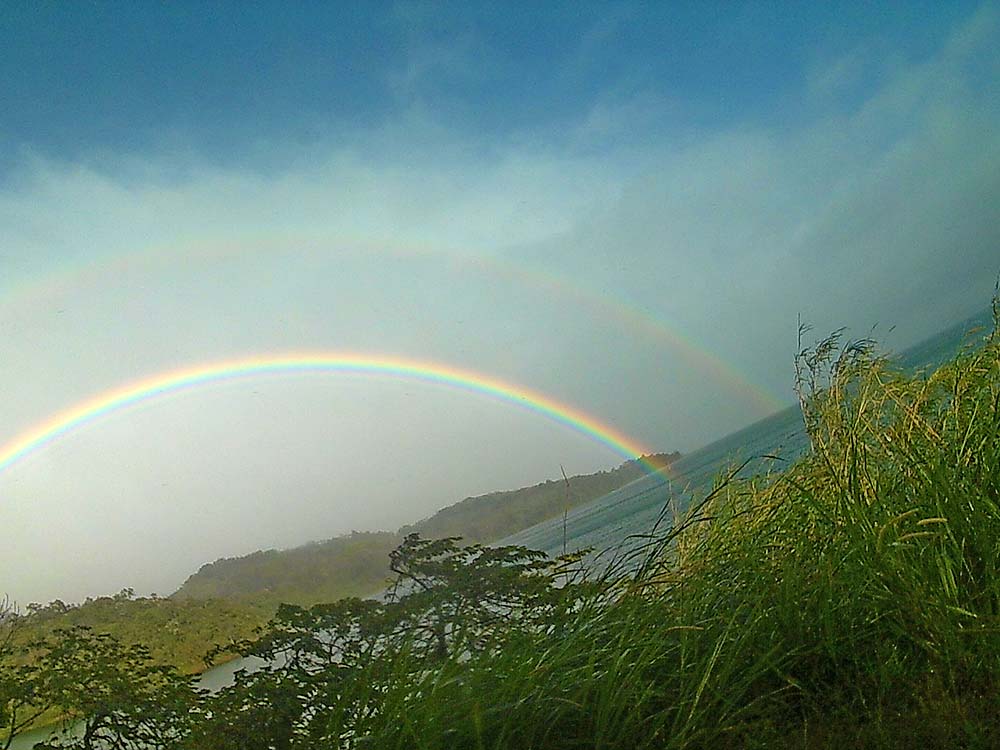
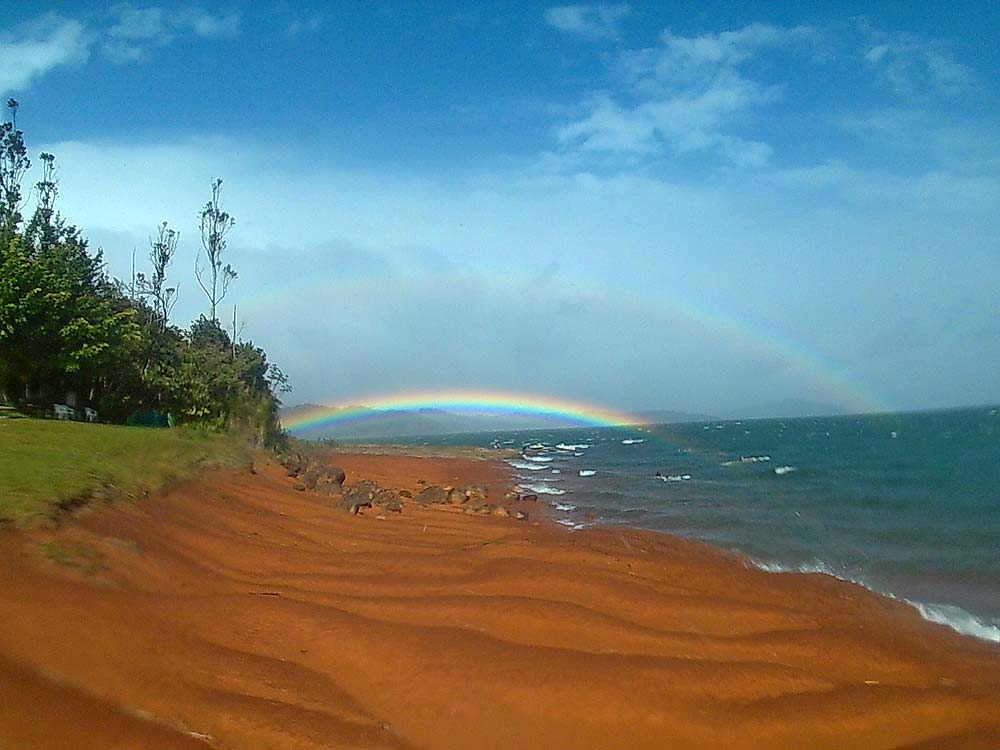
The north-east trade wind only accelerates by five to ten knots on the last three kilometres of the 40 km long reservoir. The hot dry steppe of Guanacaste sucks the cooler, humid air masses from the highlands north of Laguna Arenal sideshore over the ticowind.com station.
The only possible launch site can only be reached via a 1.5 km long dirt track. After heavy rainfall, driving there without a 4WD is borderline. Before we arrived, it rained non-stop for two days. (more…)
Punta Chame
John Wayne once had an island around the corner. It is now Disneyworld. Punta Chame is different. Situated at the end of a long peninsula 100 km north of Panama City, the lonely empty holiday homes of rich Panamenos withstand the strong winds. The stoner Belgian cook from our French fazienda drags us along to a kiteboarding party at the end of the road.
The glossy apartment block with Jaccuzi is empty during the week. The reggae is reminiscent of the rooftop bar on Cape Verde, but the grass smells much better. I quickly consider Jack Nicholson as a possible neighbour. I successfully combat the feeling with rum, which is the Spanish word for “grandad”. Until an Ansbach perma-traveller with a butcher’s knife pulsing in lemons tells me I’ve just eaten shark. (more…)
Morning Session
Santa Maria is asleep at six in the morning. The night before at the Reggae Rooftop Bar was once again bloody. Windfinder gave 16 to 18 knots for five to eight o’clock. With three good kite days in a fortnight so far, it’s clear what needs to be done: with four hours of sleep, I stroll through the dark streets, clean and still drunk, and look for the first awake taxi.
In the light of the headlights to Mitu Kitebeach, the salt of the salt pans shines brightly. I’m all alone on the beach. The orange and black striped tiger dog sleepily cuddles a lucky cat. A small flock of sandpipers play catch with the waves. White sand dunes shine golden in the sun rising behind clouds over Africa. Above, the moon watches the waves. On some days, kitesurfing is a religion. (more…)
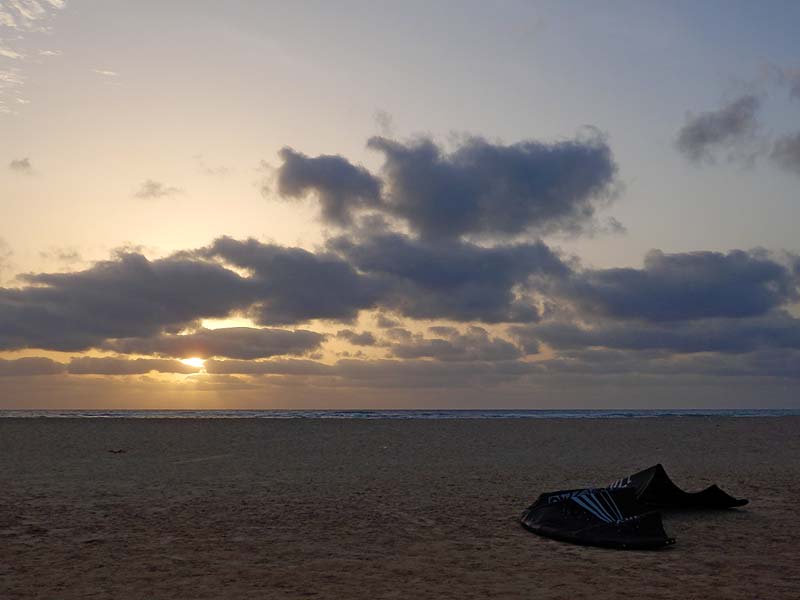
Of Mad Max & Mega Downwinders
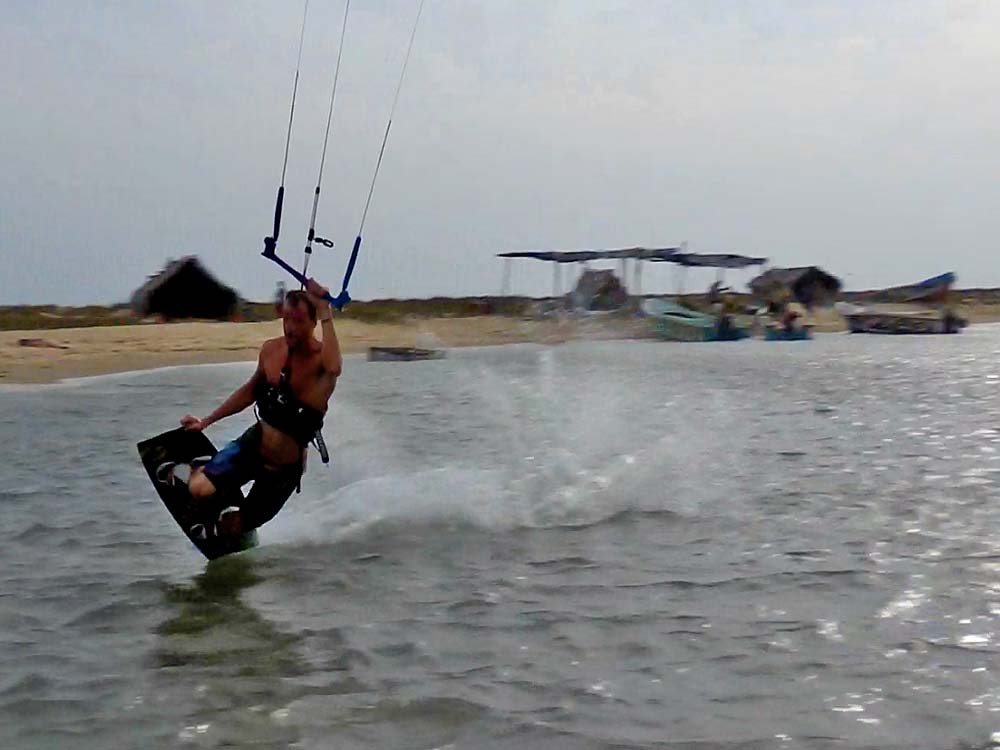
My three weeks in Kalpitiya are coming to an end. It was a strange time. A lot happened, but little happened. Towards the end of the season, the wind bucked more and more violently, completely overpowered to the point of sinking every second was the standard. Landing was often difficult and many kites formed intimate relationships with the trees in SriLankaKite.
On the penultimate day, we took three boats 25 kilometres out into the upper lagoon of Puttalam to Magic Island. I do the whole trip with the chiefs as a downwinder. Thanks to the narrow lagoon here, the first six kilometres are pleasantly flat water. Every now and then the kite sinks, even frontline pulling doesn’t help. There are fleas on the seaweed in the 10cm deep water, and they bite like jellyfish. (more…)
Kitesurfing Sri Lanka: Kalpitiya
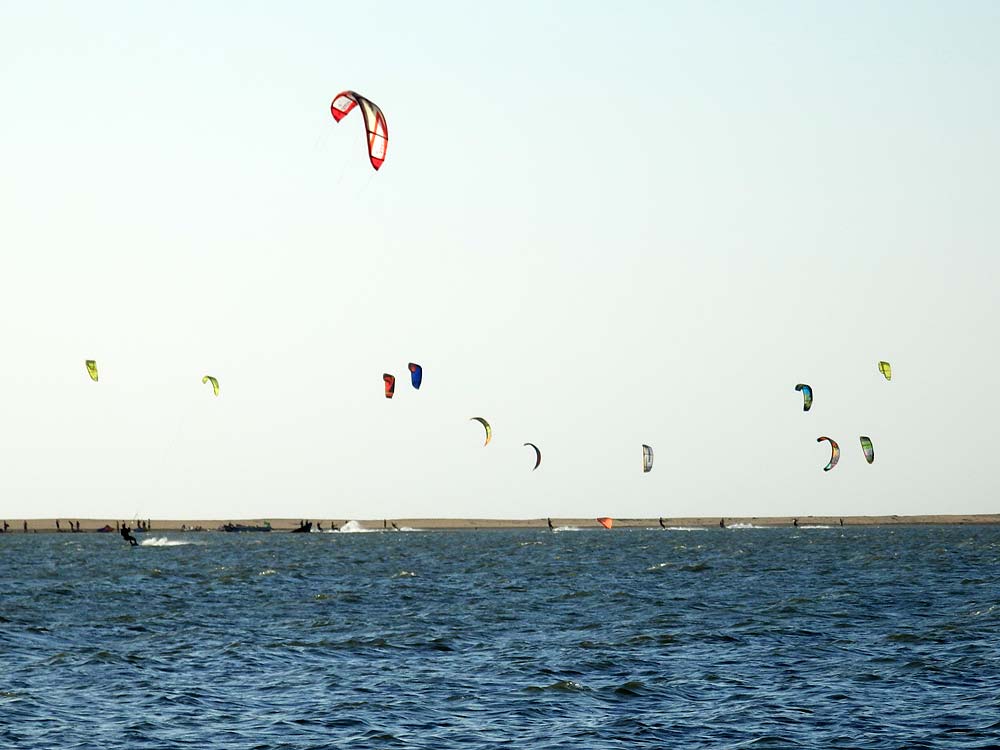
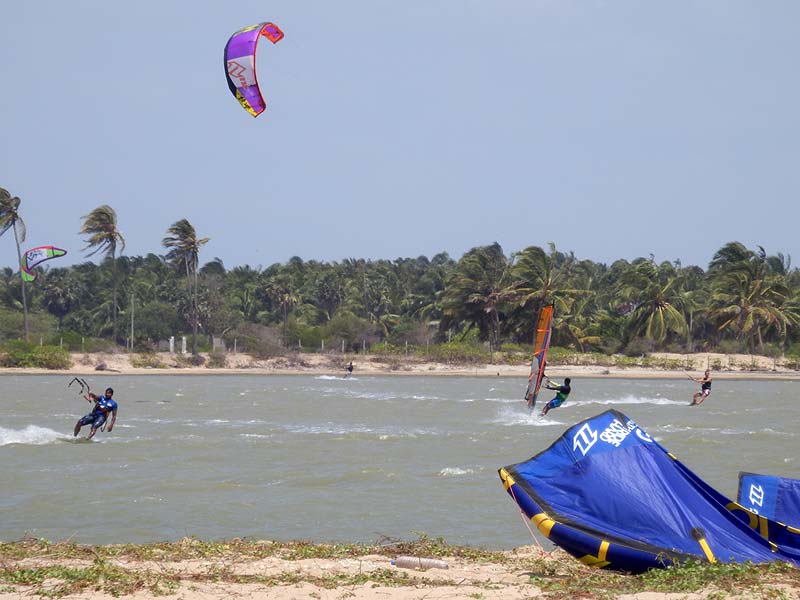
The road from the airport leads 120 kilometres north to the Kalpitiya peninsula. The name is hard to remember, but it’s pure onomatopoeia. That’s exactly what you shout on the water, with a long “jaaa” at the end. The lagoon is about 400 metres by 2000 metres. The wind has been blowing non-stop at 25 knots for three days now.
After the Tamil Tigers gave up their civil war here in 2009, development began – very slowly. The houses of the Muslims living here are more than modest. There are just a few shelters. Even these are not ostentatious. In the evening, the village gathers around the fishermen on the beach. Ravens scream from the trees, followed by the muezzins in weird stereo from two minarets. Otherwise everything is quiet. (more…)

End of a 4,000 km kite trip
My quarter of a year in Brazil is coming to an end. It was the strangest of all my journeys. In contrast to holidays, travelling means finding a home away from home. When I travelled, I often felt at home quickly in many places. Brazil was different. I could say that the wind simply blew me away too quickly. But that was only ever true on the water. On land, I spent longer in each place than on any of my other journeys.
Nevertheless, I felt at home in very few places. Perhaps even the Ballermann often has fewer Germans. Maybe kiters no longer really have a common spirt. Maybe my passion fruit and caipi love affair was too intense. Maybe the internet was almost always too bad to work. Maybe I just couldn’t open my eyes wide enough after a tough year. (more…)
Repeat Magic @ Galinhos
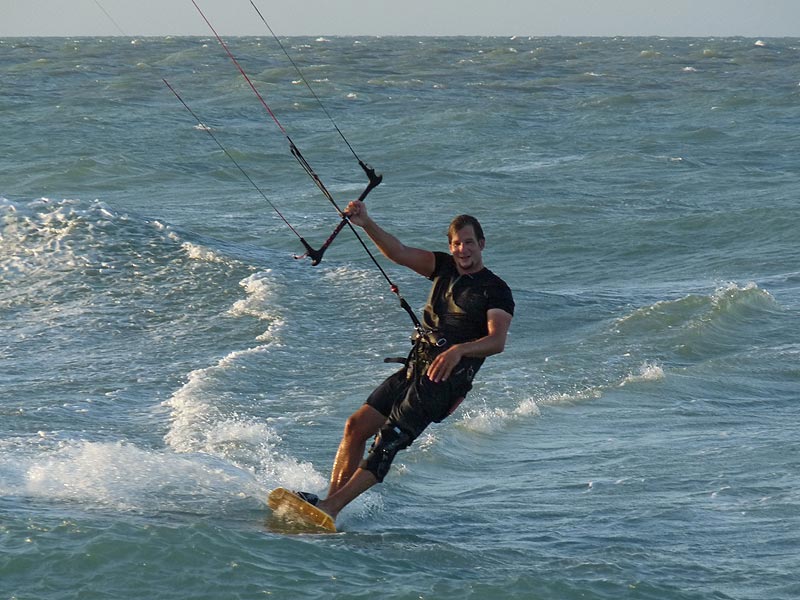
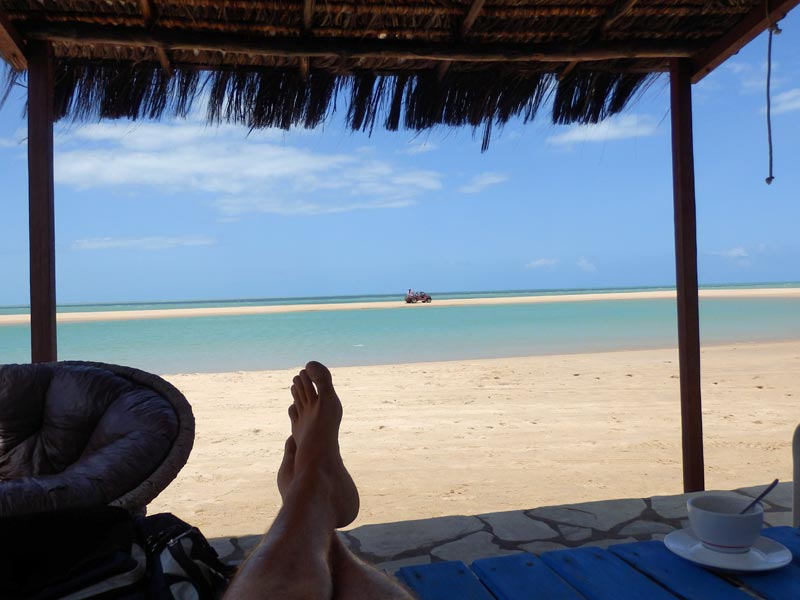
When travelling, it is dangerous to return to good places. Magicians can repeat tricks. But magic is unique. Most of the time, second visits are just chasing after the illusion of times gone by. People change or disappear. The magic of Galinhos is stronger: the good people stay good and the new ones blend in.
In 2,000 kilometres along the coast of Brazil, there was not a single kitespot comparable to Galinhos. I spend the last five days of my trip here. This time there are ten good kiters, the wind is blowing at 25 knots or more, much stronger than at the beginning of October. The lagoon would have room for hundreds more. But the arduous journey to get here continues to successfully deter mass tourism. (more…)

Roadtripping Brazil
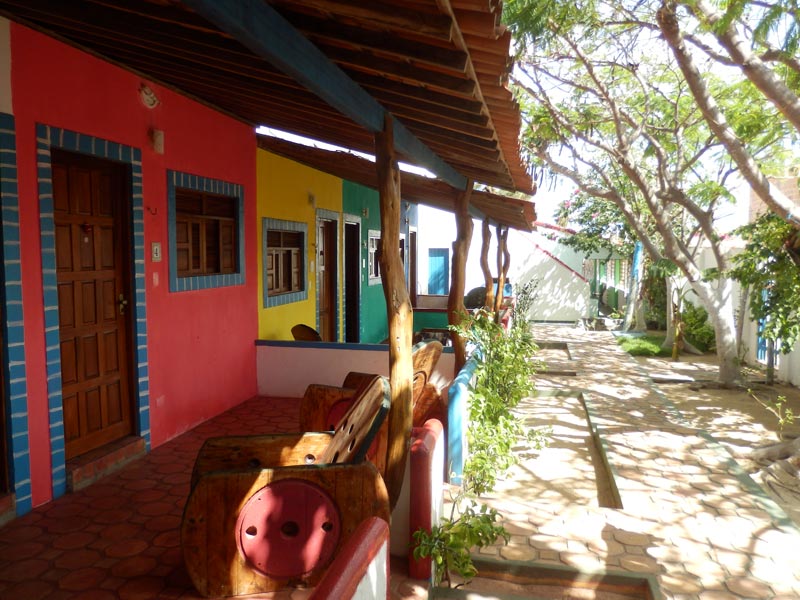
It took me a good two months to travel 2,000 kilometres along the coast of north-east Brazil. I make the return journey in just four days travelling over two weeks. After Jeri, I stop for another five days in Ilha do Guajirú. There are only a maximum of 40 kiters on the water and the wind is constantly chopping at 25 to 30 knots, day and night. Exactly my sweet spot.
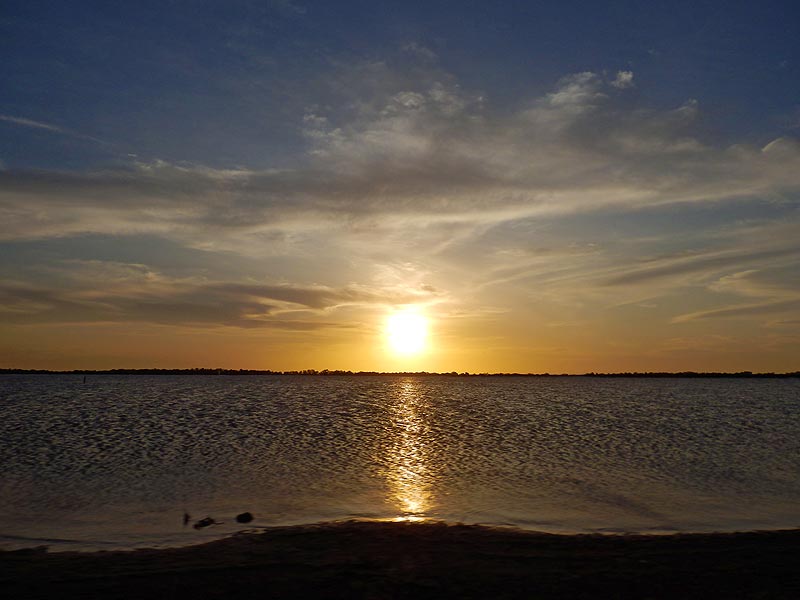
In Cumbuco I meet the shy Viking Johan again and lots of good new people at the Rolling Stone Hostel. We leave early on Saturday. On the last evening, the whole hostel goes up to the dunes to watch the sunset. Everything is quiet and peaceful up here. Down in Cumbuco, two people were shot dead by the police again last week, but this time without their hands tied. (more…)
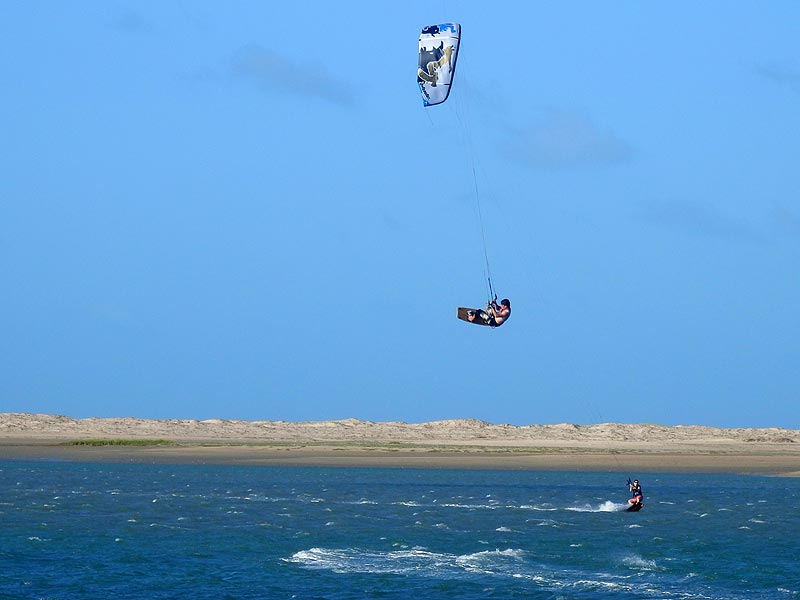
Jijoca de Jericoacoara
If anyone could remember the name, they would definitely fail because of the intonation. Jijoca de Jericoacoara is difficult to reach. Like a chastity belt, 23 kilometres of sand dunes surround one of Brazil’s ten top-selling tourist hotspots. A quarter of a century ago, Forbes Magazine named Jijoca de Jericoacoara one of the most beautiful beaches in the world.
Chastity belts already required sexual contortions in the Middle Ages. It’s no different today. Late in the evening, we cross the sand dunes on the back of a jeep under a blood-red moon rising behind the dunes. The few who make it here in a hire car bring Papparazzi’s good money. Every licence plate photo emailed to the rental company brings in three Brazilian dollars a month. (more…)

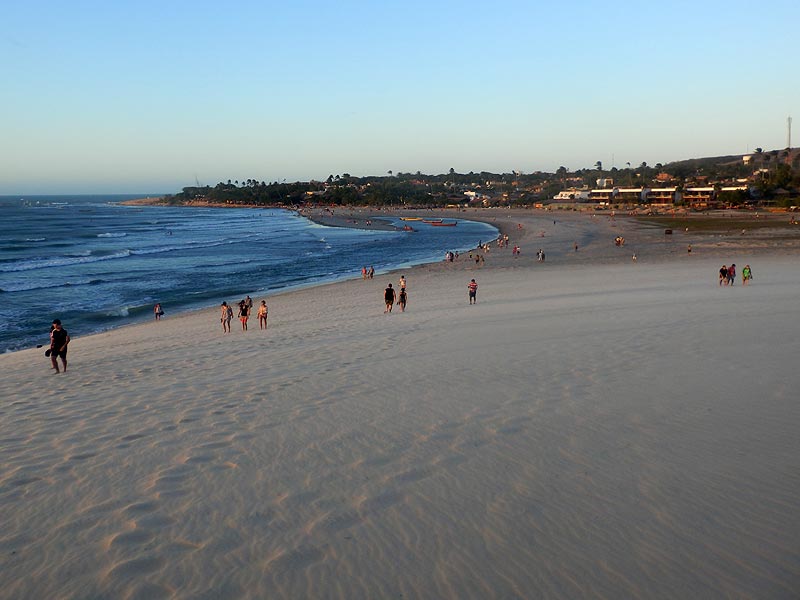
Migratory birds
When I was little, I had a big question: Where do migratory birds fly to? The answers were quickly found and included numerous countries. I devoured all the documentaries about these destinations. Sometimes you could even see birds. Even though I was getting closer to their destinations, I was still missing one thing: their route there. So I started dreaming of flying. Even before I left the earth once, I knew what it looked like from above. I took off with the birds.
Today I am one of them. I no longer dream of flying. I fly. Early in the morning, we take a beach buggy to the starting point a good kilometre west of Jericoacoara. With the wind blowing sideways at a mild 18 knots at the start, we set off with small kites on the longest downwinder I’ve ever flown. (more…)
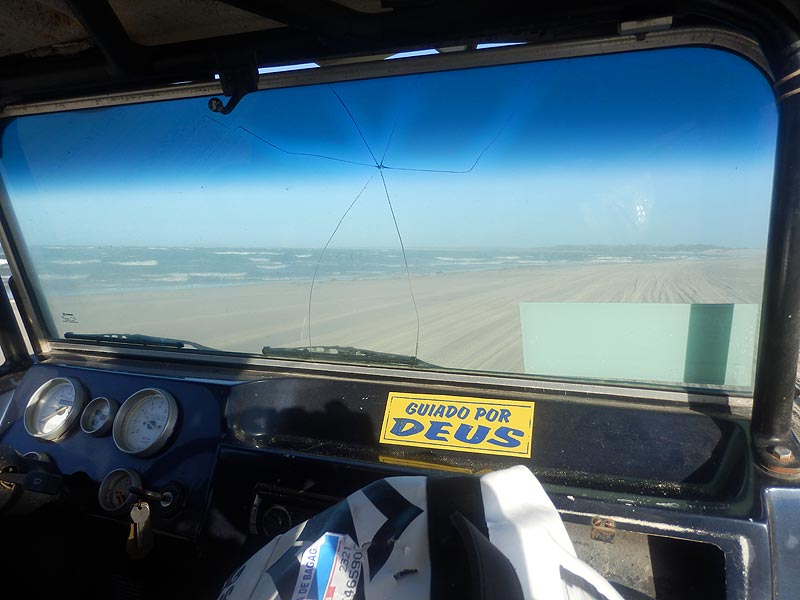
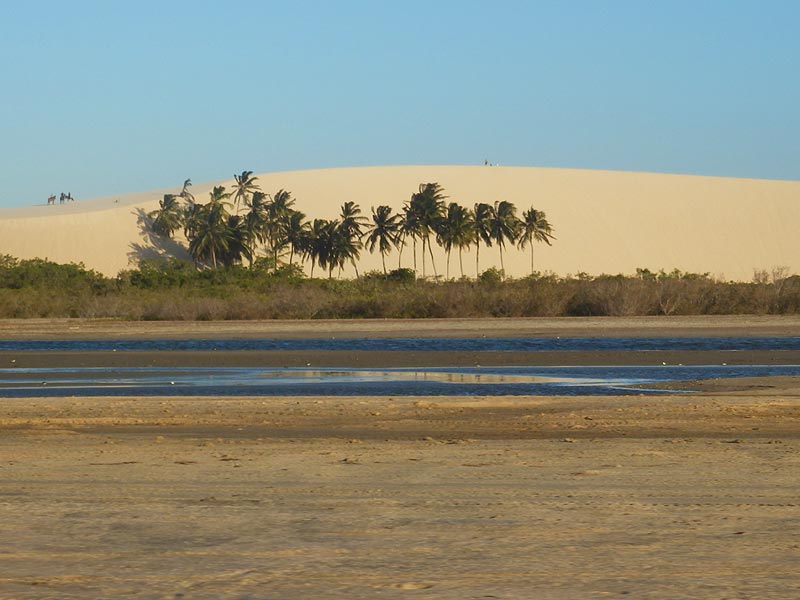
In The Delta Of Parnaiba
The Parnaiba is one of the largest rivers in Brazil. In its estuary, it divides the mainland into countless green islands over an area of 50 square kilometres. We are in the realm of crocodiles, anacondas, herons and monkeys. We travel for just under an hour in a fast motorboat through the mangroves to the last sandbank in the Parnaiba Delta. Here, the river merges with the sea under the crashing waves.
The place is more than worthy of marking the turning point of my journey. Over the past two months, I have travelled almost 1,800 km along the Brazilian coast by donkey cart, car, bus, boat and on foot. My board has made tracks in the water at 30 spots. This is as close as I will get to the equator on this trip, and nowhere will the wind blow stronger and more consistently. (more…)
The Author
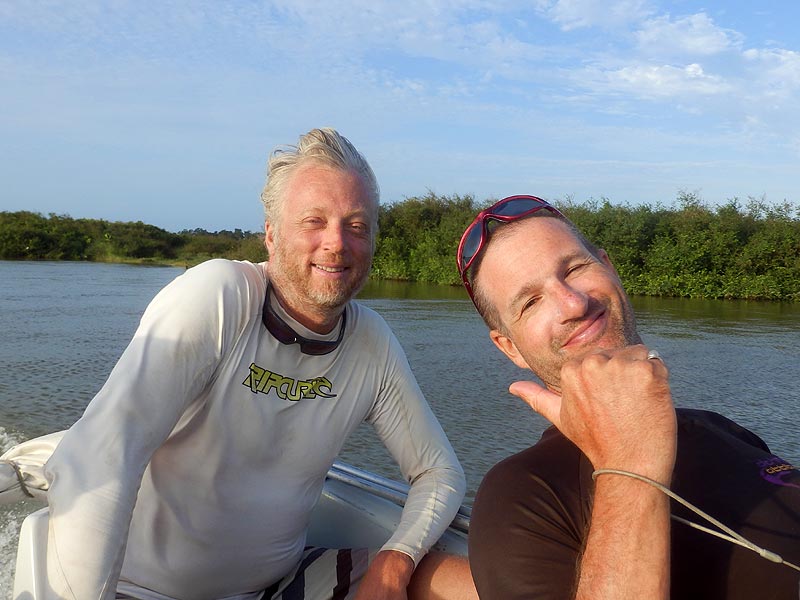
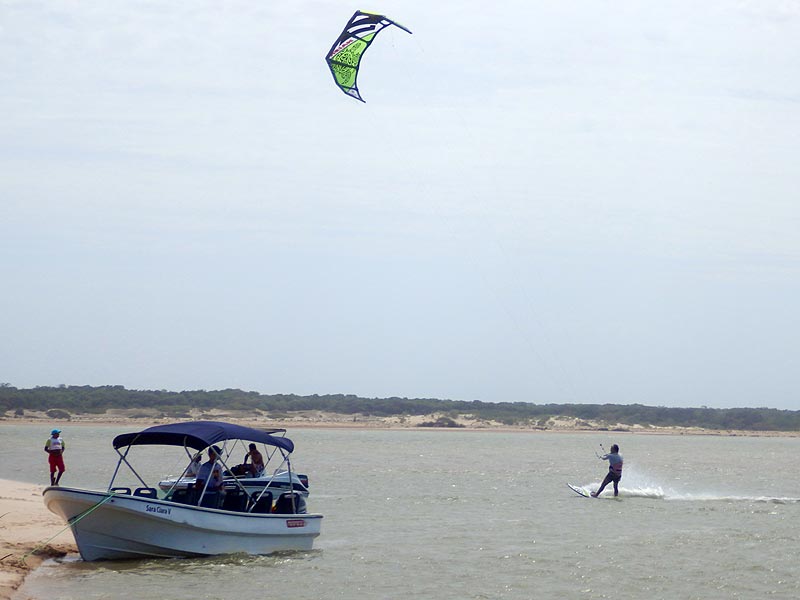
 Frank Woelky, born in 1973. Kitesurfer since 1998. Since 2006, I have been combining kitesurfing and web design on trips lasting several months off the beaten track.