
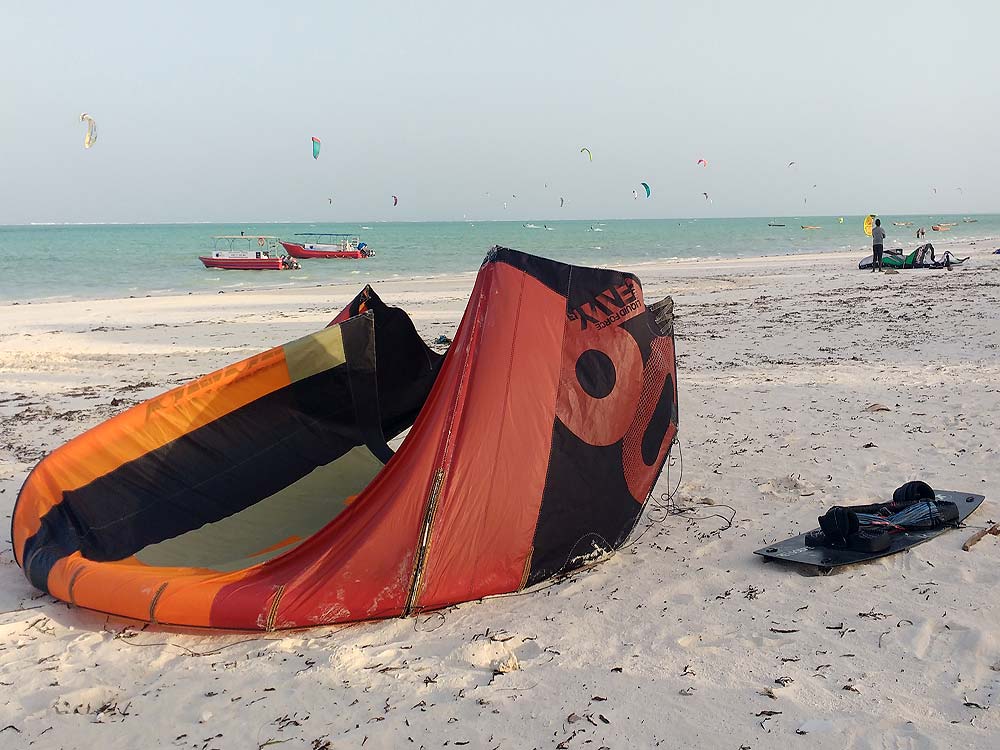
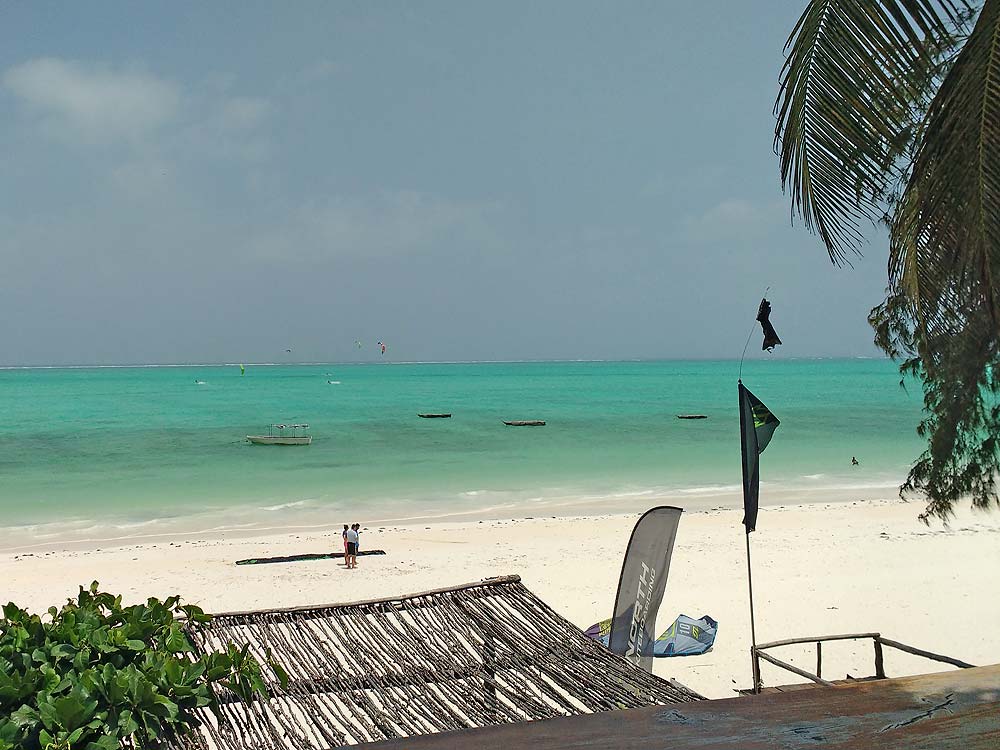
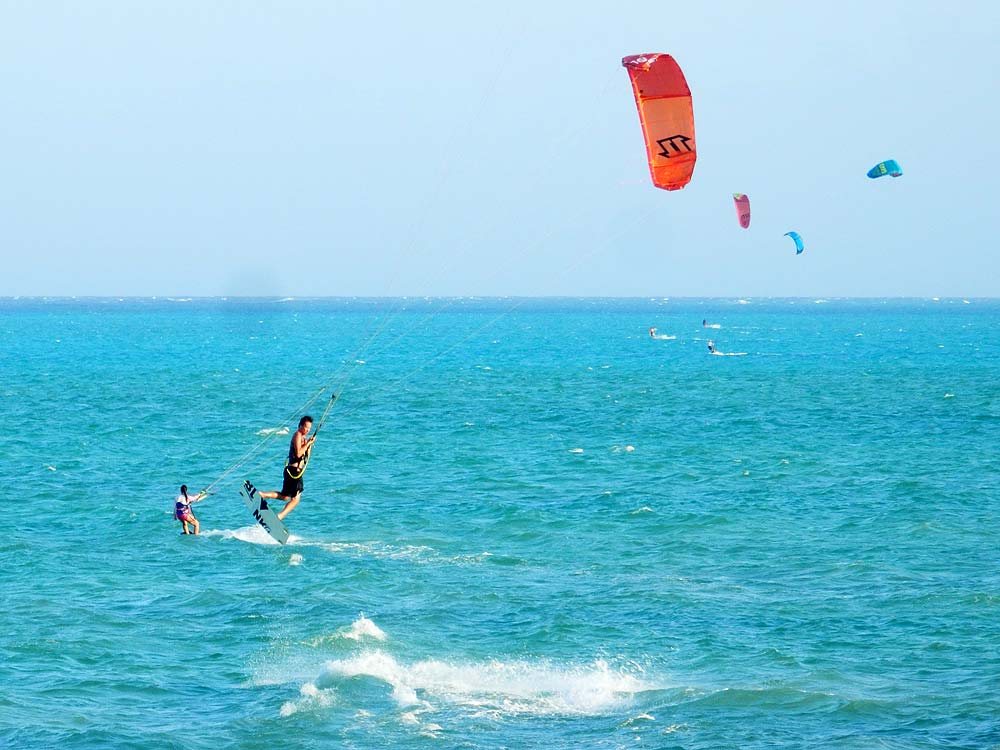
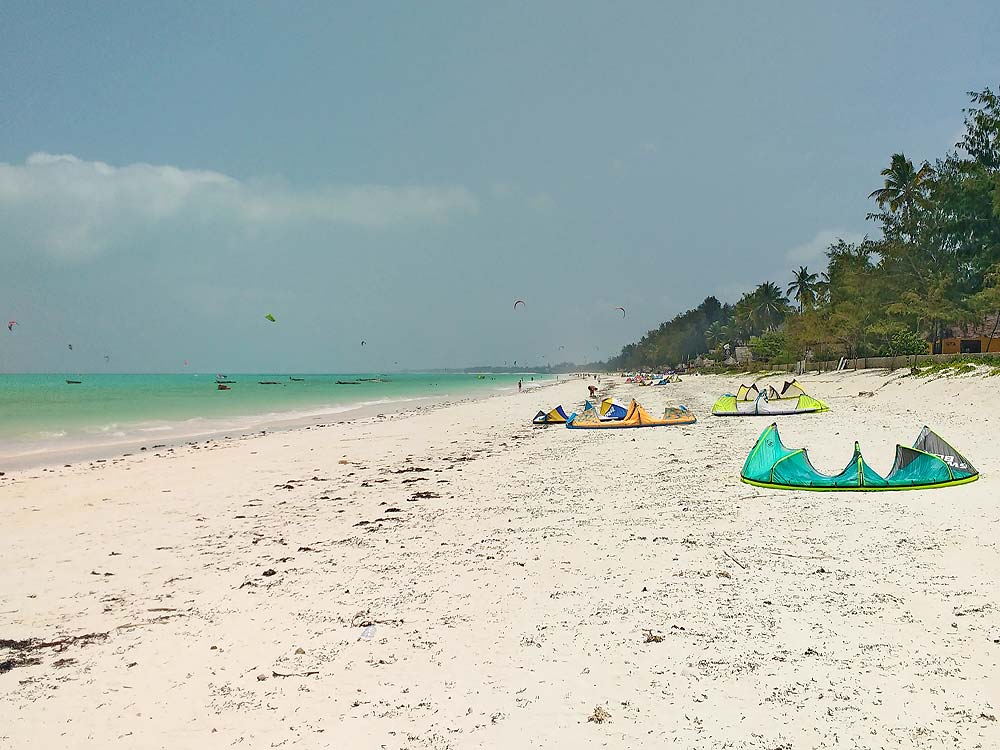
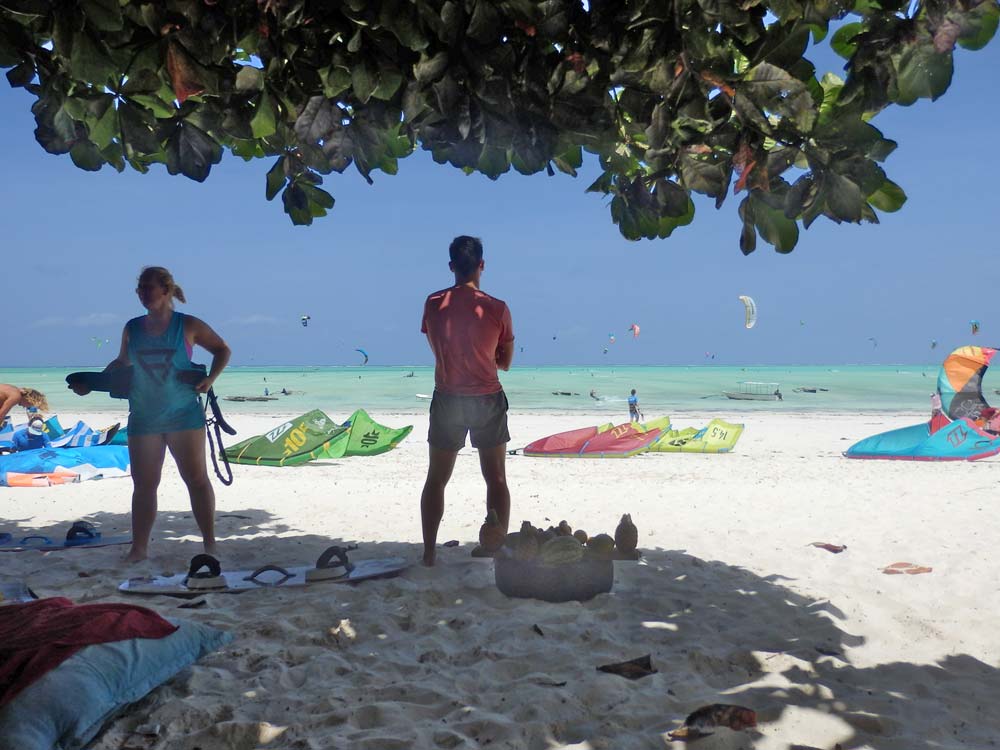
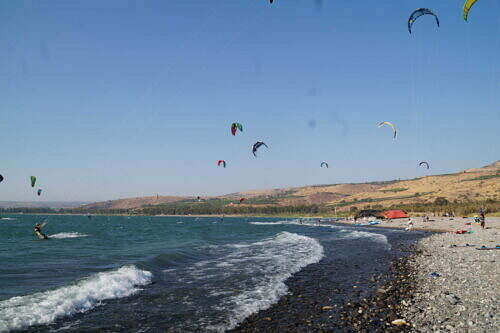
All the locals and long-term kiters say that the wind on Zanzibar has been exceptionally bad since December 2015. At the end of my second week, with just three good days so far, it finally arrives. For six days, the wind blows at 14 to 22 knots for a few hours every day. We have a lot of fun in the shallow water on the beach and in the waves up to two metres high on the outer reef.
The wind statistics published on Kitereisen, for example, give us false hope. For January it gives almost 100% gliding wind. It defines this as 4 Beaufort = 11 to 15 knots. 11 knots are actually reached almost every day, for a few hours, and often only in peaks. The basic wind rarely gets much stronger. Since mid-December 2015, there have been few days with at least 15 knots of basic wind.
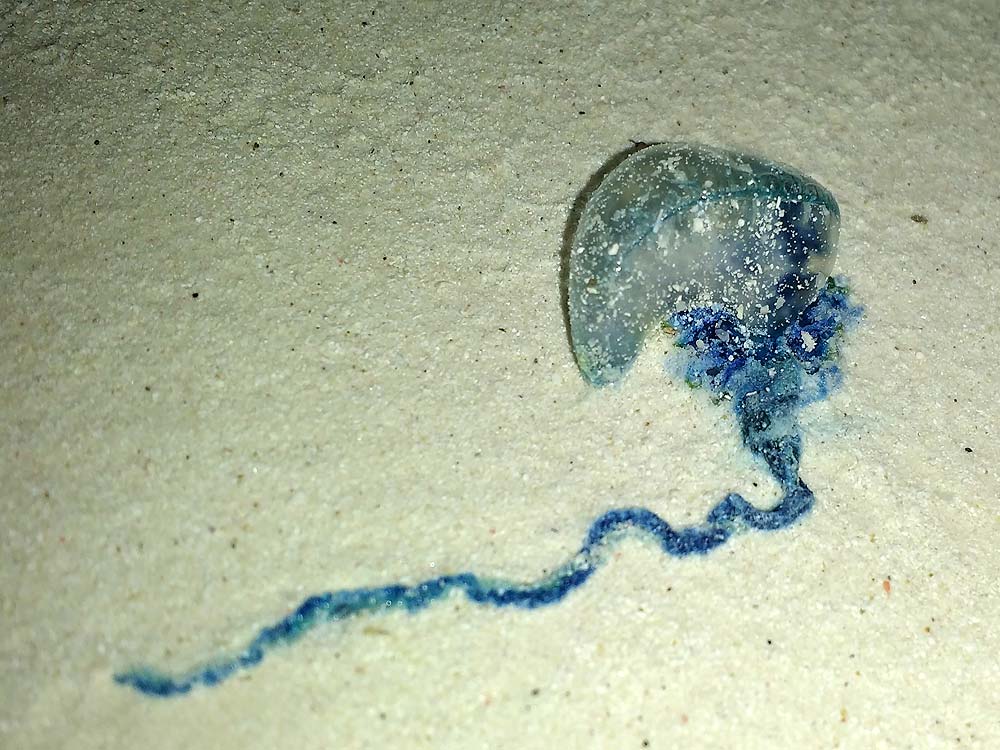
On one of the good days, I’m far out when I fall into the middle of a shoal of jellyfish. The jellyfish, known here as “blue jellyfish”, usually appear on windy, cloudy days at high tide. The fishermen tell you when it’s dangerous. But only when they are back from fishing. Hardly anyone waits that long here when the wind is finally good. A jellyfish warning flag would be a fine idea, but that is probably completely incompatible with the Zanzibari sense of service. I’ve heard of a few kiters who called for an ambulance after coming into contact with jellyfish. At first, the burning on my right leg and arm doesn’t seem any worse than a few bee stings, so I just keep on kiting.
After ten minutes, my loin suddenly starts to pull. The pain quickly becomes intense. I drive to the beach and land the kite. Next to me, a British man is already writhing in the sand, kneading his crotch in an embryonic position. He’s also had a few jellyfish far out. Then the pain kicks in. Screaming, gasping, whimpering. for 30 minutes it feels like someone is constantly kicking you in the balls. My new number one on the pain scale, well ahead of wisdom tooth and central port implant.
The internet identifies the harmless-sounding “blue jellyfish” as “Portuguese galley fish”. Their cnidocytes fire a cocktail of various strong neurotoxins, which can also cause paralysis. The poison does not reach the lymph nodes in everyone. However, if it does, the pain is described as one of the worst that can be caused by jellyfish. I can wholeheartedly confirm this after four contacts with other types of jellyfish.
The next day, I lose my GoPro, which is attached to the board with a board mount and extra stainless steel cable. Both break under little strain, thanks GoPro! Two hours of swimming around in an area the size of two Olympic pools don’t help. 330 euros are gone. The afternoon session is even better. Few kiters dare to take to the water in today’s wonderful 20 knots. I don’t go far out to avoid contact with jellyfish. But they are everywhere today. The first one catches me on the leg after a quarter of an hour. I go out, reach for the board and directly into another jellyfish tentacle wrapped around the handle. Direct hit. The pain is less severe than when I fell into a whole swarm the day before, but it’s still enough to make my lymph nodes yodel under my armpits.
Limes are the only remedy here, and they only help against the nettles, not when the poison has reached the lymph nodes. Baking powder, vitamin C, vinegar: Not a chance. There is no doctor and only a small hidden pharmacy. I’m getting more and more annoyed here. Not a single compressor in 10 kite schools is just a luxury problem. 20% of the students here step into a sea urchin within two weeks, which is somewhat incomprehensible, because there are really very few of them, especially near the beach. Not a single dedicated lifeboat for up to 200 kiters on the water weighs more heavily, even with mostly weak sideon winds, a large standing area and a wide beach.
What I vehemently condemn: all local kite schools rigorously run their courses, according to a number of student testimonials. If they go out for waterstart training on days with eight to ten knots and the kite is constantly falling out of the sky, it’s just money-grabbing. But when they train on days with jellyfish invasions, fully aware of the danger, it’s just a huge mess. Several students told me about jellyfish encounters, even though they only requested training on safe days. Jellyfish only occur more frequently on some days, not all the time. The schools know when it’s dangerous. But they all ignore it.
I warn a female kiter who is about to enter the water: “There’s a lot of jellyfish today, I wouldn’t dare it.” The instructor next to her (Airborne Kite Centre) snaps at me quite arrogantly: “Thank you, we know that.” A quarter of an hour later, she’s also lying on the beach crying. In the evening, I walk across the beach to a party. Hundreds of Portuguese galoshes burst under my feet.
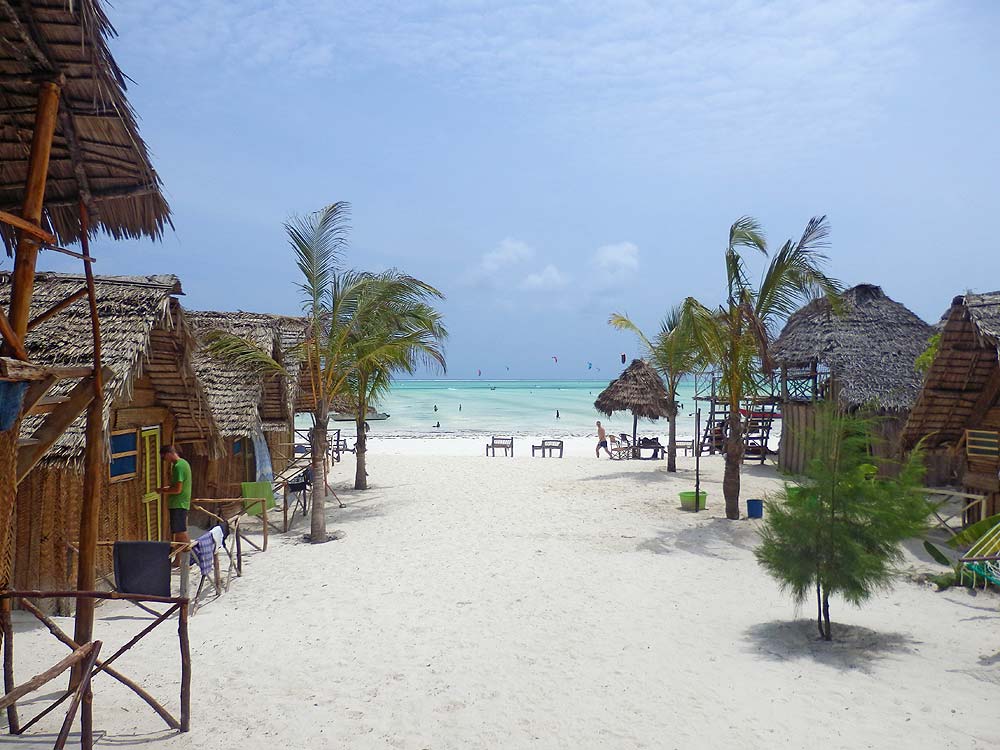
Since 1999, I have travelled to around 100 kitespots worldwide. I rarely write something like this, but it’s important for Zanzibar/Paje, because nobody writes it: this spot seems like paradise at first. But it is a huge disappointment. Too little and unreliable wind. A jellyfish invasion every few days, worse than anything I’ve experienced before. Kite instructors ignoring the dangers. Apart from some of the food, practically all prices are quite overpriced. The standard of living is far below Thailand, the Philippines or Vietnam, but the prices for accommodation are easily three times as high. The service is non-existent to poor almost everywhere. Electricity and running water often fail. The internet is rather temporary, almost perma-offline. Apart from Stonetown, the entire island has practically no culture to offer apart from reggae, shitty weed and Ami-ShitHop – and the landscape is extremely monotonous in large parts.
Save yourselves Zanzibar! Biggest disappointment for many years, countries and kite spots.


 Frank Woelky, born in 1973. Kitesurfer since 1998. Since 2006, I have been combining kitesurfing and web design on trips lasting several months off the beaten track.