

After five weeks of long stays, the pace of travelling is now changing. We are travelling by car for three weeks from Fortaleza to the wild west of Brazil with Ian, a Dutchman from England. From now on, we’ll be riding different kite spots every day. Our first stop is Lagoinha, a good hour west of Cumbuco.
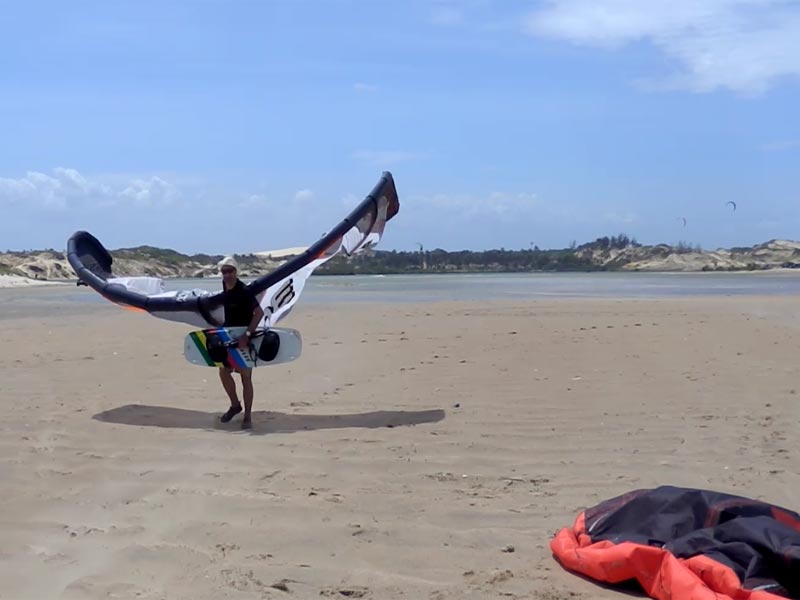
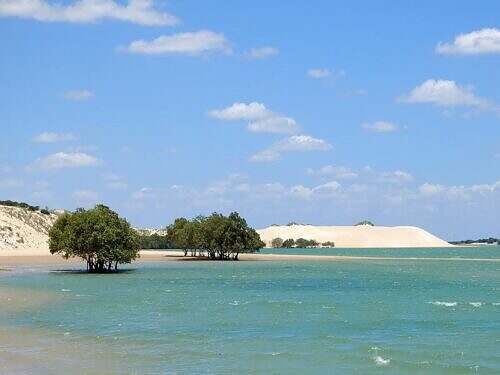
The sticker on the windscreen prohibits driving on unpaved roads. It says nothing about beaches. So the next morning we drive a few kilometres downwind to the lagoon with good people from home. It’s not much bigger than the Tabuba pond off Cumbuco, but is surrounded by palm trees and dunes like an oasis behind the beach. The wind is too good, nobody has time for photos or films.
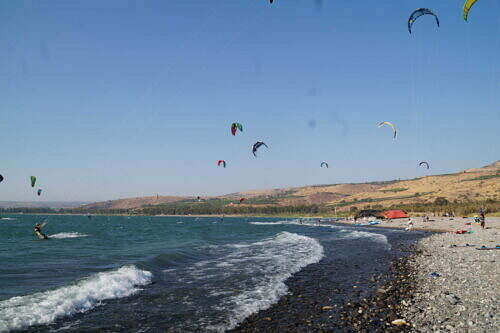
A few kiters do their laps in the shallow, clear water. At lunchtime it gets a bit crowded with a maximum of ten kiters, but everything is still cosy. The hangtime hangs on the second hand, and thanks to the flat water and strong wind, the landings are usually successful. In the afternoon, we head back to Lagoinha, refuel at the Kitepoint restaurant and then go out again directly in the bay. The clean breaking waves attract a few surfers. In between, we jump in just under 20 knots with 12 and 13m². Motto of the day: “Control is nothing without power”. I honour jumps over five metres with majestic ass bombs. In other places, surfers kill kiters for beachcombing. Here I have a crash right in front of a surfer who is riding a big wave. I apologise, he gets out of the way: “De nada!”. Very peaceful place.
The next day we drive 45 kilometres back to Paracuru. The first police checkpoint is fun. After we confess to the first paramilitary officer that we don’t have any waterproof papers, he calls a second one with his finger on the trigger. He orders us to drive on. Only people with ID or a driving licence seem to be suspicious. The second check is much stricter. They are desperately looking for the gun of the policeman who shot the local drug dealer from Cumbuco eight times a few days ago. A kiss is happily given, and police officers search for police weapons as intensively as a Muslim virgin searches for horny Indians. Drive on!
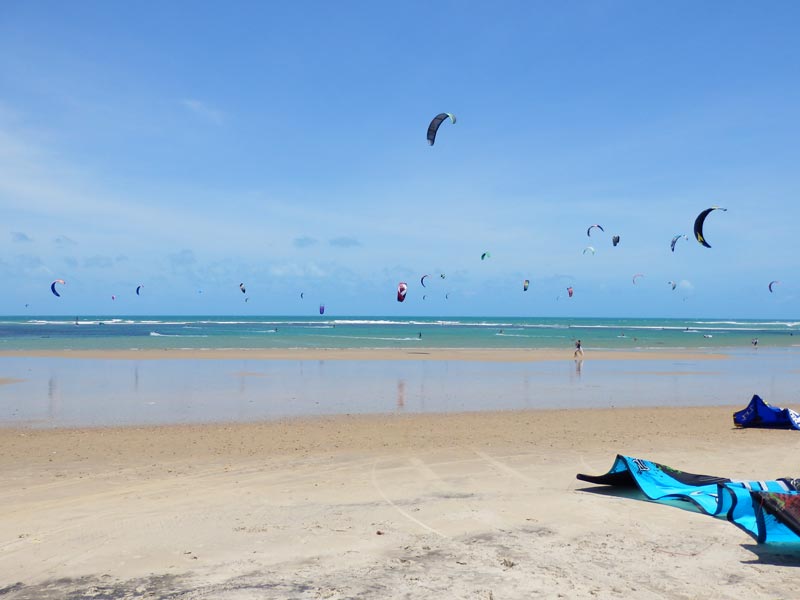
At the remote beach of Quebramar, high waves break wonderfully cleanly over a not too low reef. In front of it, up to 50 kiters cruise at low tide in shallow water interspersed with a few dangerous rocks. Space is different, but Ian, in his capacity as a voluntary resident of the European country with the highest population density, complains about a lack of space and a kite launch. I flee to the open sea. In the middle of them, 300 metres from the shore, the waves suddenly look completely different.
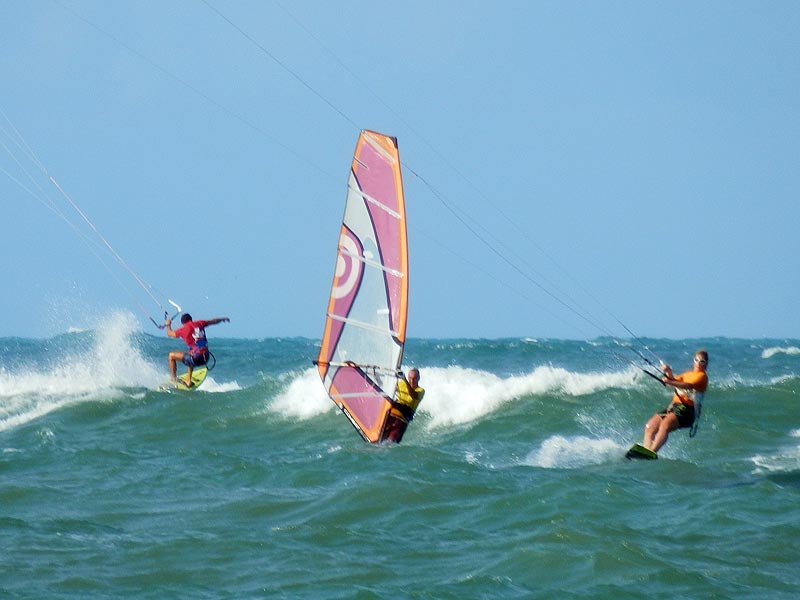
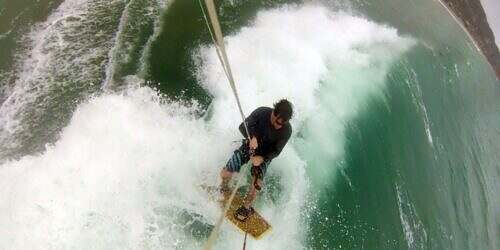
Up to 2.5 metres seem more than just threatening to me Bavarian flat-water kiter. But I get through the rough break. Again and again, sometimes with a spin wash, sometimes flung vertically upwards by monsters – without any kite or edge use. With some waves, the only thing that helps is to turn round – turn round really quickly. The white above your head changes your hearing. My tinnitus dies in the roar of the breakers behind me and then gives way to the hissing of the airstream as I speed downhill towards the flat water. Seconds stretch into endless peaceful expanses in the blue of the ocean. I have never liked waves. This day was a religious enlightenment.

 Frank Woelky, born in 1973. Kitesurfer since 1998. Since 2006, I have been combining kitesurfing and web design on trips lasting several months off the beaten track.