

I’ve been wanting to test the Way Portal kiteboard fins for ages. At €189.00 for four or €119.00 for two, they’re certainly pricey. Find out in this review whether they deliver the extra performance you’re looking for and are really worth the money. I’ve been kitesurfing since 1999. I ride exclusively a 140cm freestyle twintip and love to jump high. 100kg, 52 years old, preferably on a 10m Core XR in 25–28 knots.
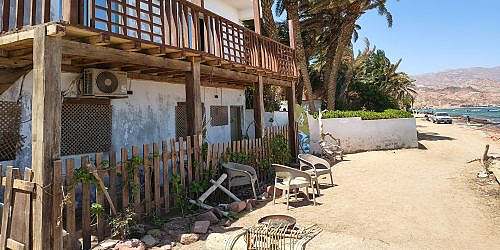
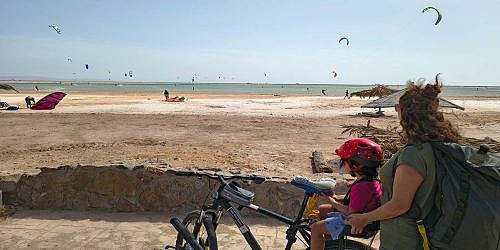
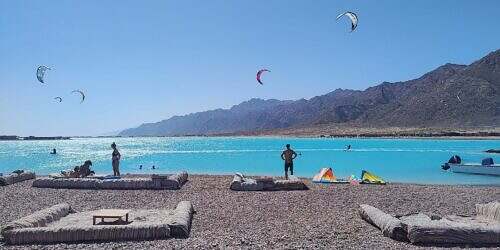
My test location is the Dahab lagoon in the Sinai, with its fairly shallow water. In October 2025, I had consistent winds of 18 to 28 knots here on 27 out of 30 days. From mid-March 2026, the heaviest rainfall in years hit Egypt. It hailed in Cairo. Gigantic sandstorms raged across Egypt, and violent flash floods rushed down many wadis. It snowed on Mount Moses. Yet this spring, kiteable wind blew on only eight out of 28 days in Dahab.
The construction of the Way Portal kiteboard fins:
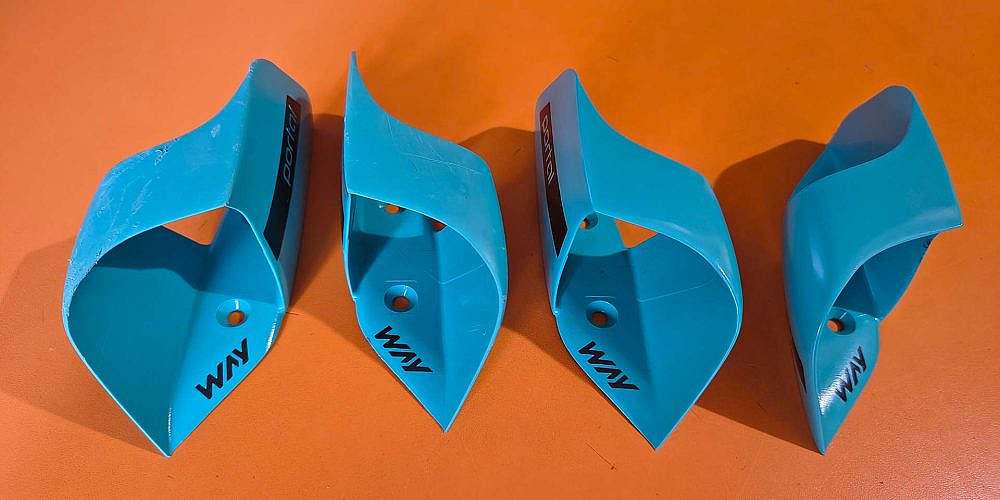
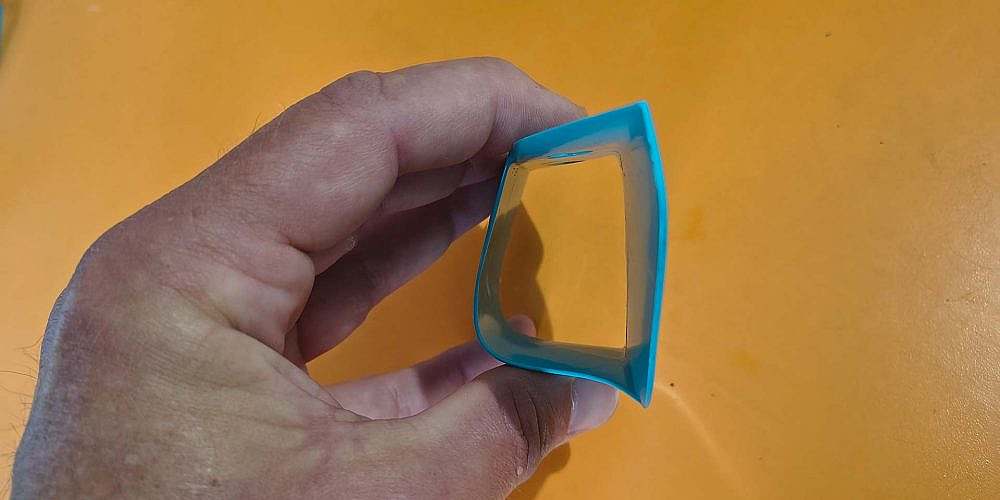
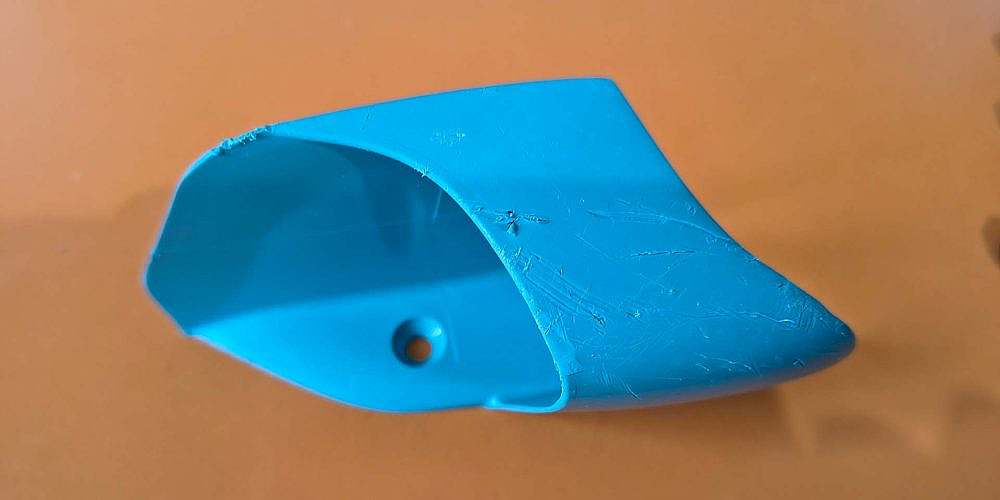
At first glance, the Way Portal kiteboard fins appear extremely thin, almost fragile. With a thickness of less than 50% that of conventional epoxy resin fins, I was genuinely worried about hard impacts with the ground. The fins are made from the same material as kayak paddles, namely Grilamid TR90 UV from the Swiss company EMS. Although it is significantly more expensive, it is also more flexible and impact-resistant than conventional cheap plastics such as ABS or PP. The flex is designed to improve the smoothness of the kiteboard’s ride. The high impact resistance means that the fins do not break immediately upon harder impacts – as is the case with many harder plastics. However, Grilamid is also significantly less scratch-resistant than, for example, epoxy resin fins.
Manufacture:
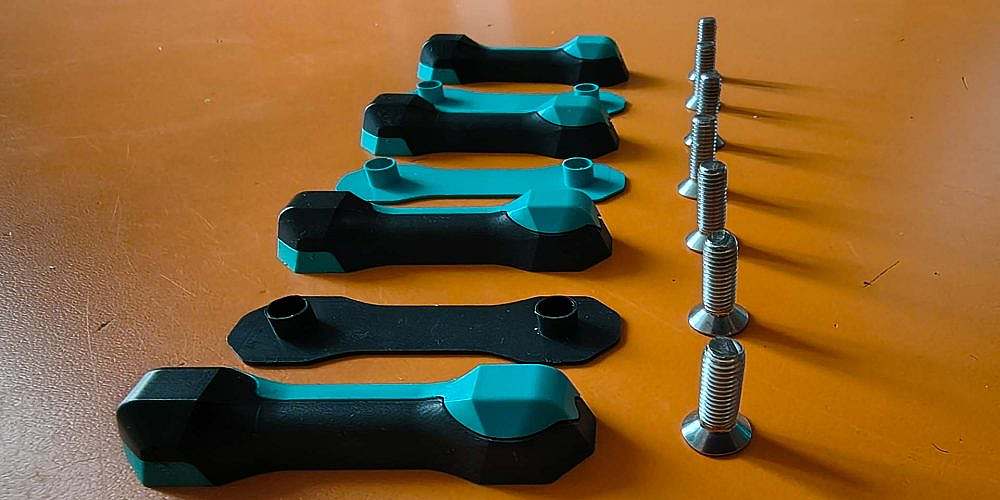
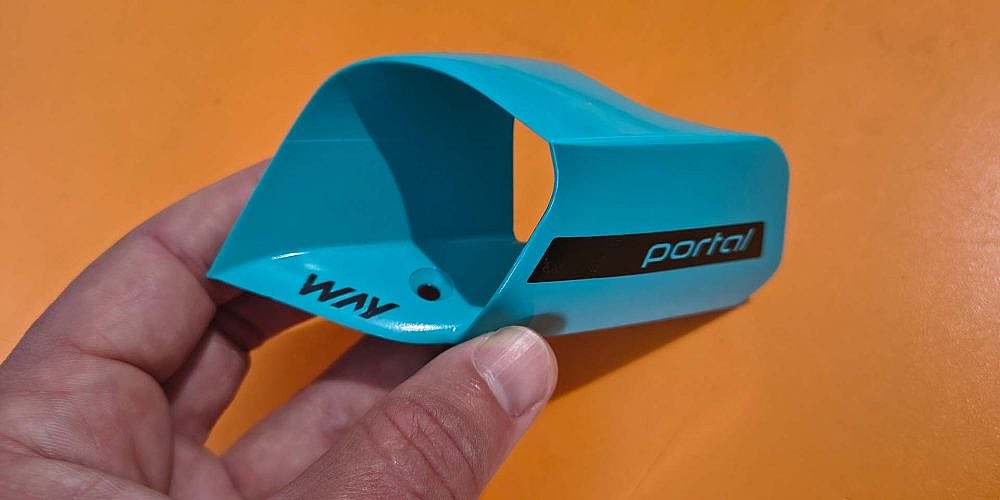
The Way Portal kiteboard fins are actually two fins offset longitudinally, connected to each other in the form of a tube. The so-called Box-Wing concept is inspired by Moto GP racing motorbikes and ensures efficient utilisation of the wing surfaces. Thanks to the inverted screw connection from bottom to top, the individual wings can be freely designed. You can find more information on the manufacturer’s website. The inner fin stands at a 90° angle to the board, just like classic kiteboard fins. The magic apparently comes mainly from the outer fin. This is angled 12° outwards. The Way Portal kiteboard fins are developed and manufactured entirely in Austria.
Packaging:
I’m a web designer. I love good product design. The packaging for the Way Portal kiteboard fins is simple, eco-friendly and really well designed. It also makes for an excellent Tetris-style puzzle. It seriously took me nearly 10 minutes to stack the fins back into the tin box. Even longer in my slightly sturdier travel box.
Riding characteristics – manoeuvrability:
When I compare my unchannelled splitboard with a channelled big air board like the Naish Monarch, I definitely notice a difference in how easily it turns. Channels tend to run on rails. Flat boards turn more easily. I wouldn’t go so far as to say, like a few testers of my splitboard, that it rides “like on black ice”. But there is a noticeable difference. With the Way Portal fins fitted to my split kiteboard, the straight-line stability is slightly better, but at the same time I really don’t notice any difference in manoeuvrability, such as quickly luffing up for a transition.
Riding characteristics – light wind:
In moderate light winds (140cm board, 16–18 knots), you notice a significant improvement in upwind performance with the Way Portal kiteboard fins. Especially on my channel-free split kiteboard. In extremely light winds of around 15 knots and below, the effect is increasingly lost with a less raked kiteboard. In light winds, I couldn’t detect any difference in smoothness of ride.
Jumping:
Logic suggests that with an edged-in board, such as before take-off or when cruising with power, the 12° outward-angled fin should provide more grip. Is that really the case?
Handling of the Way Portal kiteboard fins in moderate winds:
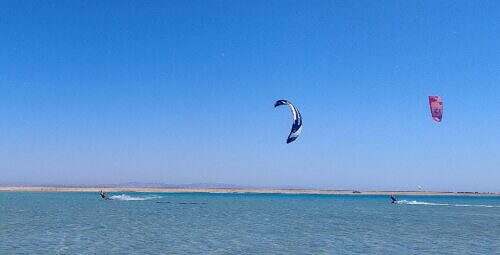
In lovely 24-knot sweet spot conditions, I head to the shallow water lab at Baby Bay. In moderate winds, I feel slightly more grip thanks to the Way Portal kiteboard fins. I hadn’t yet reached a distance of just under nine metres at this spot with ‘normal’ fins in similar wind conditions. Especially in slightly choppy water, the flex of the fins seems to improve smoothness. If you look back at the wake left by the fins in the water, the extremely thin wake is striking.
Handling of the Way Portal kiteboard fins in strong winds:
On a single day, I recorded winds of 26 to 35 knots here. My Egyptian mate Nessal quips, “You’re slightly overpowered on the XR 10.” I’d rather say “pretty much ‘King Of The Air’ overpowered”. Yet I’m the little prince at best. Even when heavily overpowered, the Way Portal kiteboard fins provide a good deal more grip. The choppier the water, the greater the difference in perceived smoothness.
In storms like today’s, there’s no room for error. Every little mistake ends in a violent crash. I treat myself to a few pressure refuelling manoeuvres. In my two hours on the water, I rarely manage to get the edge in properly. I also land just a few cautious jumps of around five metres. I honestly have a lot of respect for storms like this.
Way Portal Kiteboard Fins Big Air:
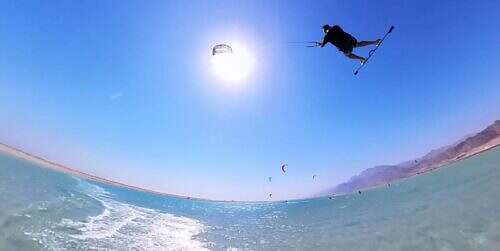
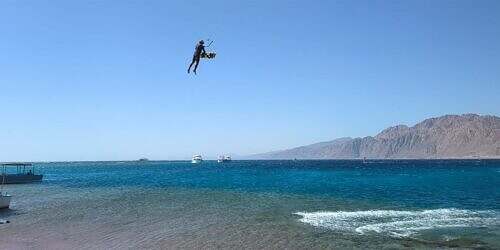
After half an hour, I suddenly go into tunnel vision. Everything is in slow motion. I fix my gaze on a few metres of flat water amidst the chop. I edge in hard – and finally get it right. A gust hits the kite. I know: this jump is going to be high. Take-off. Almost ten seconds long. Surfr gives me the highest jump of my life at 13.1 m. The main reason was certainly the storm. But the Way Portal Kiteboard fins also played a nice part in it.
It took me five years to beat my old record of 10.7 m (with a reef wave ramp and the good old jumping leg). That jump was in flat water. I’ve managed seven to ten metres every now and then in good conditions. But never more than that.
Criticisms of Way Portal fins:
Couldn’t the fins be made from epoxy resin after all? They would certainly have to be a bit thicker and therefore heavier. But they wouldn’t immediately get deep scratches in the plastic from contact with rocks or coral on the seabed. Unfortunately, my Way Portal kiteboard fins now have these, despite all my care.
Way Portal Kiteboard Fins Test – my conclusion:
Is the extra smoothness and grip really worth €189.00 for four or €119.00 for two Way Portal fins? I’ve only ever had two fitted on the backside. And I’m pretty sure: they’ve played a fair part in my new record. Try them out for yourself. I give a clear recommendation to buy them to anyone who hasn’t managed to reach heights of at least seven metres for a long time. For jump beginners and anything under five metres, it’s certainly better to work on your own jumping technique.











 Frank Woelky, born in 1973. Kitesurfer since 1998. Since 2006, I have been combining kitesurfing and web design on trips lasting several months off the beaten track.