

Despite having plenty of travelling experience in the Philippines, it takes me a full eight days to cover the 150 km from Mindoro to Cuyo as the crow flies. Only four of these are due to the typhoon. It’s true that Cuyo is more difficult to reach than the hotspots. But when I read on Facebook how many destinations some travellers want to tick off in such a short time, I can only advise one thing: plan wisely![Travel tips Philippines]
I sit out Typhoon Tisoy alone for four days in San Jose. The ferry to Coron is stuck on the wrong side for at least another four days. Minivan back to Bulalacao via the mountain road that has just been cleared of half a metre of tree trunks. The next morning, a five-hour journey on the now very slow FastCat to Caticlan.
The minivans there try to double the fare because of kite luggage. So just under six hours on the comfortable Ceres bus to Iloilo. Call Montenegro Shipping twice in two days. Each time they confirm that the ferry to Cuyo departs on Saturday morning. The ticket office at the harbour is closed. Everyone says something different. I have a bad feeling.
After 36 hours in Iloilo we are back at the harbour. Ferry? Easter bunny! Again, everyone says something different. After two hours, a Montenegro sailor finally says: “The day after tomorrow”. Do I believe him? No. Tip for you: only the local Montenegro Office Iloilo 63 910 2855 130 knows the real departure times. Allegedly. The main office on the homepage generally doesn’t know what toot and blow. Milagrosa right next door is more reliable and actually offers another ferry leaving a day and a half later.
Travel tips Philippines: Itinerary Google Maps and Rome2Rio are always a good start. I only use Google Maps for orientation and to find the first hotels. Not all of them are listed there. You can find more via Facebook and by asking around. You can usually easily add 50% to the journey times given in Google Maps. In the greater Manila area due to chronic traffic jams and in the north of Luzon due to bad roads and storm damage. On all other islands simply because the roads are nowhere near what Google considers possible.
Google estimates a good four hours for the well-developed route from Puerto Princesa to El Nido. Realistically, it takes five and a half hours in a fast minivan and around seven to eight hours by bus. Rome2Rio also knows a surprising number of smaller ferry connections. You should ALWAYS call the local operator’s office for current departure times. For navigation on the road, I recommend downloading the HEREmaps app. Then download the map of the Philippines (currently 500MB) and switch the app to offline mode. This way you always know where you are, even in a dead zone.
Travel tips Philippines: Bus or minivan? Buses in the Philippines generally stop wherever someone raises their hand. They therefore usually take between 20 and 40% longer to cover the same distance. However, unlike the minivans, which are usually crammed to the last seat and sometimes speed badly, buses offer significantly more space and often have tilting backrests. They also rarely charge extra for luggage. Buses are slightly cheaper than minivans. The only disadvantage is that there have been several reports of armed robberies on buses. In general, however, the Philippines are very safe and the inhabitants are honourable. Nevertheless, you should always carry a wallet with a maximum of 2,000 pesos on your person and hide the really important things in your hand luggage or hotel. You usually pay around €6 for a 5-hour bus journey and around €7 to €9 for a 5-hour minibus journey. Only in a few and mostly hopelessly overcrowded places (El Nido > Nacpan: 25 min minivan 9€) do these prices rise considerably.
Travel tips Philippines: The best way to finddomestic flights in the Philippines is via skyscanner.de. As almost all of the fares on offer only include hand luggage, you can usually get away cheaper if you only search for the best prices on Skyscanner and then book directly with the airlines, such as Cebu Pacific or AirAisia. Flights usually cost between €40 (from/to Manila) and €150 (more distant destinations).
20kg of luggage currently costs around €8. With many ticket portals, you can either not book luggage at all – or pay significantly more. Pay close attention to the maximum sizes and weights, especially with Cebu Pacific they check very carefully! Swift Air flies with small turboprop planes (and usually a maximum of 10kg luggage) to more distant small destinations such as Coron, El Nido or Cuyo. Prices start from around €90.
Travel tips Philippines: Ferries are by far my favourite way to travel in the Philippines. You always meet nice locals. With a few exceptions (Montenegro El Nido > Coron €36), the prices are very low. You can expect to pay around €10 for a five-hour boat trip. 2GO and Starlines are the largest ships and are in very good condition. They often offer cosy berths and a simple restaurant. Smaller ships or the fast new FastCats only have seats.
Some of the more remote islands, such as Cuyo, are only served by really old ferries like Milagrosa or Montenegro – both with sunbeds. They are in much worse condition and a bit scary on the first visit. Nevertheless, I’m not worried about safety, because even though the Sulu Sea between Palawan and Panay often has heavy seas, the Philippine harbour authority reliably closes all ports when a typhoon or even just a cyclone is approaching. On the Sulu Sea, I advise everyone who is not 100% seaworthy to take an anti-nausea medication with them – the stronger the better. Take it in good time!
Travel tips Philippines: Taxis can generally only be found in larger cities with a population of around 30,000 or more. They usually have taxi meters and therefore regulated fares. Make sure that the taximeter is running – or negotiate a price beforehand! At the end of the journey, every driver will otherwise charge considerably more.
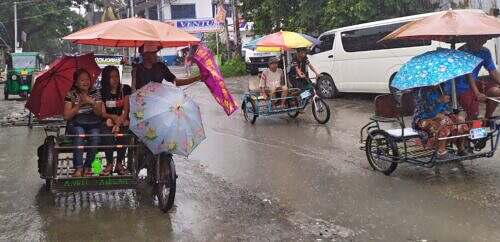
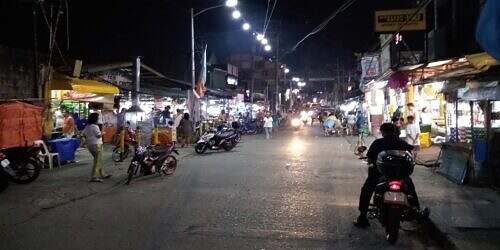
Travelling tips Philippines: Trikes In smaller towns and in the countryside, the trike is often the only choice. The prices in cities are quite well regulated and are displayed on the trike (usually 15 to 30 cents per kilometre and person). Then there are also few rip-offs. If no price list is displayed, then the trikero does not usually have a licence. You can still ride with him. But you should definitely ask a local beforehand what the right price is – and have it confirmed before you set off.
There are generally no fixed prices in the countryside; you always have to ask others and then bargain. The price fluctuations are also significantly higher here. Sometimes a trike will take you through heavy rain and mud over 40 kilometres of mountain roads for around €8. In other places, trikeros like to ask for prices that are five times higher.
Travel tips Philippines: Jeepneys are the slowest but most iconic means of transport. Unfortunately, the old jeeps extended in the centre are slowly dying out. They travel fixed routes, are usually fully loaded and cost next to nothing. You should definitely have done it once! On small islands you can still sit on the roof from time to time, but generally not in cities.
Travel tips Philippines: The best way to findhotels is via Google Maps, Booking.com and Airbnb. Almost all of them also accept telephone bookings. The prices on site are usually around 10 to 30% lower than those on Booking – with very few exceptions. If an accommodation describes itself as “simple”, then it is. Simple often means: fan in the shower and toilet flushing from the bucket. Pictures of slightly better hotels often differ quite a bit from the actual room.
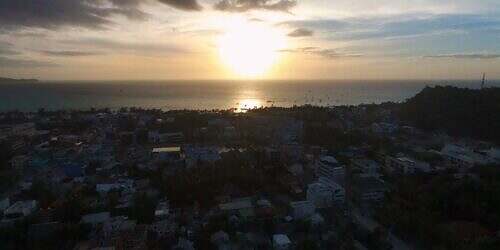
Travel tips Philippines: travel destinations My most important point comes at the end. The Philippines is my absolute favourite travel destination of the 100 I have visited. The Filipinos are by far the friendliest and most sincere people in the world. But we travellers threaten to ruin that, at least in some tourist hotspots (Boracay, El Nido).
Too many people are coming to too few and mostly completely over-hyped places. Prices are rising drastically. The otherwise modest locals then become very greedy and sometimes rude. We mess them up. The environment also suffers from too many travellers in one place. Almost all the corals around El Nido have been trampled to death. When Duterte described Boracay as a cesspit in 2018, I could only agree with him.
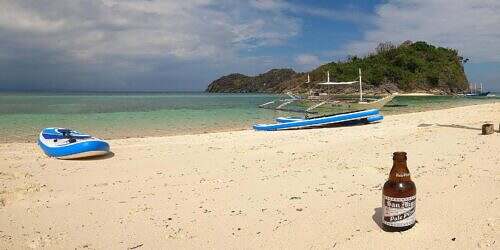
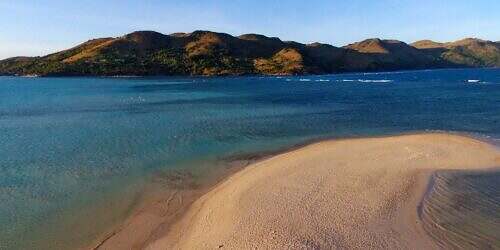
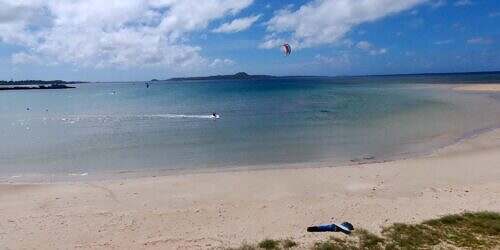
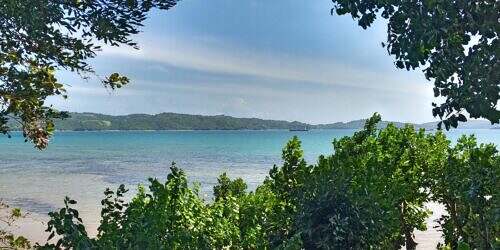
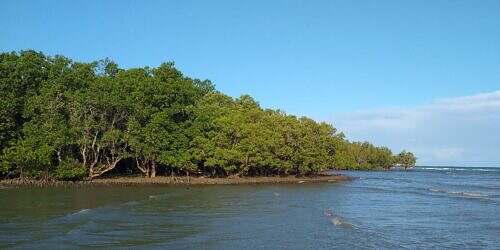
Travel tips Philippines: Find your own dream spots! The Philippines are a bit like New Zealand. No matter where you look, you’ll find wonderful new things around every corner. Sometimes there’s a plastic bottle Christmas tree in front of a poor little hut. Sometimes a lonely beach that nobody has ever heard of. Try it out! Yes, finding takes a little more time than knowing or asking. But it also makes your journey much more valuable.
Travel tips Philippines: How many islands? For me, the “real” Philippines are the quiet and often more remote places. The ones where not everyone is chasing after an online rat-catcher. Look for them! Find them! You help the country, nature and get more out of it. Even if you only have two weeks’ holiday: enjoy this wonderful country in peace! Reduce your goals. Because only then will you have truly experienced the Philippines.



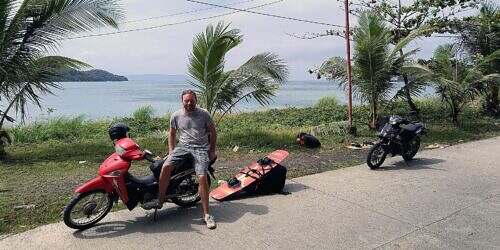



 Frank Woelky, born in 1973. Kitesurfer since 1998. Since 2006, I have been combining kitesurfing and web design on trips lasting several months off the beaten track.