

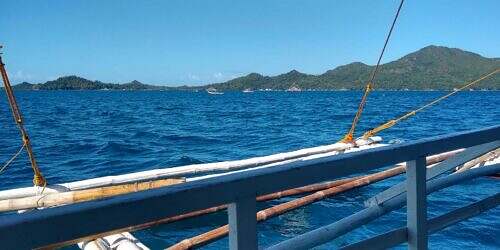
We meet a nice Kurd again, whom we had already met on Coron. He’s all about island hopping. He’s doing his third tour here within three days. We join him. The bangkas here are smaller and the engines are much quieter. The ecotourism levy seems to be making a difference. In a small group, we head a few kilometres out into the Bacuit Archipelago.
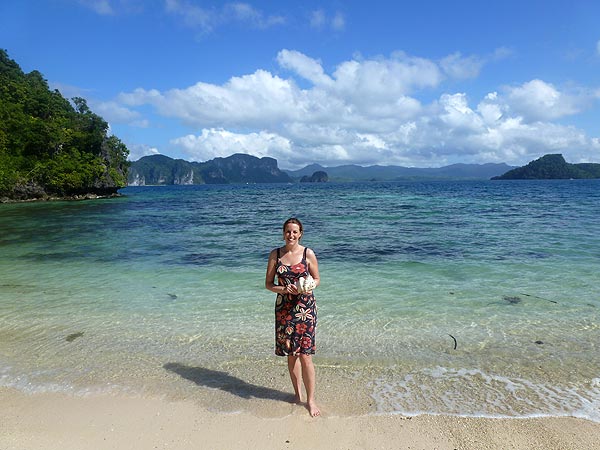
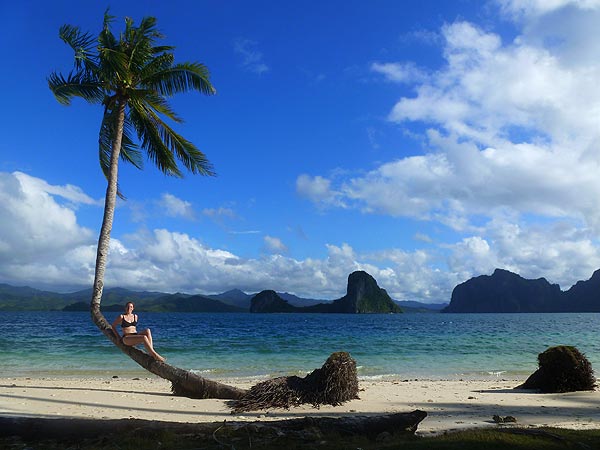
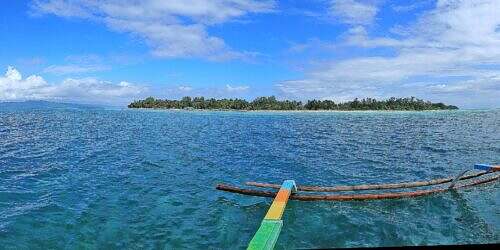
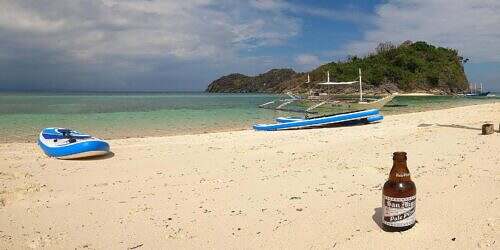
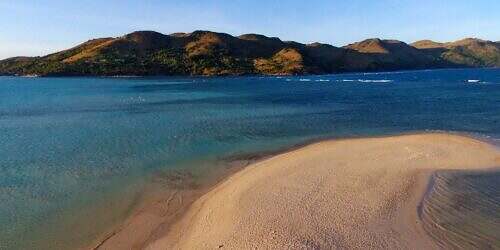
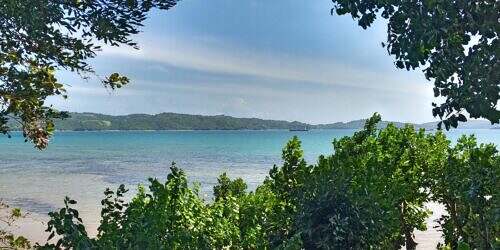
The islands are even smaller, steeper and more spectacular than in Coron. Although practically everything here is water, yesterday’s rain has added a lot of humidity to the air. Today the sun is really blazing and we’re cooking in the steam at 35°. The water here is almost perversely blue. Bright white sandy beaches catch the eye, green palm trees glow in 300 metre high cliffs. How many generations did it take to get up there?
Our guide is young and committed. He used to work in one of the two luxury resorts on the offshore islands. Now we’re anchored in front of the third, which is currently under construction. He tells us about the huge amount of unpaid overtime at the average Philippine wage – around 120 euros a month. I am anything but a socialist – but that makes me angry. The group that runs the luxury resorts makes a lot of money, an average of 180 euros per guest per night. Now they are building the next one for little money. Instead of adding a social component to “ecotourism” and endeavouring to build a community of islanders and fishing villages, they do just one thing: exploit. A few get rich and everyone else dies.
I could easily treat myself to a few nights in such a luxury resort. We had actually planned to do so at the end of our trip. But now I’ve lost the desire. I prefer to continue sleeping in cheap accommodation where the owners often work themselves. And give a good tip if I was satisfied.
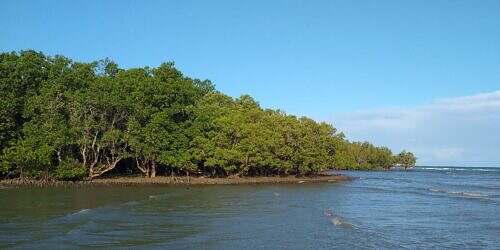
We snorkel through large shoals of cichlids. The corals glow like mad in all colours in this glorious weather. Visibility is easily ten metres. Up to the next island and a viewpoint. Bacuit is endless. Lunch in the white sand under the mangroves. Freshly grilled unicorn fish, squid, pork and, as always, rice and tropical fruit.
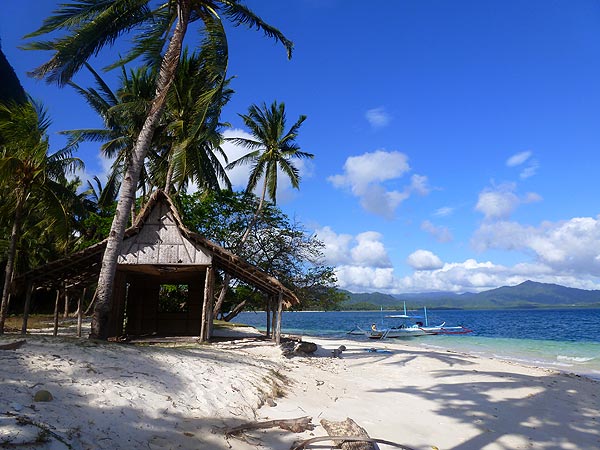
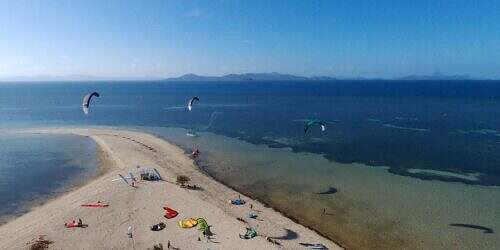
There are beaches here, far more than on Coron. They are often uninhabited, with small nipa huts on some of them. Some can be reached on one of the day tours and then picked up again a few days later. You can spend the night in tents or for relatively little money in some huts. Pure Robinson, but unfortunately no longer for us.
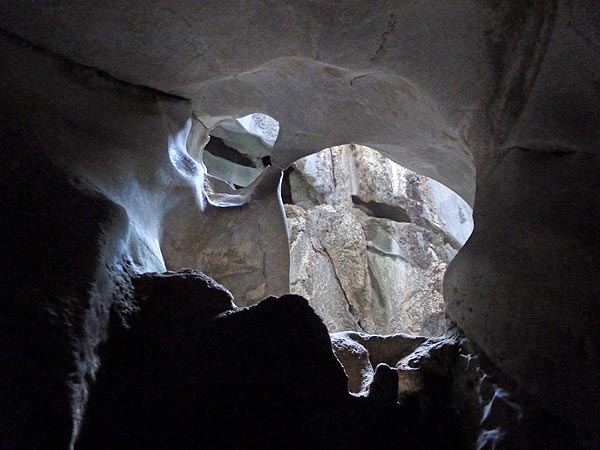
We squeeze through narrow karst rocks into a large cave. Bats startle us. All the places here start with “Secret”: Secret Beach, Secret Lagoon, Secret Cave A bit monotonous and incorrect. But it fits – because they all really look like that, even if there are three other Bangkas anchored in front of them.
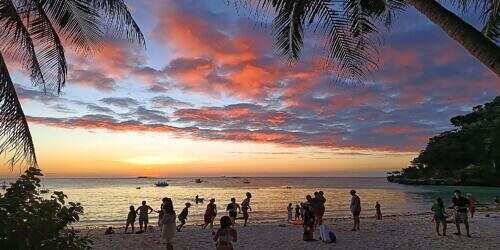
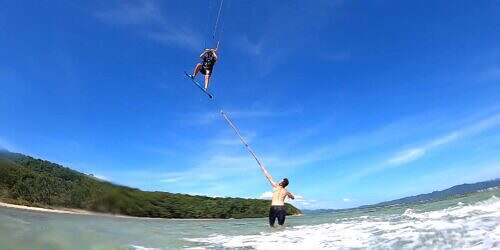
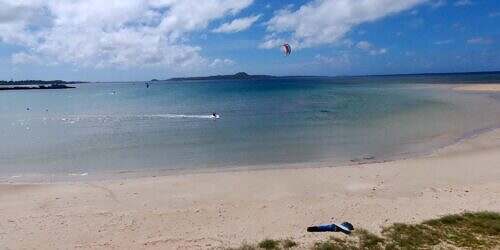
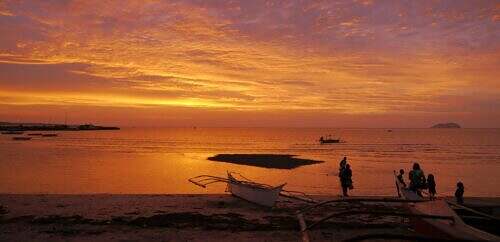
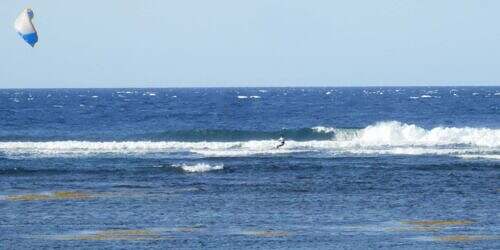
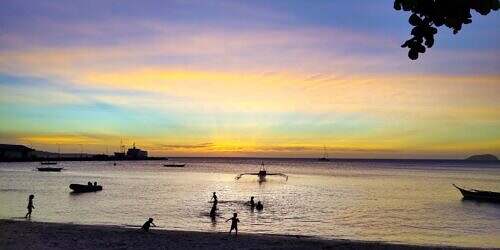
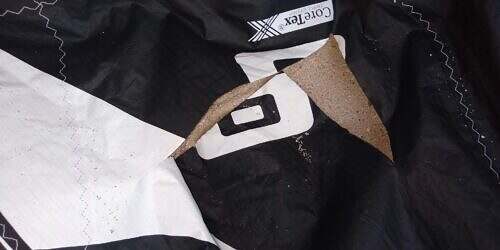
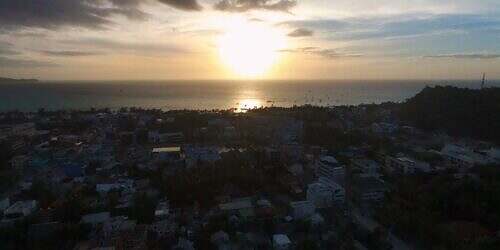
The last beach is pure paradise. On Pinabuyatan Island there is only a nipa hut, a few palm trees and a 200 metre high vertical cliff behind it. The Kurd climbs ten metres into the top of a palm tree and harvests coconuts. The sun slowly sets. The wind comes up. I immediately set up the kite. But as soon as I’m ready, so is the wind. The kite falls into the water. This would have been the kite spot of the century.
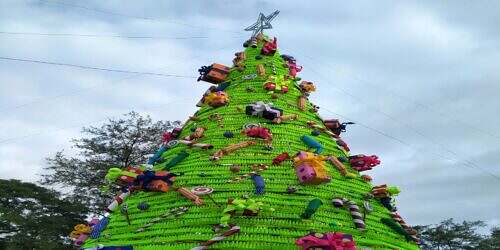
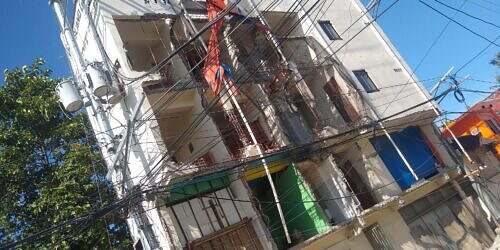
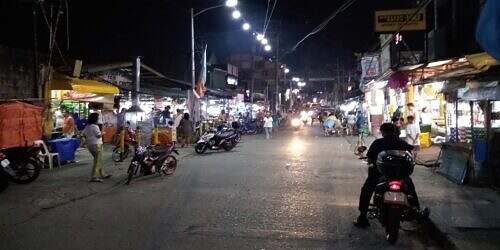
In the evening, the lights don’t come on anywhere in EL Nido. No power everywhere. We walk through the dark alleyways as pre-Christmas Father Christmases, glowing red with sunburn. There are candles everywhere in the shops and restaurants. No internet. My mobile phone brings it all online here.






 Frank Woelky, born in 1973. Kitesurfer since 1998. Since 2006, I have been combining kitesurfing and web design on trips lasting several months off the beaten track.