

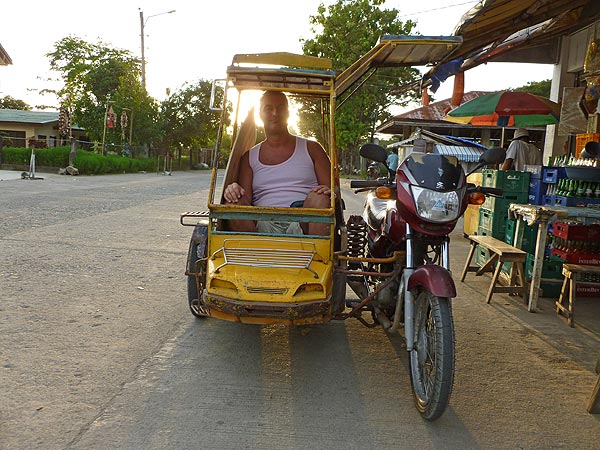
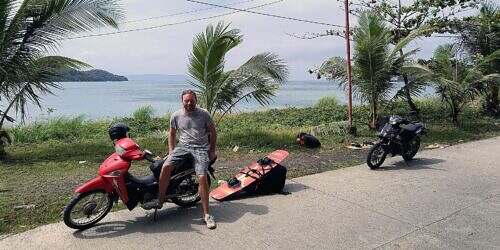
Filipinos love cockfighting. The English term “cock fight” is even more appropriate because it really is a comparison of cocks. Whoever stands the longest wins, and even Viagra doesn’t help the opponent. Today I’m unexpectedly supposed to see my first cock fight. I share a habal-habal with my mate Vanisi from Bologna and drive to the remote Sugar Beach.
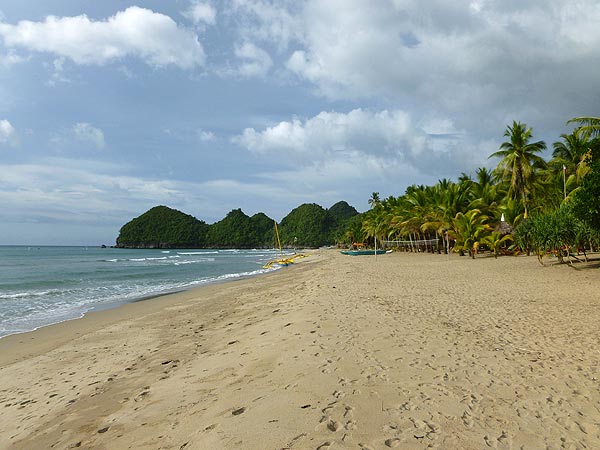
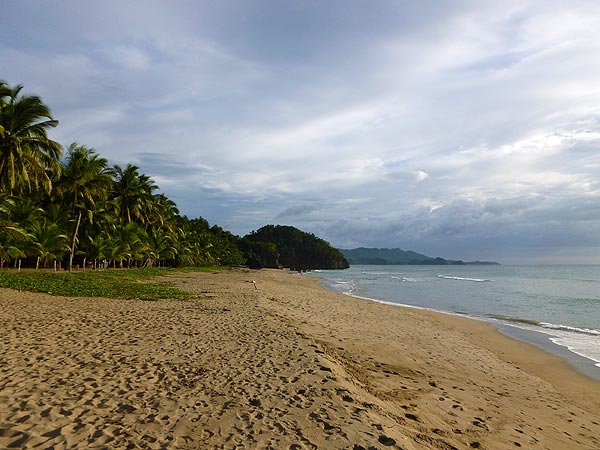
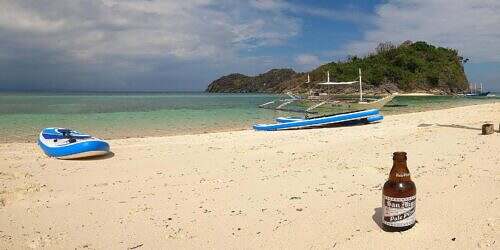
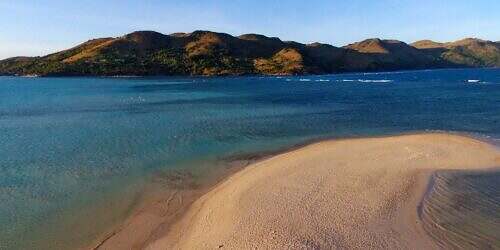
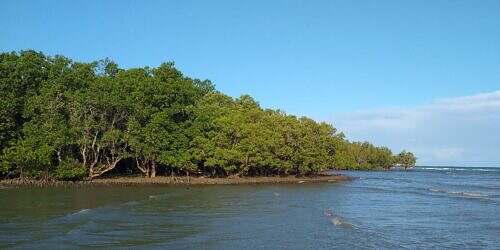
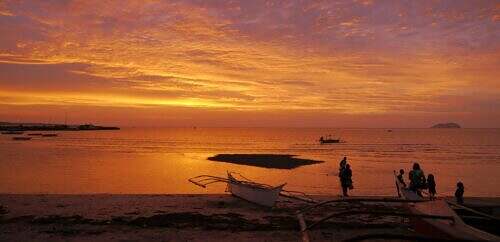
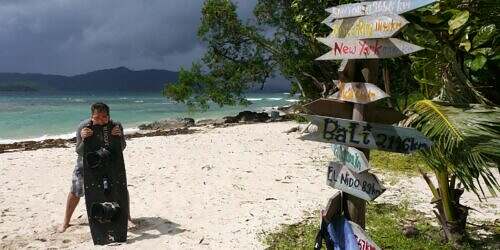
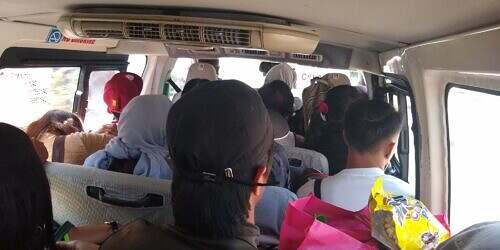
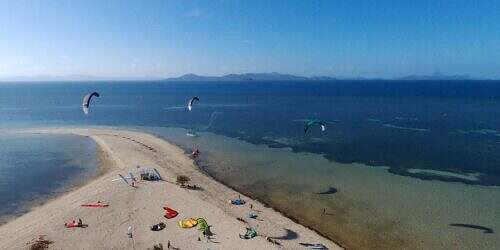
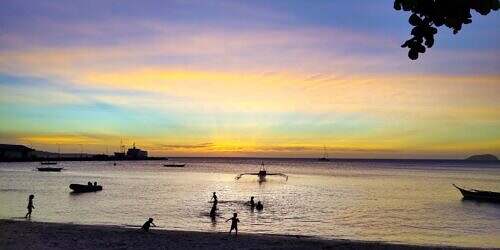
The journey to Sugar Beach is not easy. 15 kilometres of road from Sipalay, at the end of the dirt track you take a paddle boat across a tidal river, go through a village and onto the coastal cliffs to the next bay. Sugar Beach is said to be one of the most beautiful beaches in the Philippines. And it unexpectedly looks like one.
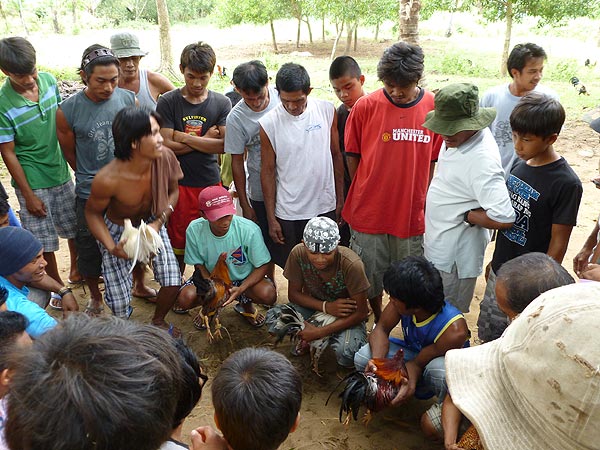
The beach is almost empty – no wonder, given the journey here. There are five small resorts on the beach, with a scattered village behind them. No cars, no roads, just footpaths. I march through rice fields in search of the cock-fight. The driver of the habal-habal picked up a proud cock-fight owner and told me about it. By the time I finally find the cock fight, the driver has already lost almost all his wages. 50 Filipinos are playing neck and neck on a remote farm. I’m the only foreigner. It could hardly be any more real.
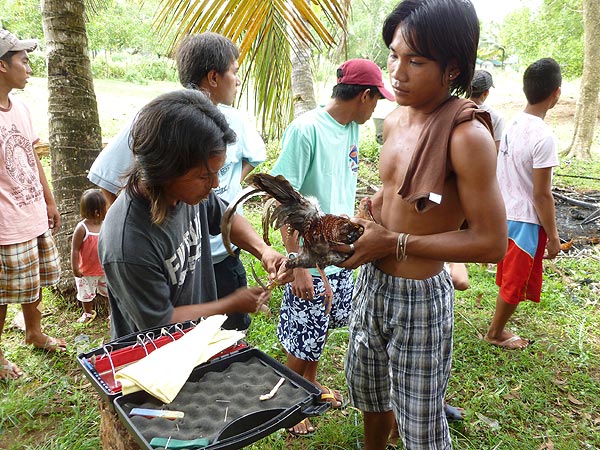
Cock fights are bloody, yes. But not as prolonged suffering as bullfights. Ten-centimetre-long razor-sharp blades are attached to the back of the fighting cocks’ right legs with string and tape. They are held briefly facing each other. They sharpen their claws and raise their feathers. A loud cry, then the owners release the fighting cocks.
Everyone stands in a circle around the cockerels. After a brief threat, they attack each other. The attacks are incredibly fast. The whole ring of spectators follows the roosters’ movements. Everyone has respect for the knives. After just one minute and four attacks, the fight is over. One rooster is hit and dies within a few minutes. I go back to the beach.
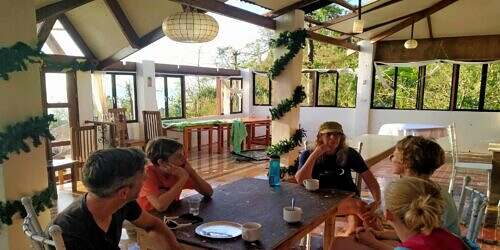
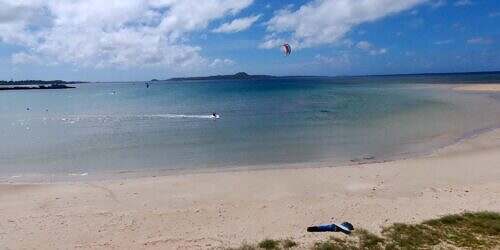
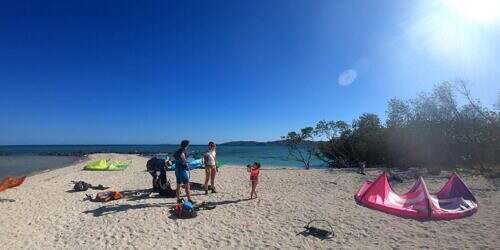
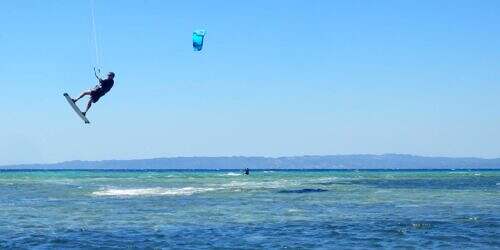
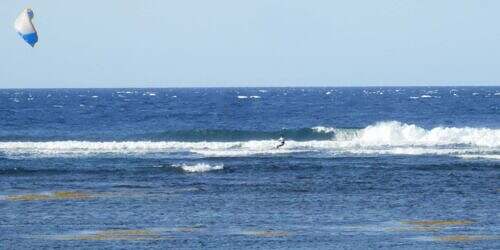
The name of Takatuka Lodge on Sugar Beach says it all. A creative explosion of the craziest ideas. Clocks on the ceiling, hairdryers as light switches, a column of calculators, colourful tables and deckchairs, slanted windows, cave rooms. Even the food could have been invented by Pipi Longstocking. We lie on the empty beach all day. My kite is with me, but the wind isn’t strong enough again.
In the evening, my two Bretons from Siquijor are suddenly at the artistic diving centre. They find it strange to have survived the typhoon together and then meet up again safe and sound. Last supper together, another good rum and then blogging off to sleep…






 Frank Woelky, born in 1973. Kitesurfer since 1998. Since 2006, I have been combining kitesurfing and web design on trips lasting several months off the beaten track.