

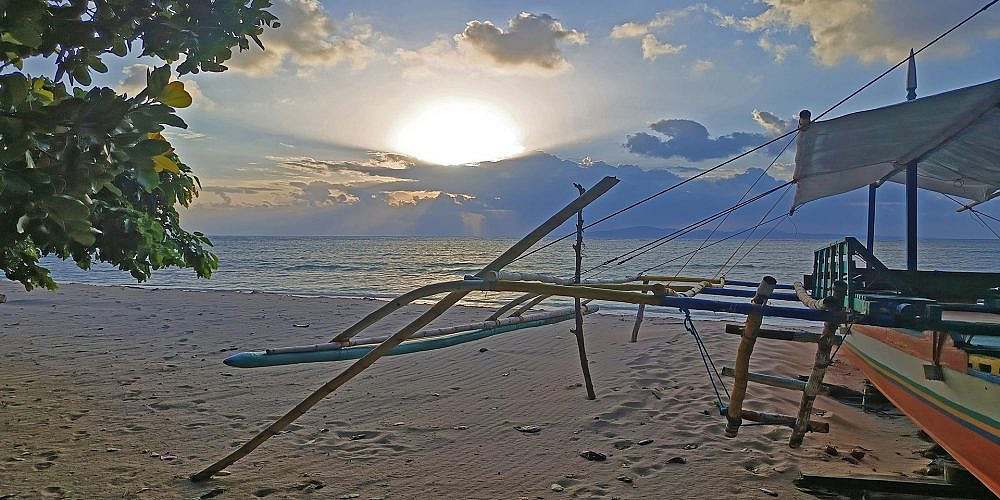
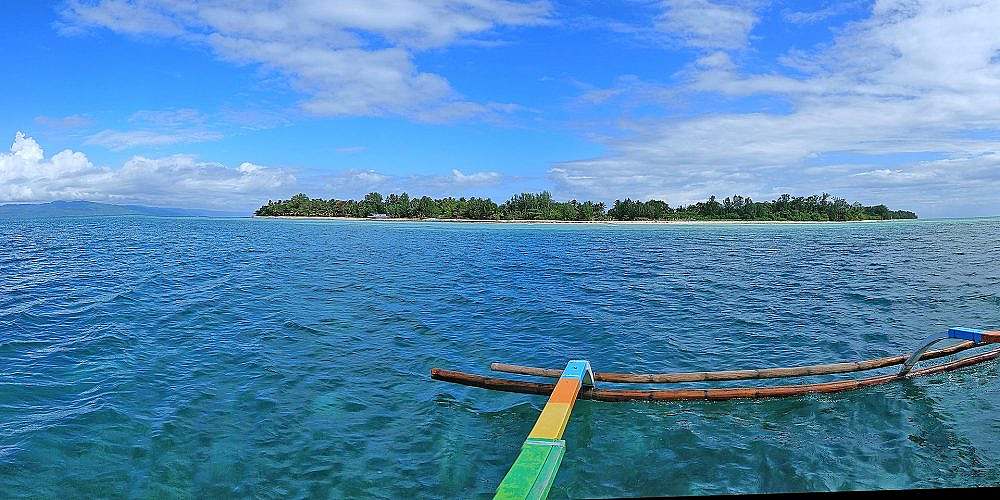
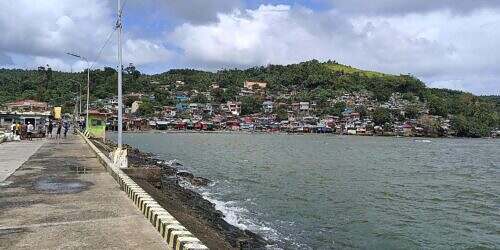
Even after 12 years and several long trips to the Philippines, there are still new magical kite spots for me. Only a few Filipino kiters know about Cagbalete. The small island has perhaps 500 inhabitants. Electricity only comes from the generator in the evenings. The internet dribbles and the shower is usually a bucket with a ladle – when there is water. Luxury is a long way off here – and life is simple and genuine.
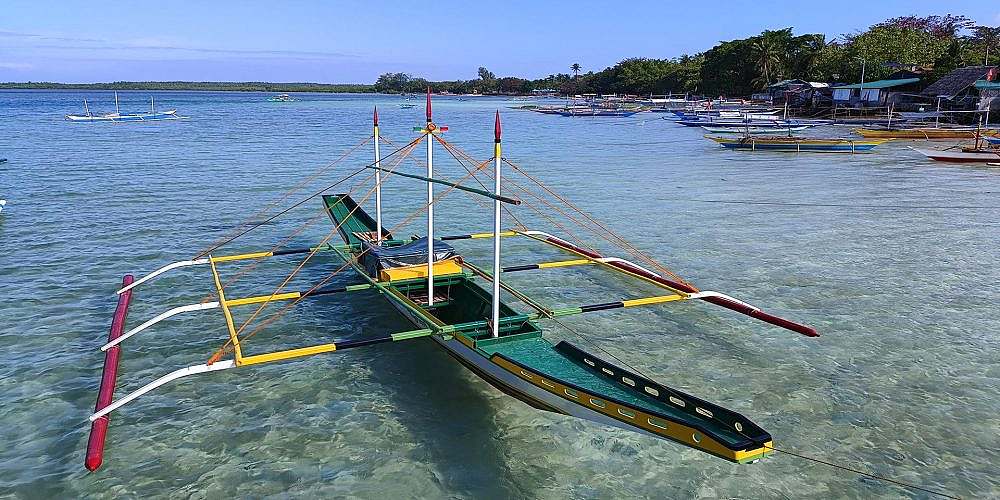
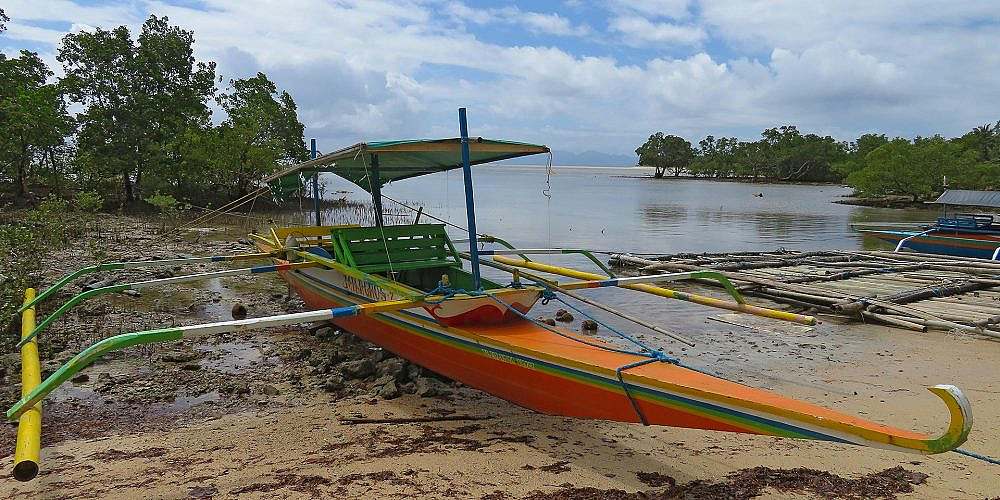
As everything really is brought in from the mainland by bankas, the small island is quite expensive. A few years ago, we got a deluxe beachfront bungalow in El Nido for €30, which probably no longer exists. Here, for the same amount of money, we initially only got a tiny, simple nipa hut that only fits two mattresses and our luggage.
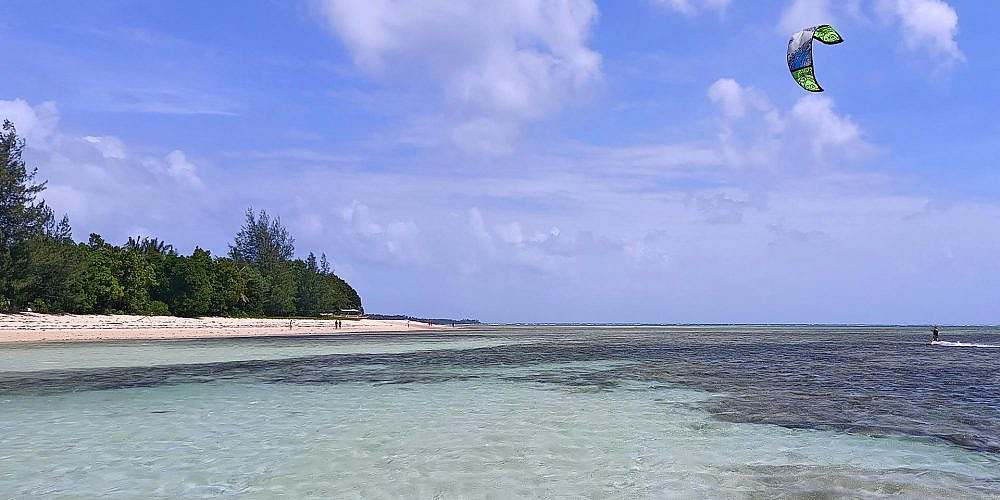
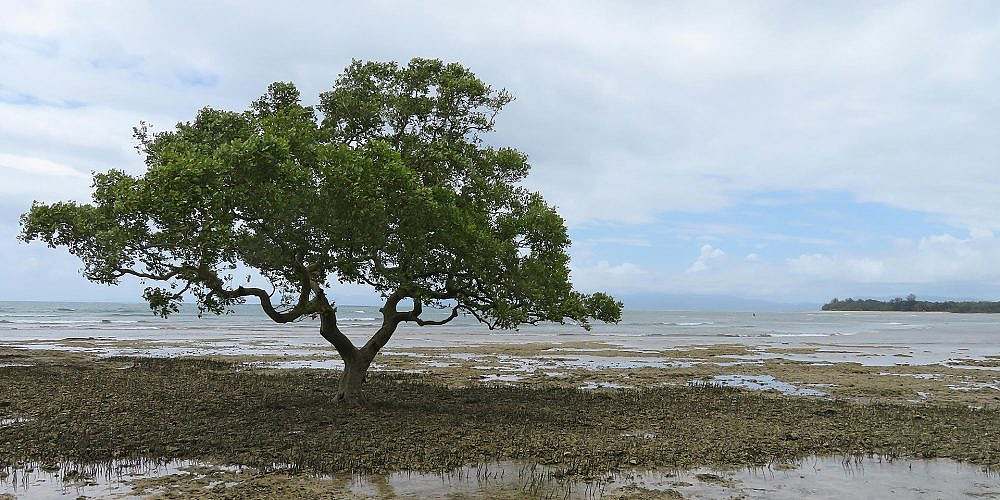
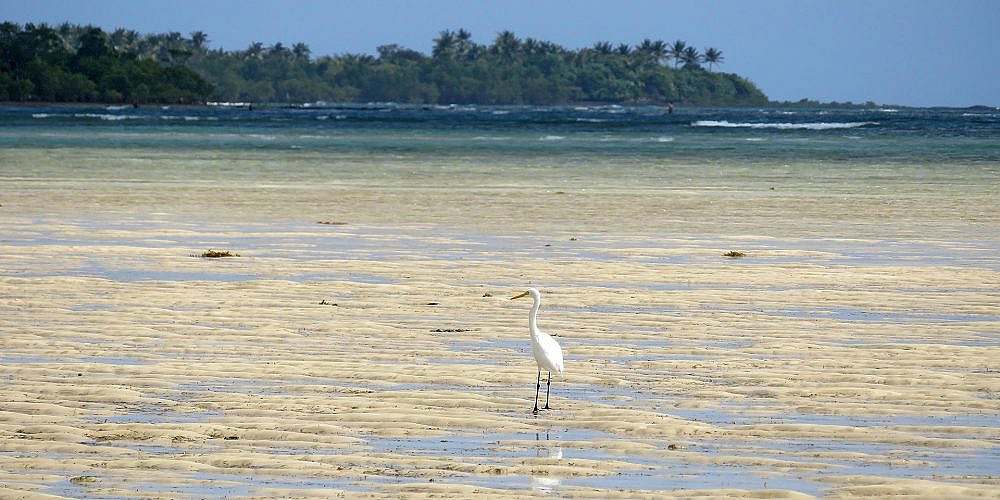
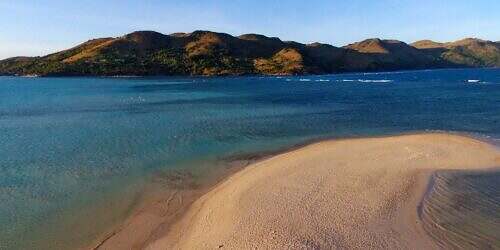
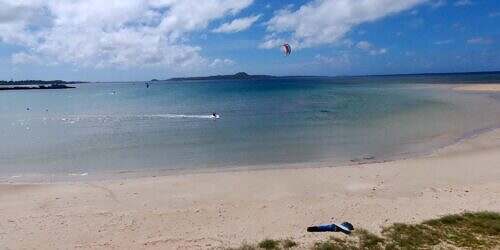
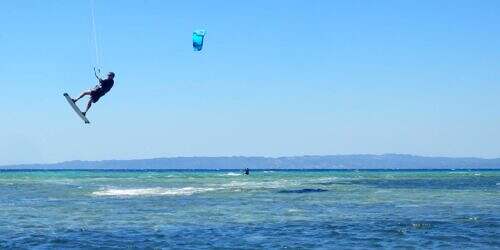
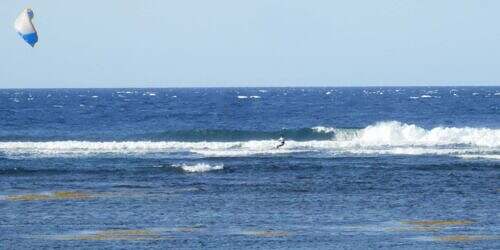
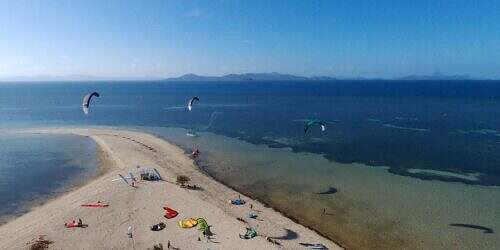
We come here for two reasons. The extremely gently sloping beach to the east promises the largest shallow-water spot in the Philippines. Only Cuyo and Secret Island are similarly cool – but much harder to reach. An infinite 2000 by 250 metres to the reef offer mirror-smooth speed and big air runs at low tide. It can get a bit choppy at high tide. But inland, on the back of the reef waves, there are always perfect conditions for high jumps. Thanks to the sideshore wind, the reef waves can also be used perfectly as kickers on the way out.
The best wind in the Philippines blows in the Visayas. But before it reaches them, the Amihan lands right here on Cagbalete in the east of the main island of Luzon. Only Windguru recognises Cagbalete as a spot, hidden under the name Cabalete. The GFS13 forecast is pretty accurate. It gives us good winds of 16 to 25 knots on five out of seven days, usually two to three knots more than on Boracay.
On the very first day, we go full throttle directly from Jovens Beach Resort. Launching is a bit tricky in NNE winds. The beach is somewhat covered. A good wind in this direction usually starts about 20 to 50 metres off the beach. We realise this and launch correctly standing in the water. But even “just quickly” getting the board from the beach is almost a disaster. My kite backstalls into a tree, which is fortunately quite soft. The slight contact has no consequences. Our kites also smear several times when we land. As there are really no dangers apart from a few pieces of coral, there are always no consequences.
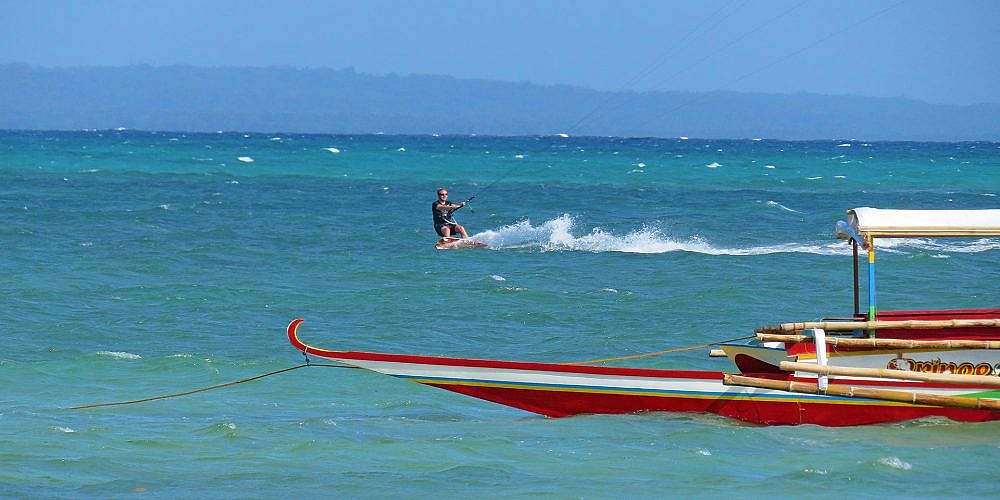
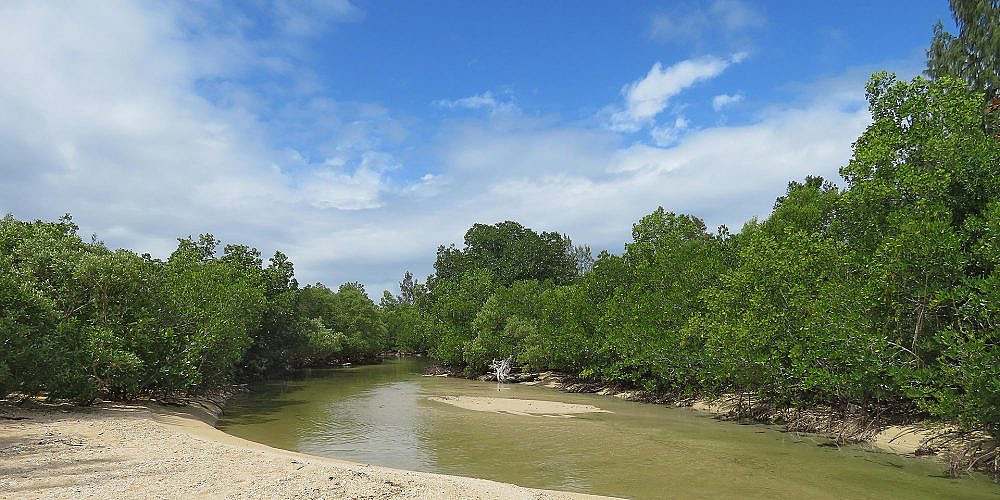
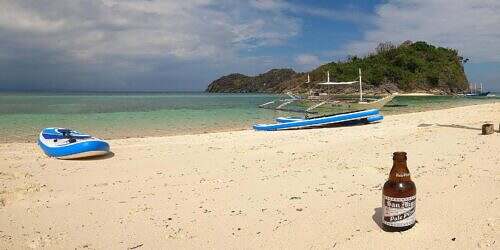
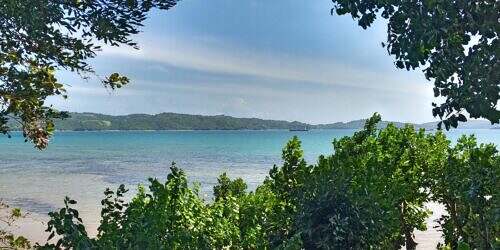
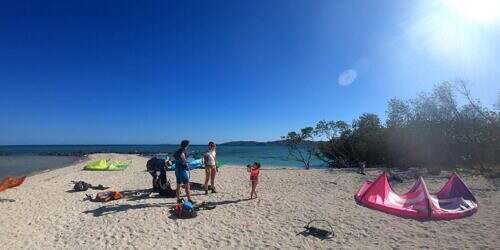
Kiting on Cagbalete is pure magic. We are the only pale faces here. The turquoise, crystal-clear water is only topped in intensity by Belize’s Caye Caulker. Green palm trees over white sand in front of endless expanses. Apart from the reef about 250 metres out, there are no rocks or sea urchins. The water hisses quietly at a speed of over 40 km/h. The waves rumble on the reef in the background. Seabirds pass by. Cagbalete is two kiters’ heaven.
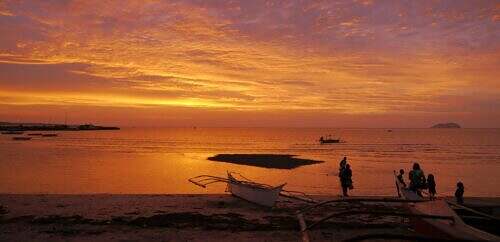
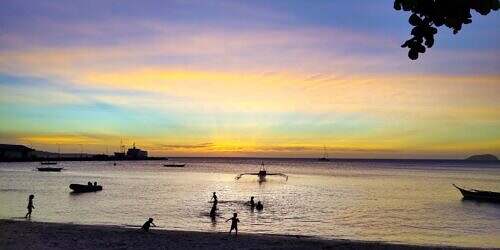
The cicadas chirp in the afternoon. Dogs doze in the shade. On the beach, the birds go crab fishing. Their relatives in the trees perfectly imitate the sound of old garden doors in the wind. Fireflies visit us in the evening. The moon shines pale over the largest mirror in the Philippines. The peace is perfect.
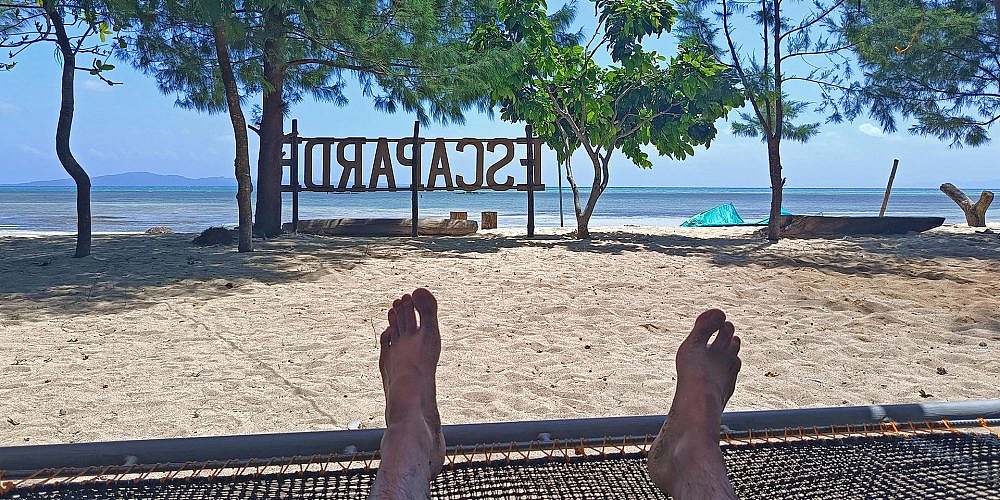
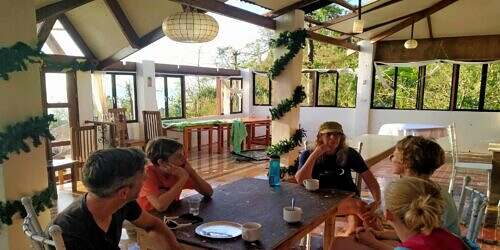
Our first accommodation is Jovens Beach Resort. A bulldog with empty eye sockets guards the entrance. Everything is a bit broken, the food is simple but okay. As the only guests, we can’t shake the “shining” feeling. 400 metres further south, we find the Philippina, whose boy surrendered so impressively on the crossing here. She owns the much nicer, simple Escaparde Beach Resort. A few Filipino guests provide entertainment at the karaoke centre. The family is infinitely hospitable and chef Jake conjures up really great and varied menus from the simplest of ingredients.
After two days in the middle of nowhere, we move here for our last five days. Landlady Jairah gives us a good price for a simple but larger nipa hut anyway. When we ask for a second mattress – as 120 cm wide is a bit too cosy for two men of our size – we get an upgrade to a huge eighth hut with a private bathroom and a real shower. A big thank you for that! For €20 a day, we get three meals as room or beachfront service.
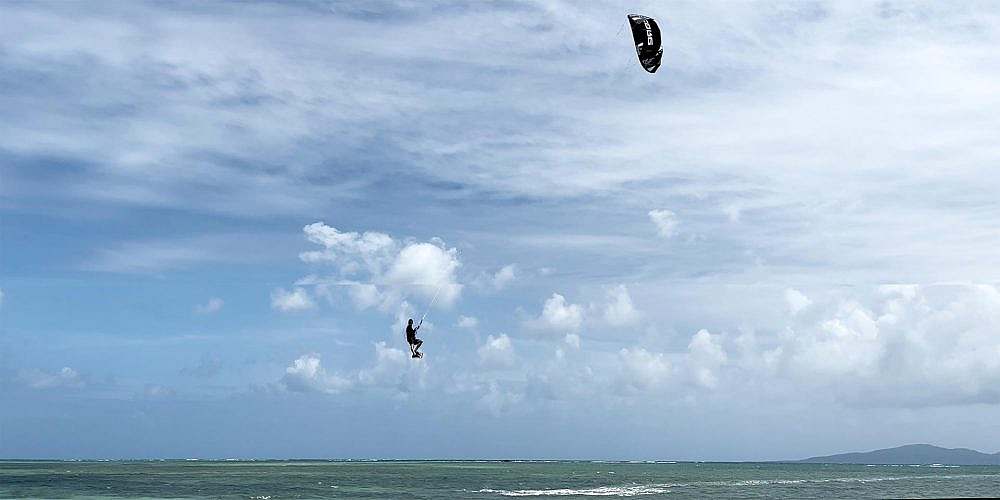
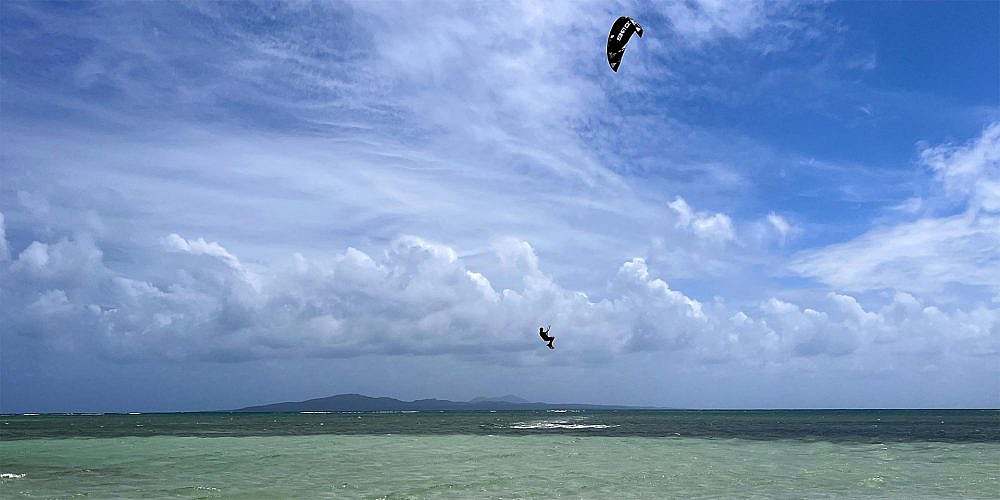
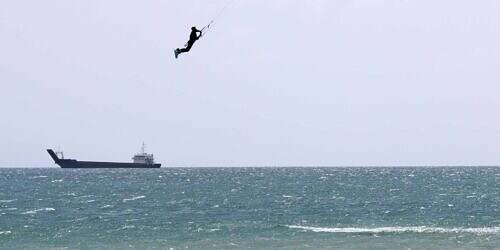
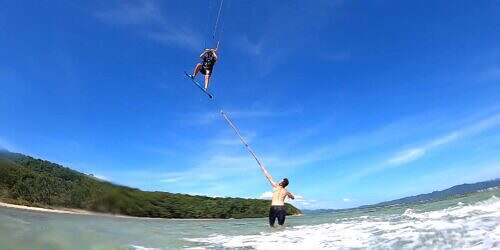
On the third day on Cagbalete, the wind kicks up again to 25 knots. After the two-hour morning session, and despite three weeks in the Philippines, my legs are already really burnt. The landlady’s sixteen-year-old sister has already taken part in the Philippine kitesurfing championships as a talented youngster. I think we’ll be hearing more about her. Today I’m flying over the water at a height of 7.6 metres with 95 kg on the 10 XR. My little sister goes out with her 42 kg on a nine. The word “overpowered” doesn’t seem to exist in Tagalog.
At full moon, like today, the water is very deep at low tide. It’s a good 200 metres to the reef with a maximum water depth of 20 cm. After the lunch break, I go out for another hour in rising water. The children in the water cheer every high jump – and are even happier about every crash. After a total of three hours in the water, I’m completely exhausted. No wonder. The WOO says I’ve climbed an unprecedented 600 metres in altitude today.
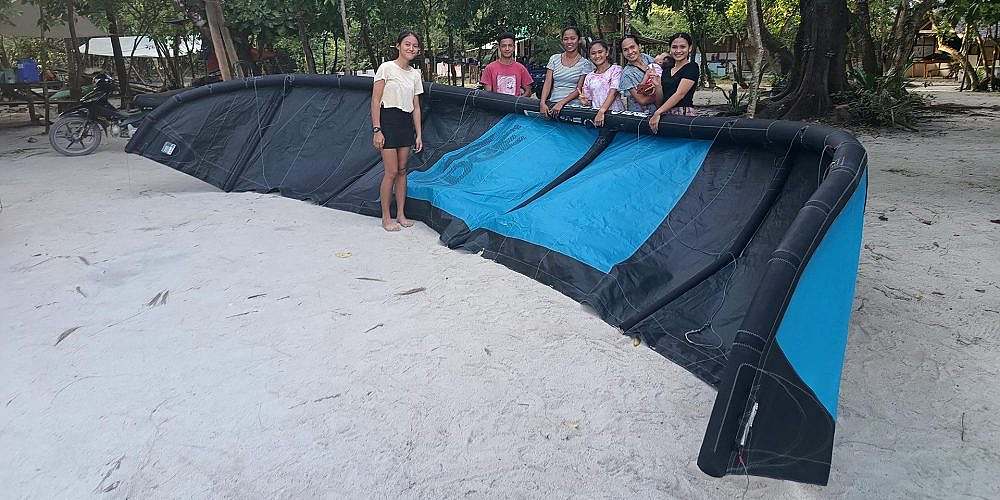
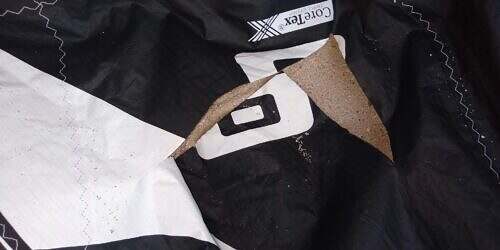
Two more L-connectors break on my Ozone, this time on the front tube. This brings the total number of non-self-inflicted damage to the Edge to four within a month. I’ve lost at least five kite days because of this. The repair at home would cost around €350. That’s enough. I give the kite to Anika, our landlady’s sister. At her weight, the kite should secure her first place and $1,000 in the women’s twintip race next year – assuming a maximum of 20 knots of wind. Her joy is the best possible farewell to my beloved blue wings.
In numerous Facebook groups I warn other kiters about the production faults of the Edge V8. Condolences and thanks come from Europe. The US-Americans react quite differently. A kite that is older than four years is generally “rubbish”. However, my first Struts burst after just two years. The kite was actively and discreetly used for just four years. My hatred of the US kite snobs is almost greater than my hatred of Ozone. I have neither the money nor the desire to invest €4,000 in a new kite range every other year. I just love kiting and want to put my wings to good use for a reasonable period of time.
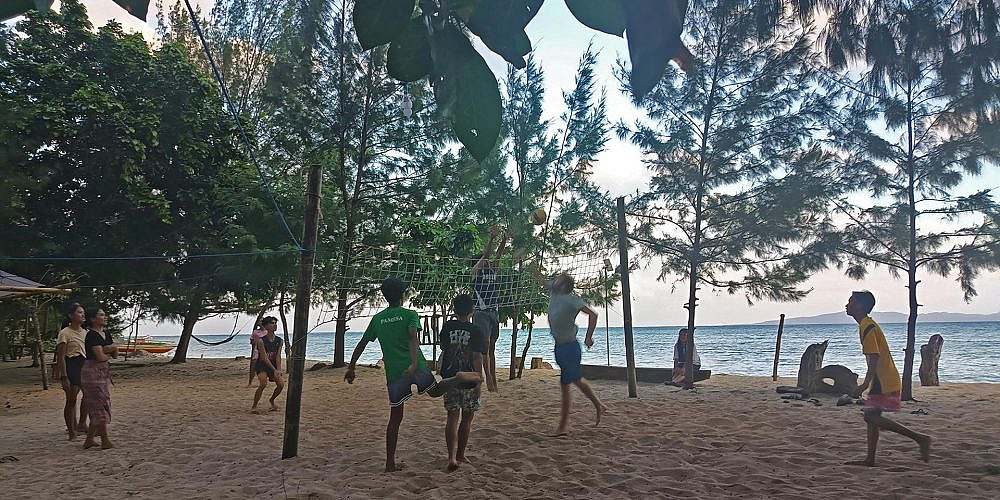
Within a good hour, the Filipinos here can make a makeshift repair to the kite in MacGyver style. They should also be able to replace all the connectors later. With a bottle of gin, I sadly watch the village youth playing volleyball.
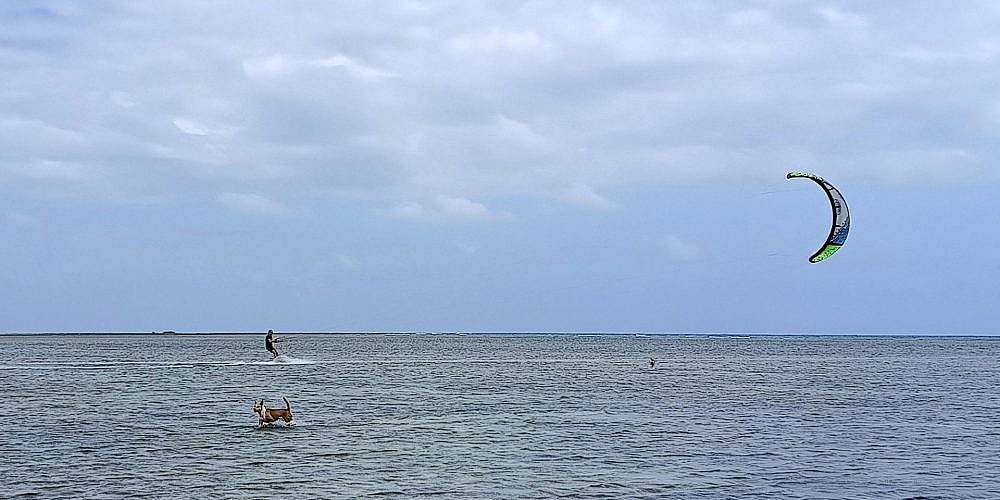
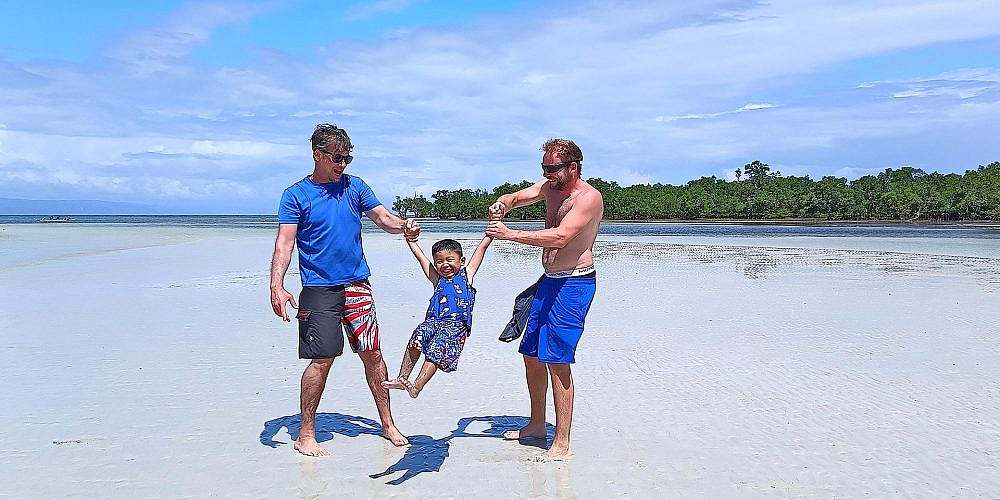
Sebastian quit his job as a teacher before leaving. But I guess he misses teaching. The next day, which is a little less windy, he teaches little Justin a bit of kitesurfing. He is beaming up to his ears when he comes back ashore after a good hour. The Philippine guests leave. The same reggae loop plays from the stereo for hours. From the fourth day onwards, I dream about him. My request for more variety is fulfilled with 70s rock crooning in the light rain. Dogs chase Sebastian in the last light wind through the endless shallows. A great journey comes to a quiet end…
Cagbalete Kitespot Pro:
- endless flat water
- few to no other kiters
- lots of space and sideshore wind
- great reef wave and several sandbanks
- from bed to board in each of the 6 resorts
- amihan often has stronger wind forecasts than the Visayas
- endless calm
Cagbalete Kitespot Contra:
- kiting is difficult at low tide
- Beach is 25 m in the cover at NNO
- quite expensive island
- no nightlife at all
- no “real” restaurants
- Electricity only in the evening
- often no water
- Smart SIM hardly works at all, Globe is supposed to be better










 Frank Woelky, born in 1973. Kitesurfer since 1998. Since 2006, I have been combining kitesurfing and web design on trips lasting several months off the beaten track.