

The Coron archipelago is perfect for playing hide and seek. Especially for ships. The Americans and Japanese already realised this during the Second World War. Nowhere else in the world are there so many shipwrecks in so little space. Even if the Americans today can only be accused of associative behaviour towards the outside and inside: here they gave billions of fish massive asylum.
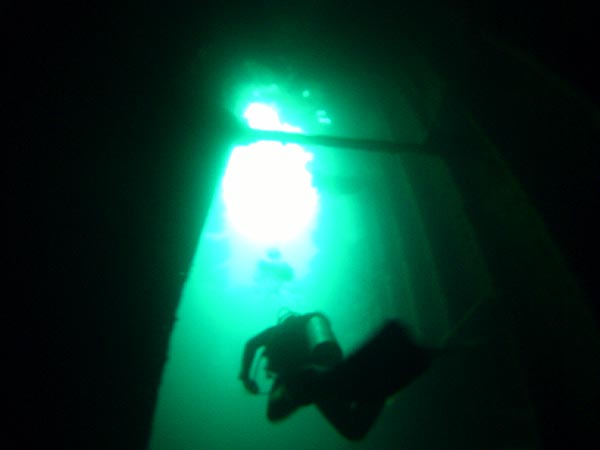
We head west for 1.5 hours with Coral Bay Divers. In a narrow passage between two islands lies the first Japanese gunboat. At a depth of 12 metres, the ship emerges from the deep blue. A short lap around the outside, then it’s time to go in. You actually need an Advanced Open Water Diver for this. But as nobody asks for my PADI licence anyway, it doesn’t matter.
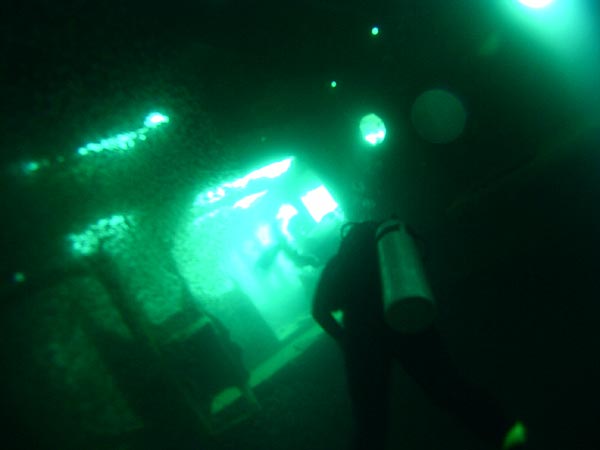
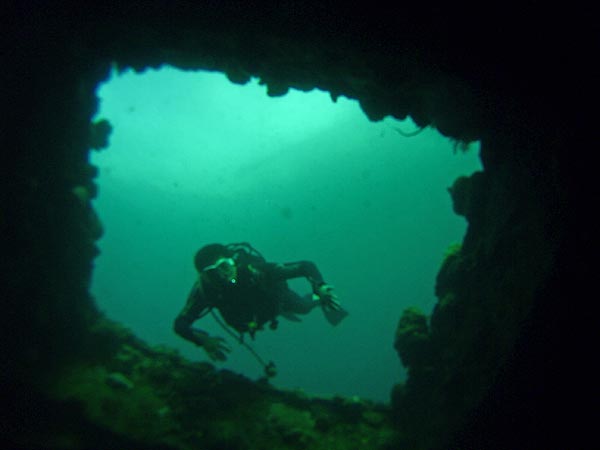
It’s dark inside, with only a few rays of sunlight shining through the holes. I don’t need to be claustrophobic to know what it feels like. My pulse increases noticeably. Breathing becomes faster. Darkness. The way up is not to the air, but to coral-covered steel. Very oppressive. But it’s also nice to feel that fear can be controlled. There are sometimes more fish than water in the wreck. Every stroke of the fins creates a wave of living creatures. Thank you, America!
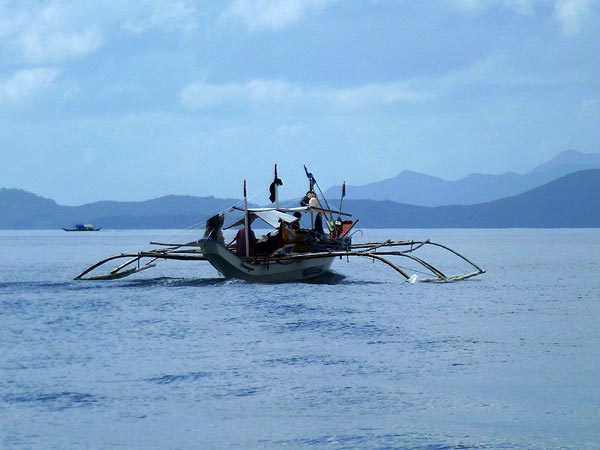
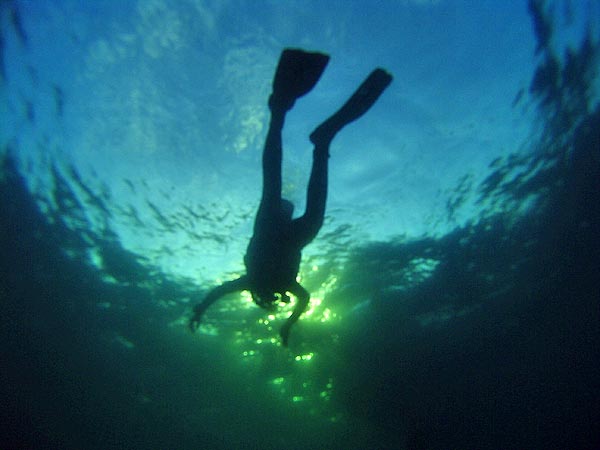
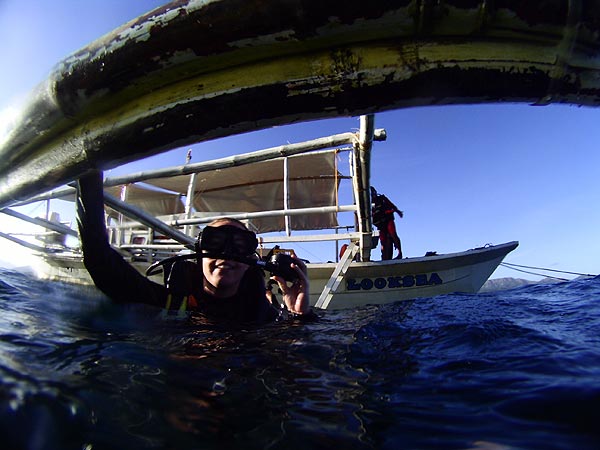
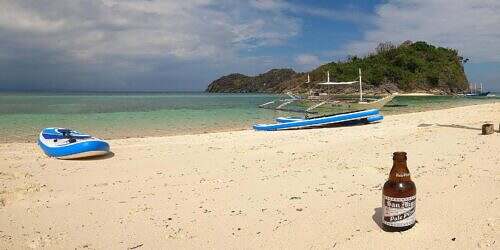
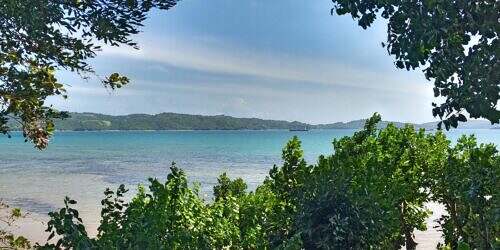
After 40 minutes we surface again. I imagine Robinson on an uninhabited beach, and that I would have landed right here with my own Bangka. It works quite well. In the meantime, Uli does her third of five dives for her licence. I go snorkelling and see a lot of rubbish. Tell me what you want, divers of the world! Diving may be as ecological as you want it to be. The dirt always comes with it. It’s not so much a question of how much everyone makes. Rather, how well it is distributed. The distribution here borders on perfection.
Unfortunately, visibility is very poor. Apparently a maximum of ten metres everywhere around Coron, usually five. Unfortunately, you don’t get great perspectives. But nobody comes here to dive because of the perspective. The mass of what you see in the five visible metres is what counts. Lots of fish, the most colourful corals. The occasional sea snake. And, Dominik: not a single shark! After the obligatory engine failure at lunchtime, the journey continues.
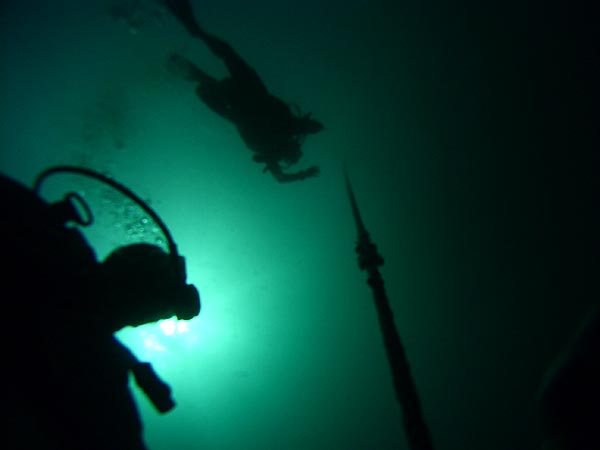
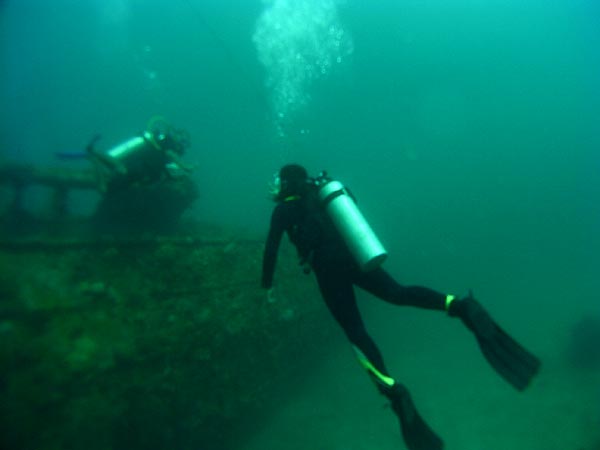
The second wreck is a real monster. The 125 metre long Japanese merchant ship lies at a depth of 12 to 25 metres. The descent is a bit fast, I have a brief problem with dizziness. I resurface a little, then continue into the deep blue. The wreck appears. Wow… I’m just a little blubber guppy. We dive around the wreck once, then go inside through the large hatches. Although the room is big, it’s a bit awkward again.
At some point, the guide points to a one metre wide, pitch-black hole. I shrug my shoulders. Later, he says that a few crazy people have already dived through the engine room. Thanks, I don’t need to see everything. We dive over the side, which is completely covered in hard coral, and the torpedo’s impact hole back to the guide line. The reserve cylinder dangles from the boat at decompression level. My pressure is at 50 – perfect timing.
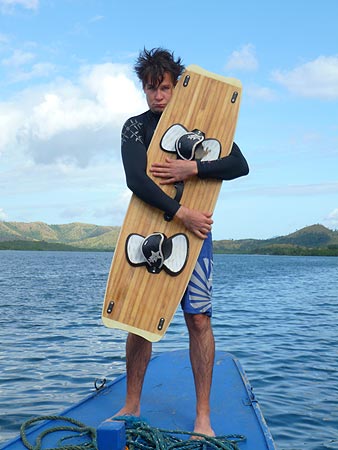
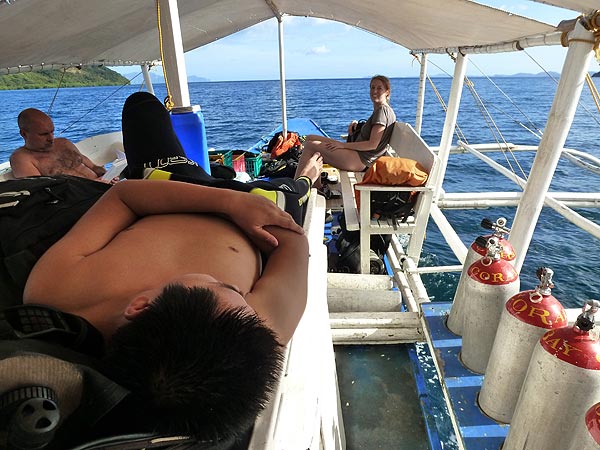
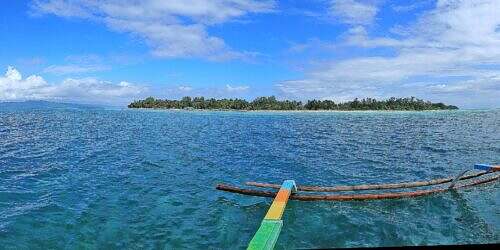
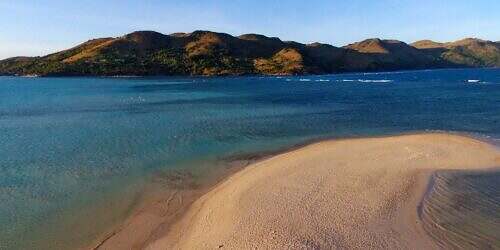
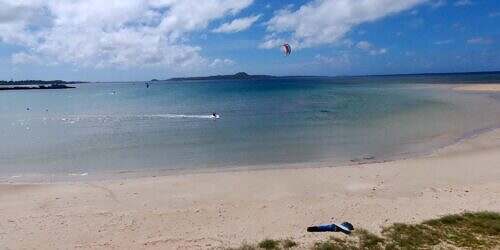
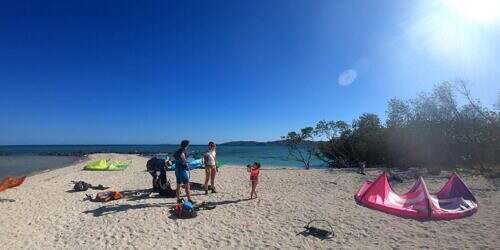
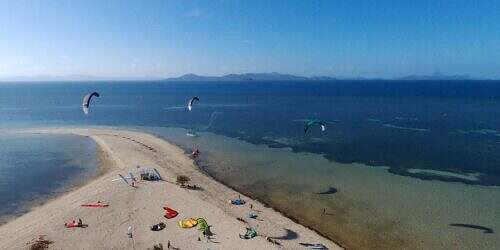
The diver’s sickness hits our boat full force. In other words: after the second dive, half of us are asleep. On the way back to Coron, I keep my eyes wide open in search of possible kite spots. I spot one: with an easterly wind, you can launch on the eastern beach of Dimanled Island, which is about 5 by 50 metres long. After that there is a tree-covered hill, but behind it another 200 metre deep sandbank. You still need a boat for the whole day. But the spot is close to Coron, the distance determines the hire price of the bangka.
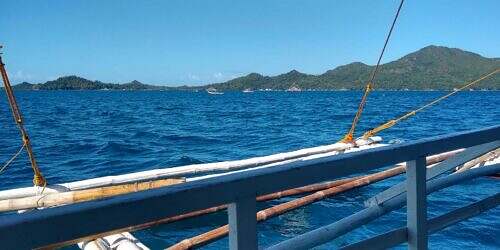
A good wind comes up in the late afternoon. Certainly 15-20 knots full from the east. But for 30 minutes of kiting from a bangka with massive pointed bamboo sails, I’m not going to give up the last paid dive. The third takes place directly in front of the steep walls of Coron Island. Our captain tries to sink an enemy bangka, but fails because of the enemy deck guard. Uli dives with me for the first time.
This time there is simply a large coral reef to see. One part is colourful and lively to the point of being stupid, the other a dead grey desert of broken coral. In ten years’ time, it will look exactly like Hurghada. The sun is approaching the horizon and the light underwater is already much worse. Palawan has long since ceased to be the hyped “Philippines last frontier”. It is more reminiscent of the gold-rush atmosphere behind the Czech border in 1989 – albeit with slightly fewer and much smaller whores.





 Frank Woelky, born in 1973. Kitesurfer since 1998. Since 2006, I have been combining kitesurfing and web design on trips lasting several months off the beaten track.