

Oamaru is famous for its penguin colonies. However, as they no longer feel the need for forced prostitution, they are decimating. The only blue penguin we see committed suicide in the grass next to the harbour. We refuse to disturb the return of the live penguins from the sea in the evening for moral reasons.
Dunedin is the oldest city in New Zealand, although at least three are in contention for this title. In the black and white stone buildings, which are up to 200 years old, one shop after another is closing down. 50% vacancy is supplemented by 25% galleries and second-hand shops. The rest seems to consist of empty pubs and restaurants.
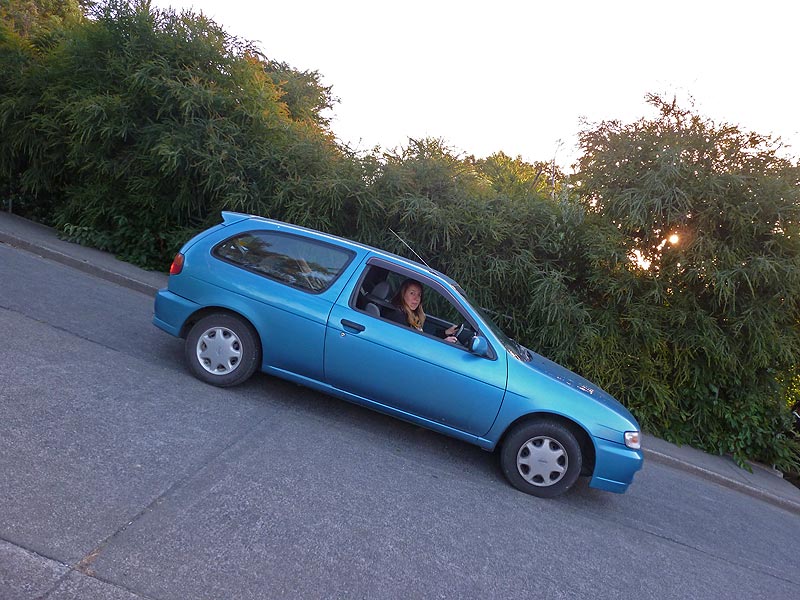
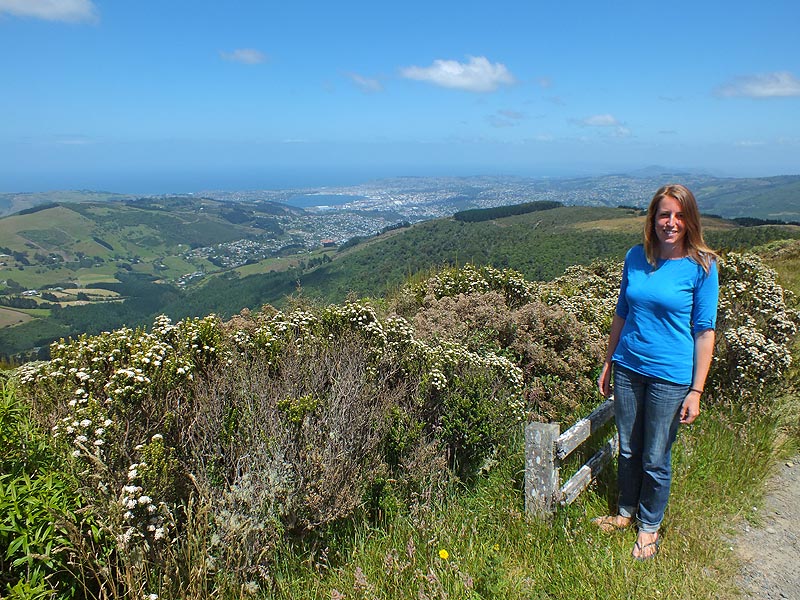
Dunedin’s city beach is located in St Kilda. Large white sand dunes, 2 metre high breakers and a gentle breeze. You can drive across the nearby cemetery for a good view – but not across the golf course behind it due to the need to preserve the peace of the dead. There are albatrosses to be seen at the tip of the Otago Peninsula – but again, animal prostitution reigns supreme. We turn round and head into a beautiful sunset along the steepest road in the world high above Dunedin to Signal Hill.
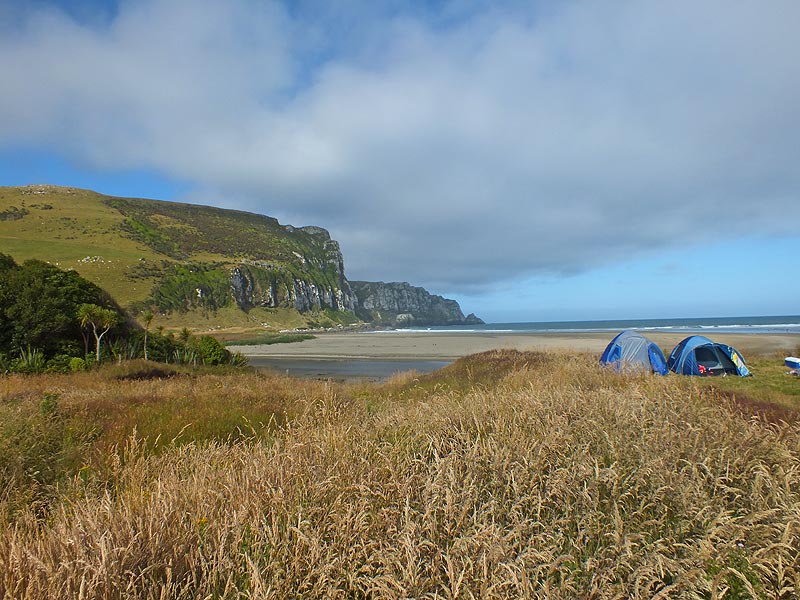
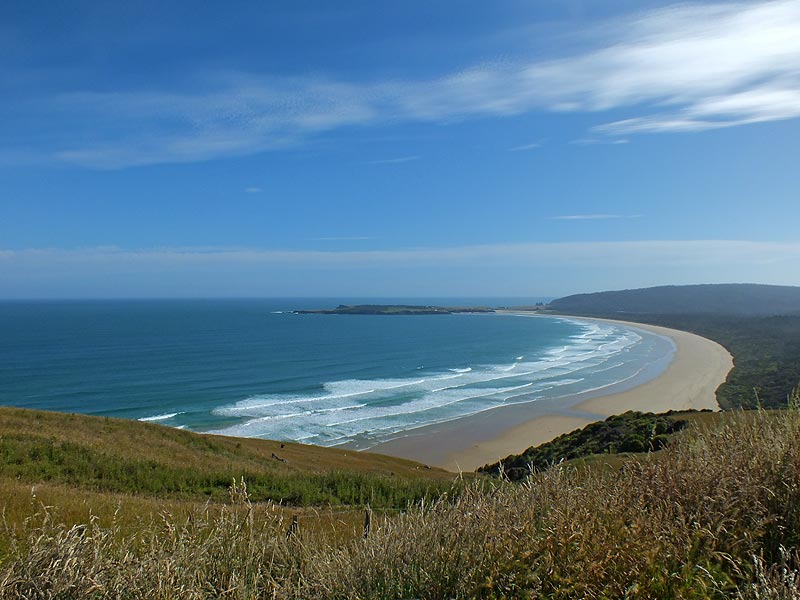
Further south in the Catlins, we meet friends of Uli for a short hike to the Cathedral Caves on the beach. Somehow the big sights are all the same: quite unworthy. Our DOC campsite is in Purakanui Bay, right on the beach. Between thick clouds, the sun shines on 200 metre high white cliffs. Worthy big cinema.
The next morning I fail in my attempt to climb the cliffs through a river and over steep sheep pastures. We continue on dusty gravel tracks to Slope Point, the southernmost point of New Zealand. It is raining and storming offshore. Next stop Antarctica. Just in time for our arrival in Invercargill, the storm has subsided.
New Zealand has very entertaining laws regarding alcohol. Practically every town centre is a “Liquor Ban Zone” with colourful warning signs on the asphalt, even though the Maoris are much less inclined to consume high-proof alcohol in public parks all day than the Australian Aborigines. In Germany, such legislation would probably trigger the third world war – at least nationwide.
Alcohol is only served in bars in New Zealand. A wide variety of warning notices are displayed behind the bar, creating a Chernobyl-like atmosphere. Age control under 25: good. Death zone if you step outside the smoking area with beer: threatening. There are no photos of young Brits throwing up. But then it gets weird: “It is against NZ law to serve intoxicated customers”. So if you get drunk, you’re not allowed to drink? Better still: “Intoxicated customers are required to leave our premises immediately”. Devilish! Swimming is okay, but if you get wet, you have to swim home immediately to dry off.
At some point in the 19th century, the Finns managed to burn practically the entire harvest to make schnapps. The following winter, many Finns starved to death. Now, understandably, alcohol is quite expensive there. Here in Invercargill, alcohol is only sold in licensed bottle shops. Otherwise you can at least buy beer and wine in any supermarket in New Zealand. One of the big questions of this trip remains unanswered: What alcohol-fuelled atrocities does Invercargill’s history hide?


 Frank Woelky, born in 1973. Kitesurfer since 1998. Since 2006, I have been combining kitesurfing and web design on trips lasting several months off the beaten track.