

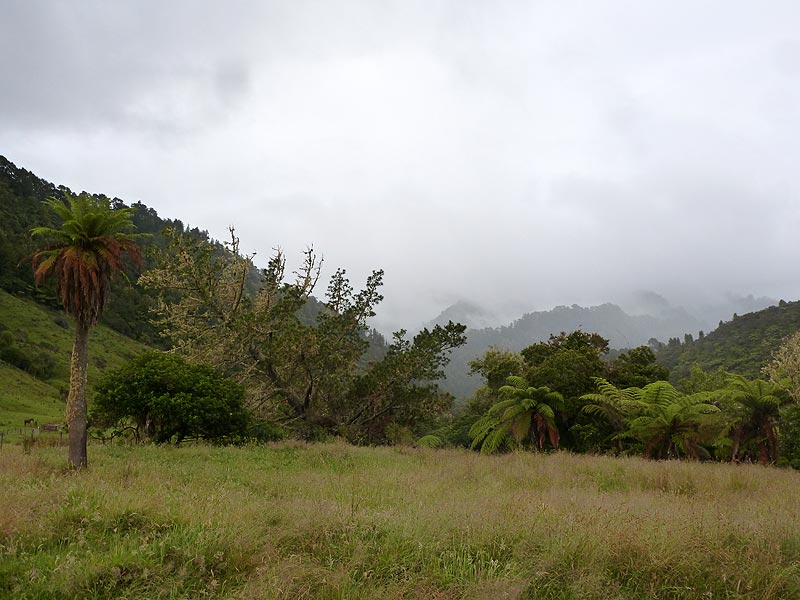
The Whanganui River is the most remote of all New Zealand’s national parks. It doesn’t even have a name, the signs just say “National Park”. The DOC campsite Whakohoro lies in the middle of it, behind 42 kilometres of gravel road to the next village. In between there are only sheep, rainforest and “No mobile coverage” warning signs.
We are at the end of the most beautiful end of the world. The meadow is richly garnished with sheep, horse, goose and rabbit dung – offering much more variety than Hobbiton. Stepping in it barefoot is unavoidable, but not too bad. The weather forecast is finally right today. It rains heavily all day, followed by sunshine every half hour.
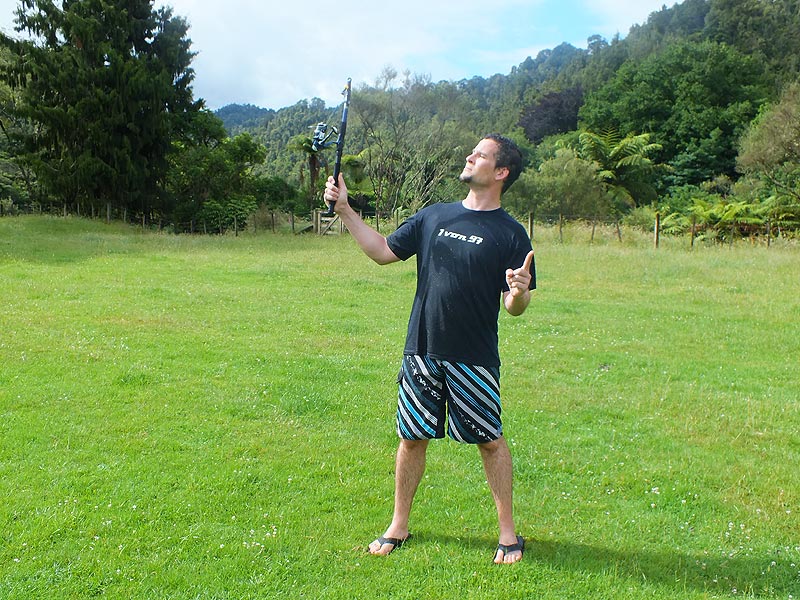
Madame Matzke has been mocking my threat to become a respectable angler a little too much lately. I don’t care about the fish, but the blasphemy fuels my ambition. In the pouring rain, I cut a path through the jungle down to the Whanganui River. After some lightning training from a Franconian in Rotorua – we almost successfully caught a big car – I consider myself perfectly prepared for a big trout. Unfortunately, the trout don’t know that yet. The only thing that snags my hook are grasses and stones on the bottom. A fish jumps out of the water twice. But it’s obviously too wet on our side of the water surface.
Back at camp, the sun comes out again. I’m soaking wet, covered in mouldy mud up to my knees and grass seeds up to the tip of my nose. The primeval forests on the steep slopes of the surrounding area are steaming. If a gorilla were to break through the bushes right now, the New Zealand country music paddlers next door probably wouldn’t even put down their Tui beer. The Whanganui is one of the “Great Walks” – there is nothing but wilderness for 90 kilometres, no roads or paths – if you paddle in from Whakohoro, you also have to paddle out.
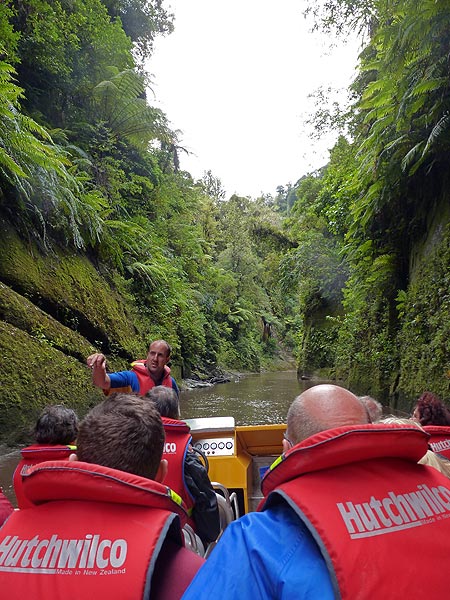
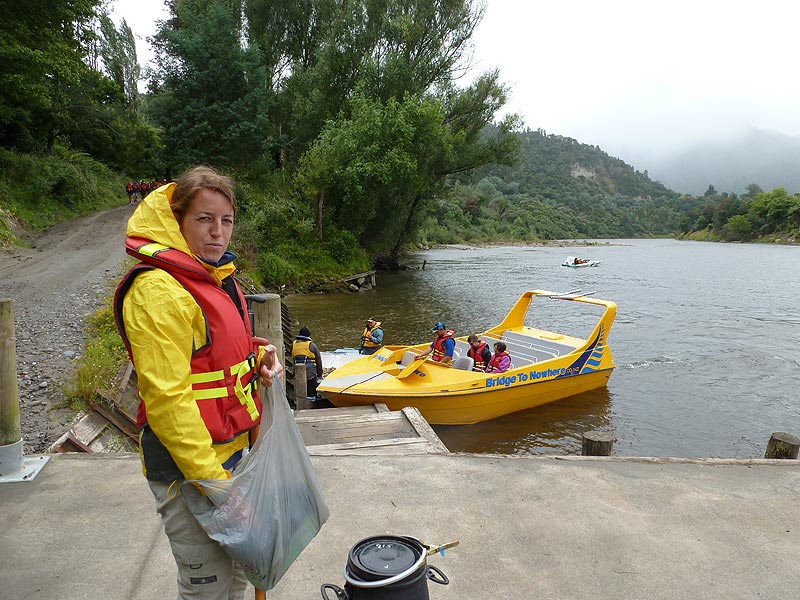
Despite our three months, the entire tour of up to six days is too long for us. We camp for just one day in Whakohoro and then drive 100 kilometres to the southern end of the park to Pipiriki the next morning. The road is a rollercoaster 400 metres down into the steep river valley. There we jump into a jet boat that takes us a good 20 kilometres north on the Whanganui to the Bridge to nowhere.
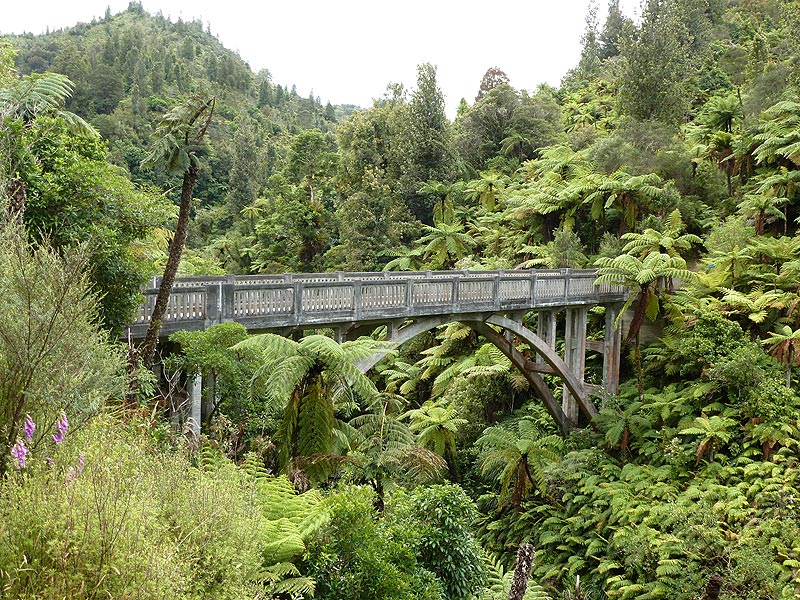
The bridge really is in the middle of nowhere. The minimum distance to the nearest road is one hour by jetboat and the same amount of walking. The Bridge to nowhere was completed in 1936 to supply the settlers in the remote Mangapura Valley. However, they had apparently run out of sweet potatoes long before then. By the time the bridge was finished, the settlers had all gone. Ten people attended the opening of the 40 metre high concrete bridge, five of whom were construction workers.
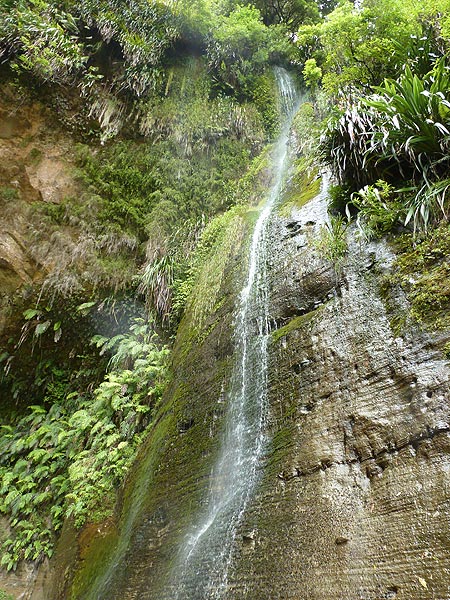
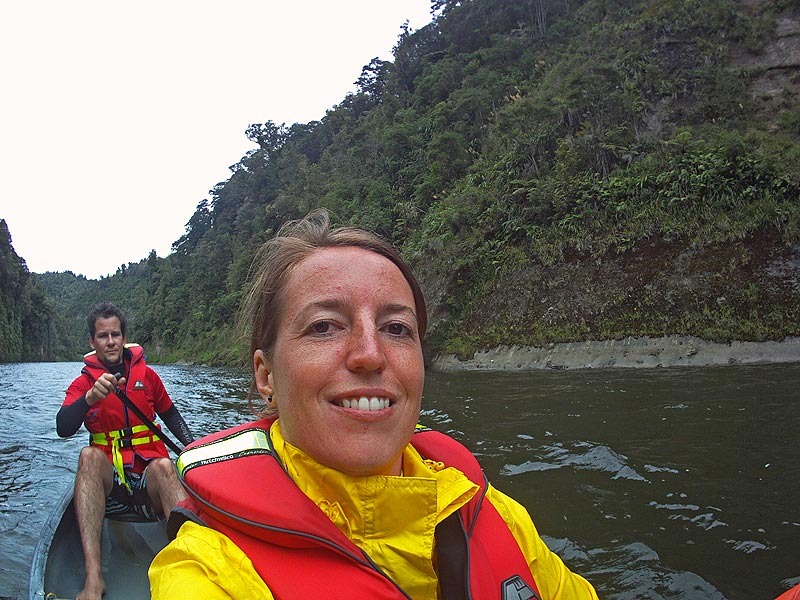
We paddle a good part of the way back downstream in a canoe through a few easy rapids. The difference in perception between jetboat and canoe could not be greater. Everything is quiet. Noise. Paddle stroke. Blue ducks flutter away. A waterfall on the left, steep walls on the right, tree trunks and stones in front. After almost 24 hours of non-stop rain yesterday, it’s dry today.
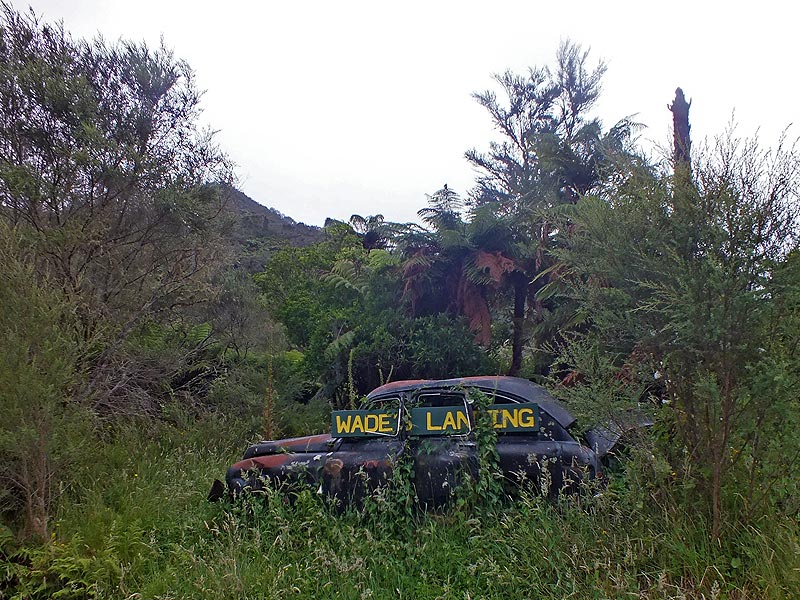
In the evening we have an invitation from a couchsurfing host in New Plymouth. On the map, the northern route there looks a little shorter than the southern route. In Taumaranui, a sign indicates the “Forgotten World Highway”. We’re very late, it’s getting dark. Just as I tell Uli that there must also be an unpaved “Lost World Highway”, which I loved on my last trip, a gravel track suddenly appears after bend 923. I’ve simply forgotten that I’ve travelled on the Forgotten World Highway before.
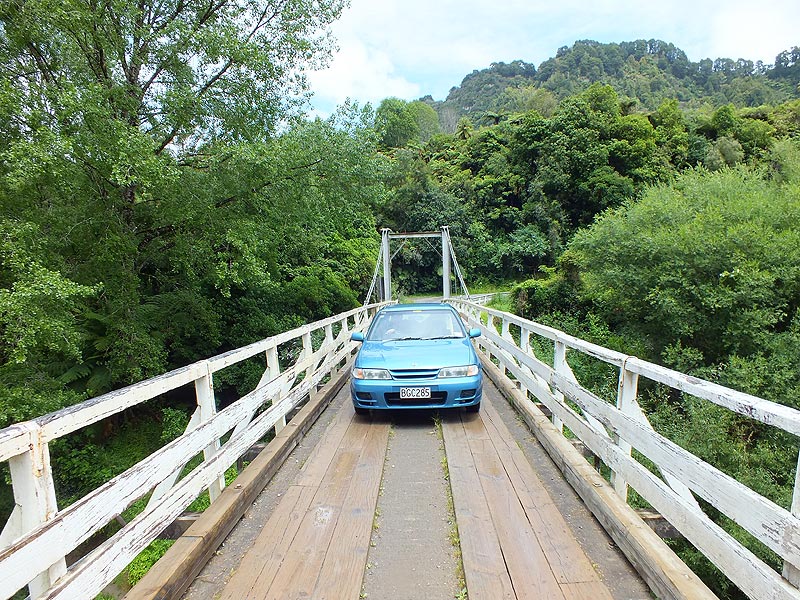
I had already wanted to take more time on the world tour, because even on four wheels the 5m wide “highway” is an absolute experience. On the 150 kilometres from Taumaranui to Stratford, not even 100 metres go straight ahead. We only see three cars. Small, extremely steep hills and five higher passes deliver what BMW promises. Volcanic hills everywhere, deep valleys, rough bumps and an old tunnel cut through the rock by hand. The planned three-hour journey time becomes a whopping five hours with tyres squealing in the bends at 50 km/h – and that’s only thanks to the afterburner.
After almost 300 kilometres, we once again arrive at our destination far too late. Nevertheless, our host Darryl takes us in late at night, treats us to tea and gives us a large and, after the Whanganui, wonderfully dry bed.
 Frank Woelky, born in 1973. Kitesurfer since 1998. Since 2006, I have been combining kitesurfing and web design on trips lasting several months off the beaten track.