

The first stop on Coromandel is a flop. The tour of the Waihi gold mine was actually supposed to be free. But the offer was cancelled five years ago. However, in order to hear how harmless mercury is for the local biotopes, we are not prepared to pay twice the $28 and drive to the “historic gold mining site” of Waitekauri.
The word “historic” is about three and a half times as trendy in New Zealand as “organic” was here in 1992. If a fart stinks for more than ten seconds, it’s called “historic”. Our gold mine dates back to 1987, as we read in awe after travelling 20 km. We definitely count the two remaining reinforced concrete foundations on a remote cow pasture among the illuminating historical highlights of this trip.
Our hostel in Opoutere, on the other hand, is truly historic. It once stood at the “Lucky at last” gold mine a few kilometres south on the mountain. Apparently the name was not so appropriate. The mine closed down and oxen pulled the house in one piece the long way to Opoutere, where it served as a school from 1909. Today we backpackers sleep in it. After a “historic Scotch fillet steak” very deep, long and good.
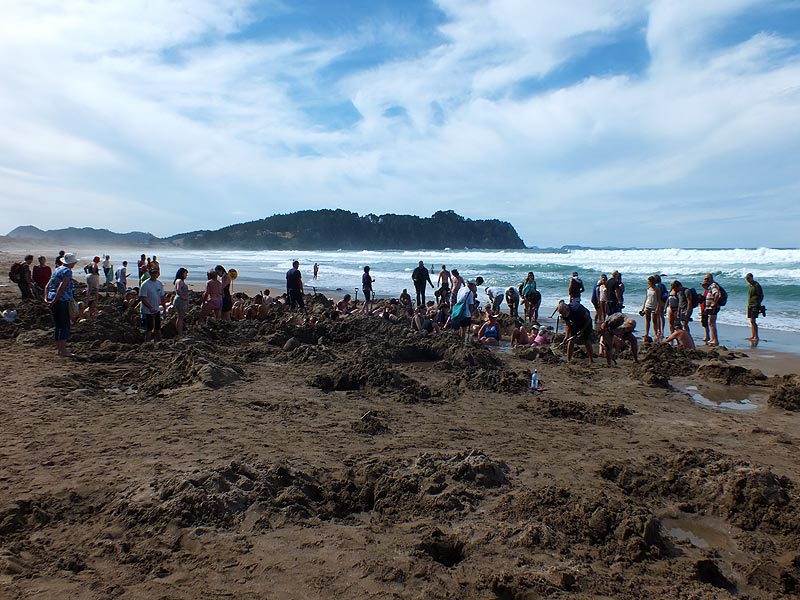
We drive an extra 100 kilometres north for the Hot Water Beach, only to discover that the water is lukewarm at best, but definitely a cesspit, despite the perfectly timed tide. Please don’t get me wrong: Sagrotan’s “everything must be disinfected” advert deserves two big slaps left and right. But when 25 square metres of beach are dug up by at least 500 tourists a day and covered in porcelain, then the limit of “my immune system needs work” has been exceeded.
Our last day in the wilderness takes Tutukaka over another 100 kilometres of gravel road to the remote northern tip of the Coromandel Peninsula. Yesterday’s prophylactic cleaning of the interior in the hope that the landlord will grant us absolution in view of our thoughtfully chosen routes is now completely obsolete. We are dirt and dust again, inside and out, for the last time.
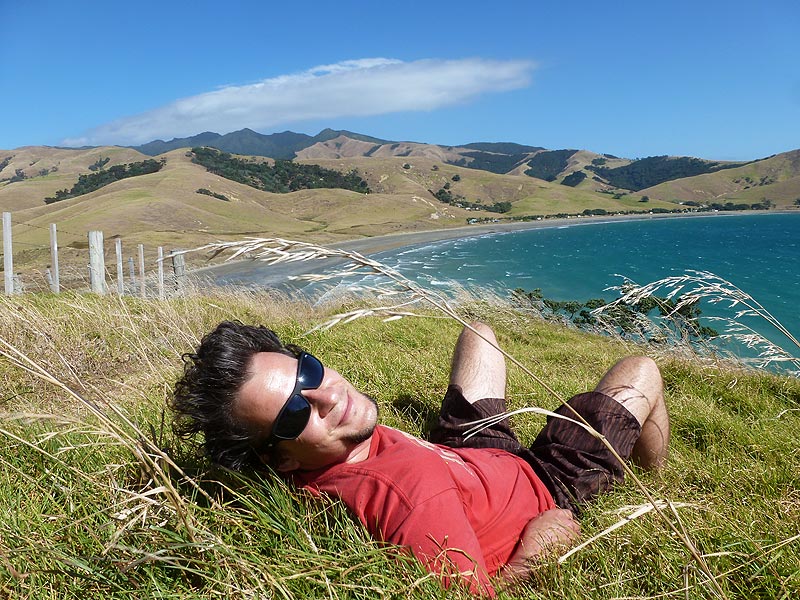
Jackson Bay welcomes us with gusts of wind that are unkiteable for me. Our modest two-axle tent only stays up thanks to the windward bracing of the vestibules towards the tree and the car. The sea boils, sometimes it flies. The sand beats around our legs at mid-30 knots with peaks over 40. On the hill at the end of the bay, Uli almost takes off. Even the tap at the barbecue only lets the water down at an angle. Our huge Green Lip Mussels take ages to get through. Full wine cups are blown off the table as the sun sets.


 Frank Woelky, born in 1973. Kitesurfer since 1998. Since 2006, I have been combining kitesurfing and web design on trips lasting several months off the beaten track.