

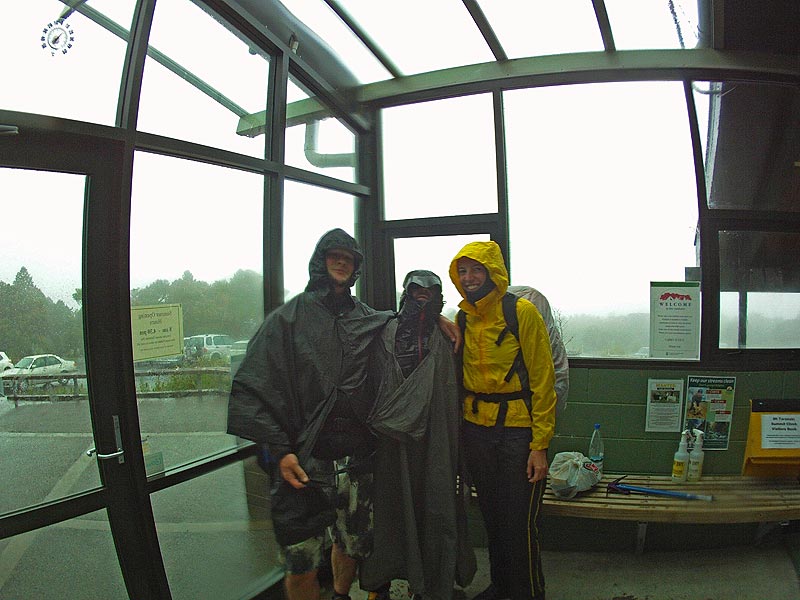
I apologise to everyone who wished me a happy new year. I had to turn it down at first. Two days before New Year’s Eve, we go shopping in New Plymouth for the ascent of New Zealand’s second highest volcano, Mount Taranaki. We borrowed the necessary ice axes and crampons for the steep summit, which was still covered in snow, and set off in the rain.
The ascent to the summit at 2,550 m begins at the North Egmont DOC Visitor Centre. Our first destination for the day is at an altitude of 1,500 metres. We reach the Taranaki Alpine Club’s Tahurangi Hut after just under two hours and 600 metres in altitude, completely soaked through with more than 15 kg of luggage each for the two days on the mountain. Visibility is close to zero and the wind is blowing strongly.
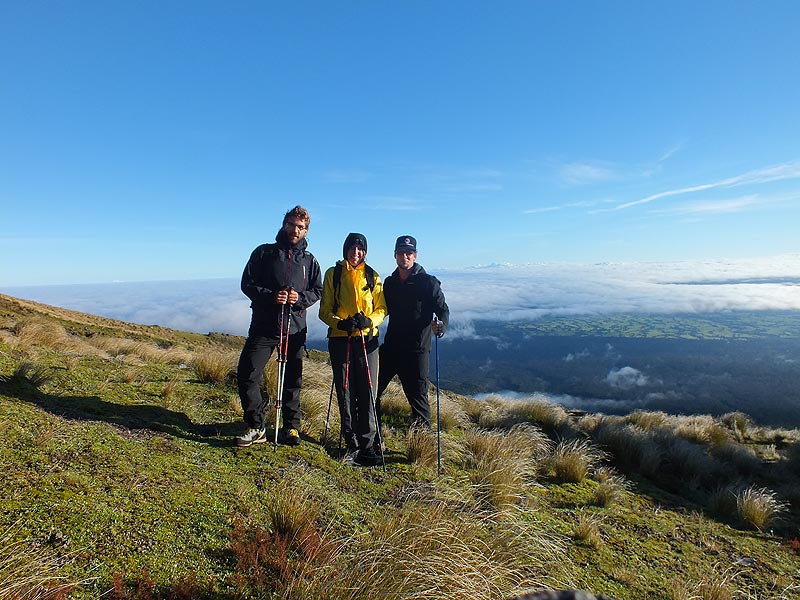
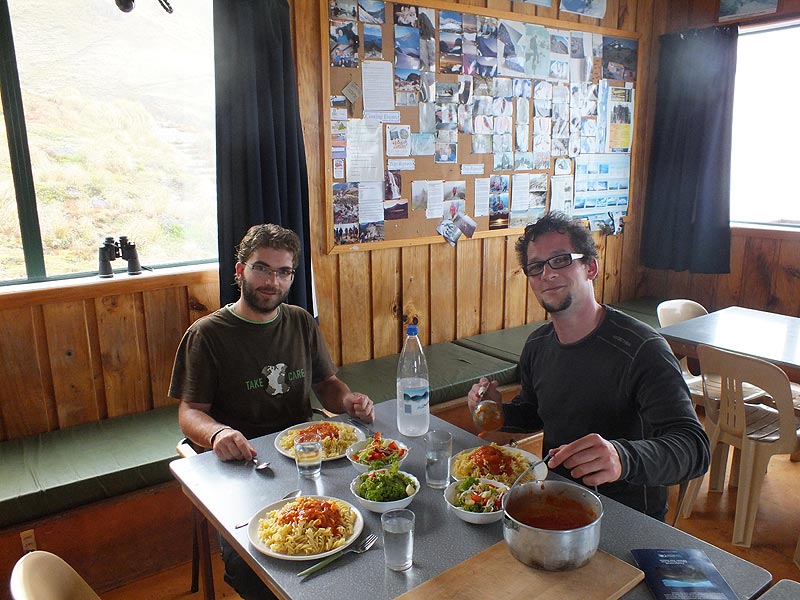
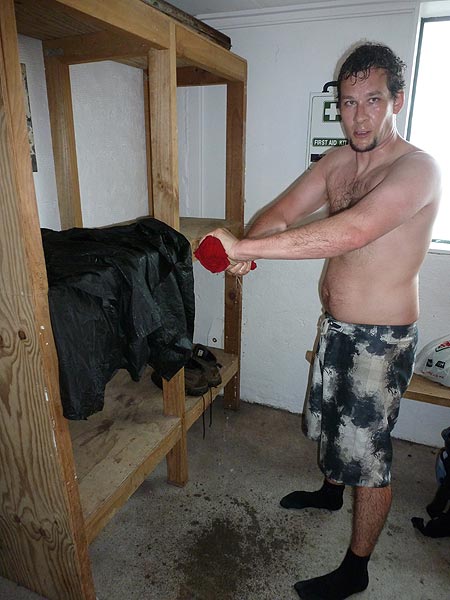
We are joined on the ascent by Allgäu climber Stefan, without whom we would certainly have turned back prematurely later. The Tahurangi Hut is pure luxury: 28 beds just for the three of us, a drying room for our equipment, a hot shower, a large kitchen and a couch area with panoramic windows. I already knew the Taranaki from my last visit. In November, we climbed up to the ice-covered saddle at around 1,800 metres – then it was over due to a lack of equipment.
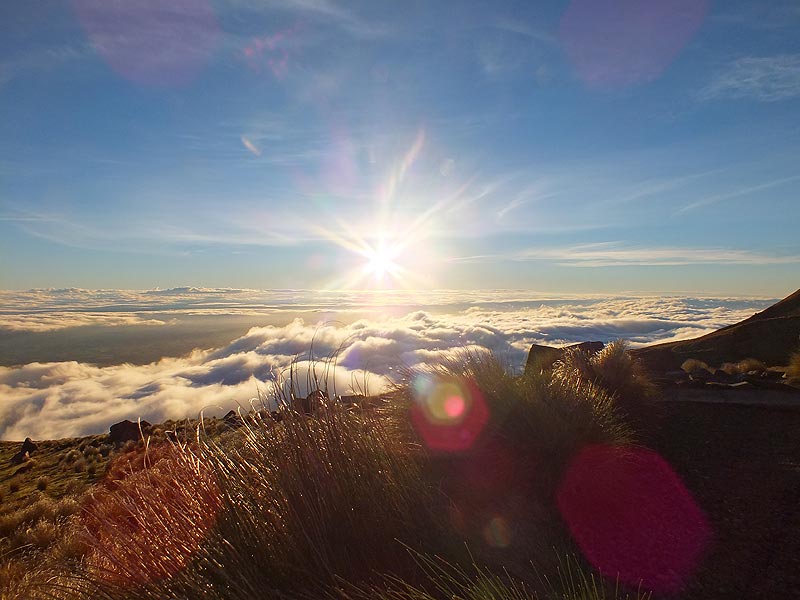
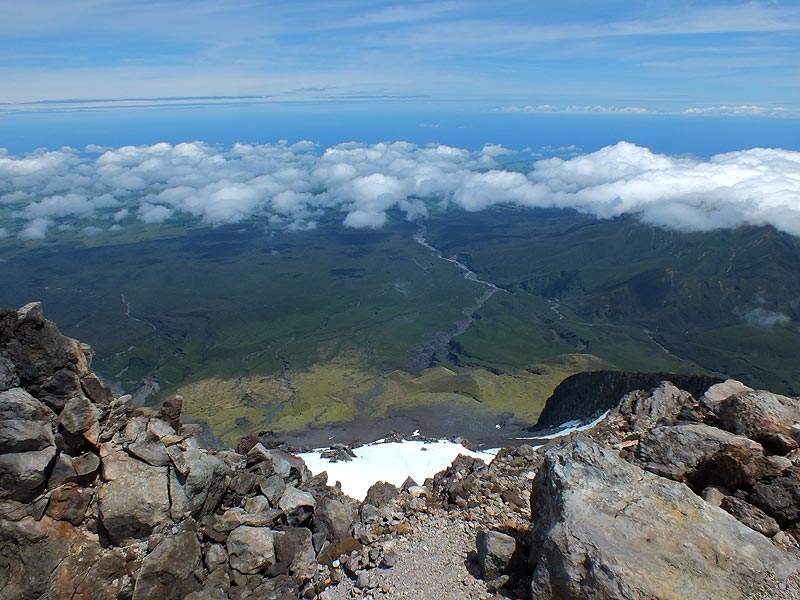
Stefan wakes us up early the next morning. It rained for four days and the forecast for the next few days is no better. Yesterday, two climbers from the summit met us at the DOC, looking more like corpses than people. They reported zero visibility and 50 km/h cold winds. But we are lucky: high above the clouds, we are greeted today by a brilliant sunrise with distant views as far as Tongariro / Ruapehu, 135 kilometres away. A quick breakfast, prepare our equipment and head for the summit.
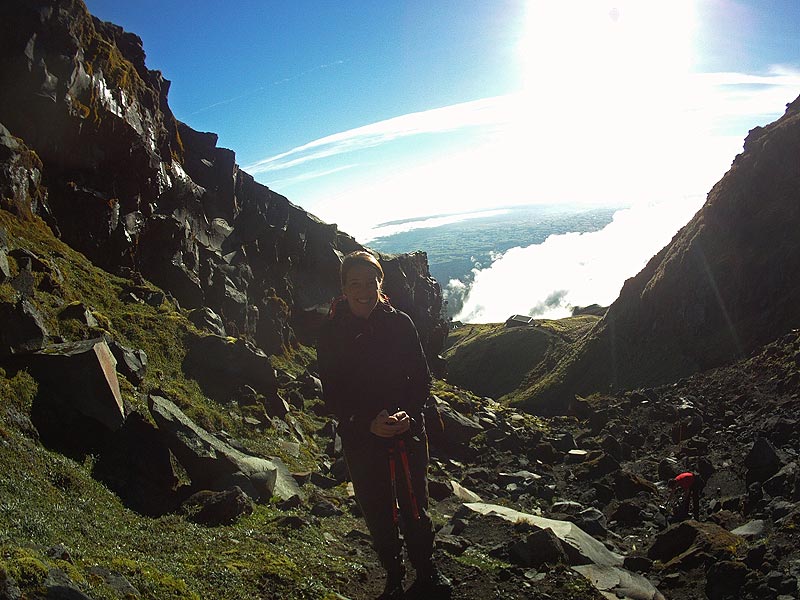
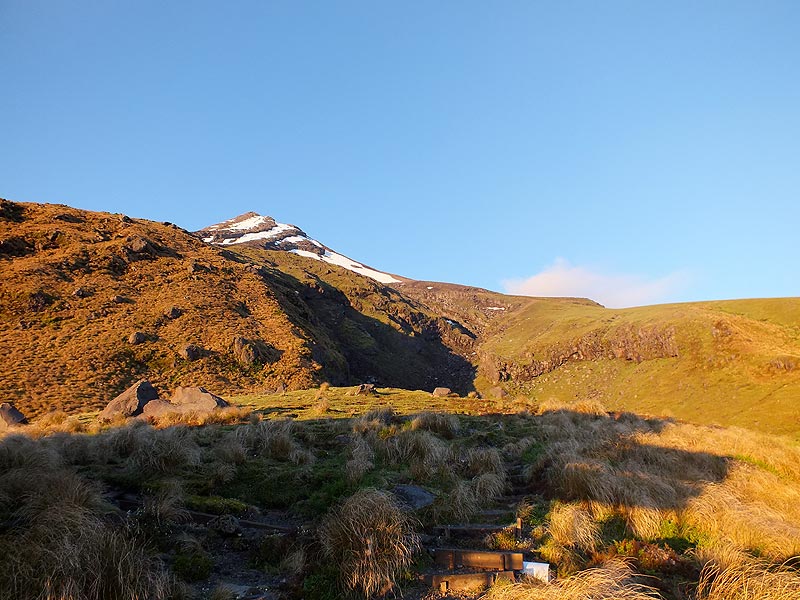
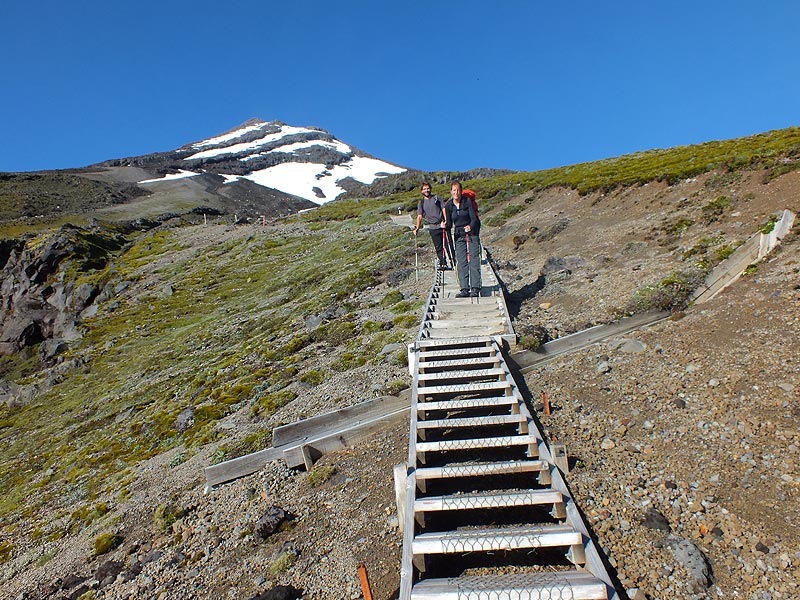
Taranaki is the perfect cone volcano, which also made it famous as the backdrop for “The Last Samurai”. The lower forested part up to Tahurangi Hut is still relatively flat – but thanks to my luggage, it still really brought me to my knees the day before. Today the ascent begins with a narrow, steep valley through large basalt rocks. From around 1,750 metres, there are steps over steep grassy slopes. Then comes the worst part by far.
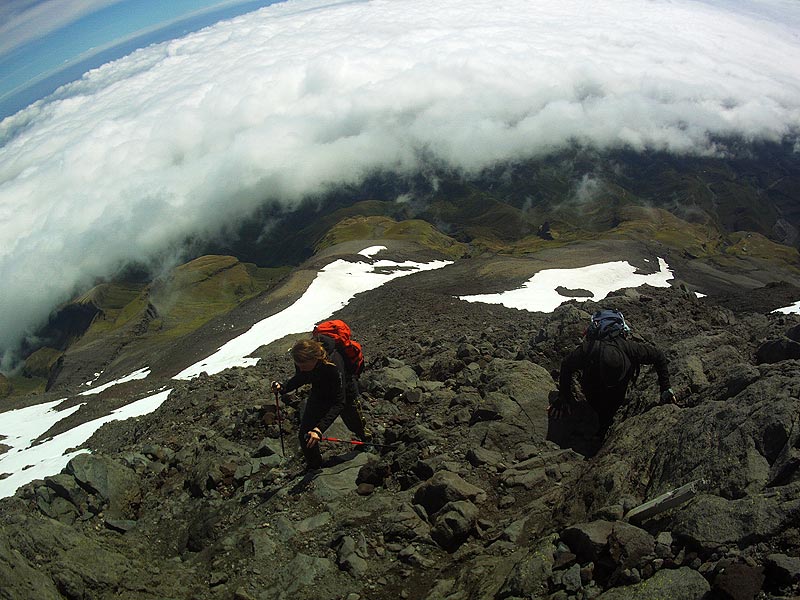
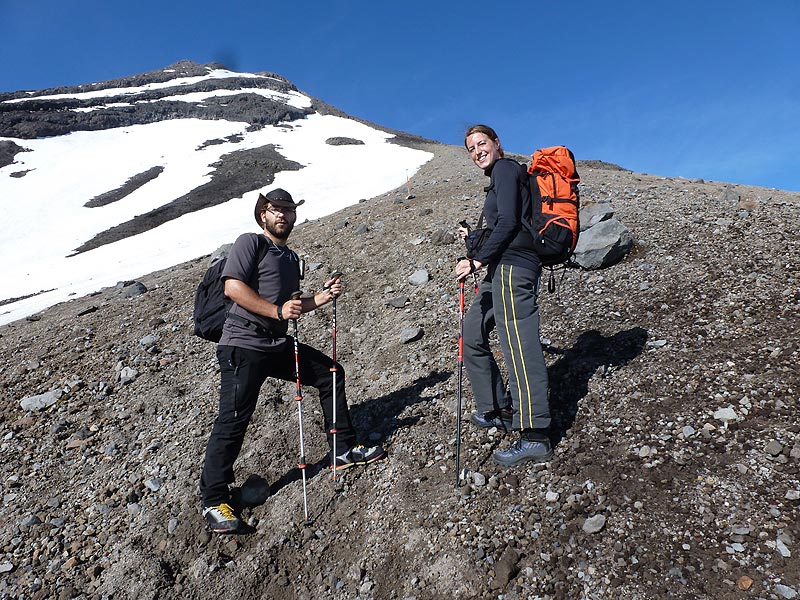
For the next 300 metres in altitude, there is loose volcanic gravel. Every step upwards is a slide downwards. We are the first on the mountain until the first break at 2,000 metres. Then one of the legendary New Zealand vertical joggers overtakes us at a breathtaking speed. I think I can make out a cloud of dust behind him.
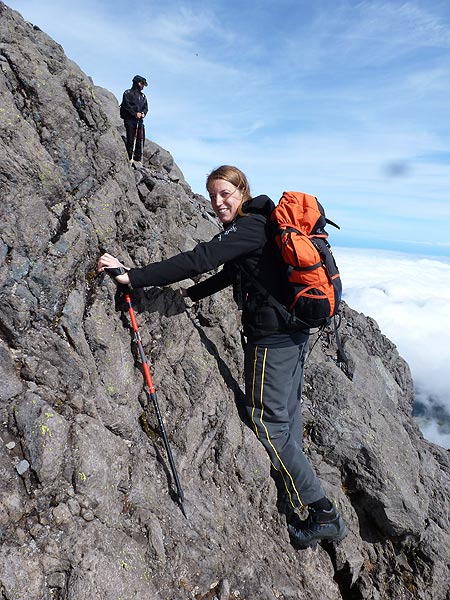
After the scree field, the first bypassable snowfields begin. The Taranaki gets steeper and steeper. Down past the hut it was just 35°, here we are climbing on bare rock at a gradient of 45° to 60°. A few times I wish I had a safety rope, but nobody uses them here. Without Stefan, we would probably have turned round here. With him, however, we continue over the last exposed ridge into the crater at 2,470 metres. There is still snow and ice here. The distant view is worth every effort.
We unpack our ice axes and crampons and make our way up the last 80 metres to the summit. Unfortunately, the firn snow is already very soft. We don’t find a really good grip with the crampons and turn back 50 metres before the summit. We still count it as conquered. Stefan storms on alone. Our old hiking boots are soaked through, and even if it is only possible to slide down into the crater, my calves simply don’t want to be bitten by 4 cm long crampon teeth. A little further down before the crater, slipping down would mean at least 200 metres in altitude and a surely nasty-sounding impact in the rocks below the snowfield.
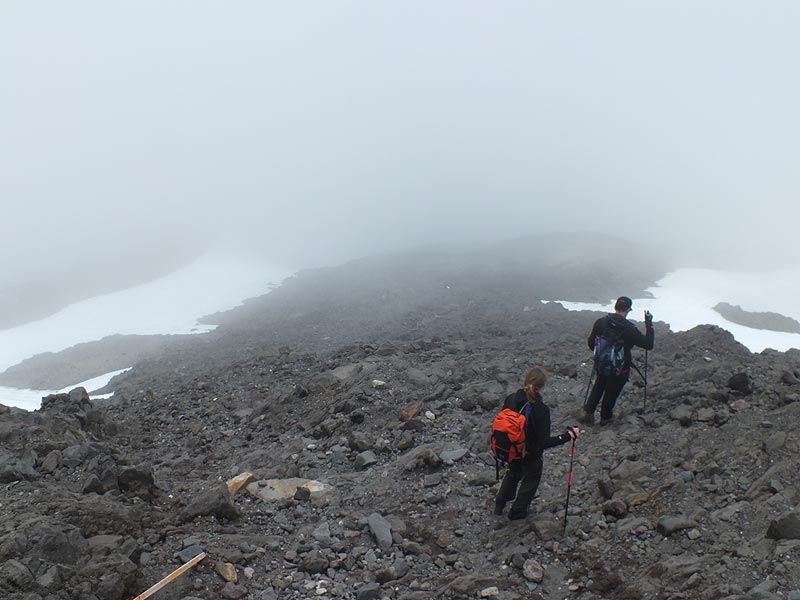
The other climbers slowly arrive at the summit crater. Apart from five others, we were the only ones up here today with perfect weather. The weather deteriorates abruptly. It’s time for the descent. The wind is getting stronger, and the towering clouds are shortening visibility to below the trail markers. We have windbreakers, fleeces and rain ponchos with us and need everything today. The poles are pretty worthless at the top, but at the bottom they’re the only thing keeping our thighs from exploding – at the cost of extremely strained wrists.
Incredible figures struggle up the mountain. A Philippina in low shoes at 2,200 metres can no longer carry her rucksack on the ascent. I hope it had better clothes in it than she was wearing, because the way back is long blood. Further down, a couple of convert Indians who wanted to put crampons on their trainers. Lastly, around three o’clock, a Japanese couple in Yu-ki-oh T-shirts running up the mountain in Nike Airs. When I said “Turn around, or you’re gonna die!” they nodded with a friendly smile and ran on.
The descent is long and difficult. On the other side, there was fine volcanic gravel that you could surf down with excellent control. Almost like snowboarding. Falling didn’t hurt. On this side of Taranaki, the scree layer is too thin. I fell a few times and the sharp-edged volcanic rock underneath bit bloodily into my calf and bum. The scree is followed by a relieving 620 steps and the narrow valley to the hut. Done. Done and done.
During the night, a storm with heavy rain causes the hut to shake. It lasts until the next morning. In pouring rain and 50 to 70 km/h winds, we descend the last 600 metres to the DOC Centre. The storm is so violent that our rain ponchos are in tatters after the hour-long hike. My hiking boots have rabies. They are foaming at the mouth. This adventure was really pushing the limits.




 Frank Woelky, born in 1973. Kitesurfer since 1998. Since 2006, I have been combining kitesurfing and web design on trips lasting several months off the beaten track.