

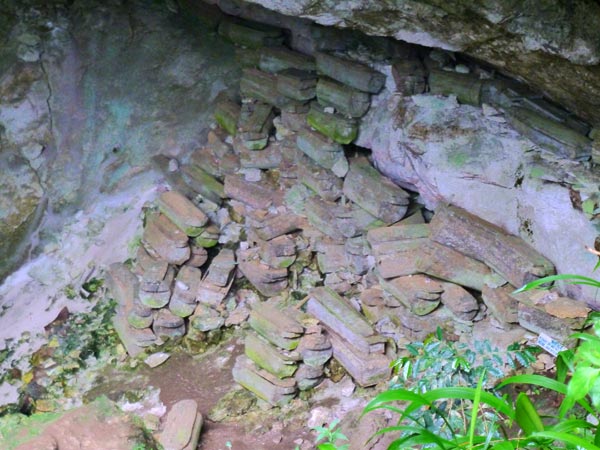
Before breakfast, we take a short hike to the hanging coffins of Sagada. The Ifugao bury their people hanging in rock faces or in one of the many caves. At breakfast we meet two nice backpackers from Holland and Italy. They had already admired my park skills yesterday. So now they think I’m a safe driver. We give them a lift to Banaue.
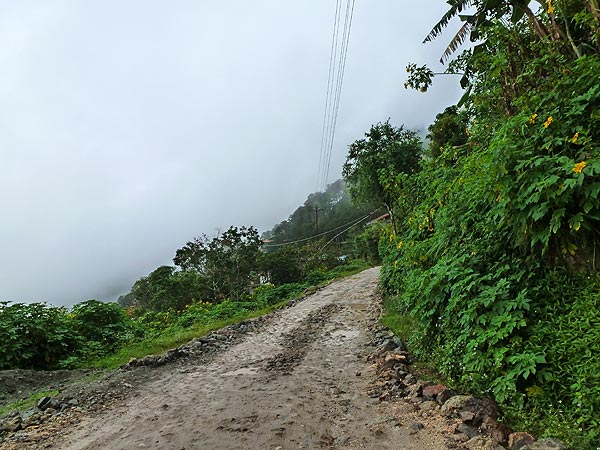
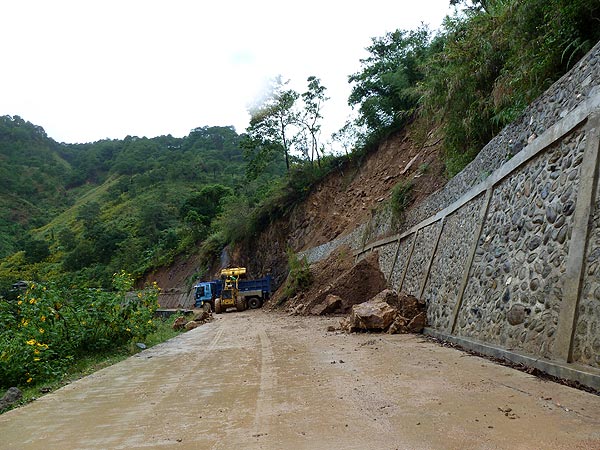
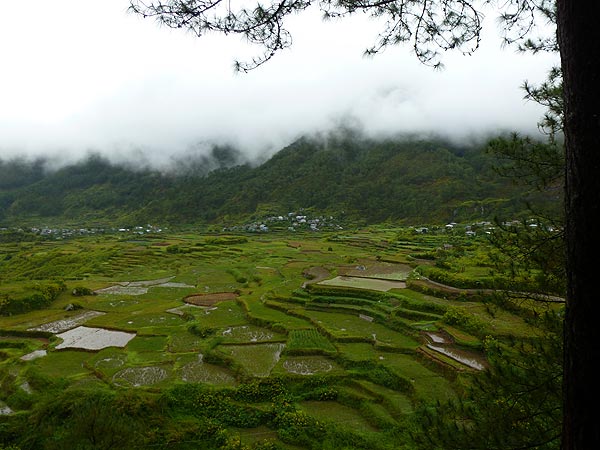
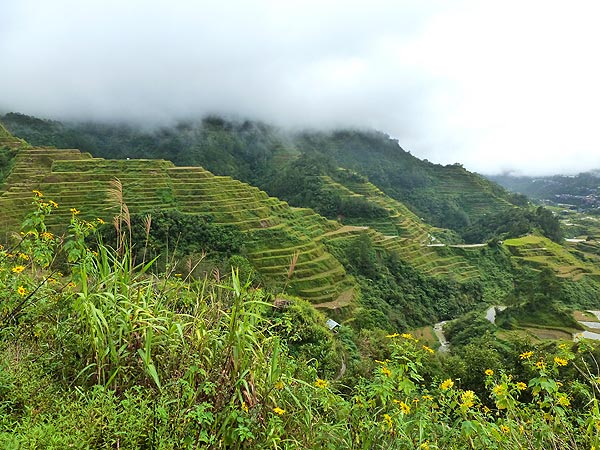
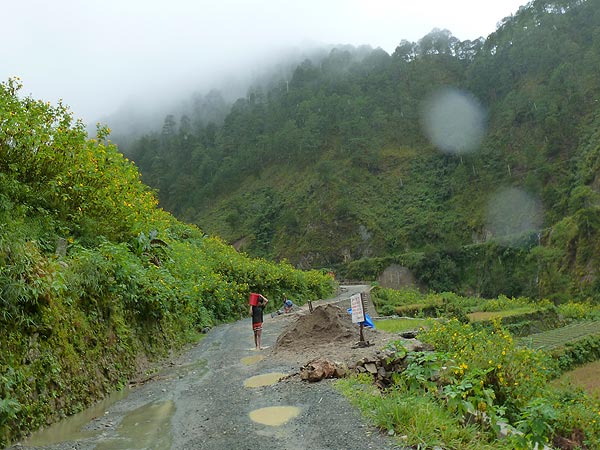
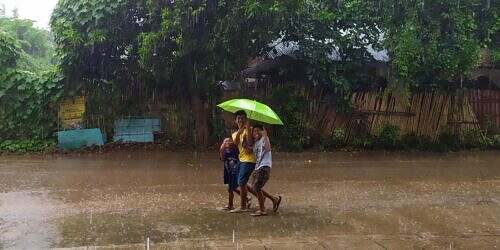
It continues to rain cats and dogs. The road leads over a rough dirt track 500 metres down into the valley. The axle seems to survive. It clears up briefly and the first rice terraces appear between clouds of mist. Then the road is completely closed due to a landslide. An excavator shovels a few tonnes onto a truck, then we carry on.
After yesterday, I thought the road couldn’t get any worse today. But it does. For long stretches, the “highway” is just a dirt track with wonderfully deep ruts. We hit rocks several times. The car seems to be tough. Torrents pour down the tracks. If the highway is tarred, then after at least one kilometre the hillside is completely covered by a landslide. The valley side of the road, on the other hand, is often content with simple inexistence. It takes us a good two hours to cover the 50 kilometres to Banaue.
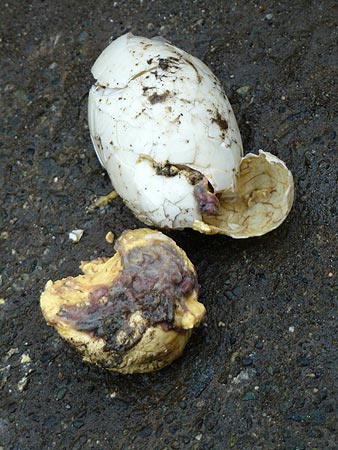
We drive through the land of the Ifugao hill tribe. The main feature: food. The Ifugao like to eat a lot, especially weird things. One local speciality is balut: half-hatched chicken embryos. Stem cell researchers of the world: this is your heaven, swing your hooves! There are also dogs on the menu. However, as stupid as they are lying all over the street here, their meat can’t really be halal. Michelin at best.
The greatest work of the Ifugao are their rice terraces. They have been building them in the steep mountains for more than 2000 years. There are places here where the whole world looks like a gigantic green Mayan pyramid. Incidentally, the Ifugao also invented the colour green. I even deny God the third day of Genesis: the Ifugao also invented water and earth. Especially water.
In the travel guides and by UNESCO, their rice terraces are repeatedly described as the eighth wonder of the world. Unfortunately, I didn’t have time for lengthy philosophical discussions with the Ifugao. But to be honest: if I had worked my arse off for 2000 years to shape my environment so that it would feed me, and then some modern-day culture vulture came along and called it a “miracle”: I’d be fucking pissed off.
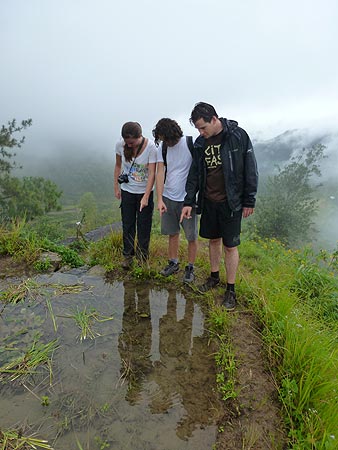
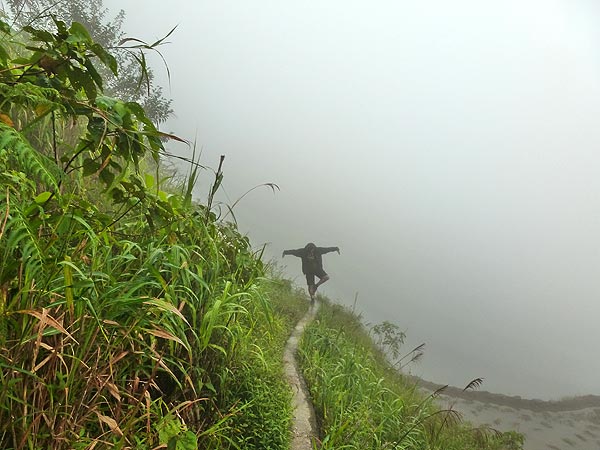
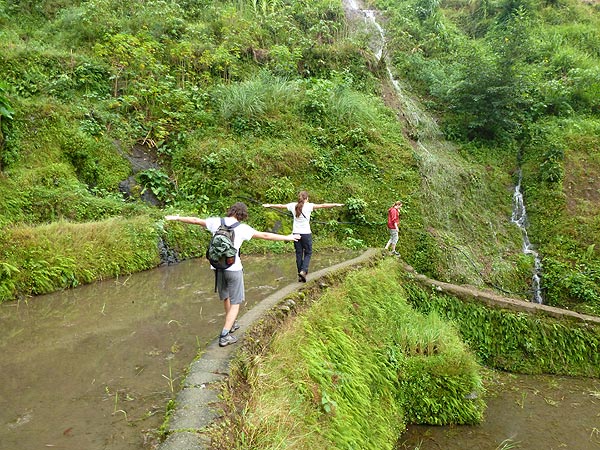
We stay in a cheap hotel, check the internet briefly and then set off on a short walk. The walk turns out to be a little longer than expected. Through the first rice terraces, we climb a few hundred metres in perma-rain through small villages into the rainforest above Banaue. Only now do I realise what the lads have achieved here. The steepest slopes have a gradient of around 70%. We balance over the boundaries of the rice terraces up the slopes. The width of the slippery natural stone walls varies between 10 and 40 cm. Ifugao slacklining.
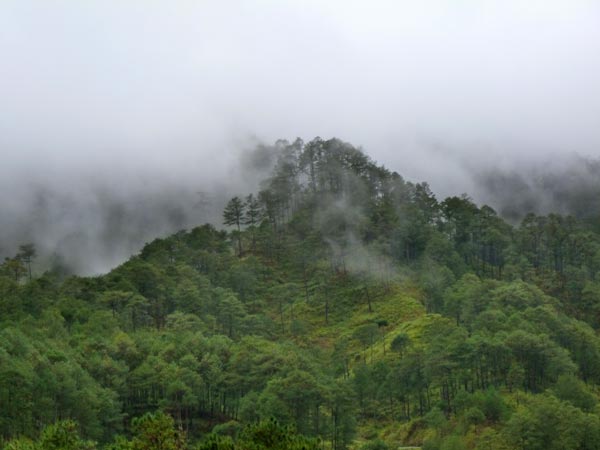
You have two options when slipping: wet feet on the left and a free fall of between three and 20 metres on the right. Uli opts for wet feet three times until we arrive at a waterfall. We hike through the clouds. Rain jackets are completely useless in the rainforest. Either you sweat all over or you shower in the open air. It keeps on pissing. The fog breaks briefly once. All we get to see today is a rough idea of how infinitely beautiful it must be here if you can see further than 50 metres.



 Frank Woelky, born in 1973. Kitesurfer since 1998. Since 2006, I have been combining kitesurfing and web design on trips lasting several months off the beaten track.